Montevideo Sign (Letras de Montevideo): What to Know Before You Visit
Installed on the Rambla in the Pocitos neighborhood in 2012, the Montevideo Sign — known locally as the Letras de Montevideo — has become one of the city's most recognizable photo spots. It's free, permanently accessible, and sits directly in front of Playa Pocitos with the Río de la Plata as its backdrop.
Quick Facts
- Location
- Rambla, Pocitos neighborhood, near Playa Pocitos and the Hyatt Centric hotel
- Getting There
- Bus along Av. 18 de Julio or the Rambla; taxi or rideshare from Ciudad Vieja takes about 15–20 minutes
- Time Needed
- 15–30 minutes to visit, photograph, and walk the nearby stretch of Rambla
- Cost
- Free — no ticket, no booking required
- Best for
- Casual walkers, photography, families, and anyone exploring the Rambla
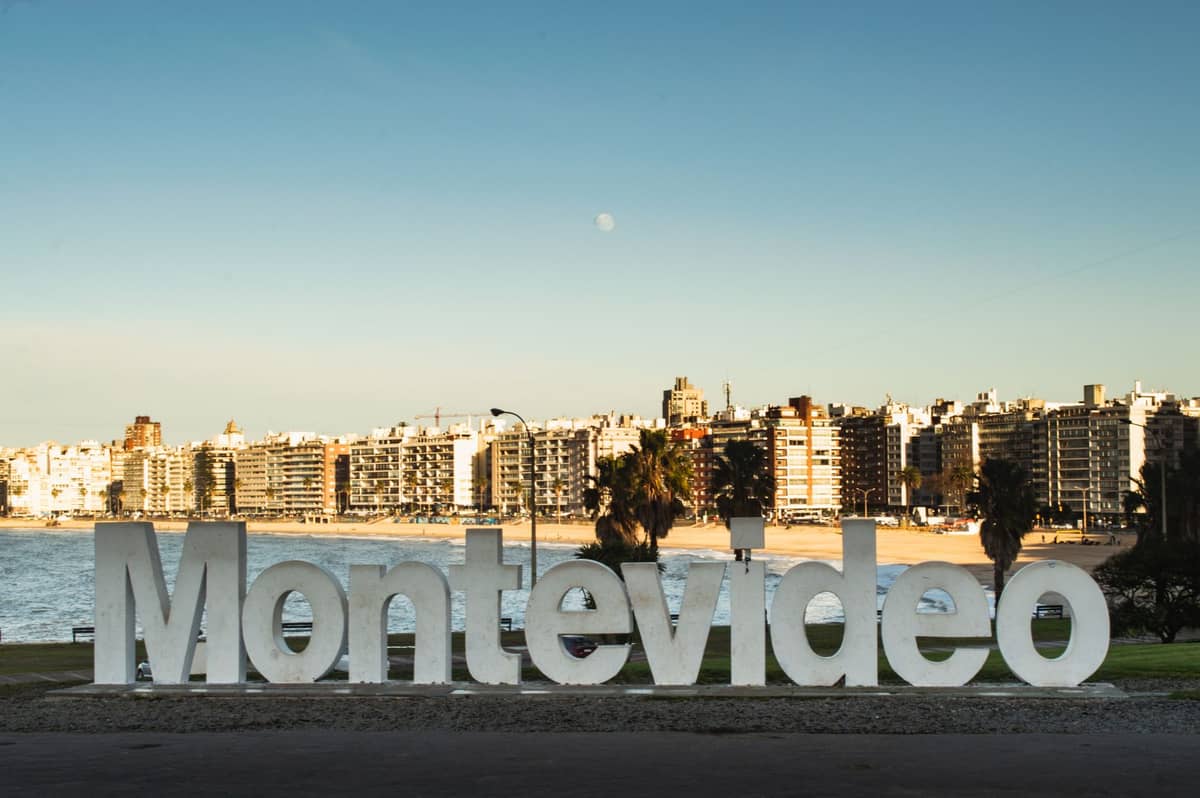
What the Montevideo Sign Actually Is
The Letras de Montevideo — referred to in English as the Montevideo Sign — is a large three-dimensional letter installation spelling out the city's name in bold, capital letters. It sits on the Rambla at the edge of Playa Pocitos, with the wide, grey-brown expanse of the Río de la Plata visible directly behind it. Like similar city-name signs around the world (São Paulo, Buenos Aires, Rio de Janeiro), it functions primarily as a public photo landmark rather than a traditional monument or museum.
The sign was first installed in 2012 for the annual meeting of the Inter-American Development Bank and the Inter-American Investment Corporation, and the current concrete version has been in place since its inauguration on January 2, 2014. It was not built as a grand civic gesture: it started as a temporary installation and became a fixture because the public responded to it. That origin explains both its appeal and its modesty. This is not an architectural landmark. It is, simply, a very good place to stand with the city behind you and the river in front of you.
💡 Local tip
The sign is accessible 24 hours a day, seven days a week, at no cost. No reservation or planning is required — just show up.
The Setting: Pocitos and the Rambla
The sign's location is a significant part of its appeal. Pocitos is one of Montevideo's most residential and well-maintained coastal neighborhoods, lined with mid-century and modern apartment towers set back from a wide, flat promenade. The Rambla de Montevideo runs continuously along the waterfront, and the Letras de Montevideo sits at one of its more active stretches, between Rambla Presidente Charles de Gaulle and Rambla República del Perú, in front of the Hyatt Centric hotel.
On any given afternoon, you'll find joggers and cyclists moving along the promenade, families sitting on the low wall overlooking the beach, and groups of friends sharing mate from thermoses. The atmosphere is unhurried. This is not a tourist-only zone — it is a genuine neighborhood meeting point, and the sign sits comfortably within that local rhythm. For the broader context of the neighborhood, see the Pocitos neighborhood guide.
The beach directly in front, Playa Pocitos, is one of the most used urban beaches in Montevideo. During summer (December through February), when temperatures reach 26–28°C, the beach fills with swimmers and sunbathers. The sign becomes a natural gathering point at the water's edge, and the combination of sand, sea, and bold typography makes for an easy photo stop even for people who are primarily at the beach.
Tickets & tours
Live prices and dates from our booking partner. If you book, we may earn a commission at no extra cost to you.
Airport to Hotel or Hotel to Airport Transfer in Montevideo
From 47 €Instant confirmationFree cancellationTasting and Lunch at Bodega Pizzorno in Montevideo
From 115 €Instant confirmationFree cancellationPunta del Este full-day guided tour from Montevideo
From 47 €Instant confirmationFree cancellationColonia guided city tour from Montevideo
From 71 €Instant confirmationFree cancellation
How the Experience Changes by Time of Day
Morning visits, between roughly 7am and 10am, tend to be the quietest. The light comes from the east, which means it falls on the face of the letters rather than behind them — useful for photography, as the letters are clearly illuminated and there's little crowd competition for the best angle. The air along the Rambla carries the salt smell of the river, and at that hour the main company is likely to be morning joggers and dog walkers.
By mid-afternoon, especially on weekends, the area sees steady foot traffic. Groups stop for photos, families rest on nearby benches, and vendors may be present along the Rambla. The light in late afternoon, particularly in the golden hour before sunset, can be striking: the sun drops toward the west-northwest, and the Río de la Plata catches color in a way that gives the background of your photos texture and warmth.
At night, the sign takes on a different character. While there is no dedicated illumination of the letters themselves, the general lighting of the Rambla provides enough visibility to see and photograph the installation. The beach view disappears into darkness, but the promenade stays active into the evening during warmer months, with couples walking and the occasional group gathered nearby.
💡 Local tip
For photography, the late afternoon golden hour gives the most visually interesting light. Come 45 to 60 minutes before sunset and face northwest for the best background color over the river.
Getting There and Getting Around
The sign is straightforward to reach from most parts of Montevideo. By bus, multiple routes run along Avenida 18 de Julio and connect to the Rambla; from Ciudad Vieja or the Centro, a taxi or rideshare typically takes 15 to 20 minutes depending on traffic. The sign is located on Rambla República del Perú next to the Hyatt Centric Montevideo hotel, with the Plus Code 4P6R+F94 useful if you're using a map app that supports it.
On foot, the sign connects naturally to a longer Rambla walk. Heading west along the promenade takes you through Parque Rodó and eventually toward Playa Ramírez. Heading east along the coast leads toward Playa Buceo and eventually the quieter eastern beaches. If you're planning a day that combines the waterfront with other sights, the sign makes a logical midpoint rather than a destination in itself.
Accessibility is good. The Rambla's pavement is level and wide, suitable for wheelchairs and strollers. There are no barriers or steps between the sidewalk and the immediate viewing area around the sign. During large events or weekend afternoons in summer, the space can get crowded, but the open-air setting means congestion rarely becomes a serious obstacle.
Photography: What Works and What Doesn't
The sign is roughly at ground level, which means the most effective photographs are taken from a slight distance rather than directly in front. Standing back five to ten meters gives enough perspective to fit all ten letters in the frame without distortion. A smartphone camera is entirely sufficient; there's no need for specialized equipment.
The classic shot places one or two people standing between or in front of the letters with the Río de la Plata behind them. On overcast days, the sky becomes a flat grey backdrop that still works reasonably well. On clear days, the water catches light and the sky opens up. Direct overhead sun at midday flattens everything and creates harsh shadows within the letter forms — this is the one time of day that consistently produces less satisfying images.
ℹ️ Good to know
The Río de la Plata's water appears brown rather than blue due to sediment from the rivers feeding into it. Manage expectations accordingly: the backdrop is atmospheric but not turquoise.
Honest Assessment: Who Should Go and Who Can Skip It
The Montevideo Sign is exactly what it appears to be: a free, well-located photo landmark with a pleasant surrounding environment. If you are walking the Rambla, spending time at Playa Pocitos, or simply passing through Pocitos, stopping for fifteen minutes costs nothing and gives you a clear sense of the neighborhood's coastal character. For travelers who want every stop to carry deep historical or cultural significance, this is not that kind of attraction.
Visitors with limited time in Montevideo who are focused on the city's architectural and historical heritage — the Palacio Salvo, the Teatro Solís, or the museums of Ciudad Vieja — may reasonably deprioritize the sign. It is not an irreplaceable Montevideo experience. But as part of a broader Rambla walk or a beach afternoon in Pocitos, it fits naturally and adds nothing in terms of cost or serious detour.
Families with children, first-time visitors who want an orienting coastal view of the city, and anyone spending part of a day in Pocitos will find it a low-effort, no-downside stop. The surrounding area — the beach, the promenade, the cafes and restaurants in the blocks behind the Rambla — gives the visit more weight than the sign alone.
Insider Tips
- Come on a weekday morning if you want the sign to yourself for photos. Weekend afternoons between December and March see the heaviest foot traffic from both locals and tourists.
- The Hyatt Centric hotel directly behind the sign has a rooftop bar with views over the Rambla. It is worth checking whether non-guests can access it for a different perspective on the installation and the coastline.
- If you're combining this stop with Playa Pocitos, bring everything you'd need for the beach — sunscreen, water, towel — and treat the sign as your arrival point rather than a separate trip.
- The letters are solid and sit at ground level; young children often enjoy walking through and around them, making this genuinely family-friendly in a way that more formal attractions sometimes are not.
- For a rewarding half-day walk, start at the Montevideo Sign and head west along the Rambla toward Parque Rodó at your own pace. The transition from Pocitos to the park area takes about 30 to 40 minutes on foot and passes through several distinct sections of the waterfront.
Who Is Montevideo Sign (Letreiro MONTEVIDEO) For?
- First-time visitors wanting a quick, iconic orientation to Montevideo's coastal identity
- Families with young children looking for an easy, outdoor, free stop
- Photographers and anyone spending an afternoon at Playa Pocitos
- Casual walkers using the Rambla as their primary route through the city
- Travelers on a tight budget who want to make the most of Montevideo's free public spaces
Nearby Attractions
Other things to see while in Pocitos:
- Playa Buceo
Playa Buceo sits along the Rambla República de Chile in the Buceo neighborhood, offering a sandy bay between Puerto del Buceo and the Malvín coast. Free to enter, calm by local standards, and loaded with more history than most city beaches can claim.
- Playa Pocitos
Playa de los Pocitos has been Montevideo's most visited beach for over a century. Stretching along the Rambla República del Perú in the Pocitos neighborhood, it draws swimmers, joggers, and weekend families in equal measure. Admission is free, the water is calm, and the surrounding streets offer plenty of reasons to linger after the sun goes down.
Planning a trip? Discover personalized activities with the Nomado app.