Playa Buceo: Montevideo's Urban Beach with a Salvage-Diving Past
Playa Buceo sits along the Rambla República de Chile in the Buceo neighborhood, offering a sandy bay between Puerto del Buceo and the Malvín coast. Free to enter, calm by local standards, and loaded with more history than most city beaches can claim.
Quick Facts
- Location
- Rambla Chile, between Av. Ing. Juana Pereyra and 9 de Junio, Buceo, Montevideo
- Getting There
- Multiple urban bus routes stop along the Rambla; also walkable or cyclable from Pocitos and Malvín
- Time Needed
- 1 to 3 hours depending on season
- Cost
- Free — public beach, no entry fee
- Best for
- Rambla walkers, local beach culture, families in summer, sunset views
What Playa Buceo Actually Is
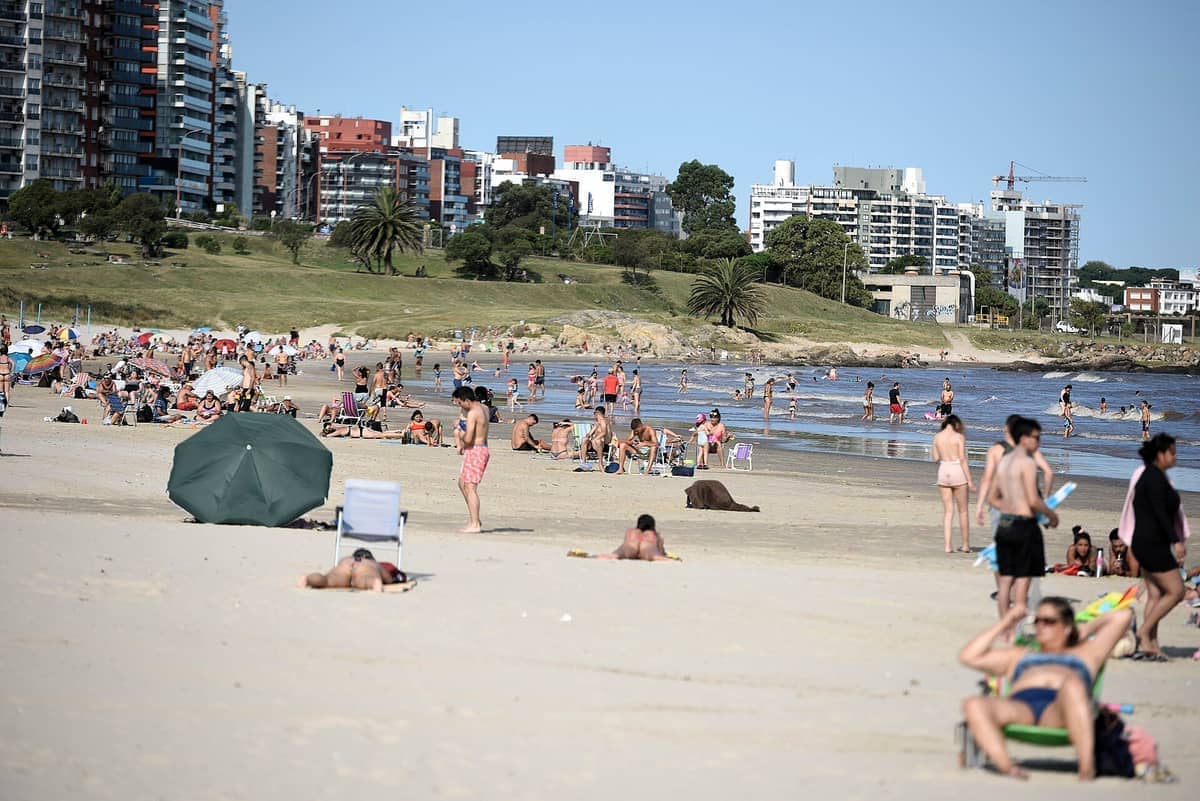
Playa Buceo, officially Playa del Buceo, is a free public beach administered by the Intendencia de Montevideo. It curves along the southern coast of the city in the Buceo neighborhood, forming a modest bay between the Puerto del Buceo yacht harbor to the west and the start of the Malvín beach sector to the east. The beach is open at all hours with no gates, fences, or ticketing. Lifeguards and seasonal facilities operate on a summer schedule, typically from around December through March, but the sand and shore are yours at any time of year.
It is not a resort beach. There are no hotel loungers, no beach clubs, and no DJ sets. What you get is a wide, gently curving bay where Montevideans actually swim, jog the adjacent Rambla, launch kayaks from the harbor fringe, or simply sit with a thermos of mate watching the Río de la Plata catch the afternoon light. That ordinariness is, genuinely, the point.
💡 Local tip
The Rambla runs directly alongside the beach, making Playa Buceo an easy addition to any coastal walk or bike ride between Pocitos and Malvín.
The Name Alone Is Worth Knowing
The word "buceo" means diving or salvage diving in Spanish, and the neighborhood's name is not metaphorical. In the eighteenth century, this bay was the site of two significant maritime salvage operations. The cargo vessel Nuestra Señora de la Luz sank offshore in 1752, and Nuestra Señora del Buen Viaje followed in 1789. Spanish colonial authorities organized underwater salvage efforts from a coastal station near this bay to recover the cargo from both wrecks. The barrio, the harbor, and eventually the beach all took the name from those operations.
That history is invisible today — there are no plaques in the sand, no museum annexes at the water's edge — but knowing it reframes the view. The calm, slightly greenish water of the Río de la Plata that looks unremarkable from the shore hides several centuries of Montevideo's relationship with the sea. The Puerto del Buceo, the yacht harbor immediately adjacent, was inaugurated in 1939 and added a modern layer to that maritime identity.
Tickets & tours
Live prices and dates from our booking partner. If you book, we may earn a commission at no extra cost to you.
Guided Tour with Wine Tasting Experience at Bouza Winery
From 68 €Instant confirmationFree cancellationAirport to Hotel or Hotel to Airport Transfer in Montevideo
From 47 €Instant confirmationFree cancellationTasting and Lunch at Bodega Pizzorno in Montevideo
From 115 €Instant confirmationFree cancellationPunta del Este full-day guided tour from Montevideo
From 47 €Instant confirmationFree cancellation
How the Beach Changes Through the Day
Early mornings are the quietest and, for many visitors, the most atmospheric. By 7 or 8 a.m. in summer, joggers and cyclists are already moving along the Rambla, and a handful of regulars are in the water. The light at that hour is flat and silvery, reflecting off the wide estuary. The sound is mostly wind, lapping water, and the distant creak of rigging from the harbor. Bring a coffee or a mate kit — there is a particular pleasure in having this stretch almost to yourself before the city fully wakes.
Midday in January or February is peak crowd time. Families cluster near the waterline, teenagers occupy the shallower sections, and street vendors walk the Rambla with chipa (cheese bread) and cold drinks. The sand can get genuinely hot underfoot by noon, so sandals are worth keeping close. The water temperature in summer is warm enough for comfortable swimming, typically in the low-to-mid 20s Celsius, though the Río de la Plata never achieves the transparency of the Atlantic coast.
Late afternoons bring the best light for photography: the sun drops toward the west and the sky above the water turns amber and pink while the harbor masts cut dark lines across it. Crowds thin after about 5 p.m. even in high summer. In autumn and spring, late afternoon is actually the most pleasant time to visit — temperatures are mild (roughly 15 to 22°C), and the beach is nearly empty while still bathed in good light. Winter visits (June through August) are for walkers only, with temperatures between 6 and 14°C, but the Rambla stays in use year-round.
ℹ️ Good to know
The Río de la Plata is an estuary, not an ocean, so the water color tends toward brown-green rather than clear blue — especially after heavy rainfall upstream in Argentina or Brazil. Check local water quality reports if swimming is your priority. The Intendencia de Montevideo publishes beach condition updates during the summer season.
Getting There and Getting Around
Playa Buceo sits in the Pocitos-adjacent coastal corridor, well connected by Montevideo's urban bus network. Multiple routes run along or near the Rambla República de Chile; check the STM (Sistema de Transporte Metropolitano) for current lines. From Pocitos, the beach is an easy 15 to 20-minute walk east along the Rambla. From Ciudad Vieja, a bus or ride-hailing app (Uber operates in Montevideo) will get you there in under 30 minutes depending on traffic.
Cycling is genuinely the best way to approach Playa Buceo if you are combining it with other coastal stops. The Rambla de Montevideo runs as a continuous waterfront promenade for roughly 22 kilometers, and Playa Buceo sits comfortably mid-route. Bike rental options are available near Pocitos. Street parking exists near the beach but fills quickly on summer weekends and public holidays — arriving by bus or bike on those days saves real frustration.
The beach is accessible on foot from the Rambla with no significant barriers to reach the sand. Detailed information on beach wheelchair availability or tactile access paths has not been confirmed in official municipal sources, so visitors with specific accessibility needs should contact the Intendencia de Montevideo directly before visiting.
What to Bring and What to Expect
There are no entrance fees and no facilities beyond what the season provides. In summer, lifeguards are on duty during designated hours, and basic amenities may include shower points and portable toilets, though the scale is modest compared to larger city beaches. There are no permanent food stalls on the beach itself, but vendors work the Rambla during busy periods. A small number of cafes and almacenes (corner shops) sit within a few blocks in the surrounding neighborhood.
If you are planning a full beach day, pack sunscreen, water, and food. Uruguay has a humid subtropical climate with summer highs of 26 to 28°C and strong UV radiation in the midday hours. For a comparative sense of Montevideo's beaches along the same coast, Playa Pocitos to the west is larger and more developed, while Playa Ramírez further toward Parque Rodó is smaller and set against a more park-facing backdrop. Playa Buceo sits between these in terms of scale — larger than Ramírez, quieter than Pocitos.
Honest Assessment: Who This Beach Is For
Playa Buceo rewards visitors who want to see Montevideo as a functioning coastal city rather than a tourist product. It is where locals actually come, which means it can feel understated to travelers accustomed to postcard beaches. The water is not Caribbean-clear; the Río de la Plata carries sediment and the color is consistently murky. If crystal water is your baseline expectation, this beach will disappoint — and honestly, no city beach on the Río de la Plata will satisfy that expectation. For ocean swimming, the beaches near Punta del Este or on Uruguay's Atlantic coast are in a different category. The Punta del Este day trip from Montevideo covers that option if beach clarity is a priority.
That said, for a relaxed morning walk, a swim among Montevidean families, or a sunset stop along the Rambla, Playa Buceo is a genuinely pleasant place. It pairs naturally with the broader Montevideo beaches guide if you want to plan a coastal itinerary covering multiple beaches in one day. The proximity to the Puerto del Buceo also makes it interesting for anyone who wants to watch yacht traffic without paying marina fees.
⚠️ What to skip
Visitors expecting a polished, resort-style beach experience will be disappointed. Playa Buceo is a working city beach with modest infrastructure. Water clarity is limited year-round due to the estuarine nature of the Río de la Plata.
Insider Tips
- Walk or cycle east from Playa Buceo toward Malvín in the early evening — the Rambla is far less crowded than the Pocitos section at that hour and the light on the water is better.
- The Puerto del Buceo breakwater, visible from the beach, is a good spot to watch sailboats return to the harbor on weekend afternoons. It is publicly accessible and the views back toward the beach are worth the short detour.
- If you visit in summer and the beach feels crowded, walk five minutes west toward the harbor side — the small strip of shore near the boat ramp is almost always quieter than the main beach arc.
- Water quality on Río de la Plata beaches varies significantly after heavy rain, as upstream runoff affects conditions. Local news and the Intendencia de Montevideo's website publish beach condition alerts during summer — a quick check before heading out saves wasted trips.
- Mate etiquette applies here as much as anywhere in Montevideo: if someone shares their mate with you, accept it graciously. If you bring your own, expect friendly nods from fellow beach-goers.
Who Is Playa Buceo For?
- Travelers wanting authentic local beach culture away from tourist infrastructure
- Cyclists and walkers using the Rambla as a continuous coastal route
- Families looking for a calm, free beach close to the Pocitos neighborhood
- Photographers chasing late-afternoon light over the Río de la Plata and yacht harbor
- Anyone curious about Montevideo's maritime history and coastal identity
Nearby Attractions
Other things to see while in Pocitos:
- Montevideo Sign (Letreiro MONTEVIDEO)
Installed on the Rambla in the Pocitos neighborhood in 2012, the Montevideo Sign — known locally as the Letras de Montevideo — has become one of the city's most recognizable photo spots. It's free, permanently accessible, and sits directly in front of Playa Pocitos with the Río de la Plata as its backdrop.
- Playa Pocitos
Playa de los Pocitos has been Montevideo's most visited beach for over a century. Stretching along the Rambla República del Perú in the Pocitos neighborhood, it draws swimmers, joggers, and weekend families in equal measure. Admission is free, the water is calm, and the surrounding streets offer plenty of reasons to linger after the sun goes down.
Planning a trip? Discover personalized activities with the Nomado app.