Memento Park Budapest: What the Communist Statues Actually Tell You
Memento Park is Budapest's open-air museum dedicated to the monumental sculptures of Hungary's communist period. Forty-two statues that once dominated public squares across the country now stand together on the outskirts of the city, forming one of Europe's most unusual and thought-provoking collections.
Quick Facts
- Location
- Balatoni út – Szabadkai utca sarok, Budapest XXII district
- Getting There
- Direct transfer bus from Deák Ferenc tér, or metro M4 to Kelenföld vasútállomás then bus 101B, 101E, or 150 to the Memento Park stop
- Time Needed
- 1.5 to 2.5 hours
- Cost
- Children aged 6–14: 1,200 HUF; under 6: free. Adult prices: verify on official site before visiting
- Best for
- History enthusiasts, photography, Cold War culture, solo travelers
- Official website
- www.mementopark.hu/en/home
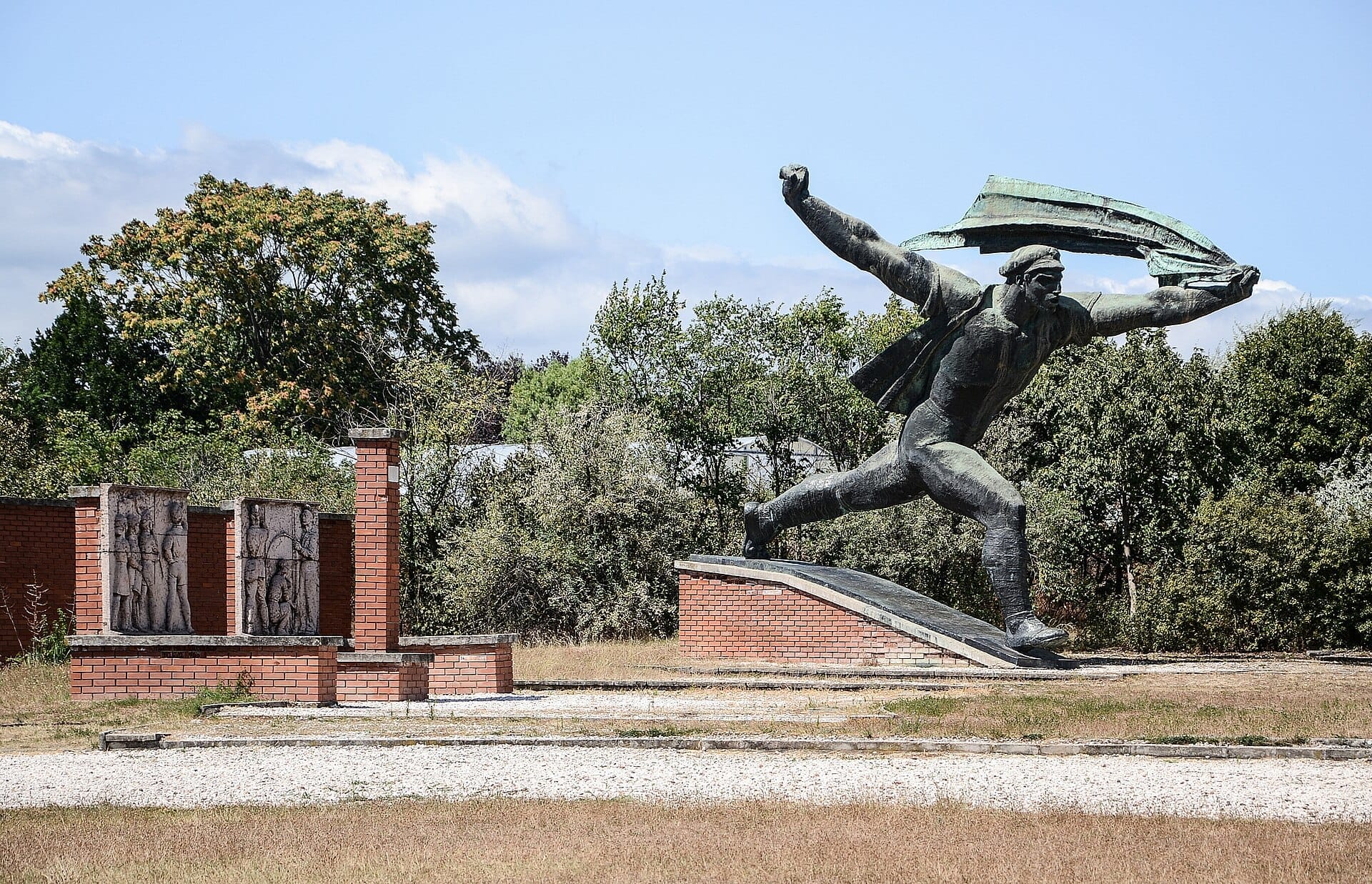
What Memento Park Actually Is
Memento Park, known in Hungarian as Szoborpark, is an open-air museum in Budapest's XXII district that collects 42 statues, busts, and monuments originally erected during Hungary's communist period between 1949 and 1989. When the regime collapsed, these works were not destroyed. Instead, architect Ákos Eleőd designed a dedicated park to house them, and Memento Park opened in 1993. The concept was deliberate: display the propaganda art honestly, in context, rather than erase it or let it rot in storage.
The result is something genuinely strange and surprisingly moving. Giant bronze Soviet soldiers, Lenin gesturing toward an imagined future, workers frozen mid-stride in heroic poses — all of it now stands quietly in a field on the southern edge of Buda, stripped of its original power but still carrying enormous physical presence. The statues were built to dominate city squares and intimidate from above. Here, grouped together without their intended urban context, they become something closer to a study in how governments use art as a tool of control.
💡 Local tip
The park's location in District XXII means it sits well outside the tourist center. Plan your visit as a dedicated half-day trip rather than a quick stop between sights.
The Statues: What You're Actually Looking At
The 42 works span several decades of Hungarian communist public art and cover a range of subjects: Soviet liberators, Hungarian communist leaders, idealized workers, and generic revolutionary figures. Some pieces are technically accomplished. The Soviet soldier figures in particular are large-scale bronze works of real sculptural skill, even if their ideological function was blunt. Others look exactly like what they are: mass-produced symbols commissioned to reinforce state messaging rather than to challenge or inspire.
One of the most striking installations is the reconstruction of Stalin's tribune — the reviewing stand from which party leaders once watched May Day parades — with only the dictator's boots remaining at the base. This refers directly to the 1956 Hungarian Revolution, when crowds toppled Budapest's massive Stalin statue, leaving just the boots on the plinth. It is one of the park's more theatrically effective moments, communicating the entire dynamic of the period through a single image.
The park layout leads you along a roughly circular route. The walking surface is uneven gravel and grass in places, so flat shoes are advisable. The site is open-air throughout, which matters significantly depending on when you visit.
Tickets & tours
Live prices and dates from our booking partner. If you book, we may earn a commission at no extra cost to you.
Budapest Guided E-Scooter Tour by Night
From 60 €Instant confirmationFree cancellationHalf-day tour to Princess Sissi's Godollő royal palace from Budapest
From 41 €Instant confirmationFree cancellationHalf-Day Countryside Wine Tour from Budapest
From 95 €Instant confirmationFree cancellation4 Course Dinner cruise with Operetta and Folk show
From 81 €Instant confirmationFree cancellation
When to Go and How the Experience Changes
The park is open daily, with seasonal hours: 10:00 to 18:00 from May through October, and 10:00 to 16:00 from November through April. Summer visits offer longer time in the park but also mean more direct sun with minimal shade across much of the grounds. On a bright July afternoon, the white gravel paths reflect heat upward and the bronze statues absorb and radiate warmth. Bring water.
Winter visits have a different character entirely. The cold air, bare trees along the perimeter, and shorter hours give the park a bleaker, quieter atmosphere that many visitors find more appropriate to the subject matter. Crowds thin considerably in the off-season, and you can spend time in front of individual statues without anyone else in the frame. If the weather is overcast, the flat grey light photographs well against the dark bronze works.
The park draws modest crowds compared to central Budapest attractions, even during peak summer. Weekday mornings tend to be the quietest windows, when school groups and tour buses have not yet arrived. Weekends between 11:00 and 14:00 see the most activity.
ℹ️ Good to know
The park includes a Barrack Cinema screening archival footage from the communist period, a photo exhibition, and a Storage Showroom in addition to the outdoor statues. Budget time for these indoor elements, especially if the weather is extreme.
Getting There: The Honest Version
Memento Park is not easily walkable from central Budapest, and that is not a flaw — it simply requires planning. There are two practical options. The first is a direct transfer bus that operates from Deák Ferenc tér in the city center. This is the simplest route for most visitors and avoids transfers. The second option is to take metro line M4 to Kelenföld vasútállomás and then board bus 101B, 101E, or 150 toward the Memento Park stop.
The second option is to take metro line M4 to Kelenföld vasútállomás (sometimes associated with the Etele tér area) and then board bus 101B or 101E on weekdays, or bus 150 at weekends, to the Memento Park stop. This is a good choice if you are already in southern Buda or combining the visit with other sights in that part of the city. If you are building a full Budapest itinerary, the getting around Budapest guide covers the BKK transit network in detail, including how to buy and validate tickets.
Taxis and ride-hailing are an option but add meaningful cost given the distance. The round trip by public transit is the most economical approach by a significant margin. Bolt and Uber both operate in Budapest (Uber via a licensed taxi partnership); taxis are regulated, so prefer app booking over street hails.
Historical Context: Why This Place Exists
Hungary was under Soviet-aligned communist rule from 1949 until the transition period of 1989-1990. For four decades, public space was shaped by ideological art: statues commissioned by the state to normalize the regime and project permanence. When the system fell, cities across Central and Eastern Europe faced a choice about what to do with these objects. Some countries destroyed the works. Budapest took a different path. For deeper background on this period and its physical legacy across the city, the Terror Háza museum covers the mechanisms of both the fascist and communist regimes with archival depth, and the two sites together make for one of the most complete engagements with 20th-century Hungarian history available to visitors.
Ákos Eleőd's design for Memento Park was itself a statement. The entrance structure is deliberately theatrical: a facade of classical Hungarian architecture that opens into a space for Soviet-era monuments. The juxtaposition is intentional, framing the statues as foreign imports onto Hungarian civic life rather than organic expressions of the culture. Whether the design succeeds in communicating that thesis depends on how much context a visitor arrives with, which is an honest limitation of the park experience.
If you want to understand how Budapest as a whole processed its 20th-century history in its urban fabric, this context is part of a much larger story. The Budapest history guide provides the chronological framework that makes Memento Park significantly more readable.
Photography, Accessibility, and Practical Notes
Memento Park photographs very well, but the approach matters. The statues are large, so wide lenses or stepping well back produces more effective images than close cropping. The early-afternoon light in summer creates harsh shadows on the faces of the bronze figures; morning light from the east is generally more flattering. In winter, overcast days eliminate harsh shadows entirely and give the images a documentary quality that suits the subject.
The grounds are largely flat with compacted gravel paths, but the surface is not smooth paving, and some areas between statues involve uneven terrain. No detailed step-free accessibility statement is published on the official site, so visitors with specific mobility requirements should contact the park directly before visiting. The indoor exhibition spaces within the barrack building are more controlled environments.
The park's gift shop sells reproductions, prints, and publications related to the communist period in Hungary. The quality varies, but some items are genuinely useful for understanding the broader collection. If you are interested in Budapest's artistic and architectural heritage beyond this period, the Budapest Art Nouveau guide covers the city's earlier and very different decorative tradition.
Who Should Skip This
Memento Park asks something of its visitors. Without some understanding of the communist period, the statues can feel like large, impressive bronzes without clear meaning. If you have no interest in 20th-century history and are drawn primarily to Budapest's thermal baths, riverfront scenery, or food culture, the significant journey to District XXII may not feel worthwhile. It is a substantial detour from the central city, and the experience rewards prior reading.
Young children may find the site slow. There is little interactive programming aimed at younger visitors, and the content — while not disturbing — is abstract for anyone unfamiliar with the historical references. It is also an almost entirely outdoor site with minimal covered areas, which makes very hot or very wet days uncomfortable visits.
Insider Tips
- The direct bus from Deák Ferenc tér runs at specific departure times, not continuously. Check the current schedule on the official Memento Park website before your visit and plan your return timing in advance — missing the bus means a longer alternative route.
- The Barrack Cinema inside the park screens original Cold War-era documentary and propaganda films. This is genuinely worth 20 minutes of your time and provides audio-visual context that reading signage alone cannot replicate.
- Buy a guidebook at the entrance rather than relying solely on in-park labels. The interpretive signage is informative but thin in places, and the park's own publication identifies individual statues with their original locations in Budapest — which dramatically changes how you read the works.
- The park receives tour groups, typically in the 10:30 to 13:00 window. Arriving at opening at 10:00 or after 14:00 gives you quieter conditions and more room to move around larger pieces.
- Pair this visit with a trip to the nearby Etele tér shopping center if you need lunch — options directly at the park are limited to a small on-site facility, and the surrounding area has few restaurants within easy walking distance.
Who Is Memento Park For?
- History and Cold War enthusiasts who want primary material rather than just narrative
- Photographers looking for monumental subjects outside the crowded city center
- Travelers building a structured understanding of Budapest's 20th-century past
- Solo visitors who prefer to move at their own pace through a quiet, unhurried site
- Anyone who has already covered the central city and wants a less-visited but genuinely significant destination
Nearby Attractions
Combine your visit with:
- Buda Hills & Normafa
Rising to around 477–479 meters above sea level in Budapest's 12th district, Normafa is a free public parkland where locals jog, sled, and picnic within easy reach of the center. The Buda Hills around it offer a network of forest trails, a historic cogwheel railway, and views that stretch across the Danube on clear days.
- Kerepesi Cemetery (Fiumei úti sírkert)
Founded in 1847, Kerepesi Cemetery is Hungary's most historically layered burial ground, where poets, revolutionaries, statesmen, and Communist-era officials rest side by side across 56 parklike hectares. Free to enter and genuinely uncrowded, it rewards visitors who want Budapest's history without a ticket queue.
- Margaret Island
Stretching 2.5 kilometres through the middle of the Danube, Margaret Island is Budapest's primary urban park and the city's most democratic attraction. Entry is free, private cars are banned, and the island rewards visitors with medieval ruins, thermal baths, a musical fountain, and enough green space to lose a half-day without trying.
Planning a trip? Discover personalized activities with the Nomado app.