Buda Hills & Normafa: Budapest's Hilltop Retreat Above the City
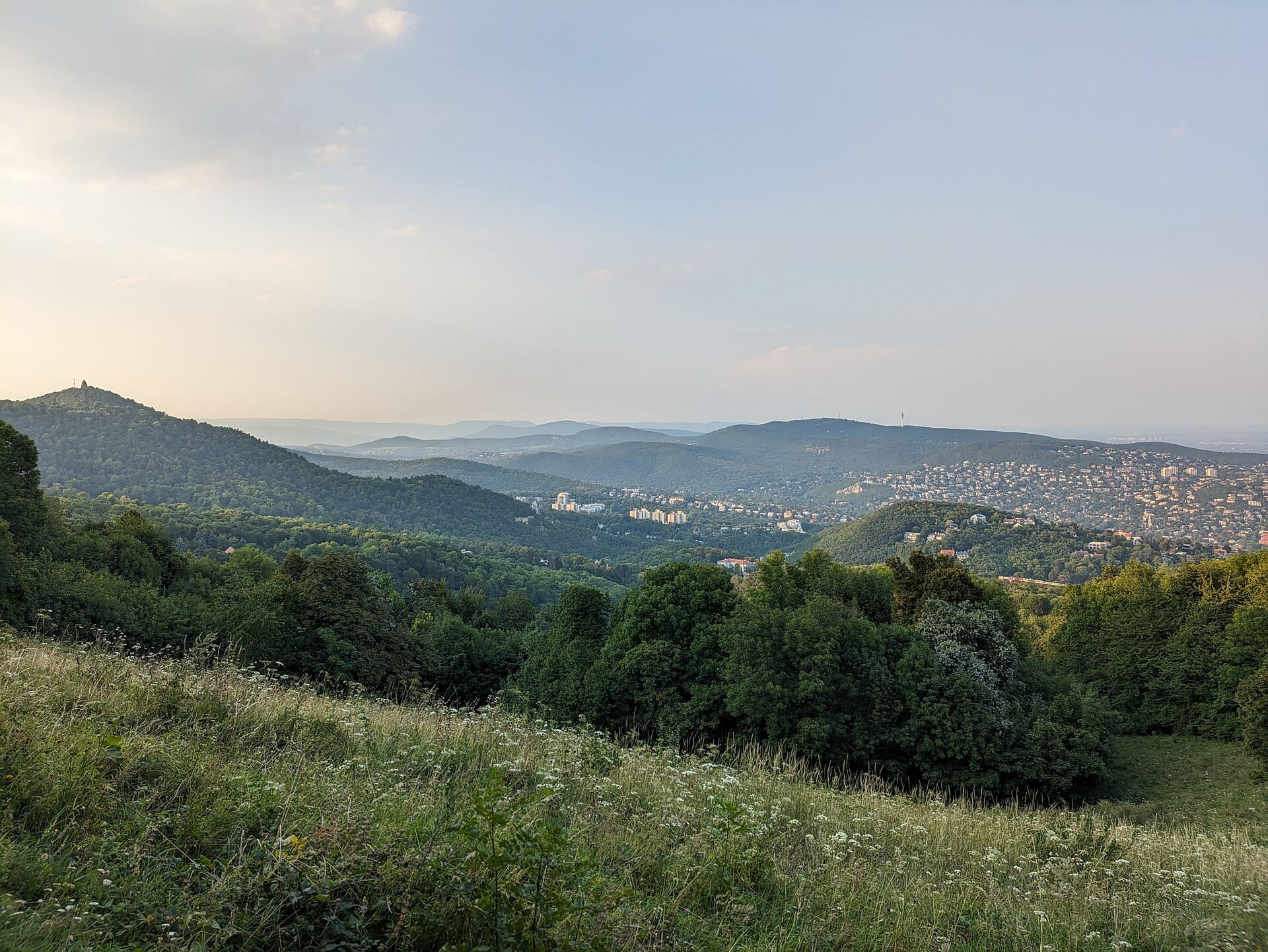
Rising to around 477–479 meters above sea level in Budapest's 12th district, Normafa is a free public parkland where locals jog, sled, and picnic within easy reach of the center. The Buda Hills around it offer a network of forest trails, a historic cogwheel railway, and views that stretch across the Danube on clear days.
Quick Facts
- Location
- Svábhegy, 12th district, Budapest
- Getting There
- Bus 21 or 21A from Széll Kálmán tér to Normafa stop; or Cogwheel Railway from Városmajor to Széchenyi-hegy, then 10-min walk
- Time Needed
- 2–4 hours for a relaxed visit; full day if hiking
- Cost
- Free to enter; standard BKK bus fare applies for transport (verify current fares with BKK)
- Best for
- Hikers, families, runners, winter sledding, anyone wanting fresh air close to the city
What Normafa Actually Is (And Why Locals Love It)
Normafa is not a single viewpoint or a formal park with ticket booths and timed entry. It is a broad forested plateau at the eastern edge of the Buda Hills, roughly 477–479 meters above sea level, where Budapestians have been walking, picnicking, and sledding for generations. On any weekend morning, you will find retired couples moving at a steady pace along the main forest road, young parents pushing strollers on the paved perimeter track, trail runners disappearing into the tree line, and school groups clustered around the small refreshment stands near the clearing. It is a place that works for the city rather than performing for tourists.
That is precisely what makes it worth your time. The Buda Hills offer a genuinely different texture from the stone-and-pavement sightseeing of central Budapest. The air is noticeably cooler and cleaner. Pine and beech canopy replaces Habsburg facades. And the transition from the city to the hillside happens faster than most visitors expect: bus 21A from Széll Kálmán tér reaches the Normafa terminus in roughly 20 minutes.
💡 Local tip
Széll Kálmán tér (formerly Moszkva tér) is the main transit hub on the Buda side. Multiple metro, tram, and bus lines connect here, making it a convenient staging point before heading up to the hills.
The Name and Its History
The word Normafa translates directly as 'Norma tree', and the story behind it is one of those details that transforms a pleasant walk into something more specific. The original tree at the heart of this area was a large beech, locally called Viharbükk, or Storm Beech. According to tradition, it sprouted in the 15th century around the time of King Matthias Corvinus, one of Hungary's most celebrated Renaissance rulers. Whether or not the timing holds up historically, the tree clearly became a landmark.
The name Normafa itself is generally dated to around 1840–1850, when a singer performed an aria from Vincenzo Bellini's opera Norma near or beneath the beech. The open-air acoustics, the hillside setting, and the theatrical moment were apparently memorable enough to rename the entire area. The original tree was destroyed by lightning in 1927, but the name and the cultural affection survived it. A marker still commemorates the spot, and the grove of beeches surrounding it maintains a quiet solemnity even when the clearing is full of joggers and children.
The surrounding Buda Hills, known in Hungarian as Budai-hegység, have their own ecological and historical character. This is low mountain terrain, geologically distinct from the Pest plain across the Danube. The hills provided a natural defensive advantage for medieval Buda, and their forest cover later became a deliberate recreational zone for the city. For more on how the city's geography shaped its development, the Budapest history guide provides useful context.
Tickets & tours
Live prices and dates from our booking partner. If you book, we may earn a commission at no extra cost to you.
Self-guided discovery walk in Budapest's Gellert Hill
From 28 €Instant confirmationFree cancellationSelf-guided Discovery Walk in Budapest's Castle Hill history and mysteries
From 28 €Free cancellationJanos hill tower visit by chairlift in Budapest
From 39 €Instant confirmationFree cancellationBudapest Guided E-Scooter Tour by Night
From 60 €Instant confirmationFree cancellation
How to Get Up There: Three Options Worth Knowing
The most direct route is bus 21 or 21A from Széll Kálmán tér, which climbs through residential Buda streets and deposits you at the Normafa clearing. Standard BKK tickets apply; verify current fares before travel. The ride itself is worth attention: the bus passes through the kind of quiet, leafy Buda neighborhoods that most short-stay visitors never see, with villas half-hidden behind garden walls and streets that narrow as they ascend.
The more atmospheric option is the Cogwheel Railway, which departs from Városmajor on a narrow-gauge line built in 1874, climbing through wooded residential districts to the Széchenyi-hegy terminus. From Széchenyi-hegy, Normafa's clearing is roughly a 10-minute walk through the forest. The railway runs on standard BKK fares and operates year-round; it is slow by design, which is part of the point.
A third option involves the Children's Railway, a narrow-gauge line running through the hills that is staffed largely by children aged 10–14 under adult supervision, a holdover from the Soviet-era Pioneer Railway system. The Hűvösvölgy end connects to tram 61, and the line passes through forest landscape with stops that serve as trailheads. It approaches but does not directly stop at Normafa, so combine it with a short hike for the most rewarding itinerary.
ℹ️ Good to know
The Cogwheel Railway and the Children's Railway are genuinely useful transport links, not tourist novelties. Locals use them daily. Both operate on BKK fares or their own ticketing; confirm current pricing with BKK or MÁV before your visit.
The Experience by Season
Spring transforms the Buda Hills faster than it changes the city below. By late April, the beech forest fills out with fresh green canopy, wildflowers appear along trail edges, and the air carries a particular clarity that makes the panoramic view toward central Pest genuinely rewarding. This is the best season for hiking: temperatures are manageable, the trails are not crowded before 10am, and the light through the trees in the morning hours is striking.
Summer brings families, weekend crowds, and a welcome escape from heat that can be oppressive in the city center. The hilltop plateau sits noticeably cooler than the streets below, often by four or five degrees Celsius. The forest provides shade that Pest's boulevards cannot. Early mornings and late afternoons are quieter; the main clearing at Normafa fills up considerably on Saturday and Sunday middays in July and August.
Winter is when Normafa earns its strongest local loyalty. When snow falls, the hillside below the clearing becomes one of the few places in Budapest where children can sled, and the scene takes on a specific nostalgic quality that you will not find anywhere in the city center. A small ski area operates seasonally on the slopes when conditions allow, with lifts running during daytime hours on operating days, though snowfall cannot be guaranteed every year. On frosty clear mornings, the view toward the Danube and the city skyline is exceptional.
Autumn may be the most underrated time to visit. October in particular brings dramatic foliage color to the beech-dominant forest, and the weekend crowds thin compared to summer. The light at midday in October has a low golden quality that photographers will notice immediately.
⚠️ What to skip
Paths become genuinely slippery after rain, particularly on clay-heavy sections of the forest trails. Wear footwear with grip, especially in autumn and after summer storms. Trainers suitable for urban walking are not ideal here.
What You'll Find at the Top
The Normafa clearing is not a dramatic summit with a purpose-built viewing platform. It is an open grassy area on the plateau, surrounded by forest on most sides, with a simple memorial marking the site of the original beech tree. The main panoramic view opens toward Budapest from the nearby Erzsébet lookout tower, a short walk from the Normafa clearing itself. From the tower, on a clear day, you can trace the line of the Danube, identify the dome of St. Stephen's Basilica, and see the flat expanse of the Pest plain extending east.
The clearing has a handful of refreshment kiosks and a small restaurant that operates year-round, offering coffee, langos, and basic hot food. There is also a refurbished running track, which functions as a loop for joggers and walkers. The entire area underwent renovation in the 2010s that improved paths and facilities without removing the informal character that makes it feel like a genuine local space rather than a managed attraction. If you are building a broader Budapest itinerary that includes outdoor spaces, the Margaret Island offers a different but complementary green-space experience closer to the city center.
Hiking Routes and Trail Connections
Normafa sits at the center of a much larger trail network that runs through the Buda Hills. Marked hiking paths radiate outward toward János-hegy, the highest point in Budapest at about 527 meters above sea level, which can be reached on foot in roughly an hour from Normafa. The summit of János-hegy has a lookout tower of its own and a chair lift that descends to the Zugliget area, offering a loop route without backtracking.
Trail markings follow the standard Hungarian convention of colored stripes on trees and rocks. The red stripe trail heading northwest from Normafa toward János-hegy is well-maintained and manageable for most walkers of average fitness. Allow 1.5 to 2 hours for the loop including the return by chair lift and bus from Zugliget back to the city.
The hills also connect via trail to the area around Memento Park to the south, though that route requires more planning and a full day. For a shorter introduction to the hills that fits within a multi-attraction day, the direct bus-to-Normafa-and-back approach is the most efficient.
Practical Notes and Accessibility
Normafa is free to access as public parkland, with no gates or admission. The bus and railway options bring visitors close to the plateau, limiting the uphill walking required. That said, the terrain is genuinely hilly, and natural trail surfaces become uneven in places. Detailed barrier-free accessibility information for specific paths is not widely documented; visitors with mobility considerations should confirm current conditions with local disability access resources before planning.
Photography works best in the early morning, when low-angle light filters through the beech forest and the clearing is quiet. For wider views of the city, the Erzsébet lookout tower nearby provides the highest vantage. If viewpoints more generally interest you, the Budapest viewpoints guide covers the full range of options, including Gellért Hill and the Fisherman's Bastion.
Normafa fits well into a broader Buda-focused day that might also include Buda Castle or a soak at one of the thermal baths on the Buda side. For a full picture of how to spend time in this part of the city, the things to do in Budapest guide is a practical starting point.
💡 Local tip
The Budapest Card covers BKK public transport, including the city buses that serve Normafa. If you plan to use public transport extensively during your stay, the card can offer good value. Check current inclusions before purchasing.
Insider Tips
- Arrive on a weekday before 9am in spring or autumn for nearly empty trails. The weekend midday crowds, especially in summer, can make the clearing feel more like a suburban park than a forest retreat.
- The chair lift at nearby János-hegy operates seasonally and allows a one-way hike from Normafa to the summit without backtracking. Check operating days before you go, as it does not run year-round.
- Bring cash for the refreshment kiosks at the clearing. Card payment is not reliably available at all the smaller stalls, and there are no ATMs on the hilltop.
- If you take the Cogwheel Railway up, consider returning by bus 21A for variety. The bus descent offers different views through the residential Buda hillside streets.
- The sledding slope below the Normafa clearing is used by locals with proper sleds, not improvised plastic sheets. If you visit in winter with children, a simple sled is a worthwhile investment and easy to find in the surrounding district.
Who Is Buda Hills & Normafa For?
- Hikers and trail runners looking for accessible forest terrain within the city limits
- Families with children, especially in winter for sledding or in spring for open-air play
- Photographers seeking the beech forest light in early morning or autumn foliage color in October
- Visitors on longer stays who have covered the main sights and want to experience where Budapestians actually spend their weekends
- Anyone needing a half-day break from the density of central Pest, without leaving the city
Nearby Attractions
Combine your visit with:
- Kerepesi Cemetery (Fiumei úti sírkert)
Founded in 1847, Kerepesi Cemetery is Hungary's most historically layered burial ground, where poets, revolutionaries, statesmen, and Communist-era officials rest side by side across 56 parklike hectares. Free to enter and genuinely uncrowded, it rewards visitors who want Budapest's history without a ticket queue.
- Margaret Island
Stretching 2.5 kilometres through the middle of the Danube, Margaret Island is Budapest's primary urban park and the city's most democratic attraction. Entry is free, private cars are banned, and the island rewards visitors with medieval ruins, thermal baths, a musical fountain, and enough green space to lose a half-day without trying.
- Memento Park
Memento Park is Budapest's open-air museum dedicated to the monumental sculptures of Hungary's communist period. Forty-two statues that once dominated public squares across the country now stand together on the outskirts of the city, forming one of Europe's most unusual and thought-provoking collections.
Planning a trip? Discover personalized activities with the Nomado app.