Margaret Island (Margitsziget): Budapest's Green Escape on the Danube
Stretching 2.5 kilometres through the middle of the Danube, Margaret Island is Budapest's primary urban park and the city's most democratic attraction. Entry is free, private cars are banned, and the island rewards visitors with medieval ruins, thermal baths, a musical fountain, and enough green space to lose a half-day without trying.
Quick Facts
- Location
- Margaret Island, 1138 Budapest, Hungary (Danube River, between Buda and Pest)
- Getting There
- Tram 4 or 6 to Margitsziget/Margit híd stop (Margaret Bridge end); Bus 26 from Nyugati Station across the island; from the north, walk or take a bus via Árpád Bridge to the island's north end.
- Time Needed
- 2 to 4 hours for a leisurely walk; full day if combining baths or theatre
- Cost
- Free to enter the park; Palatinus Baths and open-air theatre have separate paid tickets (verify current prices before visiting)
- Best for
- Families, joggers, couples, picnickers, anyone needing a break from stone and cobblestones
- Official website
- www.budapestinfo.hu/en/margaret-island-1
What Margaret Island Actually Is
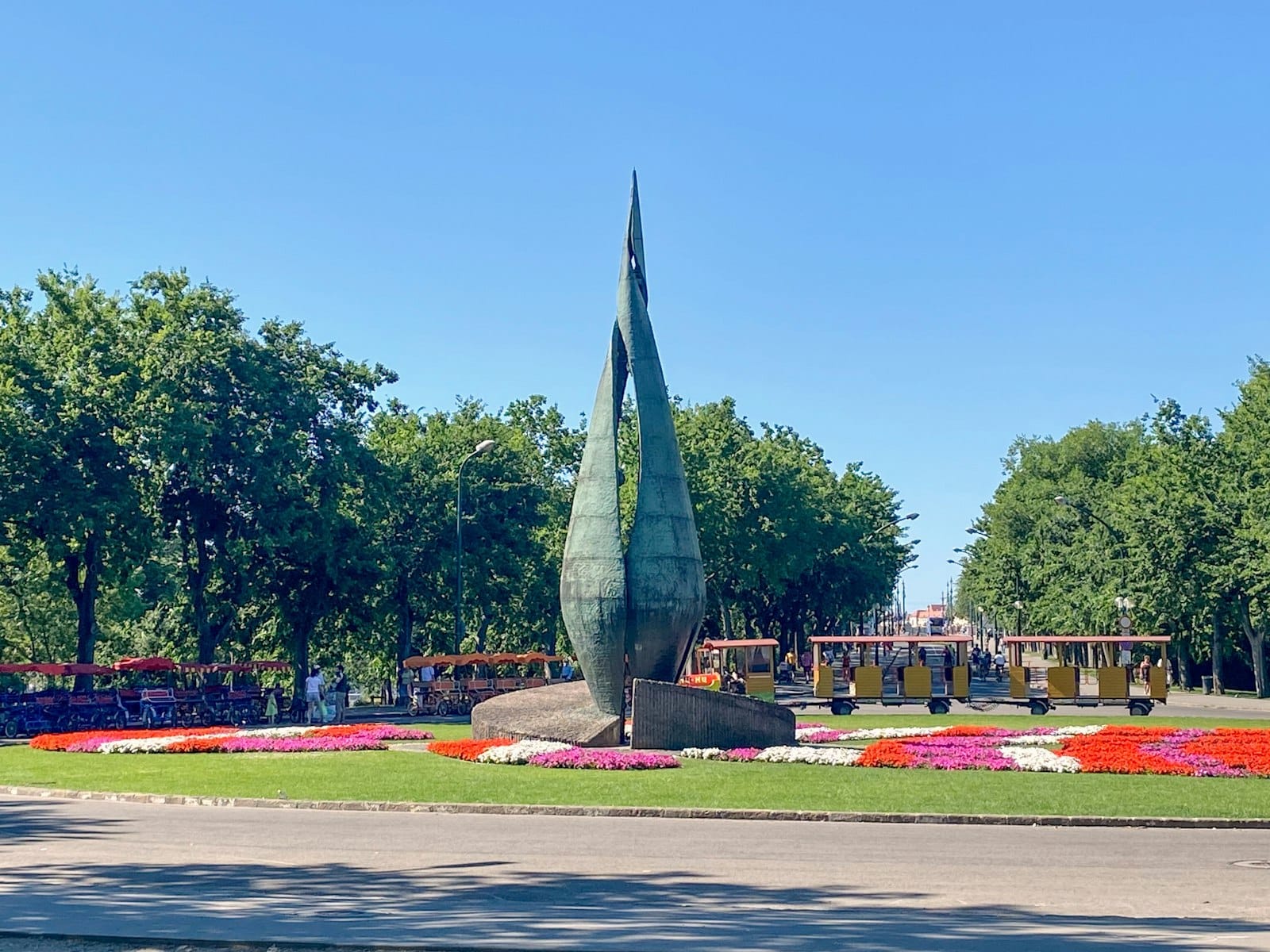
Margaret Island, known in Hungarian as Margitsziget, is a 2.5-kilometre-long, largely car-free island sitting in the middle of the Danube between the two halves of Budapest. At roughly 96.5 hectares, it functions as the city's central park, but with considerably more personality than that description suggests. There are medieval ruins, a functioning thermal bath complex, a musical fountain that draws crowds at dusk, a small zoo section, a running track, rose gardens, and a medieval convent ruin all within easy walking distance of each other.
The island is connected to the city at both ends: the southern tip links to the Pest side via the spur road off Margaret Bridge, and the northern tip connects to Árpád Bridge. No private cars are permitted on the island (only service vehicles, buses and taxis), which makes the atmosphere noticeably different from the rest of Budapest. The dominant sounds are birdsong, bicycle bells, children, and the occasional electric shuttle bus passing on the main path.
💡 Local tip
Enter from the Margaret Bridge (south) end if you are coming by tram. Tram lines 4 and 6 stop at Margit híd, which puts you directly at the island's southern entrance. This is the most convenient access point from central Pest or from the Buda side.
A Brief History: Rabbits, Royals, and a Medieval Princess
Before it became a public park, Margaret Island was a royal hunting reserve known as the Island of Rabbits. Hungarian kings used it as private ground for centuries. The island's current name comes from Princess Margaret, daughter of 13th-century King Béla IV. Following the Mongol invasion of Hungary in 1241-1242, Béla IV reportedly vowed to dedicate his daughter to religious life if Hungary survived. She entered a Dominican convent on the island, lived there until her death in 1270, and was later canonized. The ruins of that convent, along with the remains of a Franciscan church and a Premonstratensian chapel, are still visible today.
The island transitioned to public use in the 19th century, when it was developed as a health resort and pleasure ground. The connection via a spur road branching from Margaret Bridge was completed by 1901, making it accessible without a boat. Over the following decades it accumulated its current mix of formal gardens, sports facilities, and open cultural spaces.
For broader historical context on how this kind of recreational space fits into Budapest's development, the Budapest history guide covers the city's 19th-century transformation in detail.
Tickets & tours
Live prices and dates from our booking partner. If you book, we may earn a commission at no extra cost to you.
Private Buda Castle walking tour and Danube river cruise with Margaret Island
From 292 €Instant confirmationFree cancellationBudapest Guided E-Scooter Tour by Night
From 60 €Instant confirmationFree cancellationHalf-day tour to Princess Sissi's Godollő royal palace from Budapest
From 41 €Instant confirmationFree cancellationHalf-Day Countryside Wine Tour from Budapest
From 95 €Instant confirmationFree cancellation
What You Will Actually See: A Practical Walkthrough
Most visitors enter from the south and walk north along the main spine path. The path is wide, paved, and flat the entire length of the island, which is a genuine relief after the cobblestones of Castle Hill or the crowded pavements of Váci Street. You can cover the full 2.5 kilometres at a relaxed pace in about 40 minutes, though there is enough to pause at that a round trip easily fills two to three hours.
Within the first ten minutes from the south entrance, you will pass the Japanese Garden, a small but carefully maintained space with koi ponds and a stream, and one of the island's most photographed spots. A short distance north, the musical fountain becomes visible. It performs choreographed water-and-light displays in the evenings during warmer months, drawing a predictable crowd around sunset. The timing and frequency of performances change by season, so check the current schedule on arrival.
Continuing north, you reach the ruins of the Dominican convent where Princess Margaret lived. The remains are modest: foundation walls, the outline of the church nave, and a reconstructed grave marker. They are not dramatic by European ruin standards, but they give the island a genuine historical weight that distinguishes it from a purely recreational park. Nearby, the restored Premonstratensian Chapel is one of the oldest surviving structures in Budapest, dating to the 13th century. Its Romanesque tower was excavated and reconstructed in the early 20th century.
The northern section of the island widens and opens up into sports facilities, the outdoor Palatinus Baths complex, and the open-air theatre. The Palatinus Baths are fed by thermal spring water and open during summer, drawing families and locals in considerable numbers on hot days. The open-air theatre hosts concerts and performances during the summer season; check programming in advance if this interests you.
How the Island Changes Through the Day
Early morning on Margaret Island has a quality that the rest of Budapest rarely delivers: quiet. By 7am on a weekday, the paths are occupied almost entirely by joggers completing laps on the 5.3-kilometre running circuit that loops the island's perimeter. The air carries the smell of damp grass and the Danube, and the light through the tree canopy is genuinely pleasant. This is the best time to photograph the ruins and the chapel without crowds in the frame.
By late morning, families with pushchairs and cyclists start to fill the paths. Weekend afternoons between May and September are the island's busiest periods: the main path can feel congested between the Japanese Garden and the musical fountain, and the Palatinus Baths area is particularly dense on hot days. If you are visiting primarily for the atmosphere and greenery, a Tuesday or Wednesday morning in spring or early autumn will serve you better than a Saturday afternoon in July.
Evenings bring a different crowd. The musical fountain performances attract both tourists and locals, and the light after sunset over the Danube, with the Parliament building visible from the island's southern tip, is worth staying for. The island remains safe and reasonably populated until late on warm evenings. In winter, visitor numbers drop sharply, the fountain stops running, and the island becomes a quiet place for a grey riverside walk, which has its own appeal.
ℹ️ Good to know
The island is mostly pedestrianized. Electric shuttle buses operate along the main path for those who prefer not to walk the length, and limited buses and taxis are permitted, but cycling is by far the most enjoyable way to cover the island. Bike rental is available near the southern entrance.
Practical Details: Getting There, Getting Around, What to Bring
Tram lines 4 and 6 are the most straightforward option from central Budapest, stopping at Margit híd (Margaret Bridge) on both the Buda and Pest sides. From the stop, you walk across the bridge spur onto the island in about five minutes. Bus 26 runs from Nyugati Railway Station and stops at the island. From the north, Metro Line M2 to Árpád híd puts you within walking distance of the island's northern entrance. For details on navigating the wider city transport network, the Budapest transport guide covers all BKK options including trams, metro, and buses.
Wear comfortable shoes. The main path is paved but the side paths into the gardens and around the ruins involve grass and unpaved sections. In wet weather, the grass areas become muddy, and the stone around the ruins gets slippery. A light jacket is useful in the mornings even in summer, when the riverside can be noticeably cooler than the city streets.
There are several cafes and snack stands on the island, so you are not entirely dependent on bringing your own food, though prices are higher than in the surrounding city. If you plan to spend a full day, packing lunch is the more economical choice. Public toilets are available at multiple points on the island, which matters on a 2.5-kilometre walk.
Photography note: the Parliament building across the water is visible from the island's southern end, providing one of Budapest's quieter vantage points for that particular shot. For more deliberate viewpoint hunting, the Budapest views and viewpoints guide covers the full range of panoramic spots in the city.
The Thermal Baths Connection
Margaret Island sits atop thermal springs, and the Palatinus Baths on the northern part of the island make use of this geology. The outdoor complex is one of Budapest's largest thermal bath facilities, though it operates primarily as a summer lido rather than the year-round spa experience you get at Széchenyi or Gellért. If you are visiting in summer and want a water-based afternoon, it is a reasonable option, particularly for families with children.
For a proper thermal bath experience in all seasons, the established indoor baths elsewhere in Budapest have more to offer. The Budapest thermal baths guide walks through the differences between Széchenyi, Gellért, Rudas, and Lukács in detail, helping you choose based on what you actually want from the experience.
Who Will Love This, and Who Might Not
Margaret Island suits a wide range of visitors, but it is not for everyone. If your Budapest time is limited to two days and your priorities are major historical monuments and museums, the island will feel like a digression. There is no single spectacle here that competes with the Parliament interior, the Great Synagogue, or Buda Castle on a tight itinerary. The value is cumulative: the combination of open space, river air, medieval fragments, and freedom from traffic.
Visitors who arrive expecting a manicured European park in the manner of Vienna's Stadtpark may find the island slightly rougher and more utilitarian in sections. Parts of the northern end, particularly around the sports facilities, have a municipal rather than picturesque quality. The island is best understood as a living recreational space for Budapest residents, not a curated tourist attraction, and it rewards visitors who approach it in that spirit.
If you are travelling with children, the island works very well: it is car-free, flat, has the fountain, open water spaces, and the small animal petting areas in the northern section. The Budapest with kids guide offers additional suggestions for family-friendly stops across the city.
Insider Tips
- The running loop around the island's perimeter is exactly 5.3 kilometres, a fact well-known to Budapest's running community but rarely mentioned in tourist material. Even if you are not a runner, walking this perimeter path rather than the central spine gives you Danube views on both sides and feels much less crowded.
- The musical fountain performances at dusk in summer are genuinely worth timing your visit around, but position yourself on the south-facing side of the fountain for the best light and the Parliament building as a backdrop.
- Bike rental near the southern entrance lets you cover the full island in under 30 minutes, leaving plenty of time to stop at individual points. This works well if you have children who would struggle with a 5-kilometre walk.
- The Premonstratensian Chapel is easy to walk past if you are moving quickly along the main path. It sits slightly off the central route to the east. Look for the Romanesque tower, which is visible through the trees once you know to look for it.
- In early morning between April and June, the rose garden in the central section of the island is at its best before heat and crowds arrive. The garden has several thousand rose plants and the scent at 8am is noticeable from the main path.
Who Is Margaret Island For?
- Families with young children who need open, car-free space to decompress after urban sightseeing
- Joggers and cyclists looking for a flat, scenic route away from city traffic
- Couples who want a quieter riverside alternative to the more tourist-heavy central sights
- Visitors on longer stays who have covered the main monuments and want a different pace
- Anyone visiting Budapest in summer who wants to combine a thermal bath afternoon with park time
Nearby Attractions
Combine your visit with:
- Buda Hills & Normafa
Rising to around 477–479 meters above sea level in Budapest's 12th district, Normafa is a free public parkland where locals jog, sled, and picnic within easy reach of the center. The Buda Hills around it offer a network of forest trails, a historic cogwheel railway, and views that stretch across the Danube on clear days.
- Kerepesi Cemetery (Fiumei úti sírkert)
Founded in 1847, Kerepesi Cemetery is Hungary's most historically layered burial ground, where poets, revolutionaries, statesmen, and Communist-era officials rest side by side across 56 parklike hectares. Free to enter and genuinely uncrowded, it rewards visitors who want Budapest's history without a ticket queue.
- Memento Park
Memento Park is Budapest's open-air museum dedicated to the monumental sculptures of Hungary's communist period. Forty-two statues that once dominated public squares across the country now stand together on the outskirts of the city, forming one of Europe's most unusual and thought-provoking collections.
Planning a trip? Discover personalized activities with the Nomado app.