L'Oceanogràfic Valencia: What to Know Before You Visit Europe's Largest Aquarium
L'Oceanogràfic is Europe's largest aquarium, occupying 100,000 square metres in Valencia's Ciudad de las Artes y las Ciencias. With marine ecosystems ranging from the Mediterranean to the Antarctic, it offers a full half-day experience for visitors of almost any age or interest.
Quick Facts
- Location
- C/ Eduardo Primo Yúfera, 1/1B, 46013 Valencia — inside the Ciudad de las Artes y las Ciencias complex
- Getting There
- Accessible by city bus, taxi, or bicycle via the Turia Gardens. The closest metro stop is Oceanogràfic (Line 10), located right by the complex; other nearby stations such as Alameda or Marítim-Serreria require a longer walk
- Time Needed
- 3 to 5 hours for a thorough visit; at least half a day if you plan to attend dolphin or sea lion shows
- Cost
- Paid entry with tiered pricing by age (general, child ages 4–12, and senior categories). Prices vary by date — check the official ticket page before visiting
- Best for
- Families with children, marine biology enthusiasts, visitors looking for a full-day activity sheltered from heat or rain
- Official website
- www.oceanografic.org/en
What L'Oceanogràfic Actually Is
L'Oceanogràfic de València is the largest aquarium in Europe, covering roughly 100,000 square metres within the futuristic Ciudad de las Artes y las Ciencias complex on the southern edge of the former Turia riverbed. It is not a single building but a collection of interconnected pavilions, outdoor lagoons, and underwater tunnels, each dedicated to a different marine ecosystem — from the Mediterranean Sea and the Atlantic Ocean to Arctic, Antarctic, and tropical reef habitats.
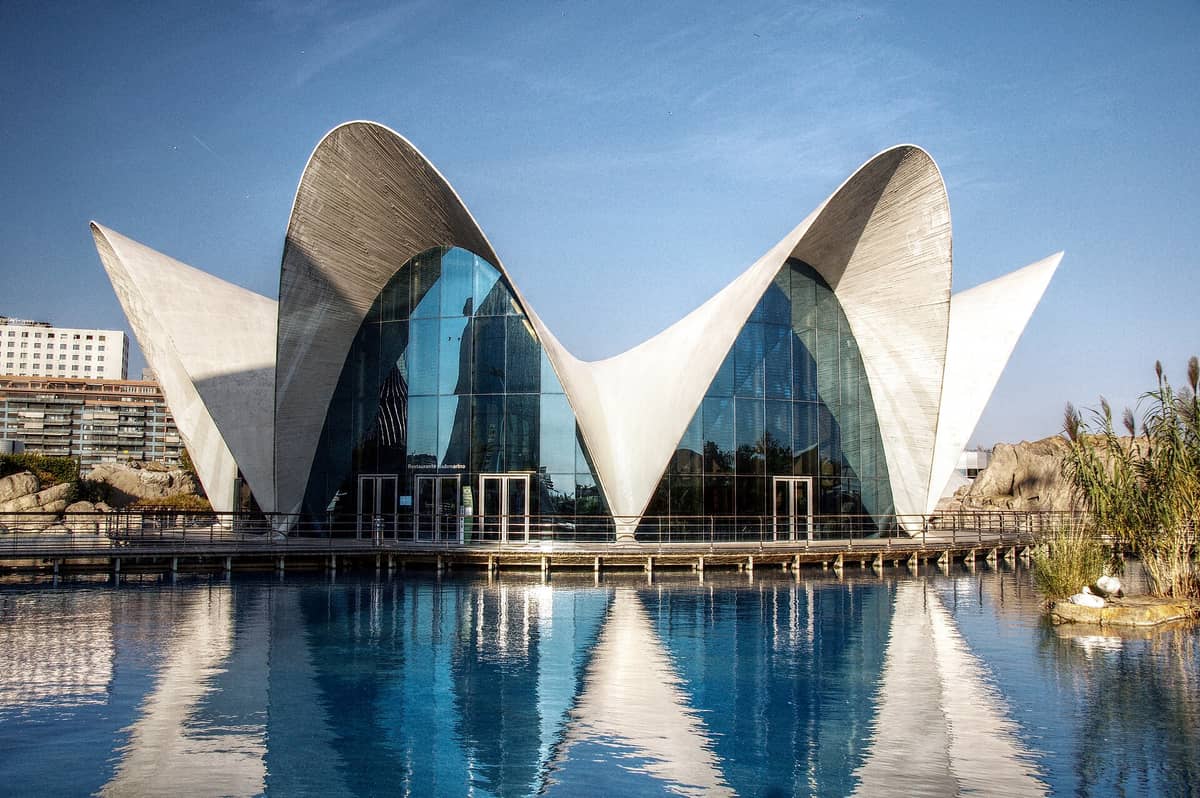
The architecture is part of the experience. Spanish architect Félix Candela, working with Arup engineers, designed the distinctive shell-like canopy structures that define the complex's silhouette. The forms are organic, deliberately echoing water lilies and coral — and they look unlike anything else in Spain. The complex also includes outdoor pools for dolphins and sea lions, a large shark tank visible through floor-to-ceiling glass, and a restaurant built inside a submerged tunnel where you can eat surrounded by fish.
💡 Local tip
Book tickets online in advance through the official site (oceanografic.org). The aquarium operates on a variable schedule that changes by season and date — check the calendar for your specific visit day before you travel, as opening hours are not fixed year-round.
The Marine Habitats: What You'll Actually See
The aquarium is organised thematically around distinct ocean environments, and the quality varies between sections. The Mediterranean pavilion, positioned near the main entrance, focuses on species local to Valencian coastal waters: sea bream, grouper, morays, and the occasional sunfish. It is a quieter starting point and gives context to the broader experience.
The oceanic zones deepen as you move through the complex. The shark tunnel — a glass-enclosed walkway passing beneath a large tank — is consistently the most-photographed area. Hammerheads, sand tigers, and reef sharks circle overhead and on both sides. The effect is genuinely impressive even for adults, and children tend to stop in their tracks. Light refracts off the water above in shifting patterns, and the sound of filtered water creates a low, constant hum that gives the space an almost meditative quality.
The polar zones are the section that most visitors either rush through or find unexpectedly absorbing. Both Arctic and Antarctic ecosystems are represented separately, with beluga whales, walruses, and penguins in purpose-built cold-water environments. The penguin enclosure allows close viewing through large glass panels — you can watch them swimming underwater, which is considerably more interesting than observing them on land.
The jellyfish gallery deserves more attention than it typically gets. Lit from behind against dark backgrounds, the tanks contain dozens of species in slow, pulsing motion. It is one of the more unusual sensory experiences in the complex: the room is dim, the light is cool blue, and the silence feels deliberate.
Tickets & tours
Hand-picked options from our booking partner. Prices are indicative; availability and final rates are confirmed when you complete your booking.
Valencia Silk Museum tickets and audio guide
From 7 €Instant confirmationFree cancellationSaint Nicholas Church Entrance Tickets and Audioguide
From 11 €Instant confirmationHistoric Valencia walking tour
From 27 €Instant confirmationFree cancellationNatural thermal springs and Girlfriend Waterfall tour from Valencia
From 89 €Instant confirmationFree cancellation
How the Experience Changes by Time of Day
Arriving at opening time, typically around 10:00 (confirm on the official calendar), gives you roughly 60 to 90 minutes before school groups and tour buses arrive in volume. The main tunnel and shark tank are far more enjoyable without crowds pressing behind you. Morning light also enters certain pavilions at angles that produce reflections not visible later in the day.
Midday, particularly in summer, is the peak congestion window. The outdoor dolphin and sea lion show areas fill quickly, and the key indoor spaces — the shark tunnel, the tropical reef pavilion — become significantly more crowded. If your visit spans the middle of the day, prioritise the smaller, less-visited areas during that window and return to the main attractions once the afternoon crowd thins out.
Late afternoon visits, starting around 15:00 or 16:00, can be calmer depending on the season. Day visitors with children tend to leave in the late afternoon, and the light in the outdoor areas softens. The lagoons around the dolphin enclosures catch the western sun and the reflections off the white Candela canopies are worth photographing at that hour.
⚠️ What to skip
In July and August, Valencia temperatures can reach 34–36°C. Most of the aquarium's marine pavilions are climate-controlled indoors, making it a useful refuge from the heat — but the outdoor sections (dolphin shows, sea lion pools) involve prolonged sun exposure. Bring water and sun protection, especially if visiting with children.
Shows, Feeding Times, and Scheduled Events
L'Oceanogràfic runs dolphin and sea lion presentations in its outdoor theatre. These are managed animal demonstrations rather than circus-style performances, framed around educational narration about behaviour and conservation. They draw large crowds, particularly on weekends, so arriving 20 minutes early to secure a good sightline makes a practical difference.
The aquarium also offers special experiences at an additional cost: these have included night visits, shark diving for certified divers, and supervised encounters with specific animals. Availability is seasonal and must be booked directly through the official site. These are niche offerings — genuinely interesting for the right traveller but not necessary for a standard visit.
Getting There and Moving Around the Complex
L'Oceanogràfic is at the southern end of the Ciudad de las Artes y las Ciencias, positioned furthest from the city centre. If you're walking from the historic district, it is a substantial walk of 4 to 5 kilometres — pleasant through the Jardí del Túria park but not practical in summer heat. The most convenient public transport option is the city bus network; several lines connect the complex to central Valencia. From the Alameda or Marítim-Serreria metro stations (Line 5), you're looking at a 15 to 20 minute walk through the complex itself.
Cycling is a practical option year-round. Valencia's network of dedicated cycle lanes extends into this area, and the Turia Gardens cycling route connects much of the city to the arts and sciences complex via flat, car-free paths. Valenbisi, the city's public bike-share scheme, has docking stations near the complex.
Inside the complex, movement between pavilions is on foot across open plazas and covered walkways. The grounds are flat and the pathways are wide and paved — suitable for wheelchairs and pushchairs throughout. The scale of the site means comfortable footwear is important: a full visit can cover several kilometres of walking.
ℹ️ Good to know
The Ciudad de las Artes y las Ciencias complex also contains the Hemisfèric IMAX cinema and the Museu de les Ciències Príncep Felip science museum. A combined ticket covering multiple attractions can offer better value than individual admissions — check the official site for current bundled options.
Photography, Practicalities, and What to Bring
Photography is generally permitted without flash throughout the aquarium, and the lighting in the main tanks is calibrated well enough that a smartphone with a competent low-light mode produces usable images. The shark tunnel and the jellyfish gallery are the most rewarding for photography. In the jellyfish room, turn off your screen brightness and let your eyes adjust — the ambient blue light is enough to shoot by, and the images improve significantly without your own screen competing with the background illumination.
For practical items: the on-site restaurant (the underwater dining experience) requires advance reservation and comes at a premium price. A separate café offers standard snack and meal options at ordinary tourist-attraction pricing. You can exit and re-enter with your ticket if you want to eat at one of the many restaurants on Avenida del Professor López Piñero nearby, though confirm current re-entry policy at the door when you arrive.
The aquarium has a gift shop near the exit — oriented toward families with children, as expected. If you're planning a broader visit to Valencia's waterfront and arts district, allow a separate half-day for the Hemisfèric and the Museu de les Ciències Príncep Felip. Trying to do all three in a single day is feasible but results in rushed visits to each.
Who Might Want to Skip It
L'Oceanogràfic is one of the more expensive single attractions in Valencia, and travellers on tight budgets should weigh it carefully against the city's substantial range of free or low-cost options. It is also not a quick visit — if you're spending only a day or two in Valencia and the city's architecture, food, and historic centre are your priorities, the aquarium may not be the best use of your time.
Visitors with strong ethical concerns about large cetaceans and marine mammals in captivity will find the dolphin and beluga exhibits uncomfortable. The aquarium presents its work through a conservation and research framing, but the facilities are what they are. For those interested in Valencia's natural coastal environment without the aquarium context, the Albufera Natural Park offers a very different kind of encounter with the region's ecosystems.
Insider Tips
- The shark tunnel is at its best in the first 45 minutes after opening, before the light reflections from crowds' camera flashes start competing with the tank lighting. Position yourself mid-tunnel and look up — the overhead view is more dramatic than the sides.
- The aquarium's variable schedule means some holiday periods see earlier closures than expected. Check the official calendar for your exact date, not just a general 'opening hours' reference — the times shift significantly between low and high season.
- If you have children under 10, prioritise the dolphin show early and work backwards through the pavilions. By mid-afternoon, children tend to be fatigued and the outdoor show areas are at peak heat and crowd density.
- The underwater restaurant (inside a tank tunnel) needs to be reserved well in advance during summer and on weekends. It is more of a novelty than a culinary destination, but the experience is genuinely unusual and the setting is hard to replicate anywhere else in Spain.
- Skip the main entrance gift shop on your way in — it slows down groups entering and creates a bottleneck. There is a secondary retail area near the polar zone exit that tends to be quieter and carries much of the same stock.
Who Is L'Oceanogràfic For?
- Families with children aged 4 to 14, for whom the shark tunnel, penguins, and dolphin presentations are reliable highlights
- Visitors seeking a half-day activity sheltered from Valencia's summer heat, given that most pavilions are fully climate-controlled indoors
- Marine biology or natural history enthusiasts who want to observe polar and deep-sea species not commonly seen in European aquariums
- Travellers combining the visit with the wider Ciudad de las Artes y las Ciencias complex for a full-day cultural and scientific itinerary
- Photography-focused visitors interested in unusual low-light conditions, architectural exteriors, and marine animal movement
Nearby Attractions
Other things to see while in Ciudad de las Artes y las Ciencias:
- CaixaForum València
Opened in June 2022 inside Santiago Calatrava's landmark L'Àgora building, CaixaForum València is the cultural arm of the 'la Caixa' Foundation in the City of Arts and Sciences complex. It hosts rotating international exhibitions across art, science, and society, with accessible pricing and a location that rewards a longer visit to the surrounding complex.
- Hemisfèric
The Hemisfèric is the signature building of Santiago Calatrava's City of Arts and Sciences complex, housing one of Europe's most impressive IMAX cinemas and a full digital planetarium. With a concave screen of roughly 900 m² and seating for 306, it delivers a genuinely overwhelming visual experience. This guide covers what to expect inside, the best time to visit, and how to fit it into a day at the complex.
- L'Umbracle
Part elevated promenade, part open-air sculpture gallery, and part gateway to one of Valencia's most famous nightlife venues, L'Umbracle is a free attraction within the City of Arts and Sciences complex that rewards visitors at almost any hour. By day, it offers shade, contemporary art, and sweeping views of Santiago Calatrava's architectural ensemble. By night, it transforms into something else entirely.
- Museu de les Ciències Príncep Felip
The Museu de les Ciències Príncep Felip is one of Valencia's most architecturally striking attractions, housed inside Santiago Calatrava's soaring skeleton-like structure at the Ciudad de las Artes y las Ciencias. It combines hands-on science exhibits with one of the most photogenic interiors in Spain. Here is what the experience is actually like, and whether it belongs on your itinerary.