Little Canada Toronto: The Miniature Nation Worth Exploring
Little Canada compresses the entire country into a 45,000-square-foot indoor attraction in the heart of downtown Toronto. Intricate scale models of Canadian cities, landscapes, and landmarks fill multiple themed regions, making it a genuinely engaging stop for curious travelers and families alike.
Quick Facts
- Location
- 10 Dundas St. East, Level B1, Toronto, ON M5B 2G9 — opposite Yonge-Dundas/Sankofa Square
- Getting There
- Dundas Station (TTC Line 1) or Queen Station — each about a 2–6 minute walk on foot
- Time Needed
- 1.5 to 2.5 hours for most visitors
- Cost
- Adult admission from CAD $31–$36 depending on channel and date; verify current pricing at little-canada.ca
- Best for
- Families with children, Canada first-timers, scale-model enthusiasts, rainy-day escapes
- Official website
- little-canada.ca
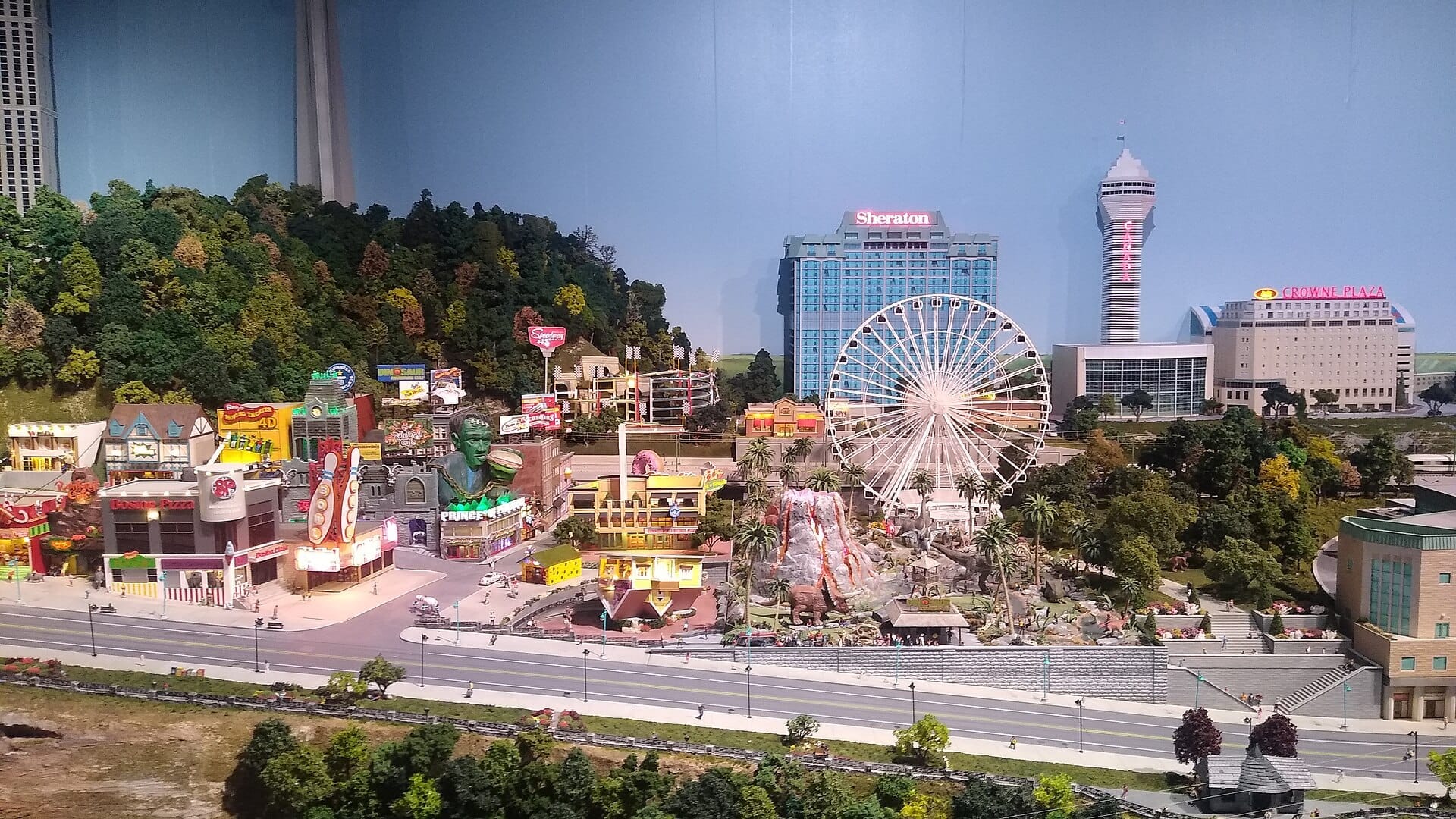
What Is Little Canada, Exactly?
Little Canada is a large-scale miniature attraction that opened in 2021, occupying 45,000 square feet across two underground levels at 10 Dundas Street East in downtown Toronto. The concept is straightforward: the entire country of Canada, reduced to intricate 1:87 scale models and spread across themed regional zones. You move from Quebec City's old town to the Canadian Rockies, from the streets of Toronto to the tides of the Bay of Fundy, all without leaving the building.
The scale of ambition is what separates this from a typical tourist trinket shop with a diorama in the corner. The CN Tower model inside stands 12 feet tall. The Bay of Fundy basin holds 400 litres of water, with tidal movements built into the display. Tens of thousands of individual model components, animated figures, working vehicles, and synchronized light cycles fill the floor space. This is not a quick walk-through.
ℹ️ Good to know
Little Canada is open daily 10:00 AM–6:00 PM (with slightly extended hours on some Saturdays), including most statutory holidays. It is closed on Christmas Day. Hours are subject to change, so confirm at little-canada.ca before visiting.
The Experience: What You Actually See and Feel
The lighting inside is deliberately dim, which focuses your attention on the illuminated models and creates an almost cinematic atmosphere. The overall effect is quieter and more immersive than the noisy, sugar-fueled chaos of many family attractions. Sound design plays a role too: ambient audio from each regional zone, whether it is the hum of urban Toronto or the sound of water near the Fundy display, keeps each section distinct.
The detail rewards patience. Visitors who stop and look closely find miniature figures in absurd, funny, or hyperlocal situations: a hockey game mid-brawl, a Tim Hortons lineup, a wedding party on a Quebec street. These Easter eggs are clearly aimed at Canadians who will recognize the references, but international visitors tend to enjoy the visual humor without needing the context.
The Toronto zone, naturally, gets prominent treatment. The model replicates landmarks including Yonge-Dundas Square (somewhat surreal, given you're standing a few feet above the real thing), the waterfront, and a 12-foot CN Tower that serves as the visual anchor of the entire space. For visitors arriving via the real Yonge-Dundas Square, there is an odd, satisfying recursion to looking at its miniature version from inside the building next door.
Tickets & tours
Live prices and dates from our booking partner. If you book, we may earn a commission at no extra cost to you.
Best Time to Visit and Crowd Patterns
Little Canada draws its heaviest crowds on weekend mornings and during Toronto's school holiday periods, particularly the March break and summer school holidays from late June through August. Weekday afternoons in the shoulder seasons — September through November and February through April — offer the most comfortable experience, with enough space to linger at each display without being crowded out.
Because the attraction is entirely indoors and climate-controlled, weather has no effect on the quality of the visit. This makes it a genuinely useful option on rainy Toronto days, when outdoor alternatives become less appealing. On those days, expect higher-than-average crowds, particularly from families who would otherwise have gone to parks or the waterfront.
💡 Local tip
Arriving at opening time (10:00 AM on a weekday) gives you the best chance of moving through the displays at your own pace before tour groups and families with young children arrive mid-morning.
Getting There and Practical Navigation
The location is about as central as it gets in Toronto. Little Canada sits directly opposite Yonge-Dundas (now Sankofa) Square, one of the city's busiest pedestrian intersections, and is steps from the Toronto Eaton Centre. Dundas subway station on TTC Line 1 is the closest stop, with the entrance less than a 2-minute walk away. Queen Station, one stop south, is also an easy walk of around 5–6 minutes.
The attraction is on Level B1 of its building, which is not immediately obvious from the street. The accessible entrance for visitors with reduced mobility is Entrance E; take the public elevator to B1 and use the call button at the entrance for staff assistance. For visitors exploring the broader downtown Toronto area on foot, Little Canada pairs logically with Yonge-Dundas Square and the Eaton Centre, both within 2 minutes on foot.
Historical Context and What It Says About Canada
Little Canada opened in 2021, making it one of the city's newest major attractions. It was developed during a period when large-scale miniature worlds — inspired by successful European counterparts like Miniatur Wunderland in Hamburg — were gaining traction as a distinct entertainment category. The ambition was explicitly national rather than local: to give visitors, particularly those on a single Toronto visit, a compressed but detailed impression of a country spanning nearly 10 million square kilometers.
For international visitors who will not see the Rockies, Quebec's old town, or the Maritimes on this trip, Little Canada functions as something between an introduction and an argument for returning to Canada. For Canadians from other provinces, it serves as a kind of affectionate national mirror. Either way, it fits naturally into the broader fabric of Yonge-Dundas Square's surrounding area, which concentrates some of Toronto's most visited institutions within a few blocks.
Photography Tips and Practical Notes
The low, dramatic lighting inside Little Canada produces excellent photography conditions if you know how to work with it. Smartphone cameras with a good night mode or manual ISO control handle the environment well. The challenge is depth of field: at close range, it is difficult to get an entire display in focus simultaneously, so selective focus shots that isolate a single miniature figure or vehicle against a blurred cityscape tend to produce the most striking results.
Most displays allow you to get close enough to shoot at eye level with the models, which produces the most convincing illusion of scale. Avoid using flash, which flattens the lighting and destroys the atmosphere the designers have worked hard to create. Tripods are impractical in the crowds and corridors, but image stabilization on modern phones compensates adequately.
💡 Local tip
Look for the day-to-night light cycle transitions built into several displays. Timing your shot during the 'night' phase produces dramatically different images from the daytime version of the same scene.
Who Will Enjoy This, and Who Might Not
Families with children between roughly ages 5 and 14 are the attraction's clearest audience. The animated elements, Easter egg figures, and kinetic displays hold children's attention well. Parents who are willing to slow down and look closely tend to find more to engage with than those rushing a bored child through.
Architecture and design enthusiasts get real value from examining the modelling techniques and the level of urban detail in the city zones. Visitors who care about Canadian geography, culture, or history will find the regional framing genuinely informative. If you want an overview of what Canada looks like before traveling further, or after, this delivers more context than most airport gift shops. For travelers planning wider Canadian trips, Little Canada pairs well with a broader Toronto itinerary that includes natural and cultural landmarks across the city.
That said, this attraction will not suit everyone. Visitors primarily interested in genuine Canadian culture, street-level neighborhood exploration, or outdoor experiences will find Little Canada too controlled and too indoor-focused. Travelers with limited time who are already planning to visit the CN Tower, the Royal Ontario Museum, or the Art Gallery of Ontario may find that Little Canada competes with, rather than complements, those deeper single-subject experiences. And if you are Canadian and have already seen most of the regions depicted, the novelty factor drops considerably.
The admission price, ranging from approximately CAD $31 to $36 for adults, is worth weighing against alternatives. Toronto has a strong lineup of free and low-cost attractions that deliver different but comparably rich experiences. Little Canada earns its price for the right visitor; for others, the value calculation is less clear.
Insider Tips
- Book tickets online in advance rather than at the door. The price is sometimes lower through the official site, and you avoid the queue that builds at the box office on busy weekend mornings.
- The Toronto region is the most densely detailed zone in the entire attraction. Budget extra time here and move slowly — the number of recognizable local landmarks packed into the model repays careful attention.
- Look down, not just forward. Several displays include underground and underwater cross-sections visible through transparent floor panels or lower viewing windows that many visitors miss entirely.
- The Bay of Fundy tidal display operates on a timed cycle. Ask staff when the next tidal demonstration is running if you want to see it at full effect rather than mid-cycle.
- If you are visiting with a mix of adults and children, split up at the entrance and let the children move at their pace. The route is largely linear but wide enough to allow slower observers to hang back without blocking traffic.
Who Is Little Canada For?
- Families with children aged 5–14 who want an interactive, indoor experience
- International visitors wanting a geographic overview of Canada before or after broader travel
- Architecture and scale-model enthusiasts with patience for detail
- Travelers seeking a full half-day activity on a rainy Toronto day
- Couples and groups looking for a low-intensity, visually rich experience away from the typical museum format
Nearby Attractions
Other things to see while in Downtown Toronto:
- Allan Gardens Conservatory
Allan Gardens Conservatory is a free, year-round botanical conservatory at 160 Gerrard Street East in downtown Toronto. Housed in six glass display houses anchored by a 1910 Edwardian Palm House, it holds about 1,500 m² of tropical palms, cacti, orchids, and seasonal blooms. One of the oldest parks in Toronto, it remains one of the city's most underrated green spaces.
- Art Gallery of Ontario
The Art Gallery of Ontario is one of North America's largest art museums, housing over 90,000 works inside a landmark Frank Gehry-renovated building in downtown Toronto. From Indigenous Canadian art to European masters and contemporary photography, the AGO rewards focused visitors and casual explorers alike.
- Brookfield Place (Allen Lambert Galleria)
The Allen Lambert Galleria inside Brookfield Place is a free, publicly accessible arcade designed by architect Santiago Calatrava between 1987 and 1992. Its arching steel-and-glass canopy, rising between two of downtown Toronto's tallest towers, is one of the most impressive interior spaces in Canada.
- Campbell House Museum
Built in 1822 for Upper Canada's Chief Justice, Campbell House Museum is the oldest surviving residence from the original Town of York. Moved to its current downtown corner in 1972 and opened as a museum in 1974, it offers an intimate, unhurried window into early colonial Toronto — a sharp contrast to the glass towers surrounding it.
Planning a trip? Discover personalized activities with the Nomado app.