La Californie District: Cannes' Hill of Billionaires
Perched on the eastern hillside above Cannes, La Californie is a residential quarter of grand Belle Époque villas, mature gardens, and sweeping views over the Bay of Cannes. It rewards slow walking and curiosity, though it has no ticketed sights. This guide explains what the neighbourhood actually offers a visitor.
Quick Facts
- Location
- Eastern Cannes hillside, above Pointe Croisette, Alpes-Maritimes, France
- Getting There
- Palmbus local routes from central Cannes; the district is a short drive or uphill walk from La Croisette
- Time Needed
- 1–2 hours for a leisurely walk; longer if combining with Palm Beach or Pointe Croisette
- Cost
- Free to walk through as a public residential neighbourhood
- Best for
- Architecture enthusiasts, slow-travel walkers, photography, and anyone curious about Cannes beyond the seafront
What La Californie Actually Is
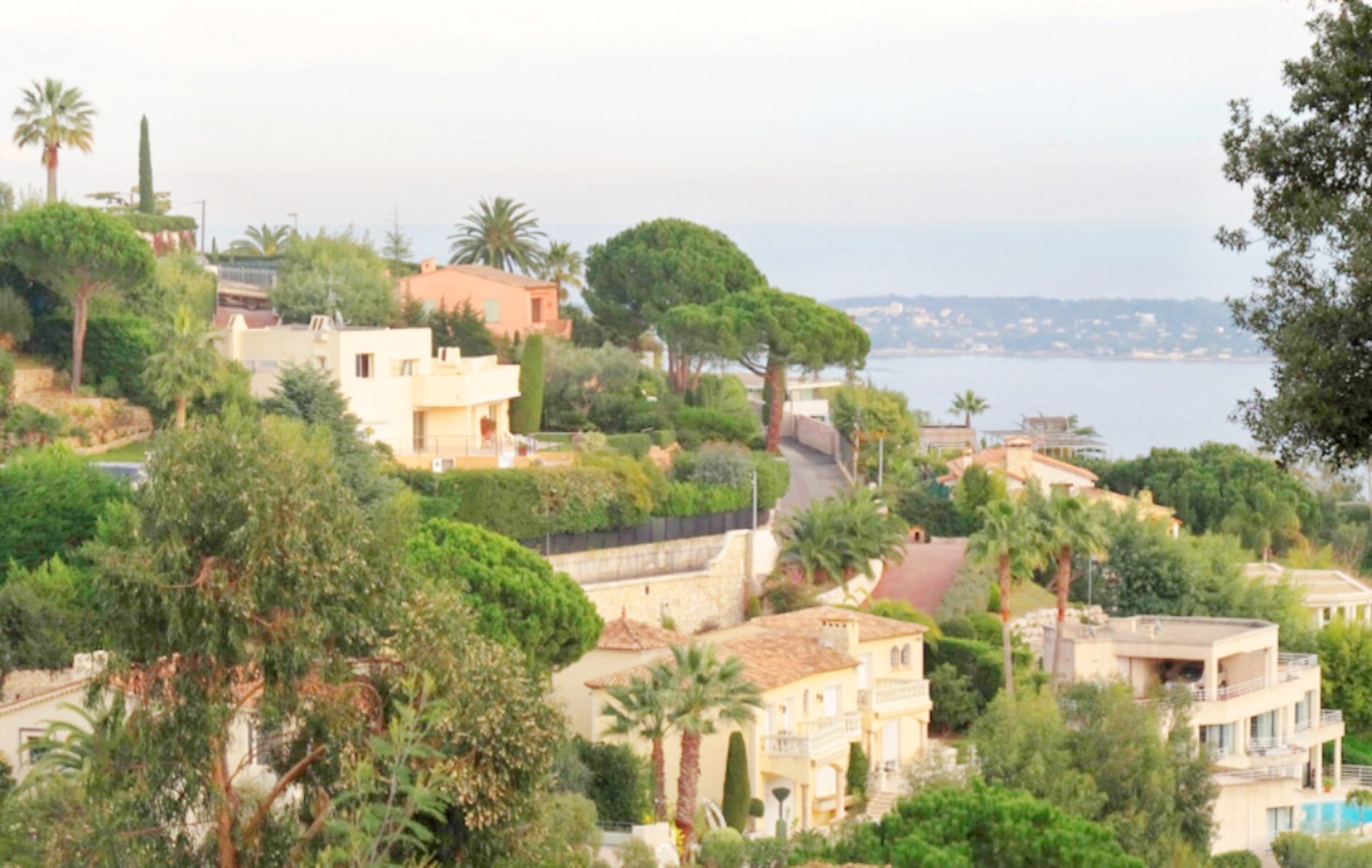
La Californie is not a park, a museum, or a managed attraction. It is a living residential neighbourhood on the eastern hills of Cannes, known formally as the Quartier de la Californie and informally as the 'hill of billionaires.' The streets are public, the villas are private, and the experience is entirely self-directed. Understanding this from the outset saves confusion: you are visiting a neighbourhood, not a site.
What makes it worth the detour is the concentration of architectural heritage compressed into a short walk. The hillside is lined with late 19th and early 20th century aristocratic villas, most of them set behind iron gates, stone walls, and tall maritime pines. Their turrets, terracotta rooflines, and wrought-iron balconies are visible from the pavement and tell a precise story about the ambitions of those who came to Cannes before the Croisette hotels existed.
ℹ️ Good to know
La Californie has no ticketed entry, no visitor centre, and no fixed opening hours. It is simply a neighbourhood. All the noteworthy villas are privately owned and not open to the public.
History: Why This Hill Attracted Royalty and Russian Aristocrats
The district's character was shaped in the second half of the 19th century, when European aristocrats began wintering on the Côte d'Azur and sought elevated plots with sea views away from the modest fishing port below. The district's development in the late 19th century established the neighbourhood's name and its social reputation. Within a few decades, the hillside hosted villas and small castle-like residences belonging to crowned heads and nobility from across Europe.
Among the district's most distinctive subcultures was a significant Russian aristocratic community, earning La Californie the nickname 'hill of billionaires.' Russian noble families who wintered or settled here in the 19th century left a visible imprint: villas in styles reflecting Eastern European tastes and, most concretely, historic villas and residences reflecting a range of European architectural styles.
By the early 20th century, La Californie had established itself as the address of choice for those who wanted proximity to Cannes society without the noise of the port and the growing commercial seafront. That dynamic has largely held. The neighbourhood today is among the most sought-after residential addresses on the French Riviera, with property values reflecting its status.
Tickets & tours
Hand-picked options from our booking partner. Prices are indicative; availability and final rates are confirmed when you complete your booking.
Cannes, Antibes and St Paul de Vence half-day private tour
From 60 €Instant confirmationFree cancellationBoat & snorkeling trip to the Esterel Calanques from Cannes
From 75 €Instant confirmationFree cancellationCannes, Antibes and Saint Paul de Vence shared tour from Nice
From 65 €Instant confirmationFree cancellationCannes food tour with full meal
From 105 €Instant confirmationFree cancellation
What You See Walking Through
The streets of La Californie are lined with mature trees, the scent of pine and jasmine shifting depending on the season and the hour. In the morning, before the Côte d'Azur heat sets in, the neighbourhood is quiet in a way that La Croisette never is. Birdsong replaces engine noise. The light through the canopy is filtered and cool.
The villas themselves are the primary visual reward. Styles range from neo-Gothic turrets and Italianate arcades to Art Deco geometry and Moorish-influenced detailing. Many properties are set far enough back that only their upper floors and rooflines are visible, which gives the walk a slightly theatrical quality: glimpses rather than full reveals. Photography here is rewarding precisely because of this partial visibility. A telephoto lens or a camera with good optical reach captures architectural details that the eye alone might miss from the pavement.
The Orthodox church, with its distinctive domes, is worth locating specifically. It stands as a direct architectural remnant of the 19th-century Russian community and offers a contrast that reads as genuinely unusual in a French Riviera streetscape. It is not a tourist attraction in the formal sense, but it is the kind of detail that rewards walkers who go beyond the obvious.
💡 Local tip
Walk in the morning between 8am and 10am. The light is best for photography, the streets are empty, and the temperature is comfortable even in July and August.
The Views Over the Bay of Cannes
La Californie sits on elevated terrain above the eastern end of La Croisette and Pointe Croisette. From the higher streets, the view extends across the entire arc of the Bay of Cannes, from the heights of Le Suquet to the west to the open Mediterranean to the south. On clear days, the Îles de Lérins sit low on the horizon: Sainte-Marguerite and Saint-Honorat recognisable as dark, tree-covered shapes just a few kilometres offshore.
These views are not obtained from a single panoramic platform. They appear intermittently as you move between streets, through gaps in the vegetation, from the upper floors of roads where the terrain drops steeply. This is part of what makes the walk exploratory: the view earns itself gradually rather than being handed to you at a designated lookout point.
Evening visits offer a different quality. As the light softens in the hour before sunset, the bay takes on a particular quality of light specific to the Riviera. The hillside streets are quieter than they were at midday, and the residences behind their gates have a more secluded, almost theatrical stillness. This is not a walk with evening cafés or lit terraces to retreat to, so plan accordingly.
How to Get There and How to Walk It
La Californie occupies the hillside east of central Cannes, bordered roughly by Pointe Croisette to the south and the boundary with Le Cannet to the north. From Boulevard de la Croisette, it is a short but steep walk uphill. The approach via Avenue du Maréchal Juin or Avenue de Vallauris takes most walkers into the residential lanes within ten to fifteen minutes.
Palmbus local routes connect central Cannes with the eastern hillside. Check current route maps and schedules at palmbus.fr before you go, as line numbers and service frequencies change. By car or taxi, the district is a few minutes from the seafront, though parking on the narrow villa streets requires patience.
There is no prescribed walking route. The neighbourhood rewards improvisation: following whichever uphill lane looks promising tends to produce better architectural encounters than a planned itinerary. Allow at least 90 minutes if you want to cover the upper reaches of the hill where the views are widest and the villas oldest.
⚠️ What to skip
La Californie is hilly terrain on uneven or narrow pavements. Visitors with limited mobility should note that the district is not flat and specific step-free infrastructure is not confirmed across all streets. Comfortable, flat-soled shoes are strongly recommended for everyone.
Who This Is For and Who Should Skip It
La Californie rewards a specific kind of traveller: one who finds satisfaction in architectural observation, finds pleasure in a quiet hillside walk, and does not need a payoff beyond the walk itself. If you are visiting Cannes for the beach, the Palais des Festivals, or the Film Festival atmosphere, La Californie is unlikely to be a priority and there is no reason to feel you have missed something essential.
Visitors who expect to enter villas, visit interiors, or access a viewpoint terrace will be disappointed. The gates are closed, the driveways are private, and the neighbourhood is exactly what it appears: an exclusive residential area where the public is welcome to walk the streets but not to intrude further. If this level of access sounds unsatisfying, the time is better spent elsewhere.
That said, for travellers on a self-guided Cannes walking tour or those spending more than two days in the city, La Californie provides a clear contrast to the seafront spectacle. It is the part of Cannes that existed before the film festival, before the luxury hotels, and before the Croisette became what it is today.
Combining La Californie with Nearby Areas
The natural pairing is a walk that descends from La Californie toward Pointe Croisette and continues along the eastern end of the Croisette toward Palm Beach. This creates a half-day loop that contrasts the quiet hillside with the open seafront without requiring transport between the two.
Alternatively, pair the neighbourhood walk with a morning visit to Marché Forville before the heat builds, then take a taxi or bus up to La Californie for late morning when the streets are quiet and the light is still good. Finish at a café on La Croisette for lunch.
Insider Tips
- The Orthodox church with its onion-shaped domes is a navigational landmark as well as an architectural curiosity. Find it on a map before you go and use it to orient yourself in the upper part of the neighbourhood.
- Mornings in July and August are not just cooler, they are meaningfully quieter. By 11am, even this residential neighbourhood has delivery vehicles and residents on the move. Before 9am, you may have entire lanes to yourself.
- Bring water. There are no cafés, kiosks, or refreshment points within La Californie itself. The hillside walk is short but the uphill stretches are demanding in summer heat.
- For the widest sea views, work your way to the upper streets rather than staying on the lower lanes nearest La Croisette. The panorama across the full arc of the bay is only visible from the higher elevation.
- The neighbourhood is at its most photogenic in late spring and early autumn when the vegetation is full but the harsh summer midday light has not yet bleached the colour from the stone facades. The golden hour before sunset in September produces particularly rich tones on the older villas.
Who Is La Californie District For?
- Architecture and design enthusiasts interested in Belle Époque and late 19th-century villa styles
- Photographers looking for textured, less-photographed Cannes streetscapes
- History-minded travellers curious about the pre-cinema Riviera aristocratic era
- Slow walkers who prefer residential quiet over tourist-area density
- Return visitors to Cannes who have already covered the main seafront attractions