Koh Lanta Old Town: The Island's Forgotten Waterfront
Lanta Old Town, also known as Ban Si Raya, is a remarkably well-preserved historic settlement on the east coast of Koh Lanta Yai. Wooden stilt houses dating back roughly a century line a calm shoreline, giving visitors a rare look at the island's trading past before the beach resorts arrived.
Quick Facts
- Location
- Sri Raya Road, east coast of Koh Lanta Yai, Krabi Province
- Getting There
- Scooter or taxi from Ban Sala Dan pier or the west-coast beaches; no public bus service
- Time Needed
- 1 to 2 hours for a relaxed walk; longer if you stop for coffee or lunch
- Cost
- Free entry; the neighborhood is public and open year-round
- Best for
- Architecture lovers, photographers, slow travelers, and anyone wanting a break from beach crowds
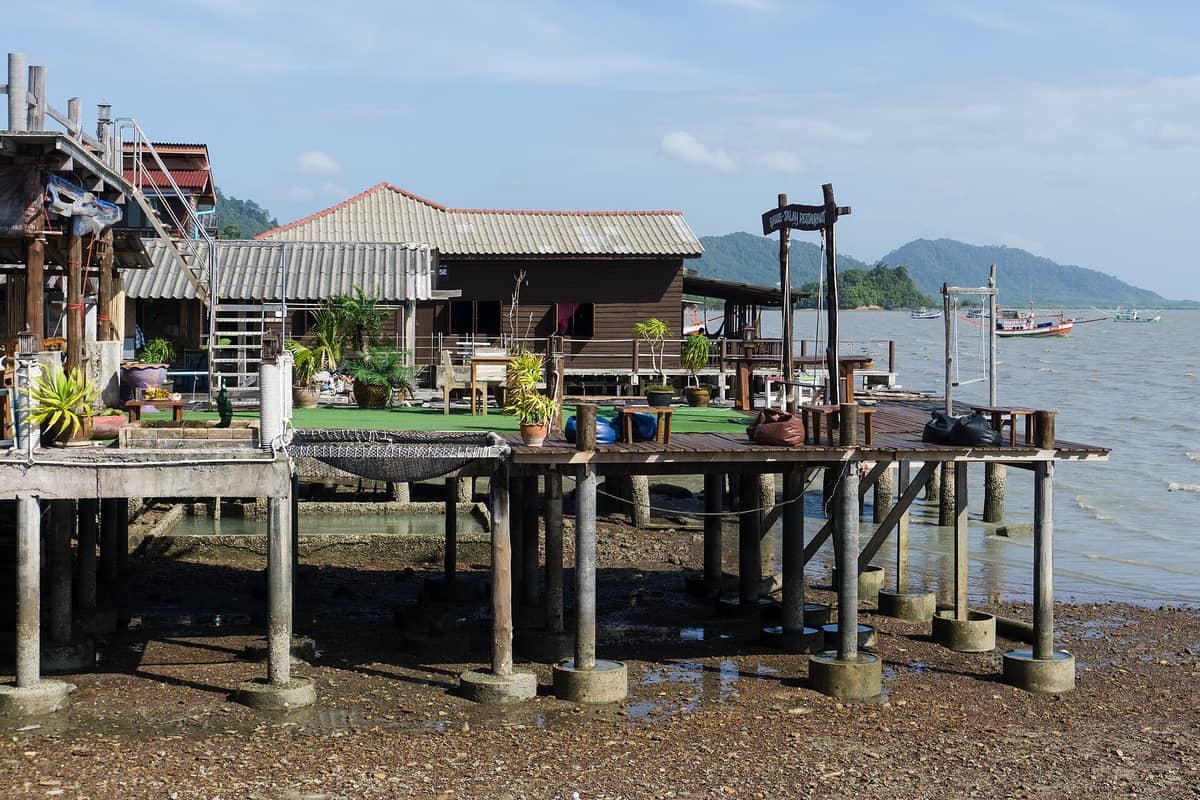
What Lanta Old Town Actually Is
Lanta Old Town, locally called Ban Si Raya, is the original settlement of Koh Lanta Yai and for much of the island's history it was the commercial and administrative heart of the island. Positioned on the sheltered east coast facing the mainland, it served as a natural harbor where traders, fishermen, and early settlers established a working port community. The result is a compact stretch of wooden shophouses and stilt dwellings that extend out over the water on hand-hewn timber posts, some of the structures estimated to be around a hundred years old.
This is not a reconstructed heritage village or a curated museum district. It is a real neighborhood where people live, run small businesses, and go about daily life. That ordinariness is precisely what makes it worth visiting. The peeling paint, the sagging floorboards, the cats sleeping on railings, the smell of salt and wood: none of it is staged.
ℹ️ Good to know
Entry is free and the area is technically accessible at any hour, but most small shops, cafes, and galleries keep their own hours. Arrive between mid-morning and late afternoon for the best chance of finding places open, especially outside the November to April high season.
The Architecture and the Stilt Houses
The most arresting feature of Lanta Old Town is the row of wooden stilt houses that line the waterfront. Built on piles driven into the tidal mud of the east coast, they extend directly over the water, and at high tide the sea laps underneath the floorboards. The construction style reflects the influences of Chinese traders, Malay settlers, and Thai fishing communities that all had a presence here, visible in the wide covered verandas, the narrow shophouse frontages, and the decorative timber fretwork on some of the older facades.
Walking the main street, you pass buildings in every state of preservation: some freshly painted and converted into guesthouses or coffee shops, others slowly returning to the earth with vines climbing the window frames. The contrast is part of the texture of the place. It is not a pristine open-air museum, and it should not be treated as one.
Photographers will find the best compositions in the early morning, when the light comes in low and sideways from the east, hitting the weathered timber facades directly. The Koh Lanta Lighthouse on the island's southern tip is another rewarding stop for anyone drawn to atmospheric, historical corners of Koh Lanta.
Tickets & tours
Live prices and dates from our booking partner. If you book, we may earn a commission at no extra cost to you.
Full-day Koh Rok and Koh Haa from Koh Lanta
From 47 €Instant confirmationFree cancellationKoh Kradan and Four Islands Boat Tour from Koh Lanta Yai
From 52 €Instant confirmationFree cancellationMuay Thai introductory group class for beginners in Koh Lanta
From 14 €Instant confirmationFree cancellationMuay Thai introductory private class for beginners in Koh Lanta
From 45 €Instant confirmationFree cancellation
How the Experience Changes Through the Day
Early morning, before 8 am, the old town is at its quietest and most photogenic. Local residents are out: older residents sweeping doorsteps, vendors setting up small food stalls, fishing boats returning across the flat water of the east coast channel. The air carries a mix of low tide mud and frangipani, and there is almost no traffic on Sri Raya Road. If you are staying on Koh Lanta, this is genuinely the best time to come, but it requires either staying somewhere close or making an early start from the west coast.
Mid-morning to midday is when the cafes and small galleries open and the flow of visitors picks up. For most of the year this crowd is modest, nowhere close to the numbers you would find at the main beaches. By early afternoon, especially in the hot season between March and May, the heat on the road becomes significant and the covered waterfront walkways and shaded cafe interiors become more appealing than any outdoor exploration. The town quiets again considerably as the sun drops and most visitors have moved on.
💡 Local tip
The walkway that extends over the water behind some of the shophouses gives you an entirely different perspective on the stilt construction. Look for access points between the buildings rather than sticking only to the main road.
Cultural and Historical Context
Koh Lanta has a diverse heritage shaped by Chinese traders, sea gypsies (Chao Ley), and Malay-speaking Muslims, and Ban Si Raya reflects that layered history more clearly than any other part of the island. The Koh Lanta Sea Gypsy Village at the southern end of the island is closely connected to this same heritage, and the two sites complement each other as a half-day itinerary exploring the island's older communities.
The old town's commercial importance began to decline once the road network across Koh Lanta improved and tourism shifted to the western beaches. That gradual economic shift is, in a way, what preserved Ban Si Raya. The lack of development pressure meant the old buildings were not demolished for resorts or shopping centers. Some have inevitably fallen into disrepair, but enough remain to give a coherent sense of what the settlement looked like at its peak.
For travelers interested in understanding Koh Lanta beyond its beaches, this stop pairs well with a visit to Mu Ko Lanta National Park, which protects the southern tip of the island and holds its own layers of ecological and maritime history.
Getting There and Practical Walkthrough
The old town sits on the east coast of Koh Lanta Yai, on Sri Raya Road, roughly in the middle section of the island's length. Most visitors staying on the west coast beaches rent a scooter, which takes around 15 to 25 minutes depending on where you are based. Taxis and songthaews are available but less predictable in frequency. There is no scheduled public bus service connecting the old town to other parts of Koh Lanta.
Parking for scooters is easy along the main road. The walkable section of the old town is compact, roughly 400 to 500 meters of the main street plus the waterfront boardwalk sections. Wear shoes with some grip, as the timber walkways can be slippery when damp. The road surface is uneven in places and some of the older wooden structures have raised thresholds and uneven floors, so step carefully.
If you are planning a full day on the east side of the island, it is worth combining the old town with the nearby Koh Klang ferry crossing or incorporating it into a broader Krabi 3-day itinerary if you are island-hopping from the mainland.
⚠️ What to skip
Individual shops and restaurants in the old town may close or reduce hours during low season (roughly May to October). Do not plan a visit around a specific restaurant without checking in advance. Some years, several establishments close entirely for the wet months.
Honest Assessment: Is It Worth Your Time?
Lanta Old Town is a quiet, genuinely interesting place, but it rewards curiosity rather than spectacle. There is nothing here that will fill a full afternoon with structured activity. If you arrive expecting lively street food stalls, a busy waterfront promenade, or a conventional tourist attraction with entry gates and exhibition panels, you will feel underwhelmed. The appeal is slower: noticing the joinery on a hundred-year-old doorframe, finding a good cup of coffee in a converted shophouse, or watching a longtail boat cross the channel in the middle distance.
Travelers who prioritize beaches, nightlife, or high-energy activities will find little reason to cross the island for this. But for anyone spending more than two or three days on Koh Lanta, the old town is one of the most distinctive stops on the island, one that provides context for everything else you see here.
For a broader sense of what the island offers beyond the shore, the Koh Lanta travel guide covers the full range of beaches, nature sites, and practical logistics.
Insider Tips
- The waterfront is at its most photogenic at high tide, when the sea fills the space below the stilt houses. Check a tide table before you go if the visual is important to you.
- A handful of small galleries and craft shops operate out of the restored buildings. These are among the better places to buy something genuinely local rather than mass-produced souvenirs, but stock varies and closures are common in the off-season.
- The covered ground-floor spaces of some shophouses are shaded and naturally ventilated through the gaps in the timber. If the heat builds during your visit, these spots offer real relief without ducking into an air-conditioned cafe.
- Morning light comes from the east, directly facing the waterfront buildings. If you are shooting architecture or want shadow and texture in your photos, arrive before 9 am rather than in the flat light of midday.
- The road through the old town connects to the ferry point for the short crossing to the mainland. If you are leaving Koh Lanta by the eastern ferry route, building the old town into your departure morning adds almost no extra distance.
Who Is Koh Lanta Old Town For?
- Photographers who want architectural texture, weathered timber, and water reflections rather than just beach shots
- History and culture travelers looking for tangible evidence of Koh Lanta's pre-tourism past
- Slow travelers and repeat visitors who have already covered the main beaches and want something different
- Families with older children interested in local history and a walking exploration that does not require physical exertion
- Anyone building a multi-day itinerary who wants to understand the island as a place with its own identity beyond the resorts
Nearby Attractions
Other things to see while in Koh Lanta:
- Kantiang Bay
Kantiang Bay sits near the southern tip of Koh Lanta Yai, backed by forested hills and flanked by limestone headlands. The beach is free, uncrowded compared to Koh Lanta's northern stretches, and rewards visitors who make the effort to get there with a genuinely peaceful atmosphere and clear water.
- Khlong Chak Waterfall
Khlong Chak Waterfall sits deep inside Mu Ko Lanta National Park on Ko Lanta Yai, reached by a trail that weaves through dense jungle and crosses a stream multiple times. It rewards patient hikers with a shaded, 8-metre cascade and a natural pool, well away from the island's beach crowds.
- Klong Dao Beach
Stretching nearly 3 kilometres along Koh Lanta Yai's west coast, Klong Dao Beach is one of the island’s longest and most well-developed beaches. Wide, calm, and easy to reach from Saladan Pier, it offers something that rarer shores often don't: comfort without sacrifice.
- Klong Nin Beach
Klong Nin Beach runs for roughly 2.4 km along the west coast of Koh Lanta Yai, offering calm waters, affordable beachside restaurants, and dramatically low crowds compared to Thailand's more famous shores. It rewards travelers who prioritize atmosphere over facilities.
Planning a trip? Discover personalized activities with the Nomado app.