Koh Lanta Sea Gypsy Village (Ban Sangka-U): What to Know Before You Go
Ban Sangka-U, known locally as the Koh Lanta Sea Gypsy Village, is home to the Chao Leh, one of the island's oldest communities with roots stretching back more than 500 years. This is not a curated attraction but a living village, and understanding that distinction shapes everything about how you visit.
Quick Facts
- Location
- Southeastern Koh Lanta Yai, Krabi Province, Thailand
- Getting There
- Approx. 28–30 km from Saladan pier, roughly 55 min by scooter or hired vehicle; no public transit to the village
- Time Needed
- 1–2 hours, depending on how much you explore and whether you engage with residents
- Cost
- No admission fee reported; donations to community shops or stalls are welcomed
- Best for
- Cultural travelers, slow travelers, and those interested in indigenous maritime communities
What Is the Koh Lanta Sea Gypsy Village?
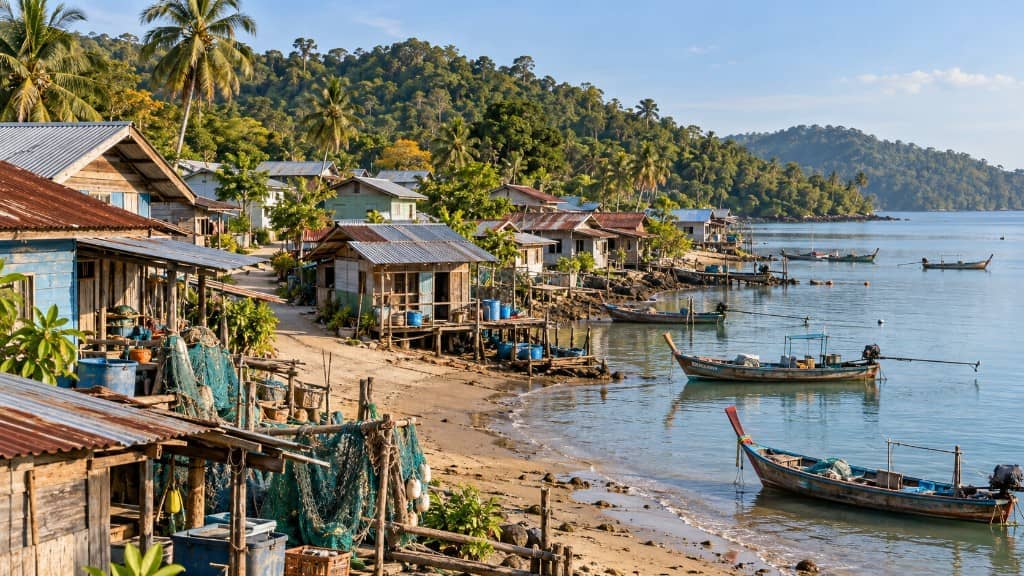
Ban Sangka-U, commonly called the Koh Lanta Sea Gypsy Village, sits at the southeastern end of Koh Lanta Yai. It is home to the Chao Leh, a term that translates roughly as "people of the sea." These communities are found across coastal Thailand, Myanmar, and Malaysia, and the Koh Lanta branch are believed to be among the island's earliest settlers. Travel accounts describe their presence on the island spanning more than 500 years, predating the fishing villages and resort communities that now define most of Koh Lanta's identity.
The village is not a museum, a theme park, or a performance. People live and work here. Fishing nets dry on wooden stilts. Children run between houses built out over the water on narrow piers. Elderly residents sort their catches in the early morning light. The rhythm is unhurried and largely indifferent to tourism, which is part of what makes a visit here so different from the beach-club and boat-trip circuit that defines most of Koh Lanta's tourist economy.
ℹ️ Good to know
Ban Sangka-U is a residential community first. Treat it the way you would any village: walk slowly, ask before photographing people, and spend money with local sellers when the opportunity arises.
Getting Here: The Journey Is Part of It
Reaching Ban Sangka-U requires some effort, and that is, arguably, a feature rather than a drawback. From Saladan, the ferry pier at Koh Lanta's northern tip, the village is approximately 28 to 30 kilometers south, following the island's main road before turning toward the southeastern coast. By scooter, the ride takes roughly 55 minutes. By hired vehicle or songthaew, allow a little longer. There is no regular public transport that connects tourist areas to this part of the island, so plan your transport in advance. Renting a scooter from Saladan or Ban Klong Dao is the most flexible option, though the road quality in the far south warrants caution if you are not a confident rider. For general advice on moving around the island, the Krabi transport guide covers the key options.
The drive through the island's interior passes rubber plantations, small Muslim communities, and stretches of coastline that most visitors never see. By the time you reach the southeastern tip, the landscape has shifted noticeably from the resort-heavy north. The road narrows, the coconut palms crowd the verges, and the sea appears in glimpses through the treeline.
Tickets & tours
Live prices and dates from our booking partner. If you book, we may earn a commission at no extra cost to you.
Full-day Koh Rok and Koh Haa from Koh Lanta
From 47 €Instant confirmationFree cancellationKoh Kradan and Four Islands Boat Tour from Koh Lanta Yai
From 52 €Instant confirmationFree cancellationMuay Thai introductory group class for beginners in Koh Lanta
From 14 €Instant confirmationFree cancellationMuay Thai introductory private class for beginners in Koh Lanta
From 45 €Instant confirmationFree cancellation
What You Will See and Hear
The village is built largely on stilts along the shoreline, a construction style that reflects both the Chao Leh's relationship with the sea and the practical demands of life in a tidal zone. Wooden walkways connect individual homes, and the salt-and-timber smell of the place is distinct: brine, smoke, and the faint sweetness of drying fish. In the early morning, fishing boats come and go, and the sound of outboard motors carries across the water.
Small shops and craft stalls operate within the village, selling hand-made jewelry, woven goods, and items made from shells and sea materials. These are not tourist souvenir shops in the conventional sense, though buying something is a natural and appropriate way to contribute to the community. Prices tend to be modest.
There is a spirit shrine near the waterfront that holds significance for the Chao Leh community. It is visible and approachable, but it is a place of worship, not a photo opportunity. Observe from a respectful distance and follow any signs or instructions from residents.
Time of Day and How It Changes the Visit
Morning is the most rewarding time to visit. Between roughly 7 and 10 in the morning, the village is active: boats return, fish are cleaned and sorted, and the communal life of the place is most visible. The light at this hour is also kinder for photography, casting a warm, low-angle glow across the stilted houses and their reflections in the water.
By midday, the heat in this part of Koh Lanta becomes significant, often exceeding 33 or 34 degrees Celsius, and much of the village quiets down. Shops may close for a few hours. If you arrive in the early afternoon, you may find fewer people around and less activity to observe. Late afternoon brings some relief from the heat, but the light is harsher and the day's fishing activity is largely over.
💡 Local tip
Aim for an 8 to 10 AM arrival. You will see the village at its most active, avoid the worst of the heat, and have softer light for any photography.
Cultural Context: Who the Chao Leh Are
The Chao Leh are an indigenous maritime people whose cultural identity is tied to the sea in ways that go well beyond livelihood. Historically, some groups lived aboard boats for extended periods, moving with fish migrations and seasons. The community at Ban Sangka-U is more settled today, but their animist traditions, oral culture, and relationship with the ocean remain distinct from the Buddhist and Muslim communities that make up most of southern Thailand's population.
Their presence on Koh Lanta predates the island's formal administrative history. Travel descriptions suggest continuous habitation spanning more than 500 years, though this figure comes from community oral history rather than documented records. What is clear is that they were here long before the tourist infrastructure, the ferry piers, and the beach resorts, and that their claim to the island's southern shores is deeper than almost any other group's.
For travelers interested in exploring Koh Lanta beyond its beaches, Ban Sangka-U pairs naturally with a visit to Koh Lanta Old Town, where a different layer of the island's multicultural history, rooted in Chinese and Malay merchant communities, is preserved in shop-house architecture along the western shore.
Visiting Respectfully: Practical Etiquette
The most important thing to understand before visiting Ban Sangka-U is that the villagers have not necessarily opted into being a tourist attraction. Some residents welcome visitors with genuine warmth; others prefer privacy. Reading that dynamic as you walk through the village and responding to it appropriately is the baseline requirement for visiting well.
- Ask before photographing any person, regardless of how good the shot looks.
- Keep your voice down and walk at a pace that reflects you are in someone's neighborhood, not a park.
- Buy from local sellers if you can, even if it means purchasing something small.
- Do not enter homes or restricted areas without an explicit invitation.
- Dress modestly; beachwear is not appropriate here.
Accessibility information is not available for this village. The wooden walkways and uneven ground near the waterfront make it challenging for visitors with limited mobility. There are no confirmed accessible facilities on site.
Weather and When to Go
Koh Lanta's climate follows the southwest monsoon pattern typical of Krabi Province. The driest and most comfortable months for travel are generally December through February. The rainy season runs from roughly May through October, when heavy downpours and rough sea conditions can affect the island significantly. Roads to the southern part of Koh Lanta can be less reliable during monsoon months, and the overall atmosphere in the village changes when persistent rain arrives. For a deeper look at how weather shapes a Koh Lanta visit, the best time to visit Krabi guide provides month-by-month breakdowns.
If you are traveling in the shoulder months of November or March, conditions are generally workable. April can bring increased humidity and the first rains of the season. During the dry season, the road south is fine for scooters and standard vehicles.
Who Should Think Twice
If your primary interest is beach time or boat trips, Ban Sangka-U will not compete with what Koh Lanta's coastline already offers. The village is not visually dramatic in the way that the island's beaches or the limestone formations further north are. There is no organized tour, no English-language guided experience, and no guarantee of a rich interaction with residents. Travelers who want a structured cultural experience with interpretation and context may find the visit underdeveloped.
Travelers uncomfortable with navigating ambiguous or unstructured environments may also find it difficult to know what to do once they arrive. That uncertainty is part of an authentic visit, but it is worth naming honestly. If you are looking for a more structured introduction to Koh Lanta's natural environment, the Mu Ko Lanta National Park at the southern tip of the island offers defined trails and clear visitor infrastructure.
Insider Tips
- Combine the visit with Mu Ko Lanta National Park, which is nearby at the island's southern tip. Both are far from the resort areas and work well as a single southern day trip.
- Bring small bills in Thai baht. Larger notes can be difficult to change at village stalls, and card payment is not available.
- If you see local crafts or jewelry you like, buy them here rather than at souvenir shops elsewhere on the island. The quality is comparable and the money stays within the community.
- The road to the southeastern part of Koh Lanta passes a few small local restaurants with no English menus. Stop at one for lunch and point at whatever looks freshest. The fish here tends to be caught that morning.
- Arrive with a full tank of fuel. Petrol stations thin out considerably past the island's midpoint, and running short in the far south is a genuine inconvenience.
Who Is Koh Lanta Sea Gypsy Village For?
- Cultural travelers who want to understand Koh Lanta beyond its resort identity
- Slow travelers with a full day to dedicate to the southern end of the island
- Photographers interested in documentary or architectural subjects rather than beach scenes
- Travelers with an interest in indigenous communities and maritime heritage
- Anyone who has already done the beaches and wants a genuinely different kind of afternoon
Nearby Attractions
Other things to see while in Koh Lanta:
- Kantiang Bay
Kantiang Bay sits near the southern tip of Koh Lanta Yai, backed by forested hills and flanked by limestone headlands. The beach is free, uncrowded compared to Koh Lanta's northern stretches, and rewards visitors who make the effort to get there with a genuinely peaceful atmosphere and clear water.
- Khlong Chak Waterfall
Khlong Chak Waterfall sits deep inside Mu Ko Lanta National Park on Ko Lanta Yai, reached by a trail that weaves through dense jungle and crosses a stream multiple times. It rewards patient hikers with a shaded, 8-metre cascade and a natural pool, well away from the island's beach crowds.
- Klong Dao Beach
Stretching nearly 3 kilometres along Koh Lanta Yai's west coast, Klong Dao Beach is one of the island’s longest and most well-developed beaches. Wide, calm, and easy to reach from Saladan Pier, it offers something that rarer shores often don't: comfort without sacrifice.
- Klong Nin Beach
Klong Nin Beach runs for roughly 2.4 km along the west coast of Koh Lanta Yai, offering calm waters, affordable beachside restaurants, and dramatically low crowds compared to Thailand's more famous shores. It rewards travelers who prioritize atmosphere over facilities.
Planning a trip? Discover personalized activities with the Nomado app.