Inwood Hill Park: Manhattan's Ancient Forest at the Top of the Island
Inwood Hill Park protects 196 acres of old-growth forest, glacial caves, and salt marsh at the northern tip of Manhattan. It is the only place in the borough where you can stand among trees that have never been cleared, on land that Lenape people inhabited for thousands of years before European contact.
Quick Facts
- Location
- Northern tip of Manhattan, Dyckman St, New York, NY 10034
- Getting There
- A train to Dyckman St; 1 train to 207 St
- Time Needed
- 1.5 to 3 hours depending on trail ambition
- Cost
- Free (public park, no admission fee)
- Best for
- Nature walks, history seekers, birders, families, photographers
- Official website
- www.nycgovparks.org/parks/inwood-hill-park
What Makes Inwood Hill Park Different
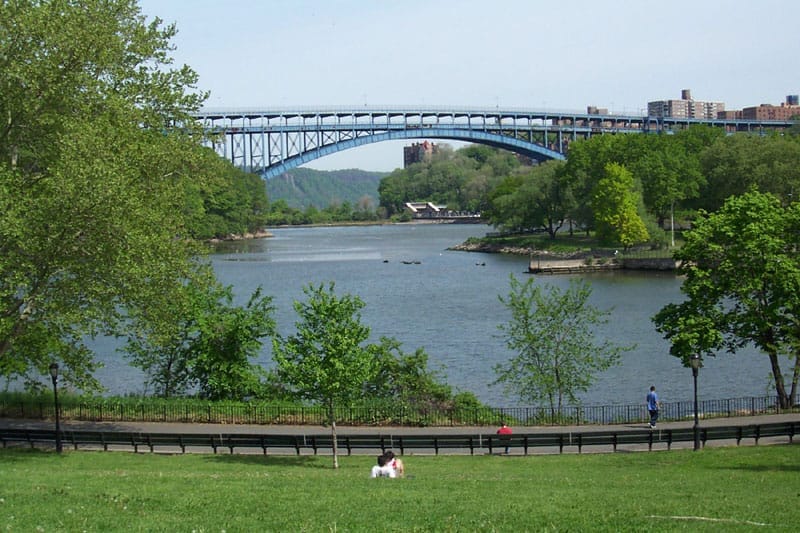
Most visitors to New York City assume that Central Park represents the island's most significant green space. Inwood Hill Park tells a different story. At roughly 196 acres, it is smaller in total area, but ecologically it is incomparable: this is the last surviving old-growth forest on Manhattan, and the only remaining natural salt marsh on the island. No other park in the borough can make that claim.
The terrain here is geological in scale. Glaciers carved deep ridges and hollows through the bedrock during the last ice age, leaving behind cave formations, exposed schist outcroppings, and a topography that feels dramatically removed from the grid below. When you climb into the interior forest, the city noise drops away quickly, replaced by the sound of wind through canopy and, in spring, a dense chorus of songbirds.
The park sits at the northern tip of Manhattan, bordered on the west by the Hudson River and on the east by the Harlem River. That dual waterfront position makes it one of the few places in Manhattan where you can watch shipping traffic on the Hudson while standing in what feels like a forest preserve. If you are putting together a broader itinerary for the island's northern reaches, the Fort Tryon Park and The Cloisters sit just to the south and pair well with a visit here.
💡 Local tip
Enter from the 207th Street and Seaman Avenue side for the most direct access to the forest trails and cave formations. The Dyckman Street entrance puts you near the salt marsh and sports fields, which is flatter but less dramatic.
History Written Into the Rock
The land that is now Inwood Hill Park has been continuously inhabited longer than almost any other site in New York City. The Lenape people, whose territory encompassed much of what is now the northeastern United States, used this area for thousands of years. The park's cave formations served as shelters, and archaeological findings in and around the site have confirmed layers of prehistoric habitation. A large tulip tree at the park is traditionally associated with a 1626 land transaction between Dutch colonists and the Lenape, though historians note the precise location of that exchange is disputed.
During the Revolutionary War, the high ground above the Hudson at this location held a fortification known as Fort Cox (sometimes recorded as Fort Cock), which was part of the American defensive line along northern Manhattan. In November 1776, British and Hessian forces breached that line, pushing General Washington's army northward in a retreat that ultimately led across the Hudson and into New Jersey. The ridgeline you walk today was once contested military terrain.
The city formally acquired the land for parkland designation in 1916, administered by the NYC Department of Parks and Recreation. Despite more than a century as a public park, much of the interior has been left largely unmanicured, which is precisely why the old-growth character has survived. The forest floor carries fallen logs, root tangles, and stone outcroppings that have never been leveled or paved.
Tickets & tours
Hand-picked options from our booking partner. Prices are indicative; availability and final rates are confirmed when you complete your booking.
Statue of Liberty, Ellis Island, and Brooklyn Bridge Happy Hour Cruise
From 49 €Instant confirmationFree cancellationSpirit of New York Dinner Cruise
From 161 €Instant confirmationFree cancellationNew York City Highlights bike tour
From 70 €Instant confirmationFree cancellationNew York Statue of Liberty and Ellis Island tour by ferry
From 55 €Instant confirmation
The Trails: What to Expect Underfoot
The trail network inside Inwood Hill Park is informal by the standards of maintained hiking paths. Paths are rocky, often steep, and in wet conditions can be genuinely muddy and slippery. Wear shoes with grip. This is not a place for sandals or dress footwear, and the uneven terrain means it is largely inaccessible for strollers or wheelchairs once you leave the flat perimeter paths near the sports fields and marsh edges.
The ridge that runs through the park's interior reaches a meaningful elevation for Manhattan, giving you elevated views across the Hudson toward the New Jersey Palisades. The Palisades themselves, a dramatic line of columnar basalt cliffs on the opposite bank, are visible from several points along the upper trails, particularly on clear days in autumn and winter when the leaf cover thins. From certain spots on the ridge, looking south down the Hudson, you get an unobstructed river view that has changed very little in visual character from what a Lenape or colonial observer would have seen.
The cave area is one of the most visited specific features. The caves are not deep or large enough to enter fully, but the rock formations are striking, and the surrounding trees, many of them old-growth tulip trees, create a cathedral-like canopy overhead. Moss covers the schist surfaces in wet seasons, and the stone takes on a dark greenish quality after rain that is unlike anything else in Manhattan.
⚠️ What to skip
Some interior trails are unmarked and branch confusingly. Download a trail map from the NYC Parks website before you go, or use a mapping app in offline mode. Cell signal can be inconsistent inside the forested interior.
How the Park Changes by Time of Day and Season
Early morning, particularly on weekdays, is the closest this park comes to solitude. Dog walkers appear first, followed by joggers using the perimeter paths, but the interior forest can be genuinely quiet between roughly 7 and 9 a.m. The light at that hour filters through the canopy at a low angle, catching mist in cooler months and producing the kind of diffused forest light photographers specifically chase.
Midday on weekends brings families and more casual visitors to the lower areas near the marsh and fields. The forest interior remains noticeably less crowded than the perimeter even then, because the terrain discourages casual strolling. Late afternoon in autumn is particularly atmospheric: the tulip trees and other deciduous species turn yellow and gold, the low sun comes in from the southwest across the Hudson, and the ridge paths take on a warmth of color that is genuinely worth the trip uptown.
Spring is the most dramatic season for birdwatching. Inwood Hill sits along a major migratory corridor, and during April and May the forest fills with warblers, thrushes, and other species moving north. Birders arrive at first light with binoculars and field guides, often comparing sightings near the cave area and upper canopy. Winter strips the leaves and opens up the river views, making the geology of the ridges more visible and the Palisades across the water more dramatic.
If you are visiting New York in autumn and want to understand the seasonal character of the city's parks, our guide to New York City in fall covers the best timing and what to expect across different neighborhoods.
The Salt Marsh and Waterfront Edge
The salt marsh at the southern edge of the park near the Dyckman Street entrance is easy to miss if you come specifically for the forest trails, but it rewards a detour. This is the last remaining natural salt marsh on Manhattan island, a tidal wetland where cordgrass and other halophytic plants colonize the mud flats at the water's edge. At low tide, the smell of the marsh is distinctly organic and brackish, a smell associated more with coastal New England than midtown Manhattan.
The waterfront path along the Hudson gives long views north toward the George Washington Bridge and south toward the Palisades cliffs. Herons are regular visitors to the marsh edges, particularly in early morning, and the area provides a completely different sensory experience from the forested ridge above. On hot summer days, the waterfront catches river breezes that make it noticeably cooler than the interior trails.
Getting There and Practical Details
The park is open daily from 6:00 a.m. to 1:00 a.m., in line with standard NYC Parks operating hours. There is no admission charge. From Midtown Manhattan, the most straightforward route is the A train to Dyckman Street station, which deposits you about a five-minute walk from both the Dyckman Street park entrance (good for the marsh) and the 207th Street and Seaman Avenue entrance (better for the forest and caves). The 1 train also stops at Dyckman Street (207 St station) and is a comparable walking distance.
The journey from Midtown takes roughly 35 to 45 minutes by subway, which is long enough that Inwood Hill Park functions more as a half-day excursion than a quick stop. Most visitors who make the trip combine it with the surrounding Inwood neighborhood, which has a strong Dominican cultural character, several good casual restaurants on Dyckman Street, and a different pace from the more visited parts of Manhattan.
Inwood sits at the northern edge of upper Manhattan. For more context on the broader area and its lesser-known attractions, the hidden gems of New York City guide covers several spots in this part of the island that most visitors bypass entirely.
ℹ️ Good to know
Photography tip: The cave area is best photographed in diffused light, either overcast days or in the hour after sunrise. Direct midday sun creates harsh contrast between the dark rock and bright sky that is difficult to expose correctly. Autumn foliage peaks here roughly mid-October to early November.
Who Should Reconsider Before Making the Trip
Inwood Hill Park is not the right choice for every visitor. If you have limited time in New York City and are weighing it against more iconic attractions, be honest about what you are looking for. The park does not offer the sculpted beauty or manicured paths of Central Park, the cultural programming of Fort Tryon, or convenient proximity to restaurants and museums. It rewards curiosity and a tolerance for genuinely rough terrain, and it requires a meaningful subway journey from the most visited parts of Manhattan.
Visitors traveling with young children in strollers will find most of the interesting terrain inaccessible. Those with mobility limitations should contact NYC Parks in advance to identify which sections of the park are navigable. First-time visitors to New York who are working through the major landmarks first may want to save Inwood for a return trip. The first-time visitor guide to New York City helps set priorities if your itinerary is tight.
Insider Tips
- The Isham Street entrance on the east side of the park, near Isham Park (a smaller adjacent green space), is less commonly used and gives you immediate access to quieter forest paths without passing through the busier Dyckman Street area.
- Bring water. There are no food vendors or water fountains inside the forested interior, and the trails are more physically demanding than they look on a map.
- The park's cave area is on unofficial paths that branch off the main trails. If you reach a large exposed schist outcropping on the ridge, you are in the right zone. Keep heading slightly downhill toward the western slope.
- Birders should arrive before 8 a.m. during the spring migration window (April through mid-May). The area near the cave formations and the forest edge along the upper ridge is particularly productive for warbler activity.
- Dyckman Street itself, just outside the park's southern entrance, has several casual Dominican restaurants that make a good post-hike stop. The neighborhood is one of the most authentically local corridors in upper Manhattan.
Who Is Inwood Hill Park For?
- Nature lovers and hikers who want genuine forest terrain rather than manicured parkland
- History-focused travelers interested in Lenape heritage and Revolutionary War geography
- Birdwatchers, particularly during spring and fall migration
- Photographers looking for old-growth forest light and Hudson River compositions
- Return visitors to New York who have already covered the main landmarks and want to explore the less-visited northern tip of Manhattan
Nearby Attractions
Other things to see while in Harlem:
- Apollo Theater
The Apollo Theater at 253 West 125th Street has shaped American music for over 90 years, launching careers from Ella Fitzgerald to James Brown. While the historic theater is undergoing a multi-year renovation, the free gallery and active programming make it worth the trip to Harlem.
- Cathedral Church of St. John the Divine
Rising above Morningside Heights at near Harlem, the Cathedral Church of Saint John the Divine is one of New York City's most extraordinary architectural spaces. Construction began in 1892 and continues to this day, making every visit a glimpse into a living, unfinished monument. At 601 feet long with a nave vaulting 124 feet overhead, the scale alone justifies the trip.
- El Museo del Barrio
Founded in East Harlem in 1969, El Museo del Barrio stands as the United States' leading museum dedicated to Latino, Caribbean, and Latin American art and culture. Positioned at the northern tip of Fifth Avenue's Museum Mile, it offers a distinct and often underappreciated counterpoint to the larger institutions that dominate the strip.
- Fort Tryon Park
Fort Tryon Park is a 67-acre public park in Upper Manhattan, designed by the Olmsted Brothers and gifted to New York City by John D. Rockefeller Jr. in 1931. It sits on one of the borough's highest natural ridges, offering sweeping views of the Hudson River, eight miles of winding paths through wooded slopes, and the landmark Met Cloisters museum. Entry to the park is free.