Huaihai Road: Shanghai's Most Stylish Boulevard
Once the grand Avenue Joffre of the French Concession, Huaihai Middle Road stretches roughly 5.5 kilometres through central Shanghai as a layered mix of international brands, indie cafes, plane-tree canopy, and century-old lane houses. Free to walk, endlessly browsable, and genuinely different at 10am versus 9pm.
Quick Facts
- Location
- Huaihai Middle Road, Huangpu & Xuhui Districts, Shanghai
- Getting There
- Huaihai Middle Road Station (Line 13); South Shaanxi Road Station (Line 1)
- Time Needed
- 1–3 hours for a walk; half a day if shopping
- Cost
- Free to walk; shops and malls vary
- Best for
- Shopping, urban walks, architecture, café culture
What Is Huaihai Road?
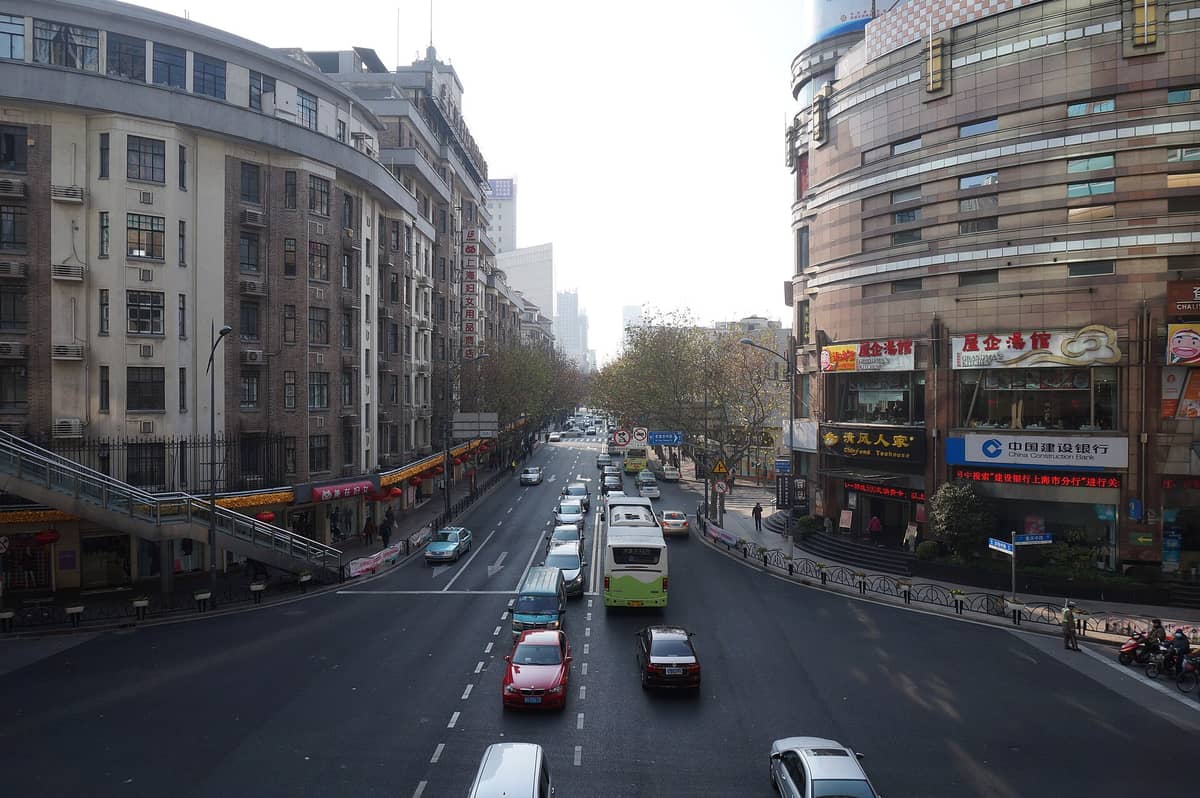
Huaihai Road (淮海路, Huáihǎi Lù) is one of Shanghai's longest and most historically layered commercial streets, running roughly 6 kilometres from east to west through Huangpu and Xuhui districts. The section that draws visitors is the core of Huaihai Middle Road (淮海中路), an approximately 2.2‑kilometre stretch between Chongqing Road and Shaanxi Road that functions as the commercial spine of what was once the French Concession. It is wide, tree-lined, and almost permanently animated — but unlike Nanjing Road's tourist-facing spectacle, Huaihai Road has always been a street where Shanghainese actually shop, eat, and spend weekend afternoons.
The street is free to walk at any hour. There are no ticket booths, no entry points, and no managed crowds. What you encounter instead is an organic urban rhythm: delivery riders weaving past window shoppers, elderly residents cutting through from lane-house neighbourhoods to the north, and groups of teenagers photographing themselves outside flagship stores. It is an honest cross-section of Shanghai's consumer culture rather than a theme-park version of it.
💡 Local tip
The best approach is to exit at Huaihai Middle Road Station (Line 13) and walk westward toward South Shaanxi Road. This puts you in the densest section of mid-range and international retail before gradually transitioning into quieter boutique territory. Allow time to duck into the cross streets — some of Shanghai's best cafes and concept stores are one block north or south.
A Street With a Long Memory: Historical Context
The road was first laid out around 1900 as Rue Sikiang, a minor arterial in the French Concession's expanding grid. It was renamed Route Paul Brunat in 1906, and then Avenue Joffre in 1915, honouring the French commander of the First World War's Western Front, under which name it became the social and commercial heart of French Concession life. The avenue was where Shanghainese who could afford Western goods shopped, where White Russian émigrés opened bakeries and delicatessens after 1917, and where the city's pre-war bourgeoisie promenaded on Sunday mornings.
In 1949–1950, following the founding of the People's Republic of China, Avenue Joffre was renamed Huaihai Road to commemorate the Huaihai Campaign — a pivotal series of battles from late 1948 to early 1949 that effectively determined the outcome of the Chinese Civil War. The renaming was ideological, but the street's function barely changed. It remained a commercial artery and continued to attract Shanghai's more style-conscious residents throughout the following decades.
That continuity is visible in the architecture today. Walk slowly and you will notice Art Deco apartment blocks from the 1930s sitting directly beside glass-fronted contemporary retail. The plane trees (Platanus × acerifolia) that line much of the pavement were planted during the French Concession era and now form a near-continuous canopy that softens the midday heat in summer. For a deeper appreciation of the architectural layer beneath the commerce, the Shanghai architecture guide is worth consulting before your visit.
Tickets & tours
Hand-picked options from our booking partner. Prices are indicative; availability and final rates are confirmed when you complete your booking.
Shanghai city and Zhujiajiao water town private tour with lunch
From 371 €Instant confirmationFree cancellationShanghai private tour with iconic landmarks of the old and new city
From 284 €Instant confirmationFree cancellationShangai Yuyuan Garden entrance tickets
From 9 €Instant confirmationFree cancellation
Morning, Afternoon, Evening: How the Street Changes
In the morning, before 10am, Huaihai Middle Road is at its quietest. The malls are not yet open, but the street itself is fully awake in a domestic sense. Street-level vendors set out fruit near the metro exits. Older residents from the surrounding longtang (lane-house) neighbourhoods walk briskly through. The light is good for photography at this hour — angled, relatively soft, and falling directly onto the plane-tree canopy and the upper-storey cornices of surviving concession-era buildings.
From mid-morning through the afternoon, the retail pace picks up noticeably. The main shopping zones between Chengdu Road and Shaanxi Road fill with a mix of local shoppers and visitors. Sounds shift: elevator music from shop entrances, the occasional automated promotion from a cosmetics counter, mandarin spoken quickly at cashier desks. The air inside the covered malls is cool and climate-controlled; outside, the pavement can feel warm and close in summer.
By early evening, especially on weekends, Huaihai Middle Road undergoes a distinct transformation. The restaurant floors of the surrounding malls fill. The street itself becomes denser but no less navigable. Neon and LED signage begins to compete with the remaining daylight around 7pm in summer. This is arguably the best time to visit for atmosphere: the day's commercial energy concentrates into something more social, and the plane trees, lit from below, look unexpectedly elegant. Anyone who finds busy shopping streets stressful will want to avoid weekend evenings and the two-hour window before and after the National Day Golden Week.
What You Will Actually Find Here
The retail profile of Huaihai Middle Road spans several price points. International luxury brands occupy dedicated flagship stores and multi-level retail blocks in the denser central section. Mid-range Chinese and international fashion brands fill the major malls, including large complexes along the central stretch and several purpose-built commercial centres whose atriums open directly onto the pavement. Toward the western end, near Shaanxi Road and beyond, the character shifts: more independent cafes, small design studios, concept stores, and the kind of ground-floor spaces where a ceramics workshop might share a building with a specialty coffee roaster.
Huaihai Road is not primarily a tourist destination in the way that Nanjing Road Pedestrian Street is — there are no souvenir kiosks every twenty metres, and most of the retail is aimed squarely at Shanghainese consumers rather than visitors looking for China-branded gifts. This is either a strength or a limitation, depending on what you are after. If you want practical shopping in an attractive urban environment, Huaihai Road is hard to improve on. If you want a curated tourist-shopping experience with easy-to-navigate English signage throughout, you will find Xintiandi more comfortable.
The lane-house courtyards and commercial complexes that branch off the main boulevard reward lateral exploration. A short detour north or south along any of the cross streets will bring you into quieter territory where the French Concession streetscape is more legible — brick walls, iron railings, wisteria in spring. Xintiandi, just north of the eastern section of Huaihai Road, is the most architecturally preserved portion of this broader neighbourhood and makes a natural pairing with a Huaihai Road walk.
Practical Walkthrough: Getting There and Moving Around
The most direct metro access is Huaihai Middle Road Station on Line 13, which deposits you in the commercial core. South Shaanxi Road Station on Lines 1, 10 and 12 is also within comfortable walking distance and useful if you are arriving from Jing'an or the northern city centre. Bus routes 911, 926, and 104 run along or near the street if you prefer surface transit, though traffic along this corridor during peak hours makes buses slower than the metro.
Huaihai Middle Road is a wide, modern boulevard with paved footpaths on both sides. The surface is level and well-maintained, making it generally accessible for visitors using wheelchairs or pushchairs, though individual malls vary in their internal accessibility provision. Taxis and Didi vehicles can be hailed from the kerbside, but expect delays at evening rush hour between 5pm and 7pm — the street sees significant private car traffic and the lane configurations can create bottlenecks.
⚠️ What to skip
Avoid driving on Huaihai Road on weekday evenings unless you have significant patience. The combination of heavy pedestrian crossings, delivery vehicles, and private car traffic creates genuine gridlock between roughly 5:30pm and 7:30pm. The metro is the correct choice.
Most shops and malls along the street open around 10am and close by 10pm, though café and restaurant hours extend later. The street itself is public space, open around the clock with no admission. Prices throughout the malls and restaurants are in Chinese yuan (CNY). International credit cards are accepted in the larger malls and branded stores; smaller independents and street-level vendors often prefer mobile payment via WeChat Pay or Alipay. Having a backup of cash in yuan is sensible.
Photography and Seasonal Conditions
The plane-tree canopy is the defining visual element of Huaihai Middle Road and changes significantly across seasons. In spring, particularly from late March through April, fresh green leaves emerge against the older stone facades — this is the most photogenic period, coinciding with generally mild temperatures. Autumn, from October through November, turns the canopy gold and amber, and the light on clear afternoons is exceptionally warm. Summer visits are manageable in the mornings but the combination of humidity and direct sun on open sections of pavement becomes uncomfortable by midday.
The street sits in a broader neighbourhood worth exploring during both spring and autumn. For guidance on timing a visit across these seasons, the Shanghai in spring and Shanghai in autumn guides provide detailed context on what to expect city-wide.
For architectural photography, the early morning window is most productive. The surviving Art Deco and Beaux-Arts facades are on the upper storeys and partially obscured during the day by ground-level retail signage. Before 9am, with low angled light and no crowds at eye level, the buildings read more clearly. A wide-angle lens or a phone held slightly high is useful for capturing the canopy plus the building line simultaneously.
Who Should Reconsider This Stop
Huaihai Road is not for everyone. Travellers who find busy commercial streets draining rather than energising will not find much relief here — the middle section is genuinely dense with retail, signage, and foot traffic for its full two-kilometre length. If your interest is in quiet cultural or historical immersion, the street offers context but requires effort to find: the history is in the upper storeys and the side lanes, not announced at ground level. Visitors on very short itineraries who need to choose between Huaihai Road and the Bund or Nanjing Road should note that Huaihai Road offers less immediate visual drama and is better suited to travellers who enjoy urban walking at their own pace.
Insider Tips
- The best surviving French Concession architecture along this corridor is not on Huaihai Road itself but one or two blocks north, particularly along Fuxing Middle Road and Gaolan Road. Walk south from Huaihai Road's midpoint and you will find iron-gated villas with French-style shutters that most visitors walk straight past.
- Wander into the commercial complexes set back from the main pavement rather than staying on the boulevard. Several of these mid-block developments have interior courtyards with cafes, bookshops, and smaller fashion labels that face inward rather than outward and are easy to miss from street level.
- If you want to see the street at its most local, visit on a weekday morning between 9am and 11am. The demographic shifts noticeably: fewer tourists, more Shanghainese residents running genuine errands. This is also when the produce and breakfast vendors near the metro exits are fully operational.
- The plane trees shed pollen heavily in spring, particularly in March. If you are sensitive to tree pollen, bring antihistamines or visit later in the season when the leaves have fully opened.
- Menus in cafes and restaurants along and immediately off Huaihai Road increasingly include English descriptions, but payment terminals often default to Chinese. Having screenshots of your order or a translation app ready at smaller venues saves time at the counter.
Who Is Huaihai Road For?
- Urban walkers who enjoy reading a city's social and commercial layers as they move
- Shoppers looking for a mix of international brands and independent Chinese labels in a single corridor
- Architecture enthusiasts willing to look above ground-floor retail to find the concession-era building fabric
- Photographers seeking the seasonal plane-tree canopy and early-morning street scenes
- Visitors wanting to experience a street used by Shanghainese themselves rather than built primarily for tourist traffic
Nearby Attractions
Other things to see while in Xintiandi & Huaihai:
- Memorial of the First CPC National Congress
On a quiet lane in Xintiandi, a preserved shikumen townhouse marks the spot where 13 delegates convened in July 1921 to found the Chinese Communist Party. Today the site and its adjoining modern exhibition hall form one of Shanghai's most historically significant free attractions.
- Xintiandi
Xintiandi is a pedestrian district in Huangpu built from restored 1920s shikumen (stone-gate) townhouses, now home to international restaurants, boutiques, bars, and the site of the First National Congress of the Chinese Communist Party. Entry to the lanes is free. The experience ranges from quiet morning coffee to a lively after-dark bar scene.