Heide Museum of Modern Art: Art, History, and Gardens Beyond the City Grid
Heide Museum of Modern Art sits on a historic property in Bulleen, about 9 km from Melbourne's CBD, where Sidney Nolan, Arthur Boyd, and Albert Tucker once gathered to reshape Australian painting. Today it combines three gallery buildings, a working kitchen garden, and a free sculpture park across grounds that change character with the seasons.
Quick Facts
- Location
- 7 Templestowe Road, Bulleen VIC 3105 (approx. 9 km from Melbourne CBD)
- Getting There
- Hurstbridge line to Heidelberg Station, then bus 903 toward Mordialloc; alight at Bridge Street/Manningham Road and walk through Banksia Park
- Time Needed
- 2–3 hours for galleries and grounds; half a day if you linger over lunch
- Cost
- Adult A$27 | Concession A$22 | MobTix A$17 | Under 16s free | Sculpture park and gardens free
- Best for
- Australian art lovers, architecture enthusiasts, weekend walkers, couples
- Official website
- www.heide.com.au
What Heide Actually Is
Most art museums occupy purpose-built civic buildings. Heide Museum of Modern Art occupies the former private property of John and Sunday Reed, a couple who spent decades drawing artists to their Bulleen farmhouse and, in doing so, helped define what Australian modernism looks like. The result is something genuinely unusual: a cultural institution where the building, the garden, and the artworks inside feel like different chapters of the same story rather than separate departments.
John and Sunday Reed purchased the property in 1934, and for roughly four decades it functioned less as a museum and more as a living experiment: a household where Sidney Nolan painted his early Ned Kelly series at the kitchen table, where Arthur Boyd and Albert Tucker argued about what Australian painting should look like, and where Sunday Reed's correspondence with artists became, in itself, a creative force. The property opened to the public as a museum in November 1981, and that layered history is what separates Heide from a conventional gallery experience.
ℹ️ Good to know
Opening hours: Tuesday–Friday 10am–4pm; Saturday–Sunday 10am–5pm. Closed Mondays, except public holidays. The sculpture park and gardens are free to enter and worth visiting even if you skip the paid galleries.
The Three Buildings: What You'll Actually Walk Through
The site contains three distinct structures, each representing a different era of the property's life. Heide I is the original 1930s farmhouse where the Reeds lived, and its rooms are small, domestic, and deliberately unpretentious. Walking through it feels closer to a house museum than a gallery, with the low ceilings and modest proportions reminding you that significant cultural history happened in ordinary domestic spaces.
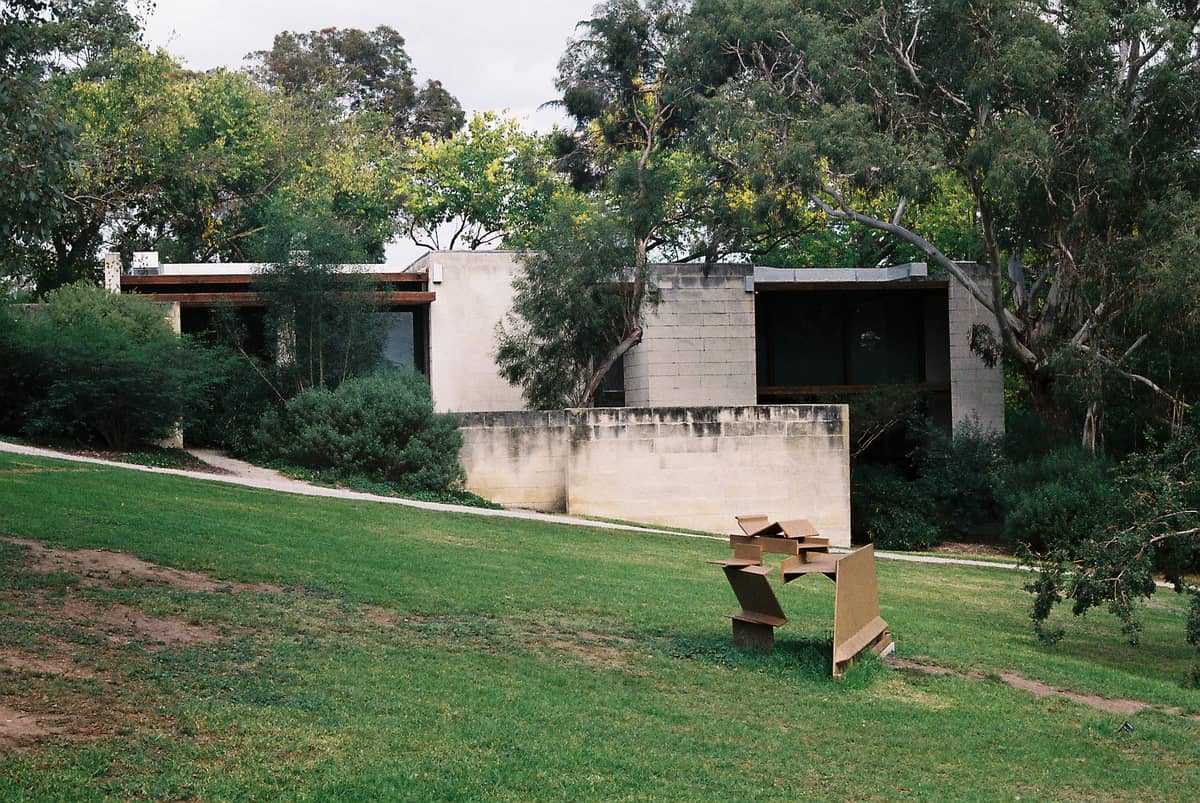
Heide II, completed in 1967 and designed by the Reeds themselves in collaboration with architect David McGlashan, is a more formal modernist structure with better-controlled natural light. This is where the major rotating exhibitions are typically shown, and where you'll find the permanent collection displayed with proper gallery spacing. The building's horizontal lines and connection to the garden feel considered rather than arbitrary.
Heide III, the newest addition, opened in 1993 and provides additional exhibition space with a more contemporary footprint. Temporary exhibitions rotate through both Heide II and III throughout the year, so the programme shifts considerably between visits. Check the museum's website before you go if you're travelling specifically for a particular show.
The architecture across the site sits comfortably alongside Melbourne's broader tradition of considered residential and civic design. If that context interests you, the broader Melbourne architecture guide provides useful framing for understanding how the Heide buildings fit into mid-century Victorian design.
Tickets & tours
Live prices and dates from our booking partner. If you book, we may earn a commission at no extra cost to you.
Melbourne street art exploration game and tour
From 10 €Instant confirmationFree cancellationGreat Ocean Road reverse itinerary tour from Melbourne
From 77 €Instant confirmationFree cancellationGreat Ocean Road bus tour with a forest walk
From 90 €Instant confirmationFree cancellationYarra Valley Bus Wine Tour including lunch with a glass of wine and chocolate
From 107 €Instant confirmationFree cancellation
The Grounds: Sculpture Park, Kitchen Garden, and the Walk In
The sculpture park is free. That matters, because it means you can walk the grounds without paying gallery admission, and in good weather those grounds deliver a genuinely worthwhile afternoon. Large-scale works by Australian sculptors are positioned across the sloping lawns and along paths that wind between established eucalypts and plantings that shift from season to season. In autumn, the light through the older trees is notably good for photography.
The kitchen garden, which the Reeds used as a working food garden during their years at Heide, has been restored and maintained. It's a small detail, but it reinforces the sense that this was a lived-in property rather than a constructed museum space. The garden sits close to Heide I and adds to the domestic texture of that building's surroundings.
Getting here on foot from the bus stop involves walking through Banksia Park, which borders the property. In dry weather this is a pleasant approach through native vegetation. In wet weather, wear shoes that can handle uneven grass and light mud. The site itself has sloping terrain throughout, and because Heide I and parts of the grounds are heritage-listed former residences, access around some buildings can be physically demanding. Visitors with mobility requirements are advised to contact the museum directly before visiting.
⚠️ What to skip
Accessibility note: Heide's heritage buildings and sloping grounds can be difficult to navigate for visitors with limited mobility. Contact the museum ahead of your visit to discuss specific access needs.
When to Go and How the Experience Changes
Weekday mornings, particularly Tuesday through Thursday, are the quietest times to visit. The galleries feel genuinely unhurried, staff have time for conversation if you're curious about a specific work, and the sculpture park is often empty enough that you can sit with a piece for a while without feeling like you're blocking foot traffic. Weekend afternoons draw more visitors, particularly families with children, and the cafe fills up quickly after noon.
The outdoor experience shifts considerably with Melbourne's weather. On a clear autumn or spring morning, the grounds are the strongest argument for the visit: the light is soft, the garden is productive, and the combination of sculpture and landscape genuinely rewards slow walking. On a hot summer day above 35°C, the sculpture park becomes uncomfortable quickly, and the climate-controlled galleries become more appealing. In winter, the grounds are quiet and the bare deciduous plantings reveal the garden's structure more clearly, though some visitors find the atmosphere slightly austere.
For broader guidance on timing a Melbourne trip to make the most of outdoor cultural experiences, the best time to visit Melbourne guide covers seasonal patterns across the city.
The Collection and What It Tells You
Heide's permanent collection centres on Australian art from the 1930s through the contemporary period, with particular depth in the mid-century modernist work that emerged from the Reed circle. Sidney Nolan's early paintings, made partly at Heide before his Ned Kelly series became iconic, are a consistent point of reference. Works by Arthur Boyd, Albert Tucker, Joy Hester, and Charles Blackman appear across the collection, and their presence here carries biographical weight that the same works wouldn't carry in a general state collection.
The museum also collects and shows contemporary Australian work, so the programme isn't exclusively historical. Major temporary exhibitions bring in work from across Australia and occasionally internationally. The programming tends toward serious engagement with ideas rather than crowd-pleasing retrospectives, which makes Heide more rewarding for visitors who read exhibition notes and less rewarding for those looking for a quick visual experience.
If your primary interest is in Australian art more broadly, the Ian Potter Centre: NGV Australia in Federation Square holds one of the largest collections of Australian art in the country and may be a useful companion visit, particularly for first-time visitors to Melbourne who want context before heading to Heide.
Eating, Drinking, and the Practical Walkthrough
The Heide cafe operates on-site and sources ingredients partly from the kitchen garden. It's a reasonable lunch stop with indoor and outdoor seating. On weekends the queue can be significant between 12pm and 1:30pm; arriving before noon or after 2pm avoids the worst of it. The menu is seasonal and changes with what's growing on the property.
There is a museum shop near the entrance with publications, prints, and design objects skewing toward the serious end of the gift-shop spectrum. If you're interested in the history of the Reed circle, the shop typically carries relevant catalogues and books that are harder to find elsewhere.
Manningham residents and museum members enter free. If you visit Melbourne regularly and have a genuine interest in contemporary Australian art, a Heide membership is worth calculating against the per-visit admission cost. The A$27 adult admission is reasonable by international museum standards but will feel steep if you're moving quickly and only spending an hour on-site.
💡 Local tip
Photography tip: The sculpture park allows photography for personal use. Early morning light from the east hits the northern lawn well in autumn and winter. The internal galleries have variable photography rules depending on the current exhibition — check with staff at the entrance.
Who Should Skip This One
Heide is not the right choice for visitors with a packed single-day Melbourne itinerary. The journey by public transport takes 40 minutes or more from the CBD each way, and the site rewards slow engagement rather than quick ticking-off. If your interest in art is broad but shallow, the larger permanent collections at the NGV International on St Kilda Road or the Ian Potter Centre at Federation Square will deliver more visual variety per hour in more central locations.
Very young children can move through the sculpture park and open grounds comfortably, but the gallery buildings and Heide I involve fragile works in confined spaces that require supervision. Families looking for child-specific programming should check whether a dedicated family event is scheduled during their visit. For more consistently child-focused cultural options around Melbourne, the Melbourne with kids guide covers the broader landscape.
Insider Tips
- Buy your gallery ticket online in advance through the Heide website. It doesn't guarantee a specific entry time in most cases, but it avoids waiting at the front desk, which can be slow on busy weekend mornings.
- The walk through Banksia Park from the bus stop takes about 10 minutes on a clear path. Download an offline map before leaving Heidelberg Station — mobile signal can be patchy along the park path.
- Heide occasionally runs late-night events and art fairs, including the annual Art Fair, which transforms the grounds and draws a different crowd than the usual daytime museum visit. Check the events calendar on the Heide website before your trip.
- If you're visiting specifically for a temporary exhibition, call ahead or check the website to confirm the exhibition is still showing. Changeover periods between shows sometimes leave parts of Heide II and III temporarily closed.
- Manningham City Council residents enter the galleries for free — bring proof of address if this applies to you.
Who Is Heide Museum of Modern Art For?
- Visitors with a genuine interest in Australian art history and the Reed circle's influence on mid-century modernism
- Architecture enthusiasts interested in how domestic modernist design and landscape interact
- Couples looking for a relaxed half-day combining culture, outdoor walking, and a garden cafe
- Repeat Melbourne visitors who have already covered the major CBD museums and want something with more biographical texture
- Photographers working with outdoor sculpture and natural light in a garden setting
Nearby Attractions
Combine your visit with:
- 1000 Steps Kokoda Track Memorial Walk
The Kokoda Track Memorial Walk, known locally as the 1000 Steps, climbs through fern-filled forest in the Dandenong Ranges east of Melbourne. Free to visit and reached by train, it combines a genuine physical workout with quiet moments of WWII commemoration.
- Albert Park Lake
Albert Park Lake is a vast freshwater reserve just minutes from Melbourne's CBD, offering a 4.7km walking and cycling path around calm water, sports ovals, and open parkland. Free to enter and accessible by tram, it rewards early morning walkers, cycling families, and anyone wanting to understand how Melbourne uses its open spaces.
- Bells Beach
Bells Beach, in Wadawurrung country and also known by its Traditional Owner name Djarrak, is a 48-hectare coastal reserve near Torquay that holds the distinction of being the world's first declared surfing reserve. With its sheer sandstone cliffs, deep bowl-shaped break, and annual Rip Curl Pro competition, it draws surfers and non-surfers alike for one of Victoria's most dramatic coastal experiences.
- Brighton Beach Bathing Boxes
Lined up along Dendy Street Beach in Brighton, Melbourne's 96 privately owned bathing boxes are one of Victoria's most recognisable sights. Free to view from the public beach, they reward visitors who time their arrival with the morning light or an empty tide. Here is what you actually need to know before making the trip.
Planning a trip? Discover personalized activities with the Nomado app.