Hanging Rock Reserve: Ancient Formation, Eerie Atmosphere, and a Great Day Out from Melbourne
Rising from the Macedon Ranges about 80 km north of Melbourne, Hanging Rock is a mamelon of interlocking volcanic rock columns that has drawn visitors for well over a century. The site carries deep Aboriginal cultural significance and a layer of literary mystery that makes it unlike any other natural attraction in Victoria.
Quick Facts
- Location
- 139 South Rock Road, Woodend VIC 3442 — about 77 km north-west of Melbourne
- Getting There
- Drive via Calder Freeway (A79); no direct public transit to the reserve gate
- Time Needed
- 2 to 4 hours including the summit walk and picnic grounds
- Cost
- A$15 per car, A$5 per pedestrian or cyclist, A$5 per motorbike. Card payment only.
- Best for
- Nature walkers, history enthusiasts, photographers, families with older children
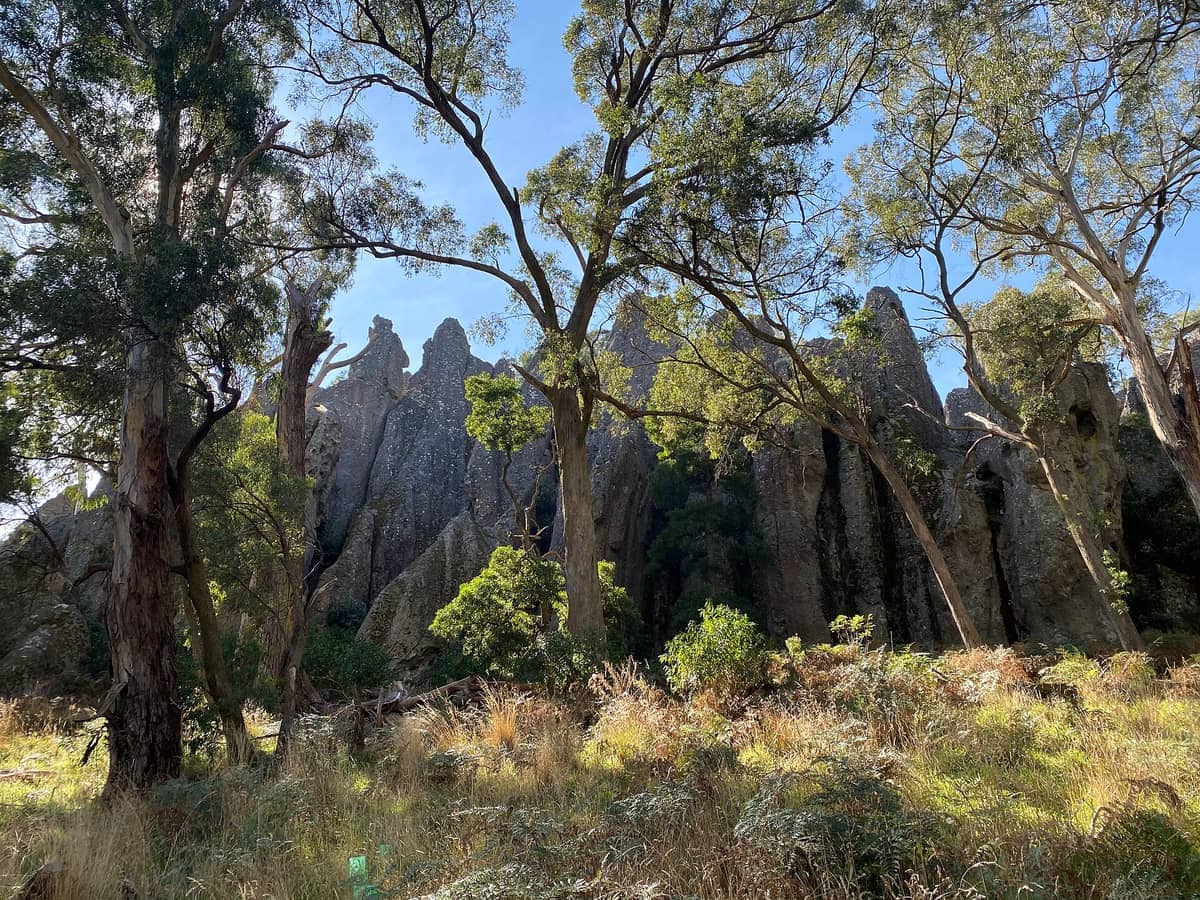
What Is Hanging Rock?
Hanging Rock Reserve protects a geological formation known as a mamelon: a mass of lava that was pushed up through the earth's crust and cooled slowly, creating a cluster of trachyte columns and boulders that now lean against, rest upon, and overhang one another at improbable angles. The result is a landscape that feels simultaneously ancient and slightly unstable, as if the rock is still shifting. The reserve covers approximately 67.6 hectares, and the outcrop is a prominent feature of the surrounding plain.
Aboriginal occupation of this area is evidenced for at least 10,000 years. The Woi Wurrung (Wurundjeri), Djaara, and Taungurung peoples are identified by Macedon Ranges Shire Council as the Traditional Owner groups of this country. The rock holds ongoing cultural significance, and visitors are encouraged to approach it with that awareness rather than treating it purely as a geological curiosity or a film set.
For many Australian and international visitors, Hanging Rock is inseparable from Joan Lindsay's 1967 novel "Picnic at Hanging Rock" and Peter Weir's 1975 film adaptation, both of which use the site as the backdrop for a mysterious disappearance of schoolgirls on Valentine's Day 1900. The story is fiction, but the atmosphere of the place is so well-matched to the narrative that the line between film and reality can feel genuinely blurred, particularly in the early morning when mist settles between the columns.
ℹ️ Good to know
The reserve is closed on Christmas Day and on Catastrophic Fire Danger days in the Central District. Check the Macedon Ranges Shire Council website before travelling, especially in summer.
Opening Hours and Entry Fees
The reserve opens daily at 9:00 a.m. From mid-April through August, last entry is 3:00 p.m. and all visitors must exit by 4:30 p.m. From September to mid-April, last entry is 3:30 p.m. with exit by 5:00 p.m. Event-day closures or altered access can apply, particularly for the Hanging Rock races and New Year concerts, so check ahead if your visit falls on a weekend or public holiday.
- Car: A$15 per vehicle
- Motorbike: A$5
- Pedestrian or cyclist: A$5 per person
- Midibus: A$40
- Coach: A$80
Payment is by card only at the entry gate. There is no cash option, so make sure your bank card is with you before you leave Melbourne. Prices listed above are current as checked in October 2026 and may change; confirm on the official council page before visiting.
Tickets & tours
Live prices and dates from our booking partner. If you book, we may earn a commission at no extra cost to you.
Great Ocean Road reverse itinerary tour from Melbourne
From 77 €Instant confirmationFree cancellationGreat Ocean Road bus tour with a forest walk
From 90 €Instant confirmationFree cancellationYarra Valley Bus Wine Tour including lunch with a glass of wine and chocolate
From 107 €Instant confirmationFree cancellationHidden bars of Melbourne guided tour
From 115 €Instant confirmationFree cancellation
Getting There from Melbourne
Hanging Rock sits Hanging Rock sits about 77 km north-west of Melbourne's central city, roughly a one-hour drive via the Calder Freeway (A79). From the freeway, signs direct you through Woodend to South Rock Road. The road is sealed all the way to the reserve entry gate, and the car park is large enough to handle a reasonable number of vehicles, though it fills on summer weekends and during race days.
There is no direct public transport service to the reserve gate. Regional coaches from Southern Cross Station stop in Woodend, but the reserve entrance is several kilometres from the town centre, making this impractical without a taxi or rideshare for the final leg. If you prefer not to drive, consider joining a tour from Melbourne. For general guidance on moving around Victoria, the getting around Melbourne guide covers transport options including regional travel.
💡 Local tip
Combine Hanging Rock with a stop in Woodend town centre, which has a reliable cafe strip, before or after your visit. It is the nearest option for fuel and coffee.
The Summit Walk: What to Expect
The Summit Walk is approximately 1.8 km return and takes most visitors between 45 minutes and 90 minutes, depending on pace and how much time they spend scrambling around the formations at the top. The trail begins at the main car park, passes through open grassland and thin woodland, and then climbs steeply through a series of rock corridors that grow progressively narrower and more dramatic as you gain height.
The rock itself demands attention underfoot. Handrails assist in the steeper sections, but the surfaces are uneven, damp in cooler months, and can be slippery after rain. Wear shoes with grip. The columns overhead create enclosed passages where sunlight filters through at low angles, casting the kind of shadows that explain exactly why Weir's cinematographer chose to shoot here in the early morning. At the summit, the views across the Macedon Ranges and toward Mount Macedon are wide and unobstructed.
Summit access is prohibited when forecast winds exceed 40 km/h, a rule that exists because the rock columns above the path create a genuine falling-debris hazard in high winds. If your visit is cancelled for this reason, the base walk and picnic grounds remain open and are genuinely worthwhile in their own right. The grassland at the base carries a different character: open, quiet, and frequented by wallabies in the early morning.
⚠️ What to skip
Strollers can be pushed part of the way up the Summit Walk, but the steepest rock section is not pram-friendly. Families with young children typically stay on the Base Walk, which circles the rock formation at ground level.
Best Time to Visit
The experience changes considerably depending on when you arrive. Early morning on a weekday in autumn or winter offers the most atmospheric conditions: cool air, low mist between the formations, bird calls from the surrounding woodland, and very few other visitors in the rock corridors. The light is also best for photography in these conditions. Summer weekends are a different proposition, with the car park filling by late morning and families spread across the picnic grounds. That version of Hanging Rock is still enjoyable, but it is a different mood entirely. For more on timing a Melbourne-region trip, the best time to visit Melbourne guide provides a useful seasonal overview.
Spring brings wildflowers to the grassland around the base, which adds colour to the otherwise grey-green palette of the reserve. Late afternoon in spring, as the light drops behind Mount Macedon, can be genuinely striking, though you need to arrive early enough to complete the summit walk before last entry at 3:30 p.m.
The Picnic Grounds, Facilities, and What Else Is on Site
The reserve includes picnic grounds, barbecue facilities, and toilets. A cafe operates within the reserve, though hours can vary by season and should not be relied upon as your only food option. Many visitors bring their own supplies, which is both practical and more in keeping with the relaxed character of the place.
The Hanging Rock Racecourse sits within the reserve boundary and hosts race meetings twice a year. On race days, the reserve has a completely different character: the car park is full, crowds are large, and access to the rock formation may be restricted. Check the racing calendar if you want to avoid this, or embrace it if a country race meeting sounds appealing.
Hanging Rock pairs well with other Macedon Ranges attractions. The nearby town of Kyneton has a well-regarded food and dining scene, and Daylesford, an hour further north, is a popular destination for thermal pools and country retreats. If you are building a full day trip from Melbourne, the day trips from Melbourne guide has itinerary ideas for the wider region.
Who Might Want to Skip It
Hanging Rock is not a dramatic alpine experience or a multi-hour wilderness walk. Visitors expecting the scale of, say, the Grampians or a coastal cliffscape may find it underwhelming in terms of sheer size. The summit walk is over quickly, and the reserve does not have the density of activities that fills a full day on its own. If you are travelling without a car and relying on public transport, the logistical effort to reach the gate is significant relative to the time you will spend inside. For wheelchair users and those with limited mobility, the Summit Walk is not accessible, and while the flat base area is manageable, the main drawcard of the site requires the climb.
Visitors whose priority is coastline, city culture, or major museums will find more concentrated options closer to Melbourne itself. The best museums in Melbourne guide and the Royal Botanic Gardens Victoria offer very different but equally rewarding experiences without leaving the city.
Insider Tips
- Arrive at gate opening (9:00 a.m.) on a weekday for the best chance of walking the rock corridors alone. By 10:30 a.m. on weekends, the passages fill with foot traffic and the atmosphere shifts noticeably.
- Bring a light layer even in summer. The shaded rock corridors near the summit stay cool and damp, and the temperature drop from the open car park to the upper sections of the walk is more pronounced than most visitors expect.
- Card payment only at the entry gate. This catches a surprising number of visitors out, particularly those who have driven out from Melbourne expecting to pay cash.
- Check the wind forecast the night before your visit if the summit walk is your main reason for coming. The 40 km/h closure threshold is reached more often than the average visitor anticipates, especially in spring and winter.
- The racecourse calendar is publicly available on the Hanging Rock Racing Club website. Cross-reference your visit date: race days change the entire character of the reserve and may affect access to the rock.
Who Is Hanging Rock For?
- Hikers and walkers looking for a half-day nature excursion within easy reach of Melbourne
- Photography enthusiasts, particularly those interested in moody landscape or architectural rock photography in early morning light
- Literature and film fans drawn to the setting of "Picnic at Hanging Rock"
- Families with children aged six and above who can manage the steep trail sections independently
- Travellers building a wider Macedon Ranges day trip combining food, wine, and nature
Nearby Attractions
Combine your visit with:
- 1000 Steps Kokoda Track Memorial Walk
The Kokoda Track Memorial Walk, known locally as the 1000 Steps, climbs through fern-filled forest in the Dandenong Ranges east of Melbourne. Free to visit and reached by train, it combines a genuine physical workout with quiet moments of WWII commemoration.
- Albert Park Lake
Albert Park Lake is a vast freshwater reserve just minutes from Melbourne's CBD, offering a 4.7km walking and cycling path around calm water, sports ovals, and open parkland. Free to enter and accessible by tram, it rewards early morning walkers, cycling families, and anyone wanting to understand how Melbourne uses its open spaces.
- Bells Beach
Bells Beach, in Wadawurrung country and also known by its Traditional Owner name Djarrak, is a 48-hectare coastal reserve near Torquay that holds the distinction of being the world's first declared surfing reserve. With its sheer sandstone cliffs, deep bowl-shaped break, and annual Rip Curl Pro competition, it draws surfers and non-surfers alike for one of Victoria's most dramatic coastal experiences.
- Brighton Beach Bathing Boxes
Lined up along Dendy Street Beach in Brighton, Melbourne's 96 privately owned bathing boxes are one of Victoria's most recognisable sights. Free to view from the public beach, they reward visitors who time their arrival with the morning light or an empty tide. Here is what you actually need to know before making the trip.
Planning a trip? Discover personalized activities with the Nomado app.