Hamilton Waterfalls: The Complete Guide to Ontario's Waterfall Capital
Hamilton, Ontario sits atop the Niagara Escarpment and shelters more than 100 individual waterfalls within city limits. From the thundering curtain of Webster's Falls to the tucked-away trickle of smaller conservation trails, this is one of the most rewarding day trips you can make from Toronto, provided you plan ahead.
Quick Facts
- Location
- Hamilton, Ontario, Canada — approx. 75 km southwest of downtown Toronto
- Getting There
- GO Transit train or bus from Union Station to Hamilton; local HSR buses, taxis, or rideshare to trailheads
- Time Needed
- Half day for 1–3 waterfalls; full day for a multi-site loop
- Cost
- Some waterfalls are free; conservation areas (e.g., Spencer Gorge / Webster's Falls) charge parking and entry fees — book online in peak season
- Best for
- Hikers, geology fans, photographers, families looking for a nature day trip from Toronto
- Official website
- www.cityofwaterfalls.ca
Why Hamilton Has More Waterfalls Than Almost Anywhere Else
Hamilton, Ontario is widely promoted as one of the most waterfall-dense urban areas in the world. The city sits directly on the Niagara Escarpment, a ridge of ancient dolostone and shale that was carved by glacial meltwater roughly 400–450 million years ago. As streams flow off the plateau and drop over this escarpment edge, they create waterfalls, and Hamilton has over 150 of them within city boundaries. The geological term for the escarpment's steep face is the 'brow,' and dozens of small river valleys cut through it, each producing at least one notable cascade.
This same geology powered early industry. Through the 18th and 19th centuries, the streams around Dundas, Ancaster, and Stoney Creek ran grist mills, sawmills, and paper mills. Some of those mill sites still exist near the waterfall trails, giving the area a layered quality: you're often walking past ruins of 19th-century industrial buildings while watching water pour over Silurian-age rock. The Niagara Escarpment is now a UNESCO World Biosphere Reserve, which adds ecological significance to the scenery.
ℹ️ Good to know
The City of Waterfalls website (cityofwaterfalls.ca) maintains an updated list of individual waterfalls with GPS coordinates, trail difficulty ratings, and seasonal access notes. Download or bookmark it before you go.
The Main Waterfalls: What You'll Actually See
Webster's Falls and Tews Falls (Spencer Gorge Conservation Area)
Webster's Falls is the most photographed waterfall in the Hamilton area, and for good reason. The horseshoe-shaped curtain of water drops roughly 30 metres into a wide plunge pool, and the viewing platform above gives you the full arc of the falls from a safe railing. In spring, when snowmelt pushes higher water volumes through the Spencer Creek, the noise and spray reach you well before you reach the edge. By late summer, flow drops and the rock face becomes more visible, but the falls remain impressive.
Tews Falls sits a short walk further into the same conservation area and is technically taller at approximately 41–42 metres, though it's narrower and more dependent on rainfall for volume. After a dry stretch in August, Tews can reduce to a thin ribbon; after heavy spring rain, it roars. Both falls are inside Spencer Gorge Conservation Area, managed by the Hamilton Conservation Authority. Entry requires an online reservation and vehicle fee during peak season, typically May through October. Check hamiltonca.ca for current pricing and reservation availability before making the trip.
⚠️ What to skip
Spencer Gorge Conservation Area requires advance online reservations during peak season (generally May through October). Showing up without one on a summer weekend means you will be turned away at the parking lot. Book several days ahead during July and August.
Albion Falls
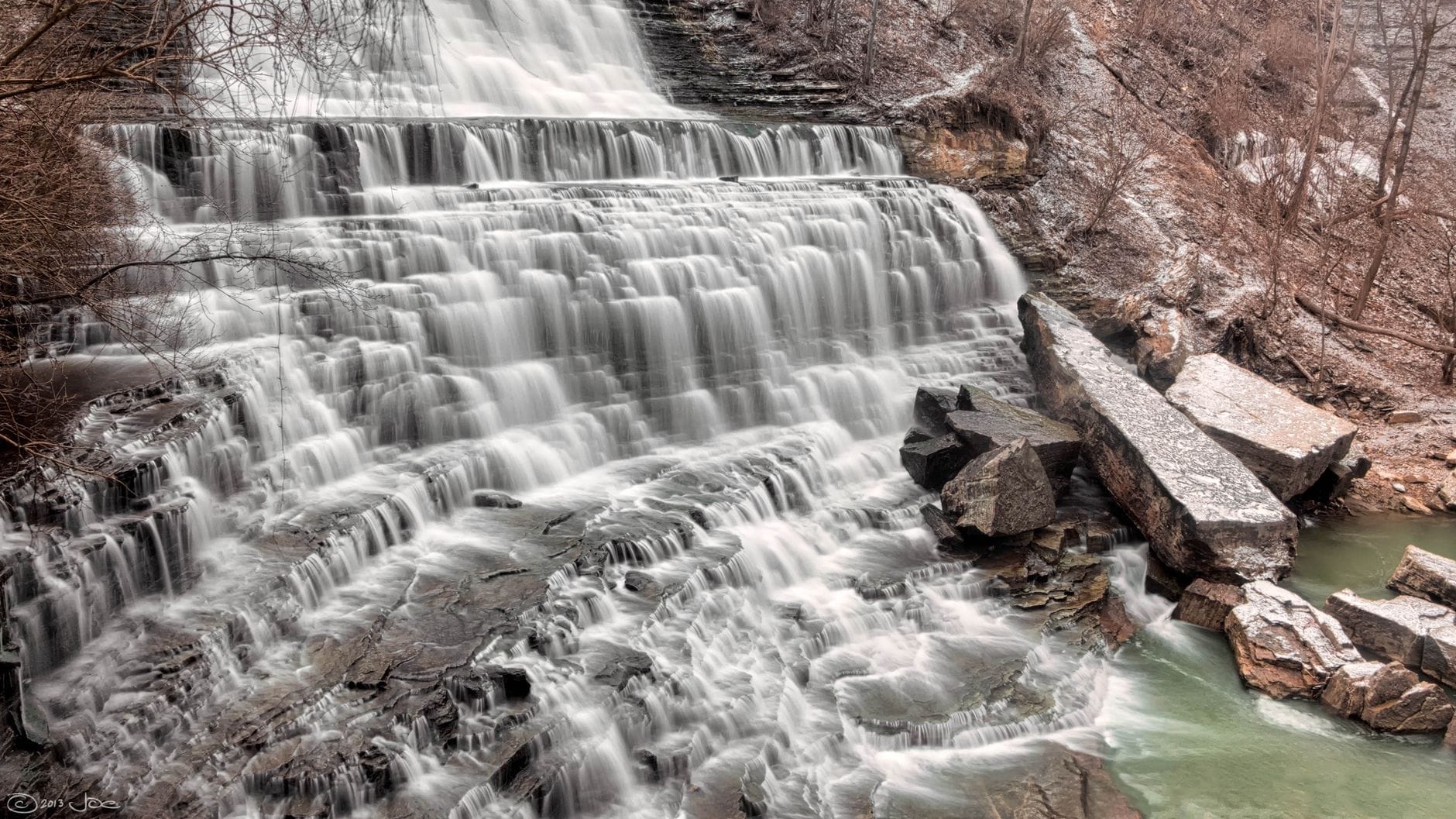
Albion Falls on Red Hill Creek is a cascading waterfall, meaning water tumbles over a series of rock steps rather than a single sheer drop. The falls are about 18 metres high and sit inside a city park with free parking and no reservation required, which makes them one of the most accessible in the Hamilton system. The viewing area at the top gives you a clear sightline down the cascade. This is often the starting point for first-time visitors who want a guaranteed, low-barrier experience.
Felker's Falls
Felker's Falls in the Stoney Creek area drops about 22 metres and is notable for being largely hidden until you're almost on top of it. The trail through Felker's Falls Conservation Area follows a wooded creek bed, and the waterfall appears around a bend. The sound precedes the view. This is one of the better options for a quieter experience midweek, and the trail's short length makes it manageable for families with children.
Tickets & tours
Live prices and dates from our booking partner. If you book, we may earn a commission at no extra cost to you.
Toronto Old Town: Dark Side Exploration Game and Tour
From 12 €Instant confirmationFree cancellationLEGOLAND Discovery Centre Toronto tickets
From 16 €Instant confirmationFree cancellationToronto 'Little Canada' entrance tickets
From 27 €Instant confirmationFree cancellationNiagara Falls evening tour with boat, dinner and Illumination Tower
From 77 €Instant confirmationFree cancellation
How to Get There from Toronto
Hamilton is about 75 kilometres southwest of downtown Toronto. The most straightforward route is the GO Train or GO Bus from Union Station to Hamilton GO Centre, which takes roughly 65 to 90 minutes depending on the service. From Hamilton GO Centre, you'll need a taxi, rideshare, or the Hamilton Street Railway (HSR) bus network to reach most waterfall trailheads, as the falls are distributed across different parts of the city and its surrounding communities. Not all trailheads are well-served by transit, so check your specific destination before committing to public transit for the whole trip.
By car, the QEW and Highway 403 both connect Toronto to Hamilton, and the drive typically takes 60 to 90 minutes depending on traffic and your exact destination within the city. Driving gives you the flexibility to visit two or three waterfall sites in a single day without logistical complexity. Parking is available at most conservation areas, though fees and reservation requirements vary by site.
If you're planning a broader day trip that combines Hamilton waterfalls with other nearby Ontario destinations, the day trips from Toronto guide covers regional options including wine country, the Niagara region, and conservation areas along the escarpment.
Best Time to Visit and What the Seasons Actually Mean for Waterfalls
Spring, specifically late March through May, offers the highest water volumes thanks to snowmelt and spring rainfall. Webster's Falls and Tews Falls are at their most dramatic during this window. The trails can be muddy and wet underfoot, so waterproof footwear is not optional. Temperatures can range from just above freezing to mild, so layers are necessary.
Summer brings the most visitors, particularly on weekends between June and August. Conservation areas fill up quickly and the reservation requirement at Spencer Gorge is strictly enforced. The upside is reliable weather, longer daylight hours, and lush green canopy on the trails. Fall, September and October in particular, brings coloured foliage that frames the waterfalls in orange and red. Water volumes drop compared to spring but remain adequate at most falls. Crowds thin significantly after Labour Day.
Winter is genuinely striking but also genuinely dangerous. Several of the smaller falls freeze partially or fully in January and February, forming thick columns of ice that photographers travel specifically to capture. However, the trails become icy and unpredictable. Some conservation areas reduce access or close sections of trail in winter. If you visit in cold months, microspike traction devices on your footwear are strongly recommended, and checking current trail conditions with the Hamilton Conservation Authority before going is essential.
💡 Local tip
Weekday visits in late September or October offer the best combination of fall colour, reasonable water flow, open trails, and no crowds. This window is arguably the most underused sweet spot in the waterfall calendar.
Planning a Multi-Waterfall Route
The most efficient approach for a full day is to anchor your itinerary around Spencer Gorge, which covers Webster's and Tews Falls in a single visit, then build one or two additional stops around it. Albion Falls is on the eastern side of the city and works well as a second stop if you're driving, since it requires no reservation and has its own parking. Felker's Falls in Stoney Creek adds a third stop for those with time. This eastern loop can be done in reverse order if you're approaching from Toronto's east end.
For visitors who want to combine the waterfall trip with time in Toronto itself, Toronto's ravine network offers urban hiking that, while less dramatic than Hamilton's falls, gives a taste of the region's glacially-carved geography before or after the drive west.
The cityofwaterfalls.ca website categorizes all Hamilton-area falls by location, accessibility, and difficulty. It's the most practical planning resource available and cross-references parking, trail surfaces, and any mobility-accessible viewing points. Several falls, including Albion Falls and some in Stoney Creek, have paved or gravel paths near the viewpoint that accommodate visitors with limited mobility, though steeper gorge trails are typically not accessible.
Photography, Gear, and What to Wear
The best light for waterfall photography is overcast. Direct sun creates harsh contrast and blows out the white water. Cloudy days, common in Hamilton during spring and autumn, produce even, diffused light that captures the texture of falling water far better than a clear afternoon. Most falls face north or east, which means late morning on overcast days is often ideal.
A tripod and a neutral density filter allow for long-exposure shots that render the water silky, a popular technique at Webster's Falls. The plunge pool area at Webster's generates consistent spray, so a lens cloth is essential. Smartphone photographers will find the platform viewpoints well-positioned for wide-angle compositions, though the gorge walls at Tews Falls can be tricky to capture in full without a wider lens.
Footwear is the single most important gear decision for this trip. Trail shoes or waterproof hiking boots with ankle support are appropriate for most sites. Flat-soled sneakers become a liability on wet rock near plunge pools and on clay trail sections after rain. Bring a light waterproof jacket regardless of the forecast; proximity to the falls means you will get damp.
Honest Assessment: Is This Worth the Trip?
For visitors based in Toronto who prioritize nature and outdoor experience, Hamilton's waterfalls are one of the most rewarding half-day or full-day excursions available within the region. The combination of geological drama, trail variety, and the genuine surprise of finding over a hundred waterfalls inside an industrial city makes it distinctive. Webster's Falls alone justifies the drive for most first-time visitors.
That said, this is not an attraction that suits everyone. Visitors who don't enjoy hiking, uneven terrain, or outdoor conditions in variable weather will find the experience frustrating rather than rewarding. If your travel priorities lean toward urban culture, dining, or indoor experiences, your time in the Toronto region is better spent at places like the Royal Ontario Museum or exploring the Distillery District. The Hamilton waterfalls are genuinely best suited to people willing to put on hiking boots and spend time outdoors.
The logistics also require more planning than a typical urban attraction. Reservations, variable parking fees, a 60-to-90-minute drive or transit journey, and trail conditions that shift with weather all demand preparation. Visitors who don't plan ahead, particularly on summer weekends, risk arriving at a locked conservation area gate. The reward is real, but so is the planning overhead.
Insider Tips
- Webster's Falls looks completely different from the lower gorge trail versus the upper platform. Most visitors only see it from the top. If trail conditions allow, descend to the base for an entirely different perspective on the scale of the drop.
- Tews Falls is consistently undervisited compared to Webster's despite being the taller of the two. If crowds at the Webster's platform bother you, walk the extra 15 minutes to Tews and you'll often find yourself alone.
- The cityofwaterfalls.ca site assigns a 'flow' rating to many waterfalls and notes which are seasonal. Cross-reference this with recent rainfall using a weather app before choosing your route. Some smaller falls run dry by August in low-rain years.
- Several waterfalls in the Stoney Creek and Ancaster areas are within short walking distance of each other and require no reservation. Building an itinerary around these free-access falls is a viable strategy if Spencer Gorge reservations are fully booked.
- If you're driving from Toronto on a weekend, leave before 8:00 a.m. to avoid both highway congestion on the QEW and the rush for parking spots at conservation areas, which fill well before noon in peak summer.
Who Is Hamilton Waterfalls For?
- Hikers and trail walkers looking for a nature escape within 90 minutes of Toronto
- Photographers chasing long-exposure waterfall shots or winter ice formations
- Families with older children who can handle moderate trails and uneven terrain
- Geology and natural history enthusiasts interested in the Niagara Escarpment
- Visitors combining the trip with a broader Niagara region or southwestern Ontario itinerary
Nearby Attractions
Combine your visit with:
- Aga Khan Museum
The Aga Khan Museum in Toronto is one of North America's only institutions dedicated to the arts of Muslim civilizations. Housed in a purpose-built building designed by architect Fumihiko Maki, it holds over 1,200 masterpieces spanning 14 centuries. Whether you spend 90 minutes or a full afternoon, the experience rewards curiosity at every turn.
- The Village at Black Creek (Black Creek Pioneer Village)
The Village at Black Creek is a fully realized open-air living history museum in northwest Toronto, where around 40 restored historic buildings, heritage breed livestock, and costumed interpreters recreate rural Ontario life from the 1800s. Operated by the Toronto and Region Conservation Authority, it offers a rare, tactile experience of pre-industrial Canada that few urban attractions can match.
- Blue Mountain & Collingwood
Perched on the Niagara Escarpment above Georgian Bay, Blue Mountain and Collingwood form Ontario's most accessible four-season resort destination. Whether you come for winter skiing, summer hiking, or a weekend in the pedestrian village, the area rewards visitors who plan around the season.
- Canada's Wonderland
Canada's Wonderland is the country's largest amusement park, located in Vaughan just north of Toronto. With 18 roller coasters, more than 200 attractions, and a 20-acre water park, it's a full-day commitment that rewards planning. Here's how to make the most of it.
Planning a trip? Discover personalized activities with the Nomado app.