GardeRobe MannekenPis: Inside the Wardrobe of Brussels' Most Famous Statue
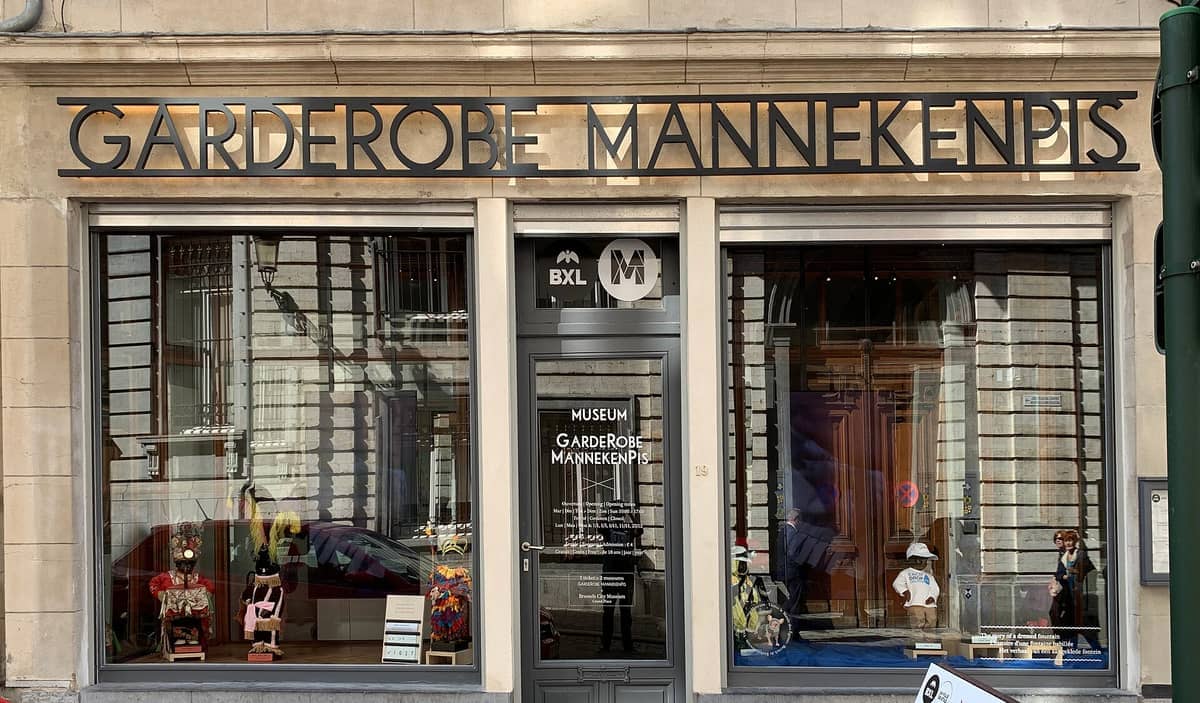
GardeRobe MannekenPis is the dedicated museum on Rue du Chêne that houses the ever-growing wardrobe of Brussels' beloved bronze fountain statue. With over 900 costumes donated by governments, organisations, and fans worldwide, it turns a roadside curiosity into a surprisingly rich story about diplomacy, folklore, and civic identity.
Quick Facts
- Location
- Rue du Chêne 19 / Eikstraat 19, 1000 Brussels (Grand-Place / Îlot Sacré)
- Getting There
- Brussels-Central Station (train, metro lines 1 & 5); trams 3, 4, 32 to Anneessens; buses 48, 95
- Time Needed
- 45–75 minutes
- Cost
- Approx. €5 adults; reductions available; free entry first Sunday of the month. Verify current rates before visiting.
- Best for
- Culture-curious visitors, families, fans of quirky civic history
- Official website
- www.mannekenpis.brussels/en
What Is GardeRobe MannekenPis?
Most visitors who make the short pilgrimage to see Manneken Pis leave mildly underwhelmed. The statue is tiny, the street is packed, and there is little context for why this particular urinating boy has become the unofficial symbol of an entire capital city. GardeRobe MannekenPis exists precisely to fill that gap. Located at Rue du Chêne 19, barely a two-minute walk from the statue itself, this small but carefully curated museum houses around 140 costumes selected from the more than 900 that have been gifted to Manneken Pis from across the globe.
The collection spans royal regalia, folk costumes, football kits, political tributes, and elaborate handmade outfits sent by foreign governments as acts of diplomacy and goodwill. The tradition of dressing the statue dates back to at least the 18th century, and today the City of Brussels continues to schedule official dressing ceremonies throughout the year. The museum is part of the official Manneken Pis complex, managed in connection with the City of Brussels.
💡 Local tip
GardeRobe MannekenPis is open Tuesday to Sunday, 10:00–17:00, and closed on Mondays. Entry is free on the first Sunday of each month — a good option if you are watching your budget.
Stepping Inside: What the Experience Actually Feels Like
The entrance on Rue du Chêne is unassuming. There is no grand forecourt, no queue management system, and no gift shop gauntlet to push through on the way in. You simply arrive at a narrow historic building in the heart of the Îlot Sacré neighbourhood, pay at the desk, and descend into a museum that feels more like a curated archive than a tourist attraction.
The costumes are displayed in glass cases arranged by theme and region of origin. The range is genuinely striking: a sequined Mardi Gras outfit from New Orleans sits near a hand-embroidered ceremonial tunic from a West African nation, which sits near a replica of a medieval Brussels guild uniform. The scale of each costume is, of course, tiny, scaled to the 55.5-centimetre bronze statue. Seeing hundreds of miniature outfits lined up together has an almost surreal quality, somewhere between a doll museum and a diplomatic archive.
An interactive terminal allows visitors to browse the full catalogue digitally and learn the story behind individual donations. This is where the museum earns its keep for genuinely curious visitors. Some costumes were presented by heads of state. Others were made by schoolchildren. Reading the provenance notes shifts the experience from passive observation to something more like detective work into how a small bronze statue became a canvas for international goodwill.
Tickets & tours
Hand-picked options from our booking partner. Prices are indicative; availability and final rates are confirmed when you complete your booking.
Brussels self-guided audio tour with Train World ticket
From 28 €Instant confirmationGhent tour from Brussels
From 43 €Instant confirmationFree cancellationTablet Workshop at Choco-Story Brussels
From 45 €Instant confirmationShared tour of Delft and the Keukenhof Estate from Brussels
From 86 €Instant confirmationFree cancellation
The History Behind the Wardrobe
Manneken Pis has occupied a corner of central Brussels since at least the early 17th century, though the current bronze casting by sculptor Jerôme Duquesnoy the Elder dates to 1619. Almost immediately after the statue was installed, it became a focal point for civic pride and, eventually, for gifting. The first recorded costume donation came from the Elector of Bavaria in 1698. Louis XV of France added another in 1747. From that point on, the tradition became self-sustaining.
The museum puts this tradition in broader context. Brussels, as the de facto capital of the European Union and a city historically positioned at the crossroads of French and Dutch-speaking Belgium, has always been a place where symbolic gestures carry weight. Manneken Pis accumulated that weight over centuries, functioning as a neutral mascot for a city that has rarely been neutral about anything. For more on how Brussels' civic identity shaped its public spaces, the Manneken Pis fountain page provides useful background on the statue's mythology and ongoing public role.
Morning vs. Afternoon: When to Visit
GardeRobe MannekenPis does not draw the same volume of foot traffic as the Grand-Place or the Galeries Royales, so timing is less critical here than at other central Brussels attractions. That said, the museum sits in one of the most densely visited corridors in the city centre, and the surrounding streets can feel genuinely congested between 11:00 and 15:00, especially in summer.
Opening time, around 10:00, is typically the quietest window. The morning light filters into the display rooms at a low angle that catches the texture of the costumes well, particularly the embroidered and metallic pieces. If you are planning to visit Manneken Pis itself before or after, do it before 09:30 or after 17:00 to avoid the worst of the crowds around the statue.
ℹ️ Good to know
If you are visiting during a scheduled dressing ceremony — when the statue is dressed in a new costume in a public ritual — the GardeRobe museum often has contextual material about that specific outfit on display. The City of Brussels publishes the dressing calendar on its official website.
Getting There and Practical Navigation
The museum is about a five-minute walk from Brussels-Central Station, which is served by national rail (SNCB/NMBS), metro lines 1 and 5, and is roughly 17–25 minutes by train from Brussels Airport (BRU) in Zaventem. From the station, walk south down Rue de l'Étuve and you will pass Manneken Pis itself before reaching Rue du Chêne. Alternatively, trams 3, 4, and 32 stop at Anneessens, from which the museum is about a four-minute walk.
The museum is in the historic core of the Grand-Place and Îlot Sacré area, which makes it easy to combine with a visit to the Grand-Place (five minutes on foot), the Galeries Royales Saint-Hubert, or the nearby Brussels Town Hall. A half-day loop taking in all of these is entirely manageable on foot.
⚠️ What to skip
Accessibility details for GardeRobe MannekenPis are not comprehensively documented in publicly available sources. The building is in the historic city centre and may have steps or narrow interior passages. Visitors with mobility requirements should contact the museum directly before visiting to confirm access arrangements.
Photography and What to Expect Visually
The costumes are lit consistently throughout the display cases, and the glass fronts reflect if you shoot straight on. Angling your camera slightly to the side eliminates most glare. The interactive terminal screen makes for a surprisingly good documentary photo if you catch someone genuinely absorbed in reading a costume's provenance.
Do not expect expansive gallery space or dramatic architectural interiors. The museum is compact and the displays are intimate. This is not the place to arrive hoping for sweeping atrium photography. The visual appeal lies in the detail: the tiny scale of the costumes, the diversity of their origins, the craft evident in even the smallest handmade piece.
Who Will Enjoy This, and Who Might Not
Visitors who approach GardeRobe MannekenPis with genuine curiosity about Brussels' civic culture, its role as a crossroads city, and the odd diplomacy of costume gifting will find it genuinely rewarding. Families with children who have just seen the statue outside often find the museum gives them something concrete to discuss. For a broader picture of Brussels' cultural offer, the best museums in Brussels guide helps put the GardeRobe in context alongside the city's larger institutions.
Visitors expecting a comprehensive history museum, a major art collection, or anything approaching the scale of the Parc du Cinquantenaire institutions will be disappointed. The museum is small, the subject is niche, and the experience is deliberately focused. If you are already sceptical about Manneken Pis as a tourist draw, the museum is unlikely to change your mind. If you are travelling with very young children below school age, the interactive terminal and display cases may hold attention for twenty minutes at most.
Insider Tips
- Check the City of Brussels' official dressing calendar at brussels.be before your visit. If a ceremony is scheduled during your stay, the museum often displays background material on the specific costume being presented that day, adding a live dimension to the collection.
- The first Sunday of each month brings free admission at GardeRobe MannekenPis. If you are visiting Brussels on a tight budget, coordinating your museum days around this schedule across multiple venues can save a meaningful amount over a full trip.
- Combine your visit with Jeanneke Pis and Zinneke Pis to complete the full trio of Brussels' urinating statues. All three are within walking distance of the GardeRobe, and each has a distinct history that the museum visit helps frame.
- The interactive terminal in the museum lets you browse costumes not currently on physical display. If there is a specific country or theme you are interested in, it is worth spending ten minutes on the terminal before moving through the physical cases — it gives you better search filters than trying to read every label.
- Morning visits on weekdays tend to be quietest. The surrounding streets see a marked increase in tour groups between 10:30 and 13:00, so arriving at opening time means you can move through the displays at your own pace without negotiating large groups.
Who Is GardeRobe MannekenPis For?
- Culture-curious travellers who want depth behind a famous symbol
- Families with school-age children looking for an accessible, short museum visit
- First-time Brussels visitors combining the Grand-Place area in a half-day loop
- Travellers interested in diplomatic history, folk costume, or civic identity
- Budget visitors on the first Sunday of the month when entry is free
Nearby Attractions
Other things to see while in Grand-Place & Îlot Sacré:
- Belgian Comic Strip Center
Housed in a Victor Horta-designed Art Nouveau masterpiece, the Belgian Comic Strip Center tells the story of Belgium's extraordinary contribution to comic art. From Tintin to the Smurfs, this is one of Brussels's most rewarding museum experiences for visitors of almost any age.
- Brussels Beer Museum
Tucked into the cellars of a baroque guild house on the Grand-Place, the Belgian Brewers Museum (Musée des Brasseurs belges) tells the story of Belgian brewing through historic equipment, documents, and a glass of beer included with your €5 ticket. Small, unhurried, and genuinely atmospheric, it rewards curiosity about one of Belgium's defining cultural exports.
- Brussels Town Hall (Hôtel de Ville)
The Brussels Town Hall, or Hôtel de Ville de Bruxelles, is the Gothic building that has anchored the UNESCO-listed Grand-Place for centuries. Interior access is by guided tour only, making advance planning essential. The exterior, however, is free to admire at any hour.
- Cathedral of St. Michael and St. Gudula
Rising above a broad flight of stone steps just minutes from Grand-Place, the Cathedral of St. Michael and St. Gudula is the most architecturally significant church in Belgium. Entry to the main nave is free, the stained-glass windows are among the finest in Northern Europe, and the atmosphere shifts dramatically between early morning quiet and afternoon tour-group activity.