Frederiksborg Castle: Denmark's Most Spectacular Renaissance Palace
Rising from a lake in the town of Hillerød, Frederiksborg Castle is Denmark's grandest Renaissance building and home to the Museum of National History since 1878. It takes about 40 minutes by S-train from Copenhagen and rewards visitors with royal interiors, formal gardens, and a scale that genuinely surprises first-time visitors.
Quick Facts
- Location
- Frederiksborg Slot 10, 3400 Hillerød, Denmark — approx. 40 km north of Copenhagen
- Getting There
- S-train Line A to Hillerød Station, then a 20-minute walk or short local bus ride to the castle
- Time Needed
- 3 hours at the castle; allow 5–6 hours for the full day trip from Copenhagen
- Cost
- Adults DKK 125 / Children (0–17) free / Students & Seniors DKK 105 / Group tickets (10+ people) DKK 105 per person. Verify before travel.
- Best for
- History enthusiasts, architecture lovers, families, and photographers
- Official website
- frederiksborg.dk/en
What Frederiksborg Castle Actually Is
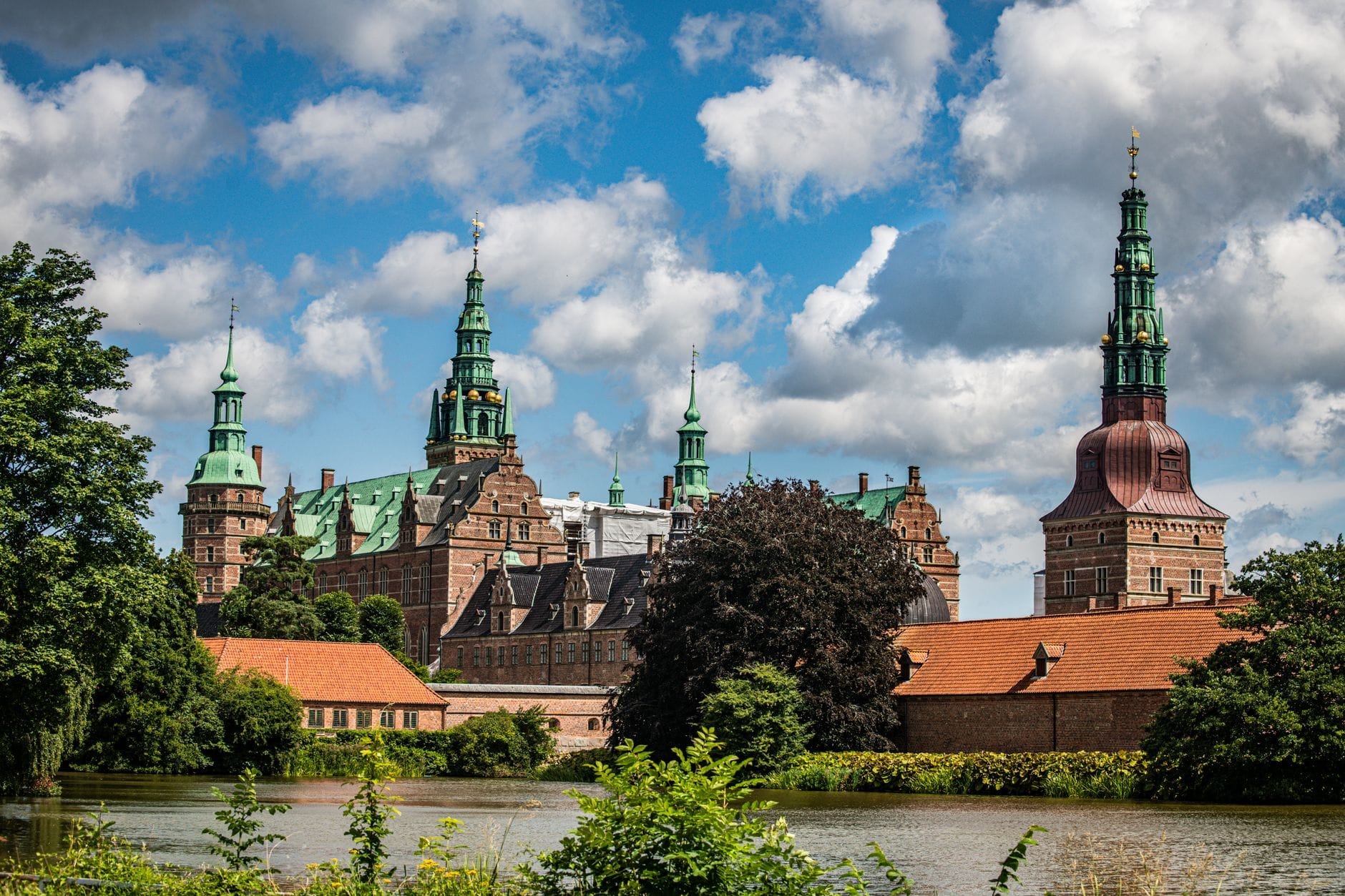
Frederiksborg Castle — Frederiksborg Slot in Danish — is a large Renaissance palace complex built on three small islands in the Slotssø (Castle Lake) at Hillerød, roughly 40 kilometers north of Copenhagen. It is the largest Renaissance building in Scandinavia, commissioned by the ambitious Danish King Christian IV and completed around 1620. The site had earlier royal structures from around 1560, but the castle as it stands today is Christian IV's project, and his fingerprints are everywhere: red brick walls, copper-green spires, sandstone detailing, and a layout that turns the surrounding water into an architectural feature.
Since 1878, the castle has housed the Museum of National History (Museet for Danmarks Historie), which makes it unusual among European royal palaces. This is not a preserved royal residence. It is an active, curated museum telling Danish history through portraits, furnishings, tapestries, and decorative arts spanning five centuries. The collection numbers in the thousands of works and fills room after room across multiple floors.
ℹ️ Good to know
Frederiksborg Castle is not a functioning royal residence. The Danish Royal Family does not live here. It is a public museum, open year-round, and far less crowded than the royal palaces in Copenhagen itself.
Getting There from Copenhagen
The journey from central Copenhagen is straightforward and one of the more pleasant rail rides available as a day trip. Take S-train Line A (the green line on most maps) from any central Copenhagen station toward Hillerød. The ride from Copenhagen's main station takes approximately 40 minutes. Trains run frequently, so there is no need to plan tightly around a specific departure.
From Hillerød Station, the castle is walkable — the route is flat, well-signposted, and takes around 20 minutes on foot through the town. A local bus also connects the station to the castle if you prefer. The journey fits naturally into a day trip from Copenhagen, and the round trip gives you most of the day at the castle without feeling rushed.
If you hold a Copenhagen Card, check the current card terms, as coverage for day trips and regional destinations can vary. Always verify zone coverage before boarding.
💡 Local tip
Buy your train ticket before boarding at any S-train station or via the DOT Tickets app. The zones required for Hillerød extend beyond the standard Copenhagen city zones, so double-check you purchase the correct zone ticket.
Tickets & tours
Hand-picked options from our booking partner. Prices are indicative; availability and final rates are confirmed when you complete your booking.
48-Hour Hop-on Hop-off Copenhagen Sightseeing Bus Tour
From 39 €Instant confirmationFree cancellationCity Sightseeing Hop-On Hop-Off Bus Tour of Copenhagen
From 0 €Instant confirmationFree cancellationCity Sightseeing Hop-On Hop-Off Bus Tour of Copenhagen
From 0 €Instant confirmationFree cancellationFeel like a royal in Rosenborg Castle during a private walking tour
From 66 €Instant confirmationFree cancellation
The Castle at Different Times of Day
The first view of Frederiksborg Castle arrives before you reach the entrance. Walking from town, the castle materializes across the lake: three connected island buildings reflected in calm water, the central tower clock face visible from a distance. In the morning, the low northern light gives the red brick a warm, almost terracotta quality. By midday, the sandstone ornamental details become crisper and the copper-green rooflines contrast sharply against whatever sky the Danish weather provides.
Visitor numbers are typically lighter in the morning, particularly on weekdays. Tour groups tend to arrive mid-morning, so the interior rooms feel noticeably more congested between roughly 10:30 and 13:00 in peak season (June to August). If your priority is moving through the Great Hall, the Chapel, or the Audience Chamber without shoulder-to-shoulder crowds, aim to be at the ticket desk when the castle opens.
The gardens — a formal Baroque design on the south slope below the main building — are at their best in May and June when the hedges are freshly clipped and spring planting is in full color. In autumn, the surrounding trees along the lake edge shift to gold and copper, making the exterior views and lakeside walk genuinely striking. Winter visits are quieter, and although opening hours are generally 10:00–17:00 year-round, it is still wise to check for any special holiday hours or temporary room closures before you go.
Inside the Museum: What You Will Actually See
The Museum of National History is chronologically organized, moving from the early Renaissance rooms at the top of the castle down through the centuries. The collection is heavy on portraiture — Danish monarchs, noblemen, military commanders, and cultural figures line the walls in thick gilded frames. For visitors with an interest in Danish royal history, this is the most comprehensive visual record available under one roof.
The Chapel (Slotskirken) is the architectural centerpiece. Largely spared from a devastating fire that destroyed much of the castle in 1859, it retains original 17th-century decoration: an ornate ebony and silver altar, a Compenius organ from 1610 that still functions, and a ceiling that pulls your eyes upward involuntarily. The Chapel is where Danish kings were anointed between 1671 and 1840, and the accumulated weight of that history is palpable in a way that photographs don't quite capture.
The Great Hall (Riddersalen) is the largest room in the castle and was reconstructed after the 1859 fire using historical records and surviving decorative elements. It now displays tapestries commemorating Danish military victories, a coffered ceiling, and walls hung with weapons and armor. The scale is considerable — this is the kind of room that makes modern architecture feel modest by comparison.
💡 Local tip
Allow at least 2.5 hours inside the museum if you want to see the Chapel, Great Hall, and a representative selection of the portrait galleries without rushing. A full exploration of every room takes considerably longer.
The Gardens and Lake
The formal Baroque garden below the south facade was redesigned in the early 20th century along historical principles and is freely accessible. Geometric parterre beds, trimmed hedgerows, and a central axis create a structured landscape that contrasts with the wild reed beds around the lake's edges. The garden is not enormous, but it provides a necessary change of pace after time spent inside.
The lakeside path around Slotssø is one of those quietly rewarding walks that most visitors skip in favor of going straight to the castle entrance. The reflections of the towers in calm morning water are worth stopping for, and the scale of the complex becomes clearer when viewed from across the water than from the courtyard itself. The walk adds perhaps 20–30 minutes and requires no additional planning.
Practical Details and Honest Assessment
Opening hours are generally 10:00 to 17:00 daily throughout the year, including Mondays; check the official website for any special holiday hours or temporary closures before traveling, particularly around Danish public holidays.
Admission pricing at the time of writing: adults DKK 125, children aged 0–17 free, students and seniors (65+) DKK 105, and groups of 10 or more DKK 105 per person. Prices should be verified directly at frederiksborg.dk before your visit, as they are subject to change.
Photography is generally permitted inside the museum without flash. The Chapel tends to have specific rules that staff will clarify on entry. Wear comfortable shoes — the castle covers significant floor area across multiple levels, and the stone floors in older sections are uneven.
The castle has a cafe on site for refreshments. Hillerød town itself has a small pedestrian center with bakeries and lunch options if you want to eat before or after. Frederiksborg pairs naturally with other royal castle visits in the Copenhagen region, and some travelers combine it with a stop at Hillerød's own town center on the way back.
Who might not enjoy this visit: if you have limited mobility, the castle involves stairs and uneven stone surfaces, and detailed accessibility information is not readily available in third-party sources — contact the museum directly before visiting. If Scandinavian royal history is not among your interests, the museum's portrait-heavy galleries may feel repetitive after the first floor. The castle is less suited to very young children without a specific interest in history, though the lake and gardens provide outdoor space for breaks.
Seasonal Considerations
The best time to visit Copenhagen broadly applies here: May to September offers the most reliable weather for enjoying the gardens and exterior. Summer crowds are real but manageable compared to the major Copenhagen city attractions. October visits catch autumn color around the lake at the cost of slightly shorter afternoon light. Winter visits are genuinely quiet — the museum does not empty entirely, but you will have rooms largely to yourself, which changes the atmosphere considerably.
Rain affects the experience differently than at open-air attractions. The interior collection is unaffected, but the lake walk and garden lose much of their appeal in heavy rain. Check the forecast, bring a light waterproof layer, and treat the outdoor components as a bonus rather than a guarantee.
Insider Tips
- Walk around the lake before entering the castle. The view of all three island buildings from the far bank is more dramatic than any photograph taken from the courtyard, and it helps orient you to the full scale of the complex.
- The Compenius organ in the Chapel, built in 1610, is one of the best-preserved Renaissance organs in existence. If you are visiting during a period when it is being played or demonstrated, this alone is worth the trip.
- Weekday mornings in May, September, and October combine thinner crowds with good light conditions for exterior photography. Avoid summer Saturday middays if you want space in the Great Hall.
- The museum shop stocks serious academic titles on Danish history and decorative arts that are difficult to find in Copenhagen city center — worth a look if you have an interest in the subject beyond the standard postcard fare.
- If you are combining Frederiksborg with other North Zealand sights, Hillerød is also a practical base for reaching Kronborg Castle at Helsingør by regional train, making a two-castle day feasible for those with high stamina.
Who Is Frederiksborg Castle For?
- Travelers with a genuine interest in Danish royal and national history
- Architecture enthusiasts drawn to Scandinavian Renaissance and Baroque design
- Photographers looking for dramatic exterior reflections and formal garden compositions
- Families with older children who can engage with historical context
- Copenhagen visitors who have already covered the city's main museums and want a substantially different experience
Nearby Attractions
Combine your visit with:
- Amager Strandpark
Amager Strandpark (Amager Beach Park) is Copenhagen's largest beach, offering a total of 4.6 km of sandy shoreline along the city's southeastern coast. Free to enter and easily reached by metro, it combines a natural shoreline with a 2 km artificial island and sheltered lagoon opened in 2005, making it a genuine summer destination for locals and a quiet surprise for visitors expecting a landlocked Scandinavian capital.
- Arken Museum of Modern Art
Located on the Ishøj coastline south of Copenhagen, ARKEN Museum of Modern Art combines a dramatically sculptural building with a serious contemporary art program. The journey out of the city is part of the experience, and the landscape setting changes everything about how you engage with the art.
- Bakken
Dyrehavsbakken, known simply as Bakken, has been drawing visitors to the forests north of Copenhagen since 1583, making it the oldest operating amusement park on earth. Unlike polished theme parks, it mixes rickety roller coasters, carnival stalls, and open-air restaurants inside a UNESCO-recognized deer park, with free entry to the grounds.
- The Blue Planet – National Aquarium Denmark
The Blue Planet, Denmark's National Aquarium, sits in Kastrup on the Øresund coast with 7 million liters of water, 450 species, and a striking spiral building that's worth examining before you even step inside. This guide covers what to expect from the exhibits, the best times to visit, and how to get there without confusion.