Estadio Benito Villamarín: Inside Real Betis's Cathedral of Football
Estadio Benito Villamarín is the home ground of Real Betis Balompié, one of Spain's most passionate fan clubs, located in the Los Remedios district of Seville. Whether you're visiting on matchday or joining the Betis Tour Experience, this guide covers everything you need to plan a worthwhile visit.
Quick Facts
- Location
- Av. de Heliópolis, s/n, 41012 Sevilla — Heliópolis district
- Getting There
- Bus stops Padre G. Tejero (Est. Benito Villamarín) and Glorieta Plus Ultra, approx. 100–150 m from the stadium
- Time Needed
- 1.5–2 hours for the stadium tour; 3+ hours on matchday
- Cost
- Tours approx. €10–€20 (members pay less); match tickets typically €30–€60. Verify current prices on the official site.
- Best for
- Football fans, families, sports architecture enthusiasts, and anyone wanting a local alternative to tourist-trail sights
- Official website
- en.realbetisbalompie.es/tour-real-betis
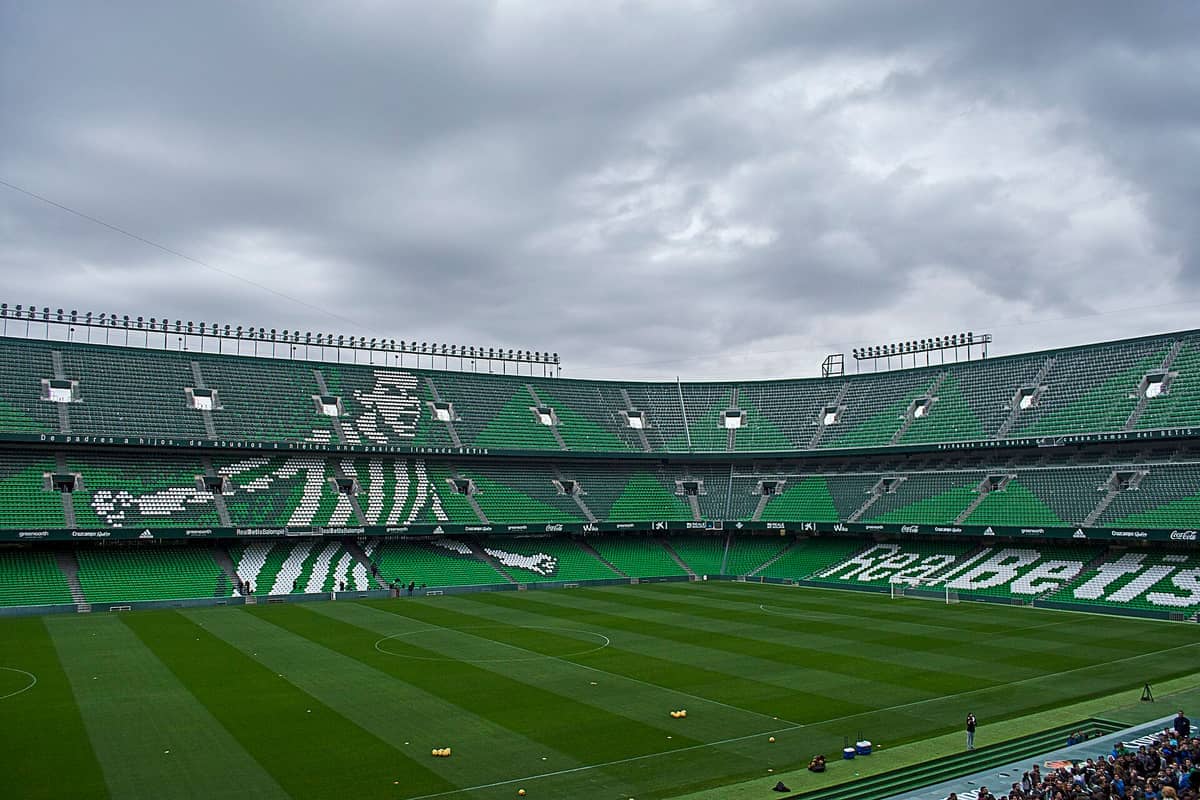
What Is the Estadio Benito Villamarín?
The Estadio Benito Villamarín is the permanent home of Real Betis Balompié, a La Liga club with one of the most devoted followings in Andalusia. The ground sits in the residential Heliópolis area, in the Bellavista-La Palmera district on the east side of the Guadalquivir, roughly 3 km south of Seville's historic centre. With a capacity of around 60,700 seats (exact figures vary given ongoing renovation work; verify on the official club site), it ranks among the largest club stadiums in Spain.
For non-football visitors, it may not be immediately obvious why a stadium deserves a place on a Seville itinerary. The answer is partly cultural: Real Betis and crosstown rivals Sevilla FC represent a civic identity that runs far deeper than the sport itself. Walking through the stadium on a quiet tour day or joining 60,000 bético faithful on matchday are genuinely different experiences of the same city. The architecture is substantial, the history is long, and the atmosphere during a home game is unlike anything on the standard tourist circuit.
ℹ️ Good to know
Tours do not operate on matchdays or sometimes the day before certain fixtures. Always check the official Real Betis website before booking or travelling to the stadium.
History and Cultural Significance
Real Betis Balompié was founded in 1907, making it one of the older clubs in Spanish football. The club has spent most of its history yo-yoing between Spain's top two divisions, but retains a fanbase that packs the stadium regardless of league position. The stadium itself has been expanded and renovated multiple times across the decades, and the current capacity reflects layers of construction added progressively through the late 20th and early 21st centuries.
The name honours Benito Villamarín, a former club president who oversaw significant development of the ground. In a city where sport, identity, and civic pride overlap, the choice of name carries weight. On the exterior of the stadium, the club's green-and-white colours are woven into signage and merchandise stalls that appear on approach from the surrounding streets.
The Betis-Sevilla derby, known locally as the Derbi Sevillano, is one of the most charged local derbies in European football. Both clubs share a city but almost no fans. If you want to understand what that rivalry means in practice, the Estadio Ramón Sánchez Pizjuán on the east side of the city offers the Sevilla FC perspective, and the contrast between the two club cultures is instructive.
Tickets & tours
Live prices and dates from our booking partner. If you book, we may earn a commission at no extra cost to you.
Sevilla FC football game at Estadio Ramon Sanchez Pizjuan
From 0 €Instant confirmationSevilla FC football game at Estadio Ramon Sanchez Pizjuan
From 0 €Instant confirmationSevilla FC football game at Estadio Ramon Sanchez Pizjuan
From 0 €Instant confirmationSevilla FC football game at Estadio Ramon Sanchez Pizjuan
From 0 €Instant confirmation
The Betis Tour Experience: What to Expect
The club's official stadium tour is called the Betis Tour Experience. It normally runs Monday to Friday (10:00–14:00 and 17:00–19:00, on the hour, with Friday sessions generally only in the morning) and on Saturdays (10:00–13:00, on the hour). These hours can shift depending on the fixture calendar, pre-match preparations, or stadium events, so confirming directly with the club before you go is essential.
The tour takes visitors through sections of the stadium that are off-limits during matches: the changing rooms, the players' tunnel, pitchside, the press box, and the directors' areas. The changing room visit tends to be the detail that surprises people most. The combination of industrial-grade kit storage, medical treatment areas, and the visual weight of an empty dressing room where pre-match instructions are given lends a specific texture to the visit that photographs rarely convey.
Prices as of the most recent official club announcement were approximately €12 for members and €20 for non-members. Reduced rates apply for fan clubs and school groups (reported at approximately €5 per person). Children under 5 enter free, and associations for disabled people have been offered complimentary access on designated days. Some third-party platforms list packages from around €10 upward depending on inclusions. These figures are subject to change; treat them as indicative and verify before booking.
💡 Local tip
Book the tour directly through the Real Betis official website rather than third-party resellers. The club site offers the most accurate, up-to-date pricing and availability, particularly around fixture congestion periods.
The Matchday Experience
If you can align your visit to Seville with a home match, the experience is worth prioritising. The area around the stadium transforms in the two hours before kick-off. Bars on the approach roads fill with supporters in green-and-white scarves. The sound level rises noticeably as you get within a few hundred metres of the ground. Street vendors selling scarves, shirts, and food operate from the early afternoon on weekend fixtures.
La Liga match tickets at Benito Villamarín are typically priced between approximately €30 and €60 in primary sale, with seats in the upper tiers behind the goals at the lower end and central main-stand positions at the higher end. Tickets for high-profile fixtures, including the Derbi Sevillano, sell out significantly faster and often command higher prices via secondary markets. For standard league games against mid-table opposition, tickets are usually available through the official club site up to matchday.
Inside the stadium, the acoustics in the main stands during a Betis goal are considerable. The club's supporters are known for sustained vocal support even during difficult patches of play, which makes the atmosphere more consistent than at grounds where noise is confined to goals alone. If you are visiting with children, seated areas in the side stands tend to be calmer than the behind-goal sections.
⚠️ What to skip
The Derbi Sevillano (Betis vs Sevilla FC) is an exceptionally high-security fixture. Visiting supporters are strictly segregated. If you are attending without a strong preference for either club, check which end neutral tickets are sold from, and be aware that the atmosphere can be intense for those unused to Spanish football derbies.
Getting to the Stadium
The Estadio Benito Villamarín is located at Avenida de Heliópolis, s/n, in the south-western part of Seville. The nearest bus stops are Padre G. Tejero (Est. Benito Villamarín) and Glorieta Plus Ultra, both within roughly 100–150 metres of the stadium entrance. TUSSAM, Seville's urban bus operator, connects this area with the city centre, and the journey from central streets typically takes around 20–25 minutes depending on traffic and the specific route.
On matchdays, additional bus services typically run to handle the increased passenger volume, though these can become crowded immediately after the final whistle. Walking away from the stadium for 10–15 minutes before attempting to board a bus or hail a taxi reduces wait times considerably. Taxis and ride-hailing apps (including Uber and Cabify, which currently operate in Seville) are options, though surge pricing applies in the immediate post-match period.
The stadium has parking available in the surrounding area, though spaces fill quickly before high-attendance games. Arriving by public transport or on foot from nearby neighbourhoods is generally more reliable on matchdays.
Los Remedios is primarily a residential neighbourhood rather than a tourist destination, but it sits close to several worthwhile stops. The Triana district is a short walk across the Puente de los Remedios, and the riverside promenade connects easily to both areas. If you are combining the stadium visit with broader sightseeing, this western part of the city repays some exploration.
Practical Details and Accessibility
The stadium is described as wheelchair-accessible, with adapted entrances, toilets, and parking areas available. Real Betis has also offered free tour access to associations for disabled people on specific visiting days. If accessibility is a factor in your planning, contact the club directly to confirm current arrangements and any advance requirements, as policies may change with ongoing renovations.
Photography is generally permitted during tours, though restrictions may apply in certain areas such as the media facilities. Bring a wide-angle lens or use a phone camera for pitchside shots where the scale of the stands becomes apparent. Midweek morning tours, when the stadium is quiet and light enters from the eastern side, produce the cleanest photographs of the playing surface.
For visitors trying to make the most of limited time in Seville, it helps to know how this stadium visit fits into a broader itinerary. Our 3-day Seville itinerary suggests how to sequence major attractions efficiently, and the stadium visit slots naturally into an afternoon in the western districts.
Who Should Skip This Attraction
Visitors with no interest in football or sports architecture will likely find the Betis Tour Experience underwhelming. The tour is engaging if you have context for what you are seeing: the weight of a dressing room visit depends on some appreciation of what happens in that room before a match. Without that frame, it is a series of corridors and seats. The same logic applies to matchday visits: the atmosphere is exceptional for those who find football meaningful, and just loud and time-consuming for those who do not.
If your priority is cultural history, Seville's architectural and artistic heritage is concentrated elsewhere. The Real Alcázar, the Seville Cathedral, and the Museo de Bellas Artes represent the city's deeper historical layers and may be better suited to visitors whose time is limited.
Insider Tips
- If you want to see the stadium from a fan's perspective without buying a match ticket, visit the club shop on a non-matchday. It is accessible without a tour ticket and gives a sense of the scale and culture without the entry fee.
- The morning tour sessions (first or second slot) on weekdays are the quietest. You are likely to share the tour with only a handful of other visitors, which means more time in each area and the chance to ask the guide direct questions.
- If you are attending a match and sitting in the away end is not relevant to you, the upper tier of the main Gol Norte stand offers a full panoramic view of the pitch and tends to have better availability than the central lower tiers.
- The bars immediately adjacent to the stadium on Avenida de Heliópolis are heavily priced toward matchday trade. Walk three or four blocks further into Los Remedios for quieter, cheaper pre-match drinks among local residents rather than crowds.
- Tour availability shrinks significantly during the busy spring fixture period (March through May) when midweek European games can cancel weekday tour slots at short notice. Check the official site within 48 hours of your planned visit.
Who Is Estadio Benito Villamarín (Real Betis) For?
- Football fans visiting Seville who want to engage with local club culture beyond Sevilla FC
- Families with children interested in sport, where the interactive tour format works well for younger visitors
- Sports architecture and stadium enthusiasts documenting large European grounds
- Travellers extending a visit into the Los Remedios and Triana areas who want an afternoon activity with clear structure
- Groups looking for a different kind of Seville experience outside the historic centre
Planning a trip? Discover personalized activities with the Nomado app.