Dubai Safari Park: The Complete Visitor Guide
Dubai Safari Park in Al Warqa is one of the UAE's largest wildlife attractions, home to around 3,000 animals across six themed zones. From guided safari buses through African and Asian habitats to giraffe breakfasts and kids' farm encounters, here is everything you need to plan a visit that actually delivers.
Quick Facts
- Location
- Al Warqa 5, off Hatta Road (E44), Dubai, UAE
- Getting There
- No direct metro. Best reached by car, taxi, or ride-hailing (Careem/Uber) via Sheikh Mohammed Bin Zayed Road (E311), Exit 52, or by taking the Red Line to Centerpoint and RTA bus F10 to Al Warqa 5. Free parking on site.
- Time Needed
- 4–6 hours for a thorough visit; full day with premium experiences
- Cost
- From AED 50 (Safari Park Pass); AED 117 online Safari Bundle with guided Explorer Safari Tour. Free for children under 3 and People of Determination with one companion.
- Best for
- Families with children, wildlife enthusiasts, visitors looking for a full-day outdoor experience away from the city's commercial core
- Official website
- dubaisafari.ae
What Dubai Safari Park Actually Is
Dubai Safari Park is a large-scale wildlife and conservation attraction located in the Al Warqa district, on the eastern outskirts of Dubai near Hatta Road (E44). It replaced the old Dubai Zoo, which had operated since 1967 in Jumeirah, and represents a significantly more ambitious undertaking: roughly 119 hectares of landscaped terrain housing around 3,000 animals from across Africa, Asia, and the Arabian Peninsula.
The park is organized into six themed zones: African Village, Asian Village, Explorer Village, Arabian Desert, Kids Farm, and Adventure Valley. This is not a traditional zoo where animals sit behind bars in compact enclosures. The design prioritizes habitat-style environments, and the guided safari bus tours through the larger zones genuinely feel different from a standard zoo walk. That said, it is not the Serengeti. Visitors should calibrate expectations accordingly: this is an exceptionally well-executed urban wildlife park, not open savanna.
💡 Local tip
Book the Safari Bundle online (AED 117) rather than buying a base pass at the gate (AED 50). The bundle includes one Explorer Safari Tour, a 35-minute guided bus ride through the larger animal zones, which is the highlight of the park. Buying separately at the park costs more and may sell out on busy days.
Opening Hours and When to Visit
Dubai Safari Park operates on a seasonal schedule. During winter (November through March), the park is open from 9:00 am to 8:00 pm. During summer (April through May), standard hours are 9:00 am to 6:00 pm, with last entry one hour before closing, and the park is usually closed to visitors during the peak summer months of June to September due to extreme heat.
The ideal visiting window is a weekday morning between October and March, arriving close to opening time at 9:00 am. At that hour, the light is soft, animals tend to be more active before the heat builds, and crowds are thin. By 11:30 am on weekends, the park fills noticeably, particularly around the Kids Farm and live show areas. Friday afternoons see the heaviest local family attendance.
⚠️ What to skip
Summer visits (June to September) are possible but come with significant heat. Midday temperatures regularly exceed 40°C. If you visit in summer, plan to arrive right at 9:00 am, take shelter in shaded or indoor sections during peak heat (roughly 11:30 am to 4:00 pm), and carry adequate water. The park is not primarily air-conditioned.
For context on Dubai's climate and how it affects outdoor activities, see the guide on the best time to visit Dubai, which covers seasonal conditions in detail.
The Six Zones: What to Prioritize
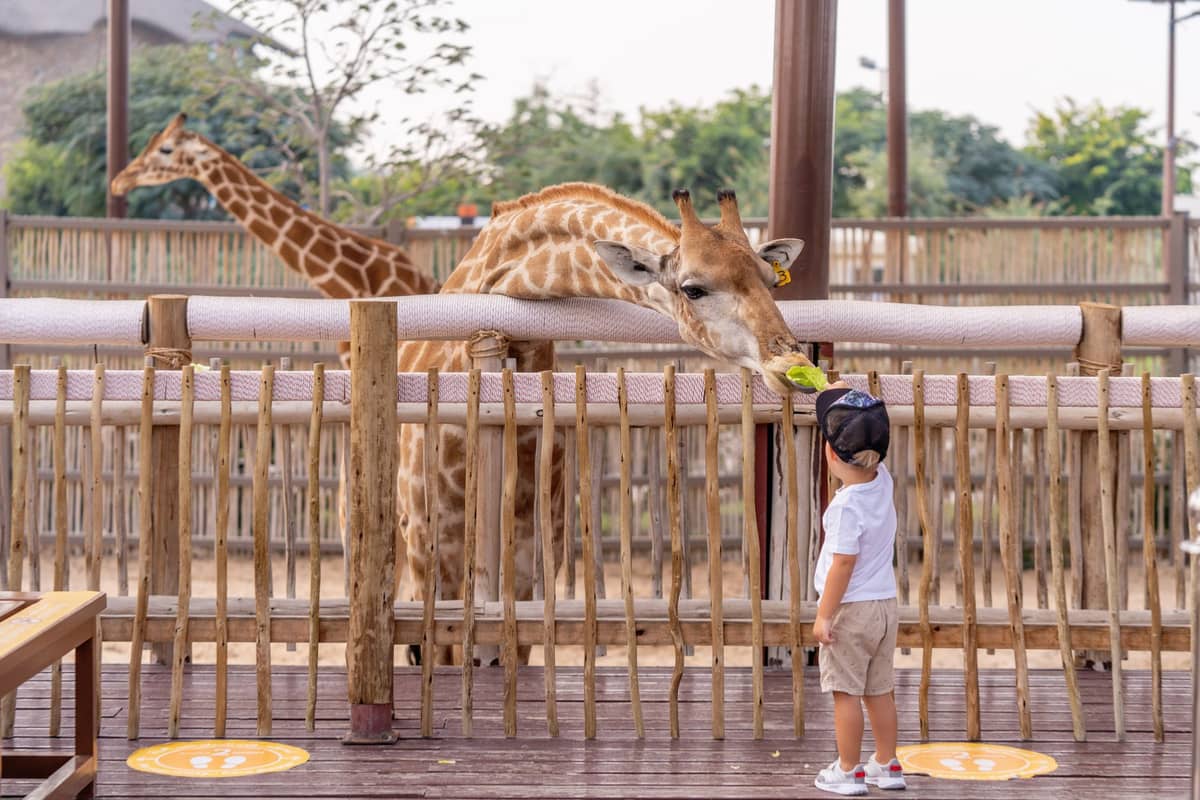
African Village is visually the most impressive zone. Giraffes, white rhinos, zebras, and African lions are among the residents, and the scale of the enclosures gives the animals more room to move than you might expect. The giraffe feeding station, where you can offer browse to the animals at close range, is a reliable crowd-pleaser and works well with children of most ages.
Asian Village covers Southeast and South Asian species: Malayan tapirs, orangutans, Asian elephants, and various big cats. The orangutan habitat tends to generate the most sustained interest from adult visitors. Arabian Desert focuses on species native to the region, including Arabian oryx, sand gazelles, and the Arabian wolf. This zone carries educational weight around regional conservation efforts, and the signage is more detailed here than elsewhere in the park.
Kids Farm is a petting and interaction area with domesticated and semi-domesticated animals, suited to children under 10. Adventure Valley adds physical play structures and is best treated as a rest stop for children while adults take a break. Explorer Village combines the ticket hub and main services with some reptile and bird exhibits. Allocate your time accordingly: African Village and Asian Village deserve the most attention; Kids Farm is essential if you are visiting with young children.
The Safari Bus Tour: How It Works
The Explorer Safari Tour is an open-sided guided bus ride that passes through the larger animal zones, including sections that foot visitors cannot access independently. Tours run at scheduled intervals throughout the day and last approximately 35 minutes. The guides deliver commentary in English and Arabic, covering animal behavior, habitat background, and conservation context. Commentary quality varies by guide, but the animal sightings are consistent: lions, rhinos, and giraffes are reliably visible from the bus.
If you are visiting with a camera, the bus windows are wide and unobstructed. Morning light entering from the east gives you better conditions in the first tour of the day. Afternoon tours benefit from animals being more active as temperatures drop. Seats on the left side of the bus tend to offer better angles through most of the route, though this varies by layout.
Premium Experiences Worth Considering
Dubai Safari Park offers a set of premium group experiences at significantly higher price points. Dine in the Wild, which includes Breakfast with Giraffes or a similar experience with lions, is priced at AED 2,150 for up to six people and requires advance booking. The King of Safari VIP Experience (AED 2,500 for up to 10 people) and the Behind the Scenes Tour (AED 1,450 for up to 10 people) offer keeper-level access to animal areas not open to standard visitors.
These experiences represent genuinely unusual access for a city-based attraction, and the per-person cost becomes reasonable for groups. A family of six splitting the giraffe breakfast, for example, pays roughly AED 358 each. Book these well in advance, particularly during the November to March peak season, as capacity is tightly limited.
The Jungle Capture Photography Tour (AED 1,275 for up to three people) is specifically designed for photographers seeking close animal access with a dedicated time slot, typically before general park opening. If wildlife photography matters to you, this is the most efficient way to shoot at the park without crowds in the frame.
Getting There and On-Site Logistics
Dubai Safari Park is in Al Warqa, in the eastern part of the emirate, and is not served by the Dubai Metro. The practical options are driving, taxi, or a ride-hailing app like Careem or Uber. From central Dubai, expect a journey of 20 to 35 minutes by car depending on traffic, entering via Sheikh Mohammed Bin Zayed Road (E311) at Exit 52, then continuing along Hatta Road (E44). Free parking is available on site and is substantial in size; arriving early avoids the walk from distant rows on peak days.
For broader guidance on navigating Dubai without a car, the getting around Dubai guide covers metro, bus, and ride-hailing options across the emirate.
Inside the park, an internal train system runs between zones and is included in the base ticket price. Walking the entire park on foot is feasible but covers significant ground. Comfortable, closed-toe shoes are essential: the terrain includes paved paths, compacted gravel, and some uneven surfaces around the animal viewing areas. Wheelchair-accessible paths exist throughout, and the park rents wheelchairs, electric scooters, and strollers near the main entrance. Strollers must be folded when boarding the internal buses and trains.
ℹ️ Good to know
Food and drink options inside the park include multiple cafes and food stalls spread across the zones. Prices are typical of tourist attractions. You are not permitted to bring outside food except for infant formula and medical dietary needs. Water is available for purchase throughout, but bring your own refillable bottle to manage costs and reduce waste.
Who This Works For, and Who Should Think Twice
Dubai Safari Park delivers most for families traveling with children between roughly 4 and 14, visitors who want a full-day structured outing away from retail and screens, and travelers with genuine interest in wildlife who understand they are visiting a managed park rather than a wild habitat. The AED 50 base ticket offers strong value for a full-day attraction, especially compared to the cost of most other major Dubai experiences.
Solo travelers or couples who have already visited world-class zoos and safari parks elsewhere may find the experience competent but not remarkable. If your Dubai itinerary is short, there are other priorities: for a structured overview of where to spend limited time, see the things to do in Dubai guide.
Visitors who are primarily interested in nature encounters with looser structure may prefer the contrasting experience of the Ras Al Khor Wildlife Sanctuary, where flamingos gather in a protected wetland within the city. Dubai Safari Park is deliberately designed and managed, with consistent sightings but also the visual language of a theme park layered over the wildlife experience.
If you are interested in wildlife and nature experiences more broadly across Dubai, the Ras Al Khor Wildlife Sanctuary and Al Qudra Lakes offer quieter, unstructured encounters with the emirate's natural side.
Insider Tips
- The first guided safari bus tour of the day, departing shortly after opening, consistently offers the best animal activity. Animals are most alert before the heat builds, and there are fewer visitors in the frame if you are photographing.
- Live animal shows run at scheduled times that vary by season. Check the show timetable at the main entrance when you arrive and plan your zone visits around it, rather than discovering you missed a show you wanted to see.
- The AED 117 Safari Bundle is only available online. Buying equivalent access at the gate costs more and the guided tour component can sell out on weekends. Book at least a day ahead during the November to March season.
- Young Explorers educational workshops are included in the base ticket and run throughout the day. These are genuinely well-structured for children aged 5 to 12 and last around 20 minutes each. Ask at the information desk for the day’s schedule when you enter.
- If you are visiting with a group of 10 or more, the Behind the Scenes Tour (AED 1,450 total) works out to AED 145 per person and includes keeper-level access that is not replicable through any standard ticket. It is the most distinct experience the park offers for adults.
Who Is Dubai Safari Park For?
- Families with children aged 4 to 14 looking for a structured, full-day outing
- Wildlife enthusiasts who want to see African and Asian species in habitat-style enclosures
- Groups or families interested in premium wildlife dining and behind-the-scenes experiences
- Visitors traveling with People of Determination, who receive free entry with one companion
- Photographers seeking organized but varied wildlife subjects in a single location