Ras Al Khor Wildlife Sanctuary: Dubai's Urban Flamingo Wetland
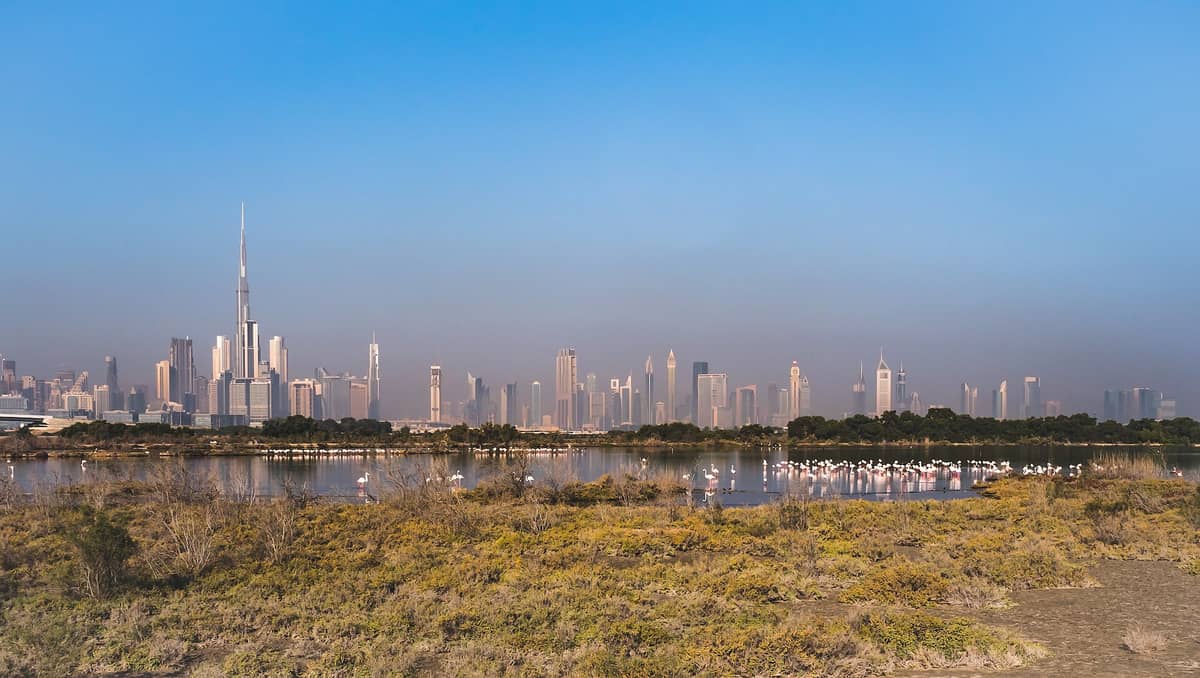
A Ramsar-recognised wetland sitting inside one of the world's most built-up cities, Ras Al Khor Wildlife Sanctuary is home to hundreds of greater flamingos and dozens of migratory bird species. Entry is free, the hides are open most of the year, and the contrast of pink birds against a Downtown Dubai skyline is genuinely striking.
Quick Facts
- Location
- Ras Al Khor Road, Ras Al Khor, Dubai, UAE
- Getting There
- No metro stop nearby; best reached by taxi, Careem, or Uber. Parking lay-bys available at each hide
- Time Needed
- 1 to 2 hours
- Cost
- Free. No ticket required for individual visitors
- Best for
- Birdwatchers, photographers, nature lovers, families with curious kids
- Official website
- www.rasalkhorwildlife.ae
What Is Ras Al Khor Wildlife Sanctuary?
Ras Al Khor Wildlife Sanctuary (Arabic: محمية رأس الخور للحياة الفطرية) is a protected intertidal wetland located at the inner end of Dubai Creek, roughly 15 kilometres from the city centre. It is formally recognised as a wetland of international importance and sits within Dubai's protected areas network, managed jointly by Dubai Municipality and the UAE Ministry of Climate Change and Environment. In practical terms, it is the place in Dubai where you can stand at a free public viewing hide and watch several hundred greater flamingos feed in still, shallow water with the Burj Khalifa visible on the horizon behind them.
The sanctuary covers an area of tidal flats, mangroves, salt marshes, and open lagoon. Its position at the intersection of the Arabian Gulf's migratory flyway means that during winter months, the species list extends well beyond flamingos to include herons, egrets, cormorants, ospreys, sandpipers, and dozens of wader species. It is, in short, a serious birding destination that also happens to be completely free and accessible to anyone willing to make the drive.
💡 Local tip
Opening hours vary by season. Winter (October to March): 7:30 AM to 5:30 PM. Summer (April to September): 6:00 AM to 6:00 PM. Friday hours are generally 2:00 PM to 5:30 PM. During Ramadan, hours may change. Always confirm current timings before visiting, as schedules can be updated.
The Three Bird Hides: What to Expect at Each
The sanctuary is not a park you walk through freely. The wetland itself is fenced and protected; visitors access it through designated bird hides, each reached from a separate lay-by or parking area off Ras Al Khor Road. The hides are screened structures that allow you to observe without disturbing the birds, and each offers a slightly different angle on the reserve.
The Flamingo Hide is the most visited and the one that produces the classic postcard view: a dense concentration of greater flamingos standing in the shallows, their pink colouring intensifying in early morning light against the muted grey-green of the mangroves. The Mangrove Hide focuses on the dense belt of mangrove forest fringing part of the lagoon, and is better suited to spotting herons, kingfishers, and perching raptors. The Lagoon Hide, when open, offers the widest field of view across open water, making it more useful for scanning large numbers of waders and ducks during the peak winter migration season.
Binoculars are available in at least some of the hides for use on-site at no charge, which makes this one of the few nature experiences in Dubai where you do not need to bring your own equipment to get a meaningful look at the wildlife.
How the Experience Changes by Time of Day
Time of day matters significantly at Ras Al Khor. The first hour after the hides open is consistently the most rewarding. The flamingos are actively feeding in the cooler air, moving through the shallows with that characteristic head-down, sieving motion. The light is low and directional, which is important for photography because it illuminates the birds from the side rather than washing them out. By mid-morning, the light becomes harsh and flat, the birds tend to rest rather than move, and the heat in the hide can become uncomfortable.
Late afternoon, in the hour before closing, is the second-best window. The light softens again, and the flamingos sometimes become more active as temperatures drop. On winter afternoons, you may also see flocks of cormorants returning to roost in the mangroves, and ospreys hunting over the open lagoon.
Midday visits between roughly 10:30 AM and 3:30 PM are the least rewarding in any season. In summer, the heat inside the hides becomes genuinely oppressive and bird activity drops sharply. In winter, the light is too harsh for photography and many species are resting rather than feeding or moving.
ℹ️ Good to know
The flamingo population at Ras Al Khor is present year-round, but numbers are typically higher between October and March when the weather is cooler. Migratory wader species peak in October to November and again in March to April during the spring return passage.
Historical and Ecological Context
Dubai's rapid urban expansion over the past five decades consumed enormous areas of natural habitat along the coast and around Dubai Creek. Ras Al Khor survived, in part, because of its ecological value and the active effort to designate and protect it. Its recognition as a wetland of international importance places it within a global framework for wetland conservation, acknowledging its significance not just locally but as a staging post on a migratory flyway that stretches from Central Asia and East Africa through the Arabian Peninsula.
The name Ras Al Khor translates roughly as 'headland of the creek,' which describes the geography accurately: the sanctuary occupies the upper reaches of Dubai Creek where the tidal channel widens into a shallow lagoon before the freshwater influence from the land diminishes entirely. The intertidal flats are rich in invertebrates, crustaceans, and small fish, which is what sustains the flamingo population and attracts wading birds in such numbers.
The sanctuary exists as a counterpoint to the city's more constructed nature attractions. Where somewhere like Green Planet Dubai recreates an ecosystem inside a dome, Ras Al Khor is the real thing: an unmanaged wetland where animals are present because the conditions suit them, not because they have been placed there.
Getting There and Practical Logistics
There is no convenient metro station near Ras Al Khor Wildlife Sanctuary. The practical options are taxi, Careem, or Uber, and the journey from Downtown Dubai takes roughly 15 to 20 minutes by road depending on traffic. If you are driving, each hide has its own lay-by or small parking area accessible from Ras Al Khor Road. Navigation apps generally recognise 'Ras Al Khor Wildlife Sanctuary Flamingo Hide' and 'Ras Al Khor Mangrove Hide' as distinct destinations.
No advance booking or permit is required for individual visitors under current arrangements. Large groups, organised tours, media crews, and academic researchers may need prior arrangement with the site management. There is no entry fee for any individual visitor.
Detailed information on step-free or wheelchair access to the hides is not comprehensively documented in publicly available sources. The paths from parking areas to the hides are generally short and on flat ground, but the surface and conditions at each hide vary. Anyone with specific access requirements should contact the sanctuary directly before visiting.
⚠️ What to skip
Do not attempt to access the wetland itself beyond the designated hides. The sanctuary is fenced and protected; disturbing the birds or bypassing the hides defeats the conservation purpose and may result in removal from the site.
Photography at Ras Al Khor
The Flamingo Hide is designed with photographers in mind. There are openings at seated height and at standing height, and the distance to the flamingos in the main feeding area is close enough to fill a frame with a 300mm equivalent lens. A 500mm or 600mm lens will isolate individual birds cleanly and allow frame-filling portrait shots. Mirrorless cameras have an advantage here because the silence of the shutter avoids startling the birds through the hide openings.
The background at the Flamingo Hide is what makes it special: depending on your angle and focal length, you can compose shots with the Downtown Dubai skyline in soft focus behind the birds. This juxtaposition of wildlife and skyscrapers is genuinely rare and is the reason the sanctuary appears in wildlife photography publications globally. The best light for this composition is in the first 90 minutes after sunrise, when the sky is still warm-toned and the city buildings catch the early light.
For context on other photography and viewpoint experiences in Dubai, the best views in Dubai guide covers rooftop and elevated vantage points across the city, which pair well with a morning visit to Ras Al Khor.
What to Wear and Bring
The hides are shaded structures but not air-conditioned. In summer, the temperature inside can climb quickly after mid-morning. Light, breathable clothing is essential. In winter mornings, temperatures at the hide can be genuinely cool, particularly when a breeze comes off the water, so a light layer is worth carrying.
Bring water regardless of season. There are no refreshment facilities at the sanctuary. If you are visiting primarily to photograph, a tripod or monopod is useful at the Flamingo Hide, where longer telephoto lenses benefit from stabilisation during the low-light early morning period. Binoculars are available on-site, but bringing your own gives you more flexibility to move between the three hides without waiting.
For general guidance on what to wear in Dubai's outdoor spaces across different seasons, the Dubai outfits and dress code guide provides practical advice that applies here.
Who Will Enjoy This, and Who Might Not
Ras Al Khor Wildlife Sanctuary is well suited to birdwatchers, wildlife photographers, anyone looking for a free outdoor experience that stands apart from Dubai's commercial attractions, and families with children who have some capacity for patience. The flamingos are sufficiently large and numerous that younger visitors do get genuinely excited by them, but the format of the hides requires relative quiet and stillness, which very young children may find difficult.
Visitors looking for interactive or guaranteed close-up wildlife encounters may be better served by Dubai Safari Park or Green Planet Dubai, where the experience is more structured. Ras Al Khor rewards patience and early starts; it is not an attraction that delivers on demand.
Anyone who expects a manicured visitor experience with signage, guided tours on demand, a cafe, and gift shop will be disappointed. The sanctuary is deliberately low-infrastructure. That restraint is part of what makes it work ecologically, but it does mean this is a self-directed, independent visit.
Insider Tips
- Arrive within the first 30 minutes of opening for the best combination of bird activity and photography light. The flamingos feed actively in the cooler early air, and the soft directional light in this window is impossible to replicate later in the day.
- The Flamingo Hide and the Lagoon Hide are in different locations reached from separate parking points off Ras Al Khor Road. If you want to visit more than one hide, factor this into your timing: you will need to drive between them, not walk.
- Flamingo numbers at the sanctuary fluctuate. Some days the main flamingo group is close to the Flamingo Hide; on others they have moved further into the lagoon. A 300mm lens is the minimum useful focal length; 400mm or longer gives you meaningful frame coverage on most days.
- Visiting on a Friday afternoon means reduced hours at some hides. If you want to visit on a Friday, aim for Saturday or Sunday morning instead to avoid the shortened schedule and smaller window of good light.
- The sanctuary is located roughly between Ras Al Khor Road and Al Khail Road. If you are using a navigation app, search specifically for the individual hide name (e.g., 'Flamingo Hide Ras Al Khor') rather than the sanctuary generally, as the main sanctuary address may route you to the perimeter fence rather than a visitor access point.
Who Is Ras Al Khor Wildlife Sanctuary For?
- Wildlife photographers wanting the specific flamingo-and-skyline composition
- Birdwatchers on winter itineraries, particularly October to March for peak migratory species
- Budget-conscious travellers looking for a genuinely free and non-commercial outdoor experience
- Families with children aged 6 and above who have some patience for quiet observation
- Anyone wanting contrast with Dubai's built environment: this is the city's most accessible piece of genuine nature