Dr. Sun Yat-Sen Classical Chinese Garden: Vancouver's Ming-Dynasty Masterpiece
Built in 1985–86 and opened during Expo 86, the Dr. Sun Yat-Sen Classical Chinese Garden in Vancouver's Chinatown is the first full-scale classical Chinese garden constructed outside China. Recognized as a National Historic Site of Canada, it recreates the intimate scholar's gardens of the Ming dynasty, complete with hand-carved pavilions, jade-green pools, and limestone rockeries.
Quick Facts
- Location
- 578 Carrall Street, Chinatown, Vancouver, BC V6B 5K2
- Getting There
- Stadium–Chinatown SkyTrain (~5-min walk); Main Street–Science World SkyTrain (~10-min walk)
- Time Needed
- 1–2 hours for the ticketed garden; add 30 min for the adjacent free public park
- Cost
- Adult CAD $16 | Senior CAD $13 | Student/Youth CAD $12 | Family CAD $30+. Verify current prices at official site before visiting.
- Best for
- History seekers, architecture enthusiasts, photography, quiet reflection, cultural immersion
- Official website
- vancouverchinesegarden.com
About the garden
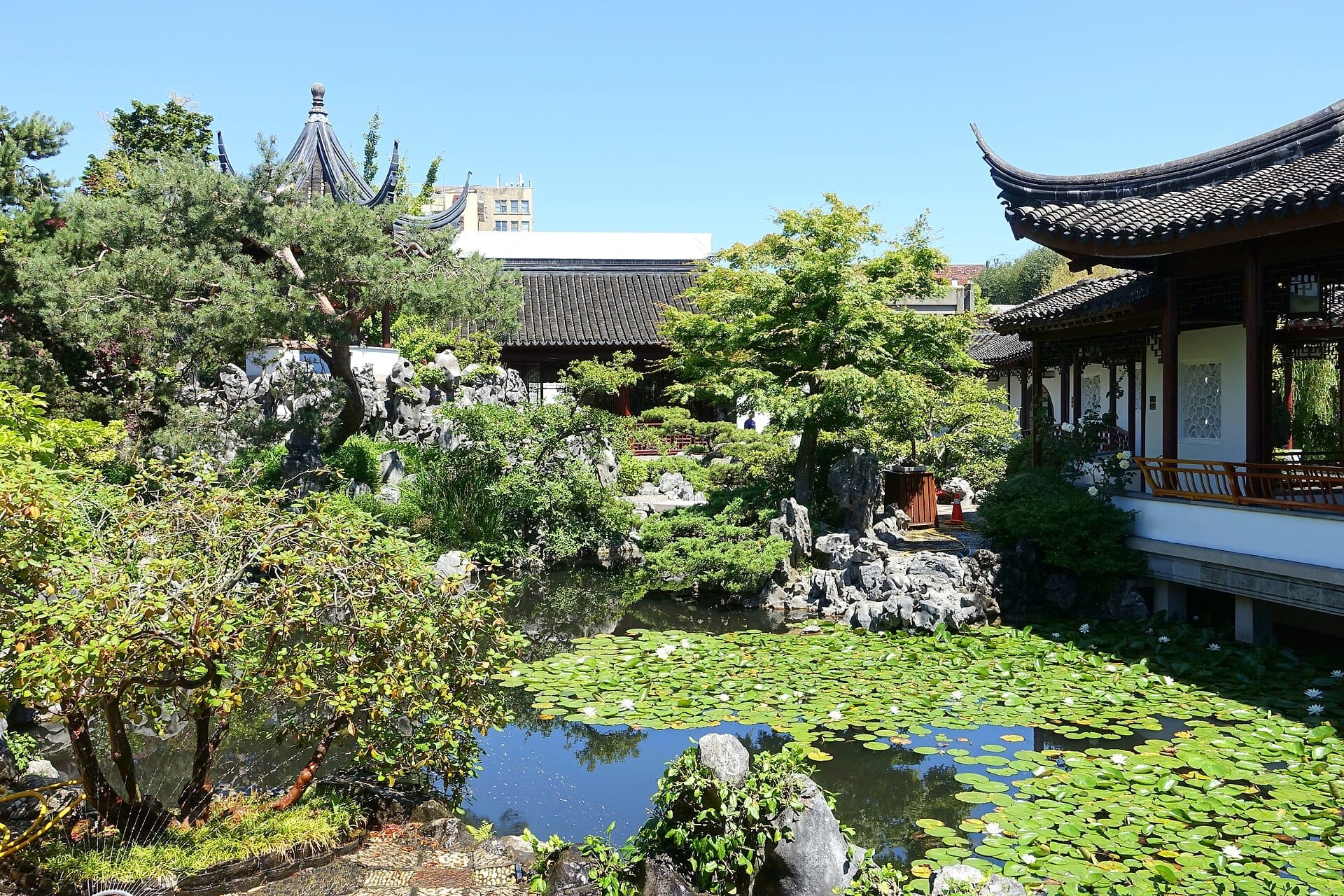
The Dr. Sun Yat-Sen Classical Chinese Garden is not a decorative park with a Chinese theme. It is an authentic reconstruction of a Ming-dynasty scholar's private garden, the kind built in Suzhou, China, between the 14th and 17th centuries. Every tile, carved lattice screen, and arrangement of rock was designed to evoke a specific philosophical idea: the balance of yin and yang expressed through contrasting elements — soft water beside hard stone, dark wood against pale plaster, open sky framed by a low pavilion roof.
Opened on April 24, 1986, in time for Expo 86, it holds the distinction of being the first full-scale classical Chinese garden built outside China. That reflects the scale and method of construction: over 50 master craftsmen traveled from Suzhou, bringing with them materials that could not be sourced locally, including Taihu limestone rocks and traditional grey clay roof tiles. The site is designated a National Historic Site of Canada under the name Dr. Sun Yat-Sen Classical Chinese Garden and Park.
ℹ️ Good to know
There are two distinct areas at 578 Carrall Street: the ticketed classical garden (the full Ming-dynasty reconstruction) and an adjacent free public park. Both are worth visiting, but they are separate spaces. The park offers no guided interpretation and has a more open, casual feel. The ticketed garden is where the genuine historical experience is.
How the Garden Looks and Feels
The garden is small by the standards of Vancouver's larger parks, which is precisely the point. Ming scholars built intimate spaces designed to be experienced slowly, with every turn of a path revealing a new framed composition. The central jade-green pool reflects the surrounding pavilions and the sky above, and goldfish move just beneath the surface. Koi are absent here — the pool contains traditional species consistent with the original design philosophy.
The Taihu limestone rocks are the garden's most unusual visual feature. They were sourced from Lake Tai near Suzhou and shaped over hundreds of years by water action into forms that suggest mountains, caves, and clouds. They are not decorative stones placed for color. In classical Chinese garden theory, they represent the wild landscape of nature brought into a compressed, contemplative form. Running your hand across one, you feel the pitted surface, full of small hollows and ridges.
The carved wooden screens, windows, and lattice panels throughout the pavilions are all handcrafted. No power tools were used in their construction. The geometric patterns in the windows frame specific views of the garden, turning the act of looking through a window into a deliberate aesthetic experience — a technique known in Chinese garden design as "borrowed scenery."
Tickets & tours
Hand-picked options from our booking partner. Prices are indicative; availability and final rates are confirmed when you complete your booking.
Full-day tour to Victoria and Butchart Gardens from Vancouver
From 163 €Instant confirmationFree cancellationChristmas guided tour of Victoria and the Butchart Gardens
From 166 €Instant confirmationFree cancellationSightseeing tour of Victoria and Butchart Gardens from Vancouver
From 140 €Instant confirmationFree cancellationGrouse Mountain and Capilano Suspension Bridge Park tour
From 252 €Instant confirmationFree cancellation
Morning vs. Afternoon: When to Visit
Early in the morning, shortly after opening at 9:30 am, the garden has a stillness that is difficult to find in the middle of a Canadian city. The light is soft and diffuse on overcast days, which Vancouver has frequently from October through April, and the reflections in the pool are sharpest before the wind picks up. Tour groups tend to arrive mid-morning. If you want the pavilions to yourself for photography, aim for opening time on a weekday.
By midday and into early afternoon, the garden's small size becomes noticeable. Even a moderate number of visitors can feel like a crowd in some of the covered walkways and pavilions. The outdoor areas open up more in fair weather, but the intimate indoor spaces — including the Hall of Clouds and Rain — are at their best with few people inside. On summer weekends, visiting right at opening is strongly advisable.
💡 Local tip
Rainy days in Vancouver are not a reason to skip the garden. The sound of rain on the traditional tile roofs, the mist rising off the pool, and the green deepening on the bamboo plantings make a wet visit arguably more atmospheric than a sunny one. Bring an umbrella — the covered walkways connect most areas but do not cover every transition.
The Historical and Cultural Context
The garden sits in the heart of Vancouver's historic Chinatown, one of the largest and most historically significant Chinese-Canadian communities in North America. The neighbourhood itself was established in the 1880s by Chinese laborers who helped build the Canadian Pacific Railway, and the area retains heritage commercial buildings along Pender Street that date to the early 20th century. Understanding the garden as part of this broader community gives it additional weight — it is not a tourist installation dropped into a neutral location. For more context on the surrounding area, see our guide to Vancouver's Chinatown.
The garden is named for Dr. Sun Yat-Sen, the revolutionary leader who unified China and is widely regarded as the father of modern China. His connection to Vancouver is direct: he visited the city several times in the early 1900s to fundraise for his political movement among overseas Chinese communities. The naming honors that historical link and acknowledges the contributions of Chinese Canadians to Vancouver's development.
The construction collaboration between Suzhou and Vancouver was significant in itself. Suzhou's classical gardens — including the Humble Administrator's Garden and the Master of Nets Garden — are UNESCO World Heritage Sites. The craftsmen who worked on the Vancouver garden trained in that tradition. The philosophical underpinning of the space draws from Taoist and Confucian principles, using the tension between opposing elements to create a sense of harmony.
Guided Tours and Programming
The garden offers guided tours as part of the admission experience, typically offered with the ticket price. These tours, led by knowledgeable interpreters, are one of the better reasons to visit. The space is compact enough that without context, a first-time visitor might spend twenty minutes walking through and feel uncertain about what they have seen. With interpretation, the same circuit becomes a lesson in classical Chinese aesthetics, the symbolism of individual plants and rocks, and the specific philosophical intentions behind each design choice.
Tour schedules vary by season. The garden also hosts seasonal programming including evening lantern festivals, Chinese New Year events, and occasionally live music. Check the official website at vancouverchinesegarden.com for current schedules before visiting. Evening events, when the garden is lit differently from daytime conditions, can offer a genuinely different experience of the space.
If you are planning a visit around the Lunar New Year period, the garden typically offers special programming. Vancouver's Chinatown hosts one of Canada's largest Chinese New Year celebrations — our guide to Vancouver Chinese New Year has details on the broader festivities in the neighbourhood.
Photography Practical Notes
The garden is photogenic in almost any weather, but the composition challenges are real. The space is intentionally designed to be viewed from specific points, and the framing opportunities through the lattice windows reward patience. A wider lens helps in the covered pavilions, where the distance between you and a carved screen may be only a few feet. The pool offers the best reflections when the water is calm, typically in the first hour after opening.
Tripods are not practical in most areas given the narrow pathways and the presence of other visitors. A camera or phone with good low-light performance helps indoors, where the natural light filtering through paper screens is dim. The exterior courtyard walls — white-painted with grey tile copings — create strong graphic lines that photograph well even on flat, overcast days.
Accessibility and Practical Logistics
The garden's traditional pathways include irregular stone surfaces and some steps, consistent with authentic Ming-dynasty design. These may present challenges for visitors with limited mobility. The garden advises contacting them directly for current accessibility information before visiting, as conditions and accommodations may vary.
Getting here by transit is straightforward. The Stadium–Chinatown SkyTrain station is about a five-minute walk from the garden entrance at 578 Carrall Street. The Main Street–Science World station is a ten-minute walk. Street parking exists in the area but is limited. For general advice on moving around the city, see our guide to getting around Vancouver.
⚠️ What to skip
Opening hours are seasonal and the garden is closed Mondays (and Tuesdays in winter, October through April). Always check the official site at vancouverchinesegarden.com before making a specific trip. Arriving to find the garden closed is a real possibility if you rely on outdated information.
Is It Worth Your Time?
For travelers comparing this to Vancouver's larger outdoor attractions — Stanley Park, the Capilano Suspension Bridge, or the Museum of Anthropology — the Dr. Sun Yat-Sen Garden operates on an entirely different scale. It is a small space requiring slow attention, not a half-day excursion with expansive views.
Visitors who appreciate architecture, landscape philosophy, or cultural history tend to find it significantly more rewarding than the ticket price suggests. Visitors expecting a large, visually spectacular space may feel the garden is over quickly. The honest answer is that the garden rewards a particular kind of attention. If you are willing to move through it slowly and take the guided interpretation seriously, it is one of the more genuinely unusual cultural experiences available in Vancouver. If you are looking for dramatic scenery or physical activity, your time is better spent elsewhere.
The garden pairs naturally with a walk through the surrounding Chinatown streets and, if time permits, a visit to the Vancouver Police Museum nearby. Budget two to three hours total for the combination.
Insider Tips
- The free public park adjacent to the ticketed garden has a koi pond and covered pavilion that give a reasonable preview of the aesthetic. If you are uncertain about spending the admission fee, spend ten minutes in the park first — but note the classical garden inside is considerably more detailed and intentional in its design.
- Ask specifically about the Jade Water Pavilion and the significance of the rock placement around the central pool when you take the guided tour. Interpreters with more depth on these topics will give you the most useful context for understanding the space.
- The garden shop near the exit sells a small selection of books on classical Chinese garden design, including Suzhou-specific titles not easily found in general bookshops. Worth a look if the architecture interested you.
- Combine your visit with a walk east along East Pender Street through the heritage commercial core of Chinatown. The Millennium Gate at the intersection of Taylor and Pender Streets marks the neighborhood entrance and provides a useful geographic orientation point.
- If you are visiting Vancouver in late spring or early summer, the garden's wisteria and flowering plants are at their most visible. The plantings are chosen for seasonal variation, so the garden's color palette shifts considerably between a February and a June visit.
Who Is Dr. Sun Yat-Sen Classical Chinese Garden For?
- Architecture and design enthusiasts curious about classical Chinese garden theory
- Travelers wanting genuine cultural context rather than a themed attraction
- Photographers working in small, detailed spaces rather than wide landscapes
- Anyone spending time in Chinatown who wants to understand its historical depth
- Visitors seeking a calm, unhurried experience away from Vancouver's busier attractions