Doñana National Park: Europe's Wild Wetlands on Seville's Doorstep
Doñana National Park is one of Europe's most ecologically significant protected areas, covering over 54,000 hectares of wetlands, dunes, and scrubland across the provinces of Huelva and Seville. A UNESCO World Heritage Site and Ramsar wetland, it rewards patient visitors with sightings of rare birds, Iberian lynx, and landscapes that feel genuinely untouched.
Quick Facts
- Location
- Provinces of Huelva, Seville and Cádiz, Andalusia — approx. 60–100 km southwest of Seville city
- Getting There
- No direct public transport to the interior; car rental or organized tours from Seville are the most practical options
- Time Needed
- Half-day for a single visitor center; full day or overnight for a 4x4 guided circuit
- Cost
- Free park entry; guided 4x4 tours from approx. €33 per person (verify current pricing before booking)
- Best for
- Birdwatchers, wildlife photographers, nature lovers, and families wanting a genuine wilderness experience
What Doñana Actually Is
Doñana National Park (Parque Nacional de Doñana) is not a conventional sightseeing destination. There is no single viewpoint, no famous facade, no queue to join. What you get instead is a flat, enormous, ecologically complex landscape in the lower estuary of the Guadalquivir River, where Atlantic dunes, freshwater marshes, and Mediterranean scrubland exist side by side across 54,252 hectares. It is a place that requires some planning, a degree of patience, and a willingness to let the landscape come to you.
The park holds dual UNESCO World Heritage and Ramsar Wetland status, which points to its global rarity rather than its fame as a tourist draw. The core zone is strictly protected and cannot be entered freely. Most visitors access it through official guided tours or by spending time at the designated visitor centers on the periphery, each of which offers a different angle on the ecosystem.
ℹ️ Good to know
Park entry itself is free, but independent access to the interior is not permitted. To see the marshes and dune corridors up close, you need to book a guided tour in advance, particularly in spring and autumn when demand is high.
The Landscape: Three Ecosystems in One
Visitors unfamiliar with Doñana sometimes expect dramatic scenery, and leave slightly puzzled by how flat and quiet it is. That flatness is the point. The marismas, the great seasonal marshes that flood in autumn and winter and dry to cracked mud plains by midsummer, support one of the highest densities of waterbirds in Europe. In winter, the shallow waters shimmer with hundreds of thousands of flamingos, spoonbills, herons, and migrating ducks. By late spring, the water has retreated and the same area becomes a pale, sun-bleached expanse where deer and Iberian wild boar move between dust clouds.
Inland from the marshes, a band of Mediterranean scrubland and cork-oak woodland provides habitat for the Iberian lynx, one of the rarest wild cats on earth and a species whose survival is closely tied to Doñana's protection. Sightings are possible but genuinely rare; do not visit expecting to see one, but know that the population here is real and monitored.
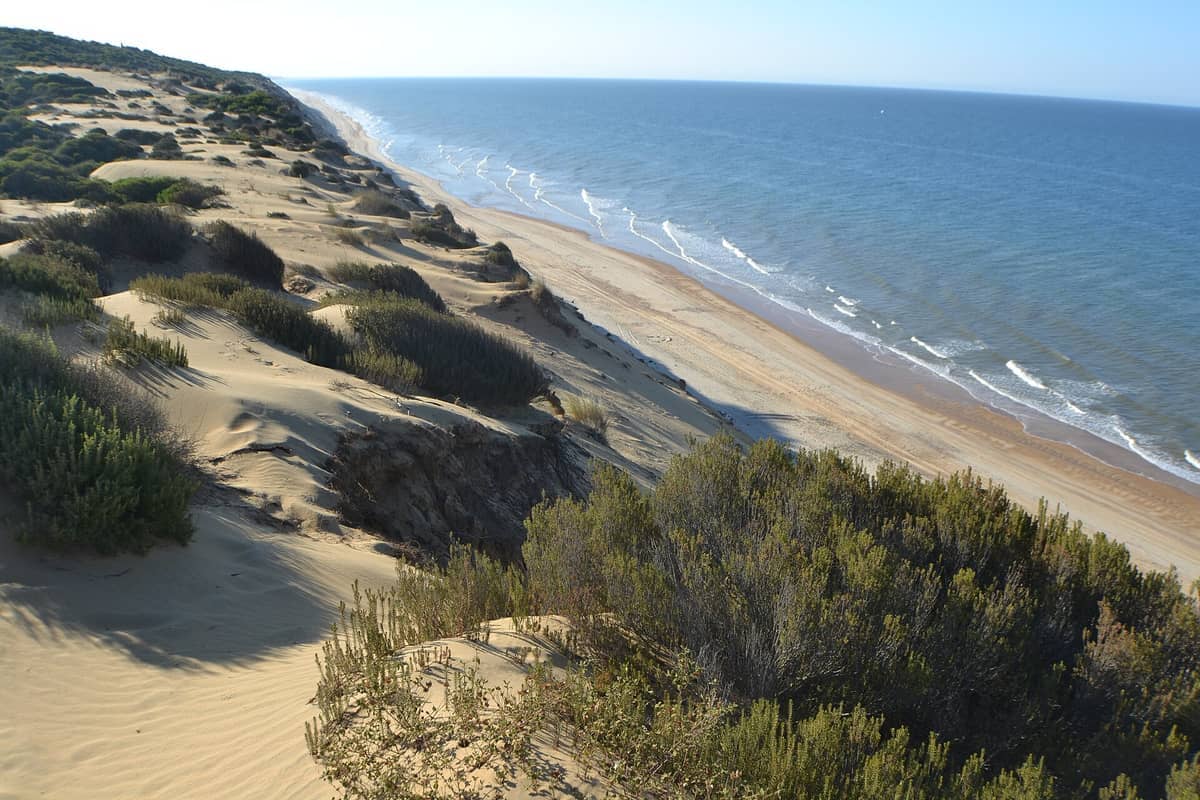
Along the Atlantic coast to the west, a chain of moving sand dunes reaches heights of around 30 metres and advances steadily inland at a measured rate, gradually engulfing the scrubland behind. Walking among these dunes at dusk, when the light turns orange and the wind carries salt off the ocean, is the most viscerally memorable part of any Doñana visit.
Tickets & tours
Live prices and dates from our booking partner. If you book, we may earn a commission at no extra cost to you.
Getting There from Seville
Doñana sits roughly 60 to 100 kilometres southwest of Seville city, depending on which entrance or visitor center you are heading for. The most convenient approach from Seville is by car via the A-49 motorway toward Huelva, then south toward El Rocío or Almonte. The journey typically takes around 1–1½ hours to the El Acebuche visitor center, which is the main access point on the Huelva side of the park.
There is no practical direct public transport into the park interior. Visitors without a car should consider joining an organized day trip from Seville, several of which operate year-round and include transport. This is also the most reliable way to access the interior 4x4 routes. For general guidance on getting around the wider region, the Seville transport guide covers car rental and intercity bus options that can help you plan the first leg of the journey.
💡 Local tip
If you are combining Doñana with other Andalusian stops, El Rocío village — famous for its white sand streets and extraordinary flamingo lagoon — is just outside the park boundary and requires no booking. It makes a logical first stop before joining a guided tour.
Visitor Centers and How to Use Them
Doñana has several official visitor centers, each serving a different geographic entry point and offering different experiences. El Acebuche, on the western edge near Matalascañas, is the most-used gateway for visitors coming from Seville or Huelva. It has a small exhibition on the park's ecology, a lagoon with viewing hides, and is the departure point for official guided tours into the interior. Opening hours at El Acebuche are seasonal: from 1 May to 15 September, 08:00 to 15:00 and 16:00 to 21:00 (with reduced hours on Sundays between 15 June and 15 September); from 16 September to 31 March, 08:00 to 15:00 and 16:00 to 19:00; and during April, 08:00 to 15:00 and 16:00 to 20:00, with closures on 1, 5 and 6 January, the Romería del Rocío, and 24, 25 and 31 December.
The Fábrica de Hielo center in Sanlúcar de Barrameda (Avenida Bajo de Guía, s/n, 11540, Cádiz) is the access point for boat tours across the Guadalquivir into the park's eastern marshes. The view from the river bank of the dune escarpment rising opposite the town is particularly striking in morning light. The José Antonio Valverde center (Cerrado Garrido, 41849 Aznalcázar, Seville) is the most remote, reached via a long unpaved track, and is best visited in winter when the marismas are flooded and bird density is at its highest.
Official guided 4x4 circuits depart from El Acebuche and cover the dune corridors and transitional woodland zones. Pricing for these tours has been listed at approximately €35 per person; booking in advance through the official donanavisitas.es platform is strongly recommended, as daily capacity is strictly limited by conservation rules.
When to Visit and What Changes by Season
The single most important variable in planning a Doñana visit is the season. The park's ecology is driven by its water cycle, and the experience changes dramatically between a wet winter visit and a dry summer one. Winter (November to February) brings the highest water levels in the marismas and the largest concentrations of migratory waterbirds. Flamingo numbers peak, and the flat marsh reflects the sky in a way that makes the landscape look endless. Temperatures are mild by Andalusian standards, typically between 10 and 15 degrees Celsius during the day.
Spring (March to May) is widely considered the best all-round time for a first visit. Migrating birds are passing through in large numbers, wildflowers cover the scrubland in colour, and temperatures are comfortable for walking. This coincides with Seville's peak cultural calendar, so if you are combining the city with a park visit, the guide to Seville in spring gives useful context for planning the full trip.
Summer should be approached with caution. By July and August, the marshes have dried almost completely, temperatures regularly exceed 35 degrees Celsius at midday, and many birds have left or retreated to shade. The dunes are photogenic in the low morning light and the coast offers swimming, but the interior is harsh and the wildlife experience is significantly diminished. If you visit in summer, go early, bring far more water than you think you need, and keep expectations calibrated accordingly.
Autumn (October to November) is the second-best window, as the rains begin to refill the marismas and migratory birds return from northern Europe. For a broader picture of visiting Seville in this season, the autumn in Seville guide covers the wider regional context.
Photography, Accessibility, and Practical Notes
Doñana rewards telephoto lenses. Bring at least a 300mm equivalent if birds are your primary subject; the hides at El Acebuche lagoon allow you to get within reasonable range of flamingos, herons, and spoonbills without disturbing them. The best light for both birds and dunes is in the first two hours after sunrise and the hour before sunset. Midday light flattens everything and the heat in summer makes it physically uncomfortable.
Some visitor center facilities and boardwalk sections are adapted for people with reduced mobility, and certain hides are accessible by wheelchair. Contact the specific center in advance to confirm current accessibility provisions, as these can vary by site and season.
Wear closed shoes with grip if you plan to walk any distance; the sandy paths shift underfoot and the scrubland can be dense with low thorny vegetation. Sun protection is non-negotiable from April onward. There are few food or water facilities inside the park, so carry sufficient supplies.
⚠️ What to skip
Mobile signal is unreliable in large parts of the park interior. Download offline maps and the GPS coordinates for your visitor center before leaving Seville. If you are driving the access road to José Antonio Valverde, the unpaved track requires a vehicle with reasonable ground clearance, especially after rain.
Is Doñana Worth It from Seville?
Doñana is not for everyone, and it is worth being direct about that. If your time in Seville is limited to two or three days, the city itself offers extraordinary architecture, history, and culture that would take that time easily. The three-day Seville itinerary and the guide to day trips from Seville can help you weigh Doñana against alternatives like Italica or Carmona.
For visitors who have a genuine interest in wildlife, ecology, or simply want to spend time in a landscape that feels genuinely removed from the urban world, Doñana delivers something that cannot be replicated closer to the city. The combination of scale, ecological rarity, and the absolute quiet of the interior marshes on a winter morning is unlike anything else within reach of Seville.
Travellers who find birdwatching dull, who prefer dense historical itineraries, or who are visiting in summer with limited heat tolerance should probably spend the day differently. The park is not a theme park and it does not perform on demand. But if you arrive with the right expectations and the right season, it is one of the most remarkable natural areas accessible from a major Spanish city.
Insider Tips
- Book guided tours through the official donanavisitas.es platform as far in advance as possible, especially for spring visits. Slots sell out weeks ahead and walk-up availability at El Acebuche is not guaranteed.
- The boat tour from Sanlúcar de Barrameda gives a completely different perspective on the park than the inland 4x4 route: you approach the moving dunes from the river and can see the dune escarpment rising directly opposite the town. It is the better choice if you are based on the Cádiz side or coming via the Costa de la Luz.
- El Rocío village, just outside the park boundary, has a free lagoon viewpoint from the church path where flamingo numbers can be extraordinary in winter. You can stop here without any booking and get a sense of the wetland landscape before deciding whether to commit to a guided interior tour.
- The internal tracks to José Antonio Valverde visitor center require a drive of around 25 kilometres on unpaved road. This is the most isolated center and sees far fewer visitors; in winter, the views over the flooded marismas from the observation tower here are the most expansive in the entire park.
- If you are a serious birder, the period from late October through December, when the marsh is refilling and northern European migrants are arriving in large numbers, often produces higher species counts than the spring peak. This window is consistently underrated relative to spring.
Who Is Doñana National Park For?
- Birdwatchers and wildlife photographers seeking genuine wilderness within a day trip of a major city
- Families with children who are comfortable with outdoor walking and interested in animals and ecosystems
- Photographers who prioritize landscape and nature work over architectural subjects
- Travellers on longer Andalusia itineraries who want to balance urban sightseeing with natural landscapes
- Visitors planning a second or longer stay in Seville who have already covered the main city attractions
Nearby Attractions
Combine your visit with:
- Carmona Historic Town
Perched on the ridge of Los Alcores some 30 km east of Seville, Carmona is one of Andalusia's most complete historic towns. Roman walls, a Moorish gate, Gothic churches, and a Roman necropolis all sit within a walkable medieval core that most Seville visitors miss entirely.
- Itálica Roman Ruins (Santiponce)
Founded in 206 BCE and birthplace of two Roman emperors, the Conjunto Arqueológico de Itálica in Santiponce is one of the most significant Roman sites in Spain. Less than 10 km from Seville, it rewards visitors with a vast amphitheatre, intricate floor mosaics, and the ghostly grid of a once-thriving imperial city.
Planning a trip? Discover personalized activities with the Nomado app.