Dollymount Strand & Bull Island: Dublin's Wild Coast on the City's Doorstep
North Bull Island is a sandy island in Dublin Bay, roughly 5km long and only a few hundred metres wide, formed by sediment build‑up over the past 200 years and now part of the Dublin Bay UNESCO Biosphere Reserve. Its seaward beach, Dollymount Strand, offers free access to open skies, migratory birds, and tidal flats just 6km from the city centre. No entry fee, no crowds in winter, and no need to leave Dublin.
Quick Facts
- Location
- North Bull Island, Dublin Bay, Dublin 5, Ireland
- Getting There
- Dublin Bus routes to Clontarf; DART to Clontarf Road station, then a 20-minute walk to the Wooden Bridge
- Time Needed
- 1.5 to 3 hours for a beach walk; longer if birdwatching or cycling the full island
- Cost
- Free — no admission, no ticket required
- Best for
- Coastal walks, birdwatching, kite surfing, dog walking, and escaping the city without leaving it
What Dollymount Strand Actually Is
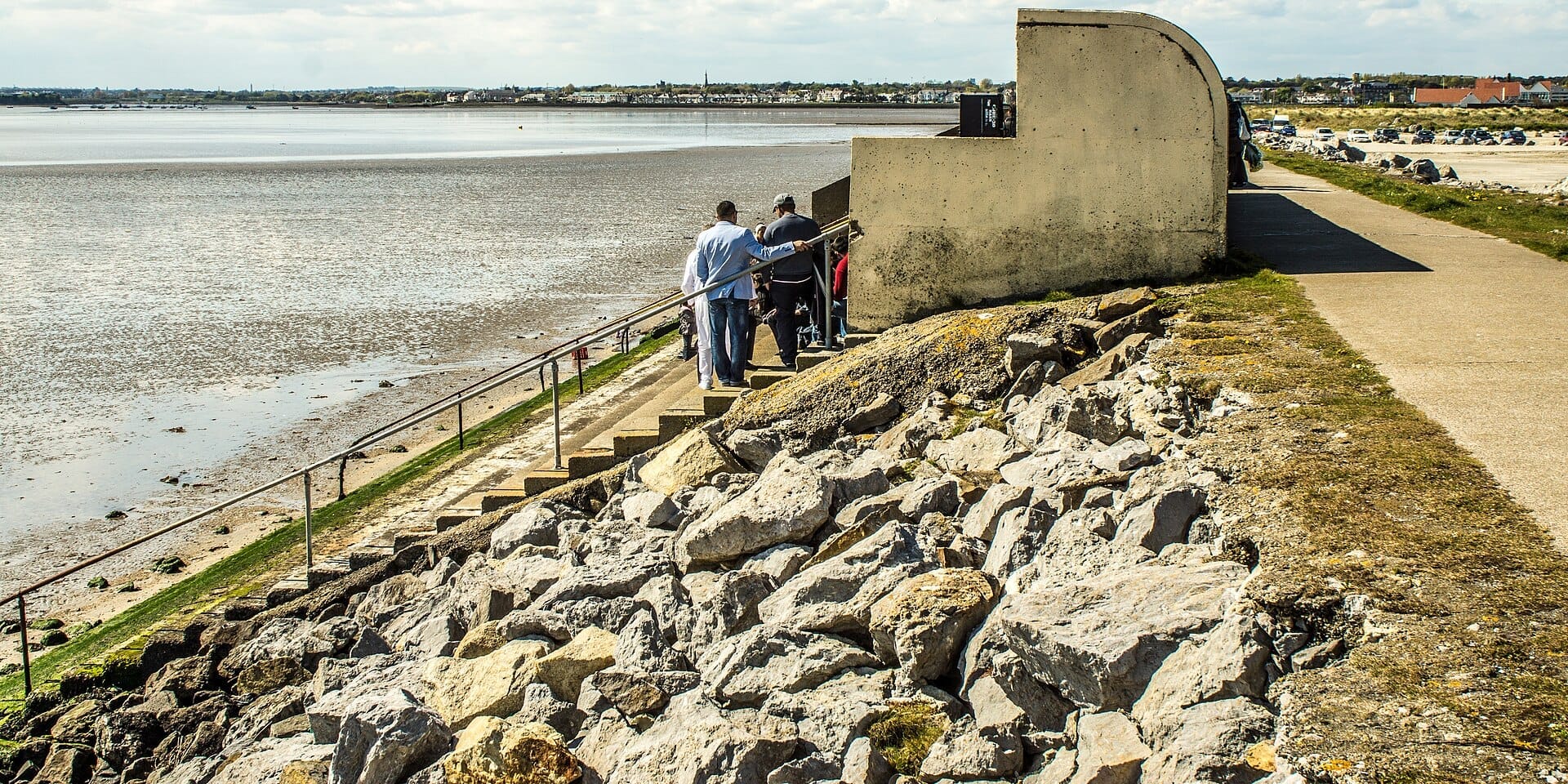
Dollymount Strand is the open, Atlantic-facing beach that runs along the eastern side of North Bull Island, a narrow sand island in Dublin Bay roughly 5km long and a few hundred metres wide. The island sits parallel to the Clontarf shoreline, separated from the mainland by a shallow tidal channel crossed by a wooden bridge. On the bay side, the water is calm; on the seaward side, the strand takes the full force of the Irish Sea wind.
North Bull Island forms part of the Dublin Bay UNESCO Biosphere Reserve and is a protected Special Area of Conservation under European law. That status is not decorative. The island supports internationally significant populations of wading birds and wildfowl, particularly in winter, when migrating species use the intertidal mudflats on the sheltered western lagoon. The sand dunes behind the strand are among the most intact dune systems near any major European capital.
The island is also home to two golf clubs (Royal Dublin Golf Club on the island itself and St Anne's Golf Club on the mainland side), so it is not an entirely wild landscape. But the 5km beach itself remains natural, wide, and largely undeveloped. For context on how this fits into Dublin's broader coastal character, the Clontarf Promenade runs along the opposite shore and gives a clear view across to Bull Island from the mainland.
ℹ️ Good to know
Drive-on beach access has been permanently removed. Cars can park at the causeway car park or near the Bull Wall at the south end of the island, but you cannot drive onto the sand itself. Come prepared to walk.
How Bull Island Was Formed
Bull Island did not exist 200 years ago. It is a direct consequence of engineering. In the 1820s, the North Bull Wall was constructed to scour sediment from the mouth of the River Liffey and deepen the shipping channel into Dublin Port. The wall redirected tidal flows in a way nobody fully anticipated: sand began accumulating on its northern side, and over the following decades an entirely new island grew out of the bay.
That accidental origin makes Bull Island one of the more interesting pieces of urban geography in Ireland. What began as an unintended consequence of industrial infrastructure became, within two centuries, a designated biosphere, a habitat for over 130 recorded bird species, and the closest thing to a wild beach that most Dublin residents will ever walk. The North Bull Wall itself is worth exploring on foot: it stretches nearly 2km into the bay and ends at the red-painted Bull Wall lighthouse, a popular photography subject at sunset.
Tickets & tours
Hand-picked options from our booking partner. Prices are indicative; availability and final rates are confirmed when you complete your booking.
Giant's Causeway, Dark Hedges, and Belfast Tour from Dublin
From 85 €Instant confirmationFree cancellationDublin self-guided audio tour
From 10 €Instant confirmationBird of Prey, Cliffs of Moher and Aillwee Cave from Dublin
From 201 €Instant confirmationFree cancellationGame of Thrones Studio tour with return transfer from Dublin
From 63 €Instant confirmationFree cancellation
What the Beach Feels Like at Different Times
Early morning, Dollymount Strand belongs to dog walkers and solo runners. The light off Dublin Bay in the first hour after sunrise is flat and silver, the tide either retreating to expose wide ridged sand or advancing to push walkers up toward the dunes. The wind is rarely absent here. Even on still city days, the strand usually carries a salt-edged breeze off the Irish Sea that makes a light layer worth packing.
Midday on a dry summer weekend brings a different crowd: families with children, kite surfers rigging gear at the south end, cyclists crossing the Wooden Bridge. The strand is long enough that it never feels genuinely packed, but the car park fills early and the causeway gets congested. Parking on the causeway itself is available but limited. If you are coming by car on a sunny summer Saturday, arrive before 10am.
Winter is arguably when the island shows its best side. The human population drops sharply, the wading birds arrive in force on the western lagoon, and the dunes take on a tawny, stripped-back quality that feels entirely different from the green softness of summer. Oystercatchers, dunlin, and brent geese are all visible from the western channel path between October and March. On overcast afternoons the bay turns the colour of pewter and the Dublin Mountains, visible across the water to the south, appear closer than they are.
💡 Local tip
For birdwatching, the western (lagoon) side of the island is far more productive than the open beach. Walk the Bull Wall or take the path along the inner channel at low tide for the best views of waders on the mudflats.
Getting There: Access and Navigation
The island is accessed via two points. The Wooden Bridge at the north end of the Clontarf Road links the mainland to the island's interior and is the most popular pedestrian and cycling entry point. At the south end, the Bull Wall causeway runs out from the Dollymount area and allows vehicle access to the causeway car park. Neither route is complicated, but first-time visitors sometimes mistake the island's geography: the beach faces east (away from the city), while the golf course and lagoon face west toward Clontarf.
By public transport, several Dublin Bus routes serve the Clontarf Road, and the DART stops at Clontarf Road station, from which the Wooden Bridge is approximately a 20-minute walk north. Cycling is a practical option: the island has a dedicated cycle path. For a guided or self-guided coastal route context, see getting around Dublin for transport planning details.
There are no food vendors operating on the island itself as a permanent fixture. Bring water and snacks, particularly if you plan to walk the full length of the strand. The nearest cafes and shops are back on Clontarf Road on the mainland.
Photography and What to Expect Visually
The visual draw of Dollymount Strand is space. Dublin is a compact, human-scaled city, and the strand offers something the city rarely provides: an unbroken horizon. Looking east from the beach, your view runs unbroken across the Irish Sea toward the Welsh coast. Looking back west, you can see the Poolbeg Chimneys, two distinctive red-and-white striped industrial stacks that have become one of Dublin's most recognisable silhouettes, rising behind the Bull Wall.
The Poolbeg stacks frame the south end of the bay and are best photographed from the beach in late afternoon when the light catches the red-and-white stripes. For another angle on the bay from the opposite side, the Poolbeg Lighthouse Walk gives a full view of Bull Island from the southern breakwater.
Kite surfers are a reliable photographic subject on windy days, particularly at the south end of the strand near the Bull Wall where the wind tends to be most consistent. The dunes behind the beach are marram-grass covered and rise in some places to a height where you can see across the full width of the island.
💡 Local tip
Sunset photography from the western (lagoon) side of the island looks back toward the Dublin skyline and the Wicklow Mountains. This side is much calmer and more sheltered than the open beach, with reflections in the tidal channel on clear evenings.
Practical Notes and Who Should Know What
The beach is a Blue Flag beach, which indicates it meets European standards for water quality and is monitored during the bathing season. Swimming does happen here, but the water is cold by most standards (Dublin Bay water temperatures typically range from around 8°C in winter to a peak near 16–17°C in late summer), and the current near the Bull Wall at the south end can be strong on an outgoing tide. Swimming directly adjacent to the wall is inadvisable.
The island's surface changes significantly with tide and season. At low tide, wide expanses of flat sand are exposed, perfect for walking. At high tide, parts of the lower beach disappear and the dune edge becomes the effective shoreline. Check tide times before planning a long beach walk, particularly if you want to walk the full 5km length of the strand.
Families will find the beach works well for children, with soft sand, space to run, and no entry fees or queues. For a broader sense of what Dublin offers families outdoors, the Dublin with kids guide covers both coastal and city options.
Accessibility on the island is limited by its natural terrain. The causeway road and the path along the Bull Wall are firm and navigable by wheelchair. The beach itself is soft sand and is not suitable for wheelchair users without specialist beach mobility equipment. The dune boardwalks, where they exist, offer some access to the dune environment but the overall terrain is uneven.
⚠️ What to skip
Dogs are popular on the beach and are permitted, but this is also a protected wildlife area. The western lagoon in particular is sensitive during wading bird season (roughly October to March). Keep dogs under control near the waterline on the bay side to avoid disturbing roosting birds.
Is It Worth Your Time?
If you have three days in Dublin and every hour is committed to city-centre sightseeing, Dollymount Strand does not need to compete for a slot. But if your trip is longer, if you need a break from museums and pubs, or if you are travelling with children or a dog, this is one of the clearest examples of Dublin offering something most capital cities cannot: a largely wild, free, protected natural landscape within 30 minutes of the city centre by public transport.
Those looking only for the classic Dublin experience of culture, history, and nightlife can skip it without regret. But for anyone interested in coastal landscapes, urban ecology, or simply needing a morning with wind in their face and sand underfoot, Bull Island is genuinely valuable. It also pairs well with a visit to the Clontarf Promenade on the return walk, where the view back across the water to the island is entirely different from the experience on the strand itself.
Insider Tips
- Walk the Bull Wall at low tide all the way to the red lighthouse at its end. It takes about 25 minutes out and back and gives you a perspective on Dublin Bay that most visitors never see: the city to the west, the open sea to the east, and the full length of Bull Island to the north.
- The western lagoon path (between the island and the mainland) is almost unknown to casual visitors. It is quieter than the beach, productive for birdwatchers, and offers reflective sunset views back toward the Dublin skyline that the seaward beach completely lacks.
- If you are cycling, the island has a dedicated cycle path from the Wooden Bridge. Combining a cycle to the far end of the island with a return walk along the beach takes about 2 hours and covers the island's full range of habitats without backtracking.
- The Bull Wall causeway car park fills on sunny weekend mornings by mid-morning. For a stress-free visit, take the DART to Clontarf Road, walk 20 minutes to the Wooden Bridge, and avoid the parking situation entirely.
- In winter, arrive on the western lagoon side around high tide when wading birds are concentrated near the shoreline rather than dispersed across low exposed mudflats. November through January offers the highest bird counts.
Who Is Dollymount Strand & Bull Island For?
- Nature lovers and birdwatchers, especially during the October to March migratory season
- Families with children who need outdoor space and soft sand without entry fees
- Cyclists looking for a traffic-free coastal route close to the city
- Photographers drawn to wide horizons, the Poolbeg stacks silhouette, and coastal light
- Visitors on longer trips who want a half-day of open air between Dublin's indoor attractions
Nearby Attractions
Combine your visit with:
- Abbey Theatre
Founded in 1904 by W.B. Yeats and Lady Gregory, the Abbey Theatre is Ireland's National Theatre and one of the most historically significant stages in the English-speaking world. Sitting on Lower Abbey Street in the heart of Dublin city centre, it continues to produce new Irish work alongside classic plays that shaped a nation's identity.
- Blessington Street Basin
Once the Royal George Reservoir supplying water to Dublin's north side, Blessington Street Basin is now a free public park in Phibsborough. The central lake, Tudor gate lodge, and resident wildfowl make it one of the most quietly rewarding green spaces within walking distance of Dublin city centre.
- Casino Marino
Casino Marino is an 18th-century Neo-Classical pleasure house in north Dublin, designed by Sir William Chambers for the Earl of Charlemont. Despite its compact exterior, the building conceals 16 rooms across three floors — a feat of architectural illusion that continues to astonish visitors. Access is by guided tour only, with admission from €3 for children and students and €5 for adults.
- Clontarf Promenade
Clontarf Promenade stretches 4.5 kilometres along Dublin Bay from Fairview to the Bull Wall at Dollymount, offering open sea views, public art, and a marked cycle route along much of its length. It costs nothing to visit, runs along a flat sea wall path, and delivers some of the most expansive coastal scenery accessible from Dublin city centre.