Degraves Street: Melbourne's Most Atmospheric Laneway
Degraves Street runs a short block between Flinders Street Station and Flinders Lane in the Melbourne CBD, packing more personality per metre than almost anywhere in the city. Narrow, cobbled, and lined with espresso bars whose tables spill onto the lane itself, it's the place where Melbourne's coffee culture feels most concentrated and most itself.
Quick Facts
- Location
- Between Flinders Street and Flinders Lane, Melbourne CBD VIC 3000
- Getting There
- Flinders Street Station (southern end, direct underpass access via Campbell Arcade)
- Time Needed
- 20–45 minutes to walk through; longer if you sit for coffee
- Cost
- Free to enter; coffee typically AUD 4–6
- Best for
- Coffee lovers, street photography, laneway culture, first-time Melbourne visitors
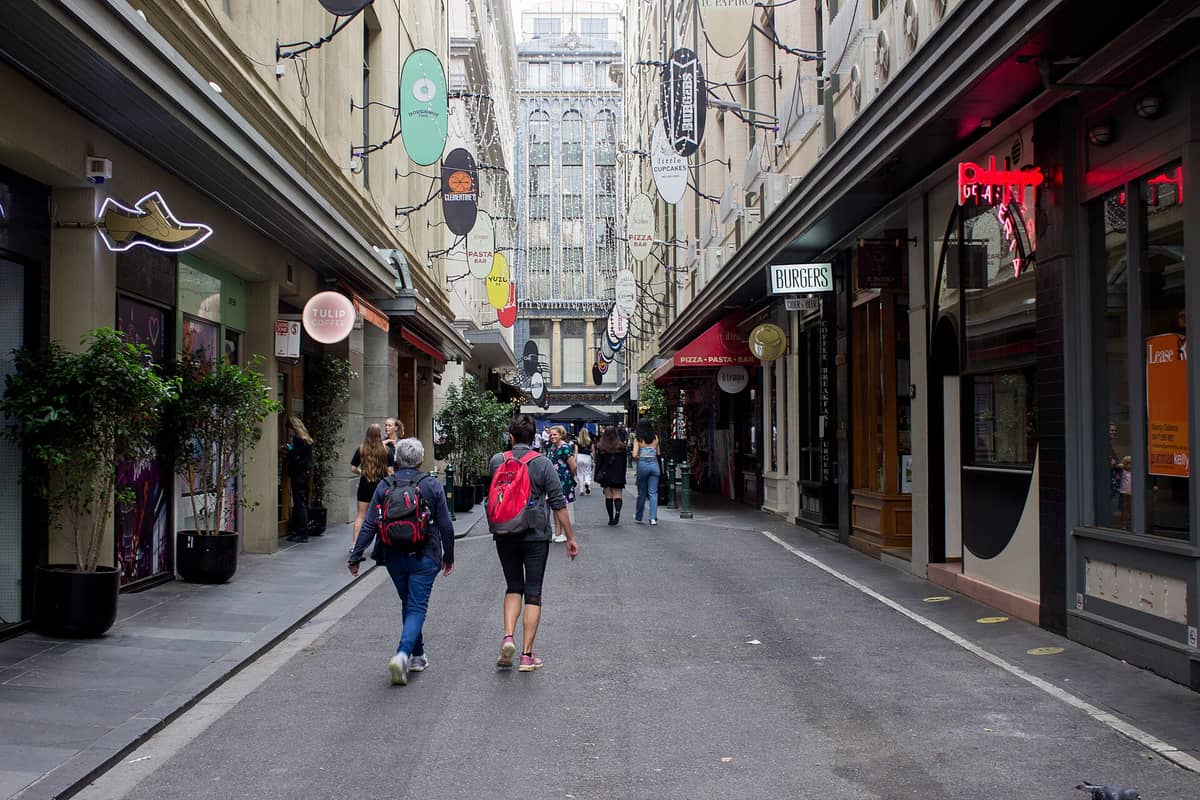
What Degraves Street Actually Is
Degraves Street is one of Melbourne's most recognisable laneways, running roughly 150 metres between Flinders Street at its southern end and Flinders Lane at its northern end. It sits in the block between Elizabeth Street and Swanston Street, placing it at the very heart of the CBD grid. The street takes its name from William Degraves, whose brother Charles arrived with him in Melbourne in 1849. The two men built a steam-driven flour mill on the site in 1851, making this one of the older named streets in the central city.
Today the lane is defined by its proportions: narrow enough that the two rows of outdoor tables almost meet in the middle, and short enough that you can see from one end to the other in a single glance. The buildings on either side are low by CBD standards, which means natural light reaches the lane for most of the day. That's not always the case in Melbourne's deeper laneways, and it makes Degraves feel less like a tunnel and more like a room with the roof removed.
💡 Local tip
Access from Flinders Street Station is easiest through the Campbell Arcade underpass, which deposits you directly at the southern entrance to Degraves Street. This route also passes through a small underground retail passage worth a look in its own right.
The Coffee Culture That Defines the Lane
Melbourne has a serious espresso culture, and Degraves Street is one of its most concentrated expressions. Several small cafes line the lane, most of them operating with outdoor seating that occupies the cobblestones from early morning onwards. The chairs and tables are typically mismatched, the service is counter-based, and the expectation is that you know what a flat white is. If you don't, the staff will explain it without condescension.
The smell of the lane in the morning is primarily roasted coffee, carried from multiple directions at once. By mid-morning, the outdoor tables are usually occupied, with a mix of office workers, tourists consulting phones, and people who appear to have no particular destination. If you want to understand why Melbourne's coffee scene has the reputation it does, sitting at a Degraves Street table for 20 minutes with a well-made espresso is a more instructive experience than reading about it. For broader context on what sets Melbourne's coffee apart, the Melbourne coffee guide explains the culture and the vocabulary in detail.
Tickets & tours
Live prices and dates from our booking partner. If you book, we may earn a commission at no extra cost to you.
Great Ocean Road reverse itinerary tour from Melbourne
From 77 €Instant confirmationFree cancellationGreat Ocean Road bus tour with a forest walk
From 90 €Instant confirmationFree cancellationYarra Valley Bus Wine Tour including lunch with a glass of wine and chocolate
From 107 €Instant confirmationFree cancellationHidden bars of Melbourne guided tour
From 115 €Instant confirmationFree cancellation
How the Lane Changes Through the Day
Early mornings, roughly 7 to 9 a.m. on weekdays, are when Degraves Street operates at its most functional and least photogenic. Workers cut through at pace, picking up takeaway cups from the counter. The outdoor seats are starting to fill but the lane feels purposeful rather than leisurely. If you want the lane without the crowd, this window is actually quite pleasant on weekdays: the light is angled and low, the cobblestones are still damp from any overnight rain, and the espresso machines are running at full volume.
Mid-morning to early afternoon on weekends is peak time. The tables fill completely, spilling conversation in several languages, and there's a near-constant flow of pedestrians navigating between the chairs. Photography becomes harder because the lane is never empty, though that density is also part of what makes a good shot. By mid-afternoon the crowd shifts: fewer office workers, more browsers, and some of the retail tenants see more foot traffic.
Evenings are a different experience altogether. Many of the daytime cafes close or wind down, but the lane itself stays open and the light changes from direct to ambient. The cobblestones catch reflections from shop windows. It's quieter, and the compressed proportions of the lane become more noticeable. If you're planning an evening in the area, Degraves connects naturally into the broader laneway network that extends north toward Flinders Lane and beyond.
The Physical Experience: Cobblestones, Proportions, and What You're Looking At
The cobbled surface of Degraves Street is worth noting before you arrive, particularly if you're walking with a wheeled bag or have mobility considerations. The stones are uneven in places, and the outdoor furniture adds further obstacles. Flat-soled shoes handle the surface more comfortably than heels. There is no official accessibility assessment for the lane, so those using wheelchairs or mobility aids should be aware that the surface is unlikely to be smooth.
Looking up is worthwhile. The facades on both sides of the lane retain older architectural fabric, including ironwork details and rendered surfaces that predate the surrounding CBD towers. The lane's low scale creates a visual contrast with the glass buildings visible at each end, which is part of what makes it feel distinct from the wider street grid. The built environment here has more in common with the covered arcades nearby than with the open boulevards of Swanston or Collins Streets.
The Royal Arcade and Block Arcade, both within a short walk to the north and west, share some of this 19th-century commercial character. Together, these laneways and arcades form a pedestrian network that rewards slow exploration. The Melbourne laneway guide maps out how these spaces connect and which ones are worth prioritising.
Photography: What Works and What Doesn't
Degraves Street photographs well under overcast skies, which Melbourne provides in reliable quantity. Direct midday sun creates harsh shadows on the cobblestones and blows out the lighter facade surfaces, so flat light is actually preferable here. Early morning on a weekday, when the lane is less crowded, allows for cleaner compositions if empty-lane imagery is what you're after. The southern end, looking north from just inside the Flinders Street entrance, gives the best compression effect with the overhead signage and furniture receding into the distance.
The lane is compact, so wide-angle lenses tend to exaggerate the distortion of the cobblestones. A standard or slightly telephoto perspective, whether on a phone or a dedicated camera, tends to produce more accurate and flattering results. The cafe awnings and signs add colour contrast against the stone and render facades. Be mindful of other pedestrians when setting up any extended shot; the lane is too narrow for a tripod during busy hours.
ℹ️ Good to know
Degraves Street sits within Melbourne's Free Tram Zone, so any tram running through the central city grid gets you close at no cost. Flinders Street Station serves metropolitan train lines, making this one of the most transit-accessible points in the city.
Setting Honest Expectations
Degraves Street is short. If you approach it expecting a sprawling cultural precinct, you'll be underwhelmed. It's a 150-metre lane with cafes, some small retail, and considerable foot traffic during peak hours. Its value is in what it represents and how it feels rather than in any single standout attraction within it. Travellers who find that kind of urban texture rewarding will enjoy it; those who need a clear destination or a tangible experience to justify the visit may find it overstated.
It's also worth being direct about the fact that Degraves is well-known. It appears in most Melbourne travel itineraries, which means it is rarely quiet during tourist-friendly hours. If what you're seeking is a laneway with equivalent character but less foot traffic, the wider network of Melbourne's CBD laneways contains quieter alternatives. The Melbourne hidden gems guide points toward some of those lesser-visited spots.
Travellers who might skip Degraves Street entirely: those with very limited time who need to prioritise major collections or exhibitions, anyone who finds crowded pedestrian spaces uncomfortable, and visitors whose primary interest is nature or outdoor recreation rather than urban atmosphere.
Getting There and Practical Notes
Flinders Street Station sits directly at the southern end of Degraves Street, making this one of the easiest attractions in Melbourne to reach by public transport. Every metropolitan train line passes through Flinders Street Station. Trams along Swanston Street and Elizabeth Street stop within a one-minute walk. Both tram routes fall within the Free Tram Zone for travel within the zone, so there is no fare to pay if you're travelling from elsewhere in the central city. For a full breakdown of transit options across Melbourne, the getting around Melbourne guide covers ticketing, zones, and route planning.
The lane itself has no admission fee and no official opening hours. Individual businesses within it operate on their own schedules, with cafes typically opening around 7 a.m. and some closing by late afternoon. The physical lane is accessible at any hour, though most of the reason to visit is tied to the operating hours of its tenants. Verifying individual business hours before a specific visit is advisable, particularly on public holidays.
Melbourne's weather is variable year-round, with temperatures ranging from average winter lows around 7°C to summer highs around 25°C. The lane's narrow proportions offer some shelter from wind, and the outdoor seating areas at most cafes have awnings. A light layer is useful on winter mornings even if the rest of the day turns mild. Rain is possible in any season, though a brief shower rarely empties the lane entirely.
Insider Tips
- The Campbell Arcade underpass connecting Flinders Street Station to Degraves Street contains its own small collection of independent retail stalls. It's easy to walk through without noticing them if you're moving quickly.
- Weekday mornings before 9 a.m. offer the clearest view of the lane with the fewest obstacles. The light is better and the cobblestones are visible rather than obscured by chairs and pedestrian feet.
- Most of the cafes in Degraves Street do not take table reservations. If you want a seat during the weekend mid-morning rush, arrive early or be prepared to wait for a chair to open up.
- The lane connects at its northern end directly to Flinders Lane, which has its own set of cafes and small galleries. Walking north from Degraves into Flinders Lane extends the experience without backtracking.
- Flinders Street Station's clocks, visible from the southern end of Degraves, make a natural backdrop for any photograph taken looking south from within the lane.
Who Is Degraves Street For?
- First-time Melbourne visitors who want to understand the city's coffee culture quickly and in a single location
- Street and architectural photographers working in the early morning hours
- Travellers building a self-guided CBD walking route that connects multiple laneways and arcades
- Anyone arriving at Flinders Street Station with 20 minutes to spare before their next commitment
- Visitors who appreciate urban texture and the layering of old commercial fabric within a modern city grid
Nearby Attractions
Other things to see while in Melbourne CBD:
- AC/DC Lane
Renamed in 2004 to honour one of Australia's most iconic rock bands, AC/DC Lane is a compact CBD laneway lined with street art, live music venues, and a raw energy that sets it apart from Melbourne's more polished laneways. Free to visit at any hour, it rewards those who show up after dark.
- Australian Centre for the Moving Image (ACMI)
The Australian Centre for the Moving Image (ACMI) sits at the heart of Federation Square and traces the full arc of screen culture, from silent cinema to interactive digital art. General entry and the permanent exhibition are free, making it one of the most rewarding stops in the Melbourne CBD regardless of your budget or the weather outside.
- Birrarung Marr
Birrarung Marr is a free, open-access riverside park on the northern bank of the Yarra River, a short walk from Flinders Street Station. Built on a former railway yard and opened in 2002, it offers terraced lawns, Indigenous cultural context, city skyline views, and a calendar of public events that transforms the space throughout the year.
- The Block Arcade
Built between 1892 and 1893, The Block Arcade is Melbourne's finest Victorian-era shopping arcade, a covered gallery of mosaic tile floors, ornate plasterwork, and a soaring glazed roof on Collins Street. Free to enter and open daily, it rewards slow exploration and offers one of the CBD's most atmospheric pauses from street-level traffic.
Planning a trip? Discover personalized activities with the Nomado app.