Sanctuary of Our Lady of Mellieħa: Malta's Oldest and Most Sacred Shrine
The Sanctuary of Our Lady of Mellieħa is Malta's oldest Marian shrine, built around a natural cave where a Byzantine-style fresco of the Virgin Mary has drawn pilgrims for centuries. Free to enter and steeped in nearly two thousand years of layered history, it sits above Mellieħa Bay and rewards visitors with both spiritual atmosphere and architectural beauty.
Quick Facts
- Location
- Mellieħa village, northern Malta
- Getting There
- Bus routes including 41, 42, 221 to Mellieħa
- Time Needed
- 30–60 minutes
- Cost
- Free entry
- Best for
- History lovers, pilgrims, architecture enthusiasts
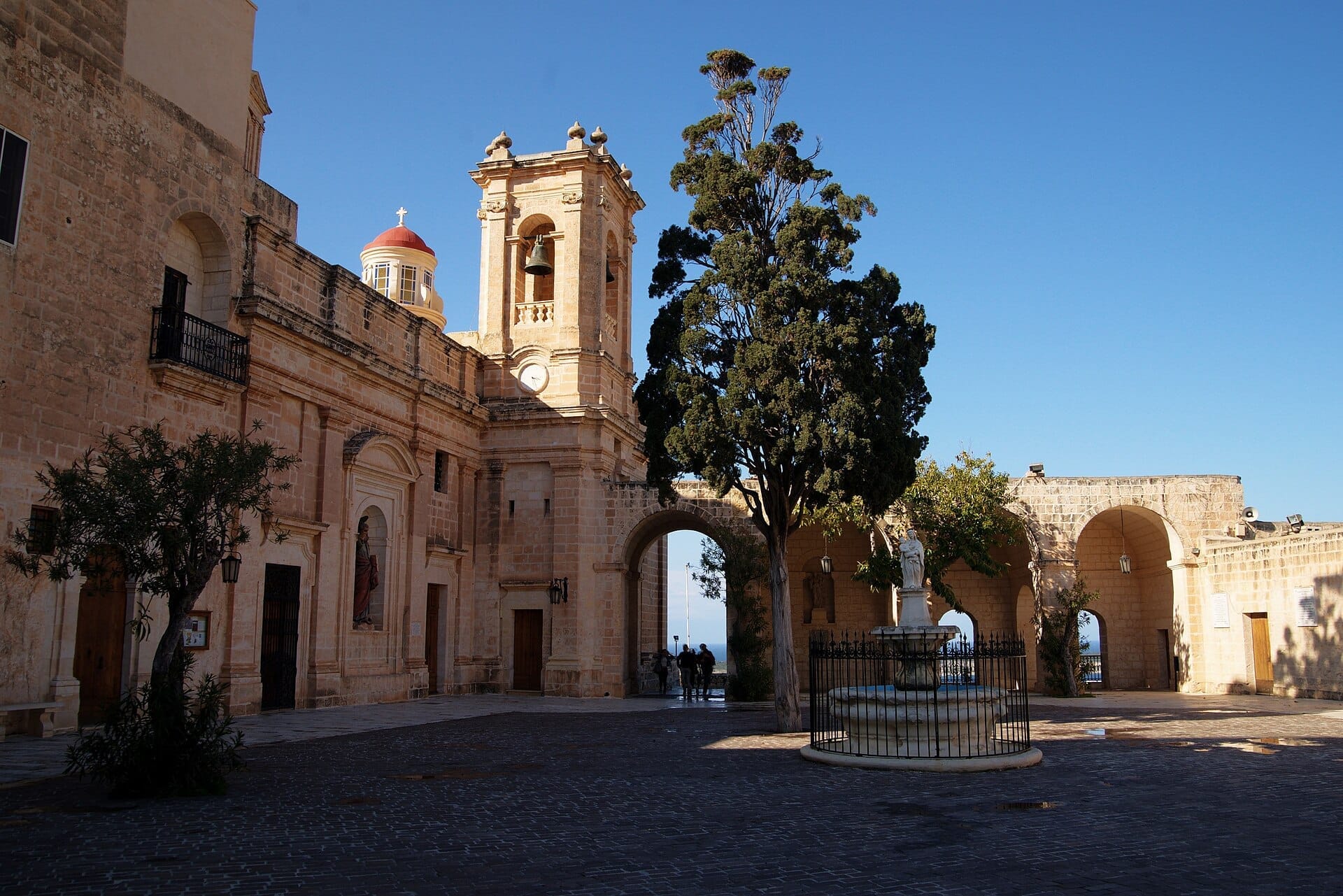
What the Sanctuary Actually Is
The Sanctuary of Our Lady of Mellieħa, known in Maltese as the Santwarju tal-Madonna tal-Mellieħa, is not simply a church. It is a pilgrimage site built around and into a natural cave in the limestone hillside of Mellieħa village, and it holds the distinction of being the oldest Marian shrine on the Maltese islands. The focal point is a Byzantine-style fresco of the Virgin Mary painted directly onto the cave wall, traditionally dated to somewhere between the 12th and 13th centuries and attributed by long-standing local tradition to Saint Luke himself. That attribution is devotional rather than historical, but it speaks to the depth of reverence this place commands.
The cave's sacred associations stretch even further back. The site is connected in Maltese tradition to the arrival of Saint Paul following his shipwreck on Malta in around 60 AD. Whether or not Paul personally sheltered here is a matter of faith rather than archaeology, but the narrative has shaped the site's identity for nearly two millennia. By 1436 the settlement already had a formal parish, and major construction phases in 1610, between 1716 and 1719, and again between 1845 and 1847 produced the layered Baroque structure visible today. In 2015 the Maltese Episcopal Conference formally designated it the National Shrine of Our Lady, and it is now part of the wider European Marian Network.
ℹ️ Good to know
Dress code applies as in all Maltese churches: shoulders and knees must be covered. Scarves and wraps are sometimes available at the entrance, but it is safer to come prepared.
Approaching the Shrine: The Courtyard and Baroque Gateway
Most visitors approach from the main road through Mellieħa village, climbing a short but steep lane flanked by old stone walls. The first thing that stops people is the monumental Baroque archway completed in 1719, a grand stone gateway that frames the entrance to the forecourt and signals immediately that this is no ordinary parish church. The archway is carved from the same golden-toned globigerina limestone that defines most of Malta's historic architecture, and in the late afternoon sun it takes on a warm amber glow.
The courtyard itself is relatively compact but carefully proportioned. Votive offerings and small plaques line the outer walls, left by pilgrims giving thanks for answered prayers, and these quiet testimonials do more to convey the site's living spiritual role than any official signage could. Early mornings here are particularly still: the village has not yet fully woken, and the only sounds are the wind coming off the bay below and the occasional clink of rosary beads from a lone worshipper.
The elevated position of the sanctuary means that even before you enter, the views across Mellieħa Bay and towards the northern coast are genuinely striking. This is one of the better panoramic vantage points in the area, and photographers visiting in the golden hour before sunset will find the combination of Baroque stonework and open sea particularly rewarding.
Tickets & tours
Hand-picked options from our booking partner. Prices are indicative; availability and final rates are confirmed when you complete your booking.
Round-trip transportation service to Mellieha's beaches
From 12 €Instant confirmationFree cancellationHalf-day quad bike tour in Mellieha with pickup
From 85 €Instant confirmationFree cancellationCity Sightseeing hop-on hop-off bus tour of Gozo
From 20 €Instant confirmationFree cancellationThe Malta Experience Audio-Visual Show and La Sacra Infermeria Tour
From 20 €Instant confirmationFree cancellation
Inside the Cave: The Fresco and the Grotto
Passing through the outer church and descending slightly, you enter the original cave space. The transition is immediate and sensory: the temperature drops a few degrees, the acoustics change from the flat resonance of a stone church to something softer and more enclosed, and the faint smell of candle wax becomes stronger. The cave walls are rough and uneven, a reminder that this is a natural space adapted over centuries rather than a purpose-built interior.
The fresco of the Madonna and Child occupies a shallow alcove in the cave wall. It is painted in a style clearly influenced by Byzantine iconography: frontal, solemn, with the flat gold tones and stylized drapery characteristic of medieval Eastern Christian art reaching the central Mediterranean. The image is modest in scale but extraordinarily present. Centuries of candle smoke and devotional attention have given it a patina that no restoration could replicate. Pilgrims come to kneel before it year-round, and on feast days the cave becomes genuinely crowded.
💡 Local tip
Visit during opening hours on weekdays if you want to spend time in the grotto without the tour groups and school visits that arrive later in the day. The light filtering through the outer church into the cave is also at its most atmospheric in the morning.
The terrain inside the grotto includes uneven stone floors and steps. Visitors with mobility difficulties should be aware that the grotto section is not easily wheelchair accessible. The outer church and courtyard are more manageable, but the cave itself requires care on uneven surfaces.
The Outer Church and Votive Room
The structure surrounding the cave developed over several centuries of building and rebuilding. The outer church is Baroque in style, with a relatively simple nave that directs attention toward the cave entrance rather than competing with it. The proportions are deliberately modest given the site's national significance: this is a place of devotion first and architectural spectacle second.
A dedicated votive room or sacristy displays a remarkable collection of ex-votos: small painted tablets, silver tokens in the shapes of body parts, model ships, and handwritten notes, all left by people who believe the Virgin of Mellieħa intervened in moments of crisis. These collections are found at many Marian shrines across the Mediterranean, but the range and age of the objects here is notable. Some of the older painted panels date back several centuries and provide a quiet record of the kinds of dangers, illnesses, and near-disasters that shaped life in northern Malta across generations.
The sanctuary fits naturally into a broader exploration of religious heritage in Malta. For context on how Christianity shaped the islands from the earliest centuries, the Knights of Malta history guide provides useful background, while those interested in early Christian archaeology should note that the Roman-era burial complexes at St. Paul's Catacombs in nearby Rabat represent the same tradition of layered sacred history.
How the Sanctuary Changes Through the Day and Year
The sanctuary is open daily from 8:00am to 6:00pm, with extended hours to 7:00pm in summer. The experience varies meaningfully depending on when you visit. Early morning visits before 10:00am offer the most contemplative atmosphere: few other visitors, soft light, and the sense that the place belongs primarily to those who have come to pray rather than to photograph. Midday sees the heaviest tourist traffic, particularly in summer when Mellieħa is busy with beach visitors combining a cultural stop with a day at the coast.
The feast of Our Lady of Mellieħa, celebrated on 8 September, transforms the entire village. Pilgrims arrive from across Malta and beyond, a traditional procession carries the image of the Virgin through the streets, and the surrounding area fills with the combination of solemnity and celebration that characterizes Maltese festas. If your visit coincides with this date, expect limited access to the inner shrine and considerable crowds, but also a rare opportunity to see the sanctuary functioning at full spiritual intensity.
⚠️ What to skip
During Mass times the shrine is primarily for worshippers, and tourists moving through the grotto can feel intrusive. Check the posted Mass schedule at the entrance and plan your visit around it if possible.
Getting There and Planning Your Visit
Mellieħa is well connected to Valletta and the rest of Malta by bus. Routes 41, 42, and 221 all serve the village. The sanctuary is close to the main square and reachable on foot within a few minutes of the bus stop, though the approach involves uphill walking on narrow lanes. By car, parking in Mellieħa village can be tight in summer, and it is worth arriving early or walking up from the larger parking areas lower down.
Entry is free, which makes the sanctuary a natural stop on a wider northern Malta itinerary. Mellieħa as a base offers access to beaches, the Red Tower on the ridge above town, and easy connections to Comino. For those building a structured trip, the 7-day Malta itinerary places Mellieħa in the context of a full island circuit.
Photography inside the grotto should be approached with discretion. The space is actively used for prayer, and flash photography near the fresco is inappropriate. The courtyard and archway, on the other hand, offer excellent photographic compositions, particularly in low-angle morning or evening light when shadows bring the carved limestone into relief.
Insider Tips
- Arrive before 9:00am on weekdays for near-solitary access to the grotto. The atmosphere is noticeably different without the background noise of tour groups.
- Look closely at the oldest ex-voto panels in the votive room. Several depict shipwrecks and fishing accidents from earlier centuries, giving an unvarnished window into the risks of life on this coastline.
- The view from the courtyard looking north toward Mellieħa Bay and Comino is one of the better panoramic points in the village and requires no entry ticket. Even travelers not interested in the shrine itself can appreciate the vantage point.
- If you are visiting in September, check whether your dates overlap with the 8 September festa. It is the most important day in the site's annual calendar and worth witnessing, but requires adjusting expectations about access and quiet.
- Combine the visit with a walk through the older residential streets of Mellieħa village below the shrine, where traditional Maltese townhouses and carved stone details reflect the same architectural tradition as the sanctuary gateway.
Who Is Sanctuary of Our Lady of Mellieħa For?
- Pilgrims and travelers with an interest in Mediterranean Christianity and Marian devotion
- History enthusiasts curious about Malta's layered pre-medieval and medieval heritage
- Architecture lovers drawn to Baroque stonework and the tactile quality of carved globigerina limestone
- Travelers seeking quiet, contemplative spaces away from coastal crowds
- Photographers looking for early-morning golden light on historic stonework with sea views
Nearby Attractions
Other things to see while in Mellieħa:
- Armier Bay
Armier Bay sits at Malta's northern tip, split between a wide family-friendly beach and a smaller, rockier cove ideal for snorkeling. The water is clear, the pace is slow, and the views reach across to Comino and Gozo. It rewards visitors who seek something more local than the island's main tourist beaches.
- Golden Bay
Golden Bay is widely considered Malta's best sandy beach, tucked into the northwest coastline near Mellieħa. With Blue Flag water quality, summer lifeguards, and a dramatic cliffside backdrop, it earns its reputation — though its relative fame means it fills up fast on summer weekends.
- Imgiebah Bay
Tucked into Malta's north-eastern coastline near Selmun, Imgiebah Bay is a small, sandy cove framed by sheer limestone cliffs. There are no facilities, no bus routes, and no easy road in — which is precisely why it stays quiet when every other beach in Mellieha is packed.
- Mellieħa Bay (Għadira)
Mellieħa Bay, also known as Għadira Bay, stretches over a kilometre along Malta's northwestern coast and earns its reputation as the island's finest sandy beach. Shallow, calm waters and a Blue Flag certification make it the go-to destination for families. Right next door, the Għadira Nature Reserve adds a surprising layer of ecological interest to what could otherwise be a straightforward beach visit.