Chow Kit Market: Kuala Lumpur's Most Authentic Wet Market
Chow Kit Market is Kuala Lumpur's largest and most unpolished wet market, where vendors sell everything from exotic tropical fruits and freshly slaughtered meat to dried spices and street snacks. It offers a rare window into how the city actually feeds itself, well away from tourist-polished facades.
Quick Facts
- Location
- Jalan Raja Alang / Jalan Haji Taib area, Chow Kit, Kuala Lumpur
- Getting There
- Chow Kit LRT station (Ampang Line or Sri Petaling Line), 5-minute walk
- Time Needed
- 1 to 2 hours
- Cost
- Free to enter; budget RM5–15 for snacks and small purchases
- Best for
- Food lovers, photographers, travelers wanting real KL life beyond the tourist trail
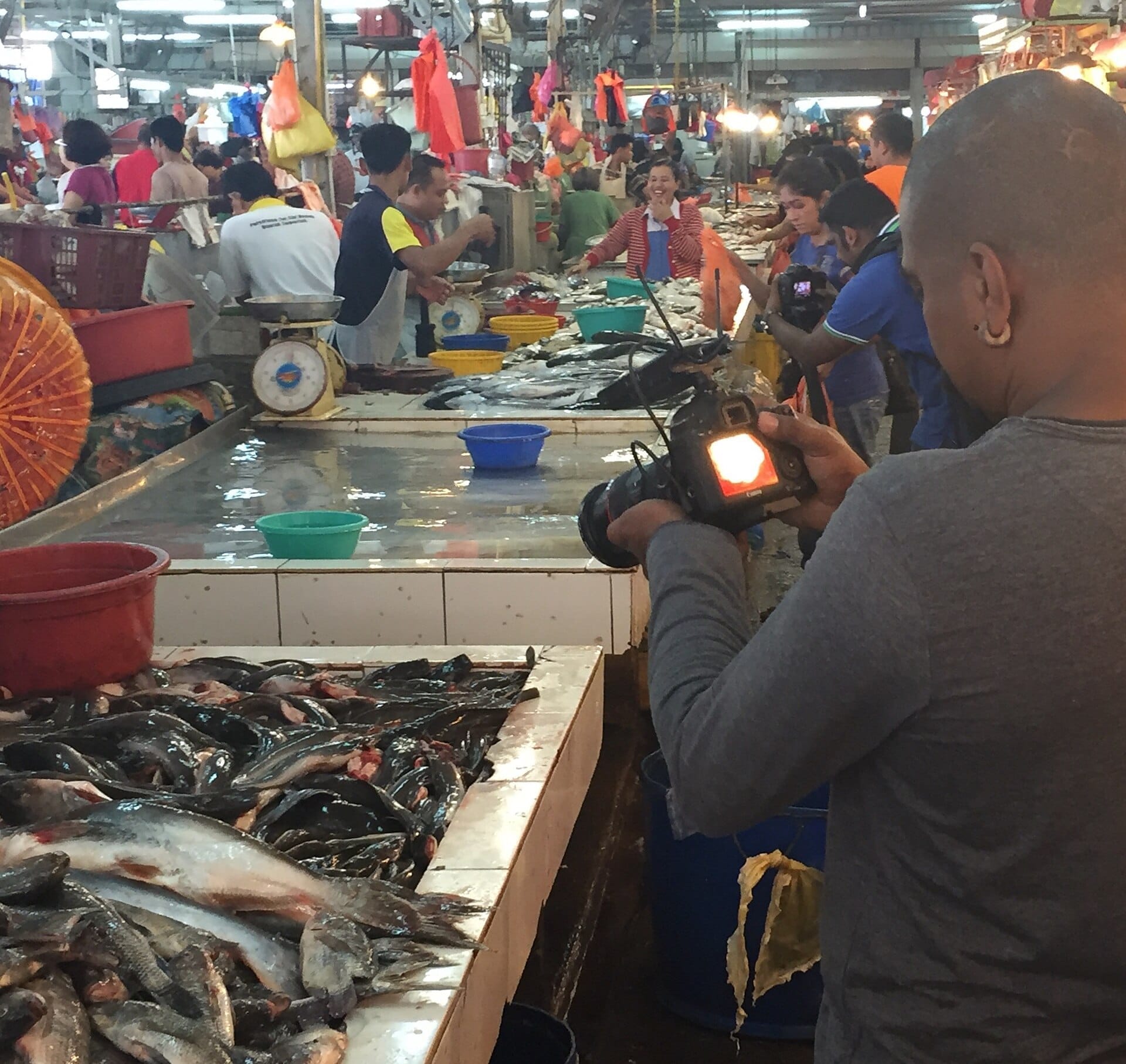
What Chow Kit Market Actually Is
Chow Kit Market is not a tourist attraction in any conventional sense. There are no entry fees, no information boards, and no curated photo opportunities. What it offers instead is unfiltered access to the daily food economy of a major Southeast Asian city. Vendors pack narrow covered lanes and open-air corridors selling live seafood, freshly butchered meat, tropical produce in varieties you will not find in any supermarket, and rows of dried goods that fill the air with layers of spice, salt, and char.
The market occupies a cluster of lanes and semi-permanent structures in the Chow Kit neighborhood, roughly between Jalan Raja Alang and Jalan Haji Taib. It has operated in some form since the early 20th century and today functions as both a wholesale and retail market, serving restaurant owners sourcing ingredients before dawn as well as home cooks shopping mid-morning.
💡 Local tip
The market is most active between 6am and 10am. If you arrive after 12pm, many fresh produce stalls will be sold out or closed, and the atmosphere thins out considerably.
The Morning Rush: Best Time to Visit
Early morning is when Chow Kit Market operates at full intensity. From around 6am, delivery motorcycles weave through the lanes, vendors unload crates of vegetables still damp from overnight transport, and the wet floor tiles reflect strips of fluorescent light. The noise is constant: the thump of cleavers on wooden blocks, vendors calling out prices, the mechanical hum of ice-shaving machines, and the occasional squawk from poultry stalls. This is the version of the market worth experiencing.
By 8am the retail crowd peaks. Home cooks arrive with wheeled trolleys, domestic helpers shop in bulk, and the corridors become genuinely tight. This is also when the street food stalls outside the main market structure are at their best, with freshly made nasi lemak, char kway teow, and bowls of curry laksa available from vendors who set up at the market perimeter.
If crowds and sensory overload are concerns, arriving closer to 9:30am offers a slightly calmer version of the same experience. After 11am the market winds down noticeably, the fishy smell intensifies as unsold seafood sits in the heat, and some sections begin to feel deserted. Weather matters here too: on rainy mornings, the covered sections stay active but the open-air stalls on the street edges can become chaotic with water pooling on uneven ground.
⚠️ What to skip
Wear closed-toe shoes with grip. The floors throughout the wet market are consistently damp, sometimes slippery with fish water or vegetable debris. Sandals are a poor choice.
Tickets & tours
Hand-picked options from our booking partner. Prices are indicative; availability and final rates are confirmed when you complete your booking.
Batu Caves, Bukit Melawati and the fireflies private tour with dinner
From 64 €Instant confirmationFree cancellationPetronas Twin Towers and Kuala Lumpur Tower observation deck tickets
From 34 €Private Taman Negara day trip from Kuala Lumpur with lunch
From 85 €Instant confirmationFree cancellationKuala Lumpur city and Batu Caves tour
From 41 €Instant confirmationFree cancellation
What You Will Find Inside
The market divides loosely into sections, though the boundaries are informal. The wet sections handle fish, poultry, and meat. Vendors display whole grouper and snapper on ice, live shellfish in shallow trays of water, and freshwater fish that are often still moving when you pass. The poultry section is not for the faint-stomached: birds are sold live and processed on-site. The smell in these sections is strong and unmistakable.
The produce section is where Chow Kit genuinely earns its reputation. You will encounter pandan leaves tied in thick bundles, five or six varieties of banana, jackfruit sections laid out on trays, starfruit, rambutan, and unfamiliar local greens with no English labels. Dried goods vendors sell shrimp paste in varying grades, dried anchovies (ikan bilis) in large sacks, tamarind slabs, palm sugar blocks, and rows of chili varieties. For anyone interested in Malaysian cooking, this section alone justifies the trip.
There is also a row of textile and sundry vendors selling cheap household goods, prayer items, and garments, which gives parts of the market a general bazaar character beyond pure food retail.
Eating at Chow Kit Market
The perimeter of the market and the nearby streets on Jalan Haji Taib host a dense cluster of hawker stalls that run on market hours. These are not food courts aimed at tourists. Prices are low, portions are generous, and the clientele is almost entirely local. A bowl of curry mee or a plate of nasi campur (mixed rice with lauk, or side dishes) will typically cost between RM5 and RM8. Some stalls have been run by the same family for decades.
Chow Kit's food stalls complement what you will find at the more visitor-oriented Jalan Alor, but the context is completely different. Here, eating is functional and fast, not a staged experience.
💡 Local tip
Look for stalls selling cendol, the cold dessert made with green rice flour noodles, coconut milk, and palm sugar syrup. Market vendors doing a brisk trade in the morning heat are usually reliable.
Cultural and Historical Context
Chow Kit as a neighborhood developed during the British colonial period as a working-class commercial area north of the city center. The market grew alongside the population, serving the immigrant communities — Malay, Chinese, Indian, and later Bangladeshi and Indonesian migrant workers — who have always made Chow Kit one of KL's most demographically layered districts. Today, this diversity shows in the market's inventory: halal butcher stalls operate alongside pork vendors, banana leaf ingredients sit next to aromatics used in Chinese cooking. The Chow Kit neighborhood retains this character in a way that more gentrified parts of the city have lost.
Unlike Petaling Street, which has been partially remade for tourism, Chow Kit Market has seen little aesthetic intervention. The infrastructure is aging: the covered sections have corrugated metal roofs, exposed pipes, and handwritten price signs. For some visitors, this is precisely the appeal. For others, it can feel overwhelming or uncomfortable.
Visitors who want a more structured heritage experience alongside their market visit should consider combining Chow Kit with a walk through Kampung Baru, the historic Malay village enclave just to the southeast, where the pace is slower and the surroundings more open.
Photography at Chow Kit Market
The market is a genuinely rewarding space for photography, but requires sensitivity. Vendors are accustomed to locals photographing produce and stalls, but pointing a camera directly at people without acknowledgment will earn you cold reactions at best. Brief eye contact, a smile, and occasionally buying something before photographing goes a long way. Many vendors are happy to be photographed once a small transaction has taken place.
The best light for photography falls in the early morning, when the exterior stalls catch directional sunlight against the dark interior of the covered market. A wide lens works well for context shots in the narrow aisles. For detail shots of produce, the stalls with overhead fluorescent lighting and colorful fruit arrangements photograph well at any hour.
Getting There and Getting Around
The most straightforward approach is to take the Ampang or Sri Petaling LRT line to Chow Kit station, which puts you roughly five minutes on foot from the main market entrance. The walk from the station takes you through the outer edges of the commercial district, where you will start to see fruit carts and hawker activity before you reach the market proper. For a broader sense of how Chow Kit fits into the city's geography, consult a guide to getting around Kuala Lumpur.
Ride-hailing services (Grab) drop off conveniently along Jalan Raja Alang. Parking in the area is possible but the lanes around the market are narrow and congested in the morning, making driving an inefficient option. The market itself is compact enough to cover on foot without difficulty, though the uneven terrain and wet surfaces require some attention.
ℹ️ Good to know
Chow Kit Market has no official ticketing or registration requirement. It is a public market operating on municipal land. Most stalls open from approximately 6am and wind down between 12pm and 2pm.
Who Should Skip This
Chow Kit Market is not suited to everyone. Travelers with a strong aversion to strong smells, live animals, or crowded unregulated spaces will likely find it stressful rather than rewarding. Parents with very young children should factor in the slippery floors, tight aisles, and the sight of live poultry being processed. Anyone with mobility limitations will face challenges: the ground is uneven throughout, surfaces are wet, and there are no accessibility features.
If you are looking for a more comfortable market experience with food, crafts, and a curated heritage feel, Central Market in the Chinatown district offers a cleaner, air-conditioned alternative specifically designed for visitors.
Insider Tips
- Arrive before 7:30am on a weekday for the highest energy and widest selection. Saturday mornings bring more shoppers but also more variety in the produce stalls.
- The best nasi lemak in the area is typically sold from small plastic-stool setups on the street edges, not from the larger sit-down stalls. Follow the crowd rather than the signage.
- If you want to buy spices or dried goods, prices are not fixed. A polite ask for a better price (boleh kurang?) is standard practice and usually produces a small discount.
- Bring small bills. Most vendors prefer exact change or RM1-RM5 notes. Paying with RM50 for a RM3 purchase will cause visible frustration.
- The market's outer edges on Jalan Haji Taib have a strip of shops selling cheap imported textiles and household goods that is worth a slow browse after the food market winds down.
Who Is Chow Kit Market For?
- Food travelers who want to understand Malaysian ingredients at their source
- Street photographers looking for textures, color, and candid scenes
- Travelers who have already done KL's main sights and want something genuinely local
- Anyone interested in the everyday food culture and demographics of a Southeast Asian city
- Early risers who prefer their explorations done before 10am
Nearby Attractions
Other things to see while in Chow Kit:
- Kampung Baru
Kampung Baru is one of Kuala Lumpur's most unusual urban pockets: a gazetted Malay agricultural reserve from 1900 that has survived almost entirely intact, surrounded by gleaming towers. Wooden kampung houses sit alongside roadside stalls, and the weekend market draws locals from across the city for nasi lemak, grilled fish, and traditional kuih. It rewards unhurried walking and genuine curiosity.
- Saloma Link
Saloma Link is a 69-metre pedestrian bridge connecting the Kampung Baru district to the KLCC area across the Klang River. Designed with sweeping curves and a nightly light show, it is one of Kuala Lumpur's most visually distinctive pieces of urban infrastructure — and one of the few bridges in Southeast Asia built primarily for walkers.
- Titiwangsa Park
Titiwangsa Park is one of Kuala Lumpur's largest and most popular recreational green spaces, anchored by a broad lake and framed by an unlikely view of the city skyline. It draws locals far more than tourists, which is precisely what makes it worth visiting.