Chicago River Kayaking: Paddle Through the Heart of the City
Few experiences reframe Chicago quite like kayaking its river. From the Wild Mile's floating eco-park near Goose Island to the downtown skyscraper canyon, paddlers get a ground-level perspective on one of America's most architecturally rich waterfronts. Multiple outfitters offer rentals and guided tours from spring through fall.
Quick Facts
- Location
- Chicago River, with main downtown access points along the Riverwalk; Wild Mile at 905 W Eastman St (behind REI)
- Getting There
- Multiple CTA L lines serve the Loop (Red, Blue, Green, Orange, Pink, Brown); Blue Line to Division or Chicago for the Wild Mile area
- Time Needed
- 2–3 hours for a rental; 1.5–2 hours for a guided tour
- Cost
- The river is free to paddle; rentals typically start around US$30/hr per person for single or tandem kayaks. Guided tours vary by operator — check each outfitter's current pricing
- Best for
- Architecture lovers, active travelers, couples, and anyone wanting a completely different angle on the Chicago skyline
- Official website
- kayakchicago.com
What Chicago River Kayaking Actually Is
Chicago River kayaking is not one single attraction with a ticket booth. It is a category of experiences offered by several independent outfitters who operate launch points along the North Branch, Main Branch, and South Branch of the Chicago River. The operators most visitors use include Kayak Chicago, Urban Kayaks, Wateriders, and Chicago River Canoe and Kayak. Each offers a slightly different route, price structure, and atmosphere, but all provide access to one of the most distinctive urban paddling environments in North America.
The experience splits into two distinct flavors. The downtown corridor puts you on the Main Branch of the river, paddling through a canyon of steel and glass between towers that include some of the most photographed buildings in the Midwest. The Wild Mile, accessed from 905 W Eastman Street near Goose Island, takes you in the opposite direction: a roughly one-mile-long floating eco-park vision currently built out in multiple shorter segments managed by Urban Rivers, where native plantings, nesting boxes, and a public ADA-compliant dock create a quieter, greener experience before you reach the skyline.
ℹ️ Good to know
The Chicago River itself is free to paddle — you only pay the outfitter for the boat, gear, and any guided instruction. All reputable operators include personal flotation devices and a basic safety briefing.
The Downtown Canyon: Architecture at Water Level
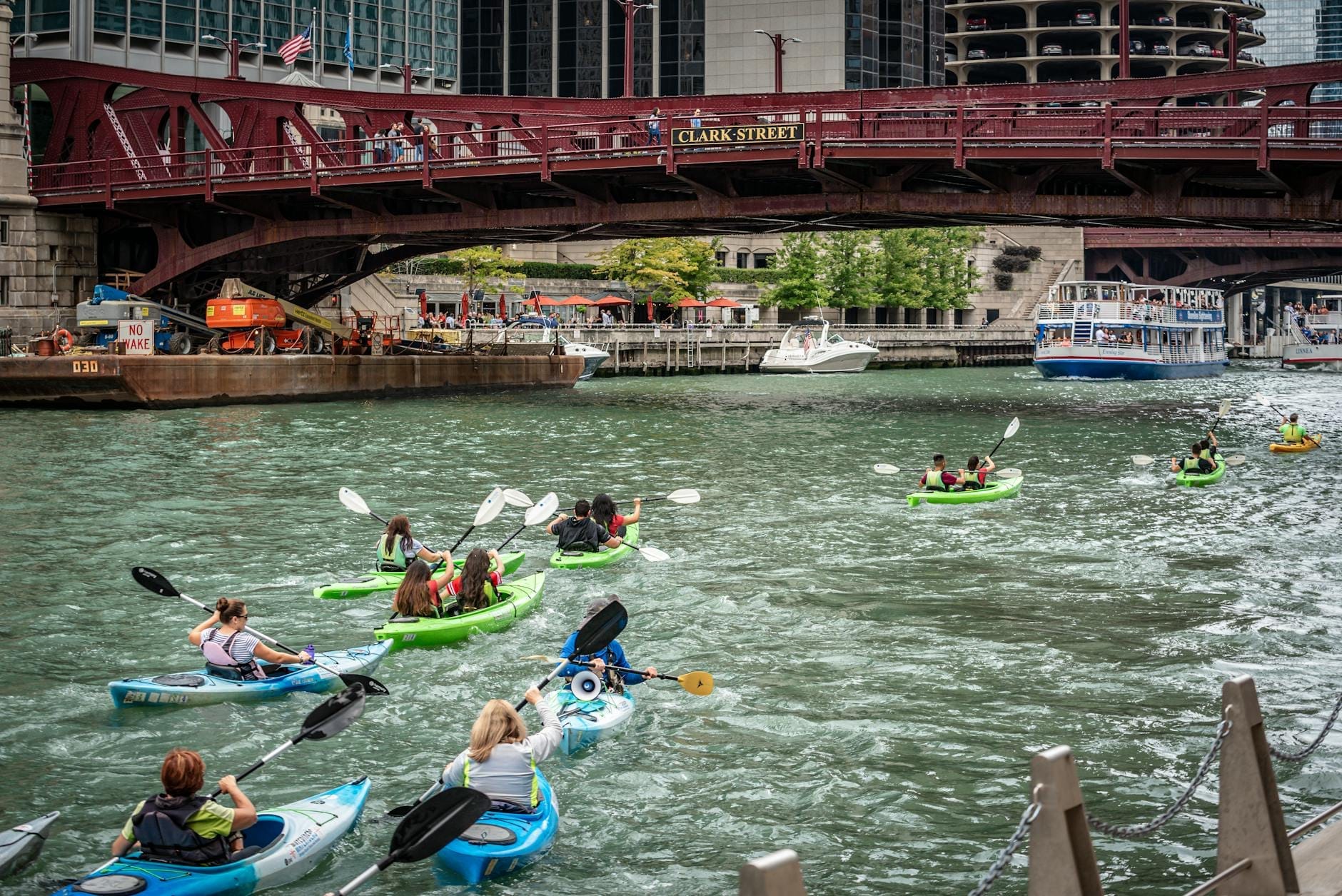
Paddling the Main Branch through the Loop is the experience most visitors come for, and it genuinely delivers something that no boat tour, rooftop, or sidewalk perspective can replicate. You are sitting roughly two feet above the waterline, surrounded by buildings that shoot 50, 70, and 100 stories above you, with the noise of the city filtered into something softer and more directional than it is on the street. If you have spent time on the Chicago Riverwalk above, the view from water level is a genuine revelation — wider, quieter, and more intimate at the same time.
The river corridor showcases Chicago's architectural legacy in a way few visitors experience. The bascule bridges overhead — many of them double-deck trunnion structures dating from the early 20th century — pass just above your head at certain water levels. The Marina City corncob towers, the Wrigley Building's white terracotta reflecting off the water, and the modernist mass of the Merchandise Mart are all framed from angles that make them feel newly discovered. For anyone already interested in Chicago's built environment, this is an essential counterpoint to the walking tours.
Morning light is the best time for photography in the downtown canyon. Between roughly 7am and 9am on a clear day, direct sunlight hits the eastern faces of the Loop towers while the river surface is relatively calm and tourist boat traffic is minimal. By mid-afternoon, boat wakes from architectural cruises create choppier conditions, and the light goes flat. If the Chicago architecture river cruise is on your itinerary too, consider doing the kayak in the morning and the narrated cruise in the afternoon — the two experiences complement rather than repeat each other.
Tickets & tours
Hand-picked options from our booking partner. Prices are indicative; availability and final rates are confirmed when you complete your booking.
Chicago's River and Lake architecture speedboat cruise
From 37 €Instant confirmation90-min architecture boat tour on the Chicago river
From 32 €Free cancellationOdyssey Chicago river architectural lunch cruise
From 86 €Instant confirmationPremium Chicago River architectural brunch on the Odyssey
From 85 €Instant confirmation
The Wild Mile: A Different Kind of River
The Wild Mile, developed by the nonprofit Urban Rivers around the North Branch Canal near Goose Island, offers a genuinely different experience. The floating park hosts native aquatic and terrestrial plantings, bird nesting habitat, and a public boardwalk and walkway that are freely accessible during posted park hours. The launch dock is ADA-compliant, making it one of the more accessible entry points on the river. From here, paddlers can explore the calmer North Branch before eventually working south toward the skyline, with the route around Goose Island offering a before-and-after contrast between the eco-restoration zone and the industrial heritage of the island itself.
In the early morning, the Wild Mile section is quietly extraordinary. Herons stand in the shallows, the floating gardens soften the ambient sound of the city, and the smell of the water is noticeably cleaner than you might expect given how recently the river was treated as an open sewer. The Chicago River was infamously reversed in 1900 to protect Lake Michigan's drinking water — an engineering feat that the city's boosters don't let you forget — but its ecological rehabilitation over the last two decades is the less-told story, and the Wild Mile makes it tangible.
Routes, Distances, and What to Expect on the Water
One of the most satisfying routes for capable paddlers is launching near the Lawrence's Fisheries area just west of Chinatown and paddling roughly three to four miles north and east to the river mouth lock, passing through the heart of downtown. This gives you the full range of the river's character: industrial banks, the museum campus approach from the water, and the skyline canyon. It is not a casual outing — four miles of paddling with current variations and boat traffic requires some comfort on the water — but guided versions of similar routes are available.
For most first-time visitors, a two-hour rental from a downtown outfitter covers a comfortable 3–4 mile round trip. The current is generally mild in the Main Branch but can strengthen near the locks and after heavy rain when the Metropolitan Water Reclamation District adjusts flow. Outfitters brief you on current conditions before launch, and no previous kayaking experience is required for the standard downtown routes. The river is flat water — no rapids, no technical challenges — but situational awareness around tour boats, water taxis, and the occasional dragon boat practice group is part of the experience.
⚠️ What to skip
After significant rainfall, river operators sometimes cancel tours or restrict rentals due to increased current speed and debris on the water. Check your operator's social media or call ahead on days following heavy storms.
Choosing an Outfitter: Practical Differences
Kayak Chicago operates tours on both the Chicago River and Lake Michigan, making it a strong choice if you want options — the lake tours give a completely different scale of experience, particularly on calm mornings. Urban Kayaks operates from the Riverwalk itself in the downtown core, putting you almost immediately into the downtown canyon. Wateriders focuses on downtown river tours with an emphasis on the architecture corridor. Chicago River Canoe and Kayak leans toward a more self-guided, community-oriented approach with competitive hourly rental rates.
Prices, hours, and tour availability change seasonally and year to year. The figures cited in various listings — including kayak rentals that in the past were advertised as low as about US$15 per hour — should be confirmed directly with each outfitter before your visit. Most operators run their primary season from May through October, with some offering spring and fall shoulder-season tours. Evening tours, available from several outfitters in summer, are particularly worth considering: the skyline lit at dusk from river level is one of the more memorable views the city offers.
Getting There, What to Bring, and Who Should Skip
For downtown launch points, the CTA's multiple Loop L stations put you within a short walk of river access. The Blue Line stops at Grand or Chicago for the Wild Mile near Goose Island. If you are planning a broader day in the Loop, kayaking pairs naturally with a walk along the Riverwalk before or after, or a visit to Millennium Park, which is a short walk from several riverfront launch points.
Wear clothes you are comfortable getting wet in — sitting spray and the occasional awkward boarding moment are realities even for experienced paddlers. Closed-toe shoes that can get wet are strongly advisable. Bring sunscreen regardless of the season, as the river reflects sun intensively. A dry bag or waterproof case for your phone is worth the investment: the photography from the water is genuinely excellent, but unprotected phones and river water are a predictable combination.
Who should skip this: travelers with significant mobility limitations may find boarding and exiting a kayak difficult even at ADA-compliant docks — the floating dock surface moves, and getting low to the water requires upper body stability. For those who want the river view without the physical commitment, the Chicago Architecture Foundation river cruise or a walk along the Riverwalk are strong alternatives. Very young children (typically under five) are often not permitted on standard kayak rentals — check individual operator policies.
The season matters significantly. Chicago's humid continental climate means summer temperatures regularly reach the upper 20s Celsius (low-to-mid 80s Fahrenheit), and a morning on the water is genuinely pleasant from June through September. Late May and September are excellent shoulder months — crowds thin, prices may ease, and the light is softer. For a broader look at when to time your Chicago trip, the best time to visit Chicago guide covers seasonal trade-offs in detail.
Insider Tips
- Book evening tours at least a week in advance in July and August — they sell out. The skyline at dusk and the lit bridges overhead make this the single best time to be on the downtown stretch of river.
- If you are renting rather than taking a guided tour, study the Chicago River Water Trail Map (available free online) before you launch. Knowing where the locks are and which stretches see the heaviest commercial boat traffic will make your route planning much more confident.
- The Wild Mile dock at 905 W Eastman Street offers public access, but the floating park is most alive in the early morning, when bird activity peaks and the rest of the city is quiet. Even if you are not kayaking, a visit to the boardwalk itself is worth the trip.
- Bring a polarizing filter or enable HDR on your phone camera. The river surface creates intense glare that washing out your skyline shots is almost guaranteed without it on bright days.
- If you are a solo traveler, several outfitters regularly pair solo participants into small groups for safety and sociability. Ask when booking — it is rarely advertised but almost always accommodated.
Who Is Chicago River Kayaking For?
- Architecture and design enthusiasts who want a perspective that no walking tour can provide
- Active couples or friend groups looking for a 2–3 hour activity that doesn't feel like a typical tourist itinerary
- Nature-curious visitors interested in urban ecology and the ongoing restoration of the Chicago River
- Photographers seeking unique angles on the downtown skyline, especially in early morning or evening light
- Repeat Chicago visitors who feel they have already seen the city's standard highlights
Nearby Attractions
Other things to see while in The Loop:
- Art Institute of Chicago
One of the largest and most visited art museums in the United States, the Art Institute of Chicago anchors the eastern edge of the Loop with a collection of over 300,000 works spanning 5,000 years. From Georges Seurat's pointillist masterpiece to Grant Wood's American Gothic, the highlights alone demand the better part of a day.
- Buckingham Fountain
The Clarence Buckingham Memorial Fountain is one of the largest decorative fountains in the world, sitting at the heart of Grant Park since 1927. Free to visit during its seasonal run from spring through mid-October, it puts on hourly water displays and a nightly illuminated show that draws crowds from across the city.
- Chicago Architecture Center
Housed in Mies van der Rohe's One Illinois Center on the Chicago River, the Chicago Architecture Center packs nearly 10,000 square feet of exhibition space, a landmark scale model of the city, and access to some of the country's most informative architecture tours. It's the most comprehensive entry point into understanding what makes Chicago's skyline one of the world's most significant.
- Chicago Architecture Foundation River Cruise
The Chicago Architecture Center River Cruise aboard Chicago's First Lady is the most authoritative way to read the city's skyline. In 90 minutes, trained docents walk you through more than 40 landmark buildings across all three branches of the Chicago River, connecting architectural styles to the human decisions that shaped them.