Oslo Botanical Garden (Botanisk Hage): A Living Collection Worth Your Time
Part of the Natural History Museum at the University of Oslo, the Botanical Garden in Tøyen is a free, year-round green space holding over 4,500 plant species from across the globe. Whether you arrive in cherry-blossom spring or frost-sharpened winter, the garden offers something most Oslo attractions cannot: genuine quiet.
Quick Facts
- Location
- Sars' gate 1, Tøyen, Oslo (Grønland/Grünerløkka area)
- Getting There
- Tøyen T-bane station (Metro Lines 1/2/3/4) — short walk
- Time Needed
- 1–2 hours for a relaxed walk; longer if combining with indoor museum exhibits
- Cost
- Free (outdoor garden); indoor museum exhibits may require a ticket — verify on-site
- Best for
- Families, solo walkers, plant lovers, travellers seeking a peaceful break from central Oslo
- Official website
- www.nhm.uio.no/english/botanical-garden
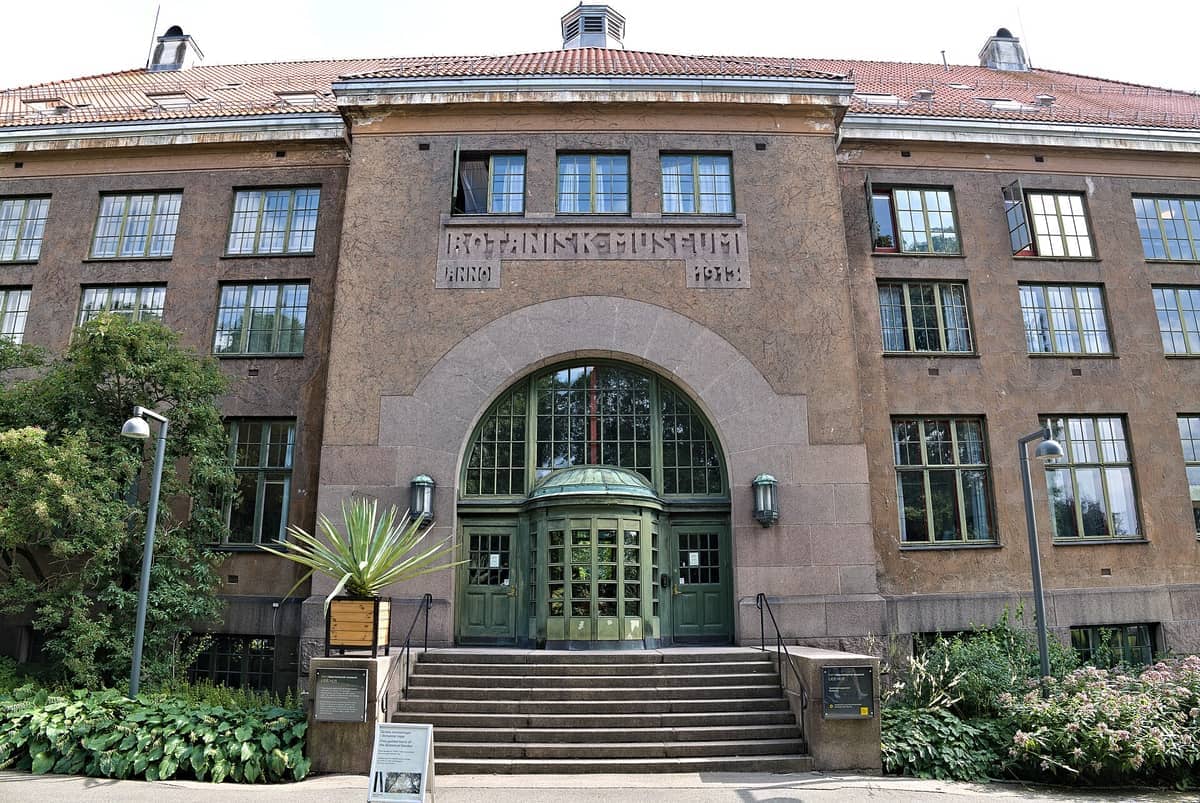
What the Botanical Garden Actually Is
The Botanisk Hage, or Botanical Garden, is not a city park in the conventional sense. It is a scientific collection maintained by the Natural History Museum at the University of Oslo, and it contains more than 4,500 plant species gathered from temperate, alpine, and tropical regions around the world. The distinction matters: the garden is laid out with the logic of a research institution, not a pleasure ground, which means every bed, every tree label, and every themed section exists to demonstrate something specific about the plant kingdom. For visitors, this adds an unexpected layer of meaning to even a casual stroll.
The garden occupies a fenced site in the Tøyen district, on the eastern edge of central Oslo. It has four entrances — on Sars' gate, Jens Bjelkes gate, and two on Monrads gate — which makes it easy to pass through as part of a longer walk across the neighbourhood. Most visitors arrive from Tøyen T-bane station and enter through the main gate on Sars' gate.
ℹ️ Good to know
Opening hours vary by season. From 15 March through 30 September, the garden is open daily 07:00–21:00. From 1 October through 14 March, hours are 07:00–17:00 on weekdays and 10:00–17:00 on weekends and holidays. Always check the museum's official website before visiting, as hours are subject to change.
What You Will See Inside
The garden is divided into thematic and geographic sections. The systematic plant collection is arranged to show how plant families relate to each other, which sounds dry but produces an unexpectedly beautiful effect: rows of carefully labelled specimens that, taken together, trace the shape of plant evolution across a few hundred metres of path. The rock garden is one of the more visually striking areas, with alpine plants arranged across stone terraces in a way that mimics natural mountain habitats. In late spring and early summer, this section is dense with small, intense flowers that would look at home in the Norwegian highlands.
There is also a section dedicated to Norwegian flora, which is worth slowing down for if you plan to do any hiking outside the city. Seeing labelled specimens of the plants you will encounter on trails gives you a concrete reference point that no field guide quite replicates. The arboretum holds mature trees, some of considerable size, and in summer the canopy over the main paths creates a coolness that is welcome on warmer afternoons.
Indoor greenhouses are attached to the museum buildings and contain tropical and subtropical species. These are particularly worth visiting outside summer, when the contrast between Oslo's grey autumn streets and the warm, humid interior of the palm house is pronounced. Note that the outdoor garden is always free, but some indoor sections of the Natural History Museum may carry a separate admission charge. Verify before you go.
Tickets & tours
Live prices and dates from our booking partner. If you book, we may earn a commission at no extra cost to you.
Oslo Fjord sightseeing audio-guided electrical boat tour
From 35 €Instant confirmationFree cancellationFjord cruise with live jazz music
From 64 €Instant confirmationFree cancellationLuggage Storage in Oslo
From 6 €Instant confirmationFree cancellationPicturesque dinner cruise in Oslo
From 137 €Instant confirmationFree cancellation
How the Garden Changes Through the Day and Across Seasons
The garden opens at 07:00, and early morning is the clearest time to visit. On weekday mornings, the paths are largely empty, occupied mainly by university staff, dog walkers from the surrounding streets, and the occasional jogger. The light in summer at this hour is soft and long, and the dew on the rock garden plants produces a clarity of colour you will not see later in the day. Birdsong is audible rather than background noise. This is the version of the garden most tourists never experience.
By midday on warm weekends, the atmosphere shifts noticeably. Families spread blankets on the lawns, children cluster around the pond areas, and the main paths become social rather than contemplative. The garden holds this well — it is large enough that you can always find a quieter corner — but if solitude is your goal, mid-afternoon on a July Saturday is not the time to aim for.
Autumn is arguably the garden's most underrated season. From September onwards, the foliage in the arboretum shifts through amber and copper, and the systematic beds take on a skeletal quality that is genuinely beautiful in a way that photographs rarely capture. October brings the first frosts, which crisp the grass and give the air a sharp, mineral quality. Visitor numbers drop sharply after September, which means the garden is almost your own.
Winter visits require lower expectations regarding colour but offer real rewards in texture and light. Snow sits on the conifer collections and the rock garden in a way that makes the garden look like a Nordic landscape painting. The reduced opening hours from October (closing at 17:00) mean that a winter afternoon visit must be timed carefully or you will find the gates locked. Spring, particularly May, when bulbs and flowering trees peak simultaneously, is the season that draws the most visitors and deserves its reputation.
💡 Local tip
May is peak flowering season. Cherry trees, magnolias, and spring bulbs reach their best simultaneously. Arrive before 09:00 on weekends to avoid crowds and get the best light for photography.
Getting There and the Tøyen Neighbourhood
Tøyen T-bane station is the most practical starting point. Metro lines 2, 3, 4, and 6 all stop here, connecting directly to Oslo Central Station in under ten minutes. From the station, the walk to the Sars' gate entrance takes around five minutes. The surrounding Grønland and Tøyen area is one of Oslo's more culturally layered neighbourhoods — a mix of long-established immigrant communities, students, and a growing number of cafés and independent shops. It is a noticeably different Oslo from the waterfront at Aker Brygge or the western suburbs, and the contrast is worth paying attention to.
There are four entrances spread across the surrounding streets, which is more useful than it might seem. If you are combining the garden with a visit to the Natural History Museum buildings on the same site, enter from Sars' gate. If you are arriving from Grünerløkka to the north, the Monrads gate entrances are more direct. The garden's fencing is distinctive and difficult to miss, and the entrances are all clearly signed.
If you are planning a full afternoon in the area, the Mathallen food hall in nearby Vulkan is a ten to fifteen minute walk north, and makes a natural pairing for a late lunch before or after the garden. The Akerselva river walk also passes close by, allowing you to build a longer outdoor route without backtracking.
Historical and Scientific Context
The Botanical Garden in Tøyen is the current home of Oslo's university botanical collection. The original garden was established in the early nineteenth century in the city centre, and the collection moved to Tøyen in 1814. The current layout reflects successive expansions and reorganisations over two centuries of botanical research at the University of Oslo. Many of the mature trees in the arboretum date from the nineteenth century, which gives the garden an age and depth that newer public parks cannot replicate.
As a scientific institution rather than a decorative garden, the collection prioritises completeness and representativeness over spectacle. This is not a garden designed to wow you with mass plantings or theatrical water features. Its authority comes from breadth: 4,500 species is a significant collection, and the labelling is thorough enough that a curious visitor with no background in botany will leave knowing more than when they arrived. The genus and species names on the labels follow standard taxonomic conventions, and the systematic beds are laid out to reflect current understanding of plant phylogeny.
Practical Notes for Visitors
The outdoor garden is free on every day of the year. No booking is required for a normal visit, no queues form at the gates, and there is no high-pressure entrance experience. You walk in, you walk around, you leave. This is worth stating plainly because it distinguishes the Botanical Garden from most other Oslo attractions, many of which now require advance booking or carry significant admission fees.
Paths in the main garden are firm and generally level, making the site accessible for pushchairs and for visitors with limited mobility, though the rock garden area involves some uneven terrain. The garden is a legitimate family option for Oslo — there is enough space for children to move freely, the pond areas attract attention, and the absence of an entry fee removes the pressure of extracting maximum value from a ticketed experience. For more family-specific planning, the Oslo with kids guide covers how to combine this and similar low-cost attractions into a full day.
Photography is straightforward throughout the garden. The rock garden and arboretum offer the most compositional variety, and the greenhouse interiors — when accessible — produce strong images due to the density of tropical foliage against glass-filtered light. A standard smartphone is sufficient; there is no need for specialist equipment.
If your Oslo visit falls in summer, it is worth knowing that the garden's extended evening hours (until 21:00 through September) make it a practical late-afternoon option after most other museums have closed. Paired with a walk along the Akerselva, this covers the best of the east-side neighbourhoods efficiently. For broader Oslo planning, the Oslo 3-day itinerary and the free things to do in Oslo guide both reference the Botanical Garden as part of a budget-friendly east Oslo half-day.
⚠️ What to skip
Dogs must be kept on a leash throughout the garden. Picnicking is common on the lawns, but you should avoid damaging labelled plant beds. Respect for the collection is expected — this is a working scientific institution, not a public park.
Who Should Skip This
If your Oslo time is tightly limited and you are prioritising iconic experiences, the Botanical Garden is not competing with the Vigeland Sculpture Park, the Munch Museum, or the Holmenkollen ski jump for your attention. It rewards curiosity and patience rather than delivering a single powerful set piece. Visitors who find botanical collections too quiet or too specialised — or who are visiting in November, when the garden is at its least photogenic and most skeletal — may find the experience underwhelming. Equally, travellers who associate the word 'garden' with formal floral displays should know that this is a scientific collection with a different aesthetic logic.
None of this is a criticism. It simply means the garden suits certain kinds of visitors exceptionally well and others less so. If you are already drawn to natural history, plant life, or quiet urban green spaces, it will exceed your expectations. If you need a high-stimulation experience to feel a visit was worthwhile, look elsewhere.
Insider Tips
- The garden opens at 07:00, a full hour or more before most Oslo attractions. On summer mornings, this early access is a genuine advantage: the light is better, the paths are empty, and the plants are at their freshest. Set an alarm and go before breakfast.
- The rock garden section is the most photographically rewarding part of the garden, but it is easy to miss if you follow only the main central path. Look for the stone terracing to the east of the main lawn and allow extra time there in May and June when the alpine plants are at their peak.
- Tøyen has some of the best value lunch spots in Oslo within a five-minute walk of the garden. The streets around Tøyen T-bane station have a concentration of South Asian and Middle Eastern restaurants that are significantly cheaper than anything in Sentrum and generally excellent. Combine a morning garden visit with lunch in the neighbourhood before heading back into the centre.
- The greenhouse interiors are worth visiting on a cold or rainy day specifically for the sensory contrast. Stepping from a grey Oslo November street into the warm, humid palm house is an unexpectedly transporting experience that has nothing to do with botany.
- Plant labels throughout the garden follow standard Latin nomenclature and include the plant's geographic origin. If you are planning a trip into the Norwegian mountains or countryside after Oslo, spending time in the Norwegian flora section gives you a live reference for the plants you will encounter on trails — far more useful than a field guide.
Who Is Botanical Garden (Botanisk Hage) For?
- Families with children looking for free outdoor space with room to roam
- Solo travellers who want a slow, restorative counterpoint to Oslo's main museum circuit
- Plant enthusiasts and natural history visitors who want to engage with the collection seriously
- Photographers seeking early-morning light and seasonal botanical subjects
- Budget travellers building a free east-Oslo day around Tøyen, the Akerselva, and nearby food
Nearby Attractions
Other things to see while in Grønland & Tøyen:
- Gamlebyen (Old Town)
Gamlebyen is the oldest settled area of Oslo, preserving medieval church ruins, a historic cemetery, and quiet residential streets on the city's east side. Admission is free, crowds are minimal, and the contrast with central Oslo is striking.
- Natural History Museum (Naturhistorisk Museum)
Oslo's Natural History Museum brings together dinosaur skeletons, geological wonders, and a sprawling botanical garden on a single University of Oslo campus. Free garden entry, affordable tickets, and a calm atmosphere make it one of the city's most underrated half-day destinations.
Planning a trip? Discover personalized activities with the Nomado app.