Sanford is a historic city on the southern shore of Lake Monroe, about 25 miles north of downtown Orlando. Its preserved brick-street downtown, waterfront riverwalk, and SunRail connection make it one of the most distinct places in the Orlando metro area.
Sanford sits at the northern edge of the Orlando metro, where the St. Johns River broadens into Lake Monroe and the pace slows considerably. Its downtown core, with late-19th- and early-20th-century storefronts along First Street and a genuine working waterfront, feels more like a small Florida river town than a suburb of one of America's busiest tourist cities. That contrast is exactly what draws people here.
Orientation
Sanford is a city in Seminole County, roughly 25 miles north of downtown Orlando along US-17-92. It sits on the southern shore of Lake Monroe, where the lake connects to the St. Johns River, giving the city a waterfront identity that most of the Orlando metro simply does not have. If you are mapping it mentally, think of Sanford as the northern end of the main SunRail commuter corridor, well beyond the theme park corridor and the International Drive tourist strip.
The downtown area is compact and easy to read. The Downtown Commercial Historic District is roughly bounded by Fulton Street and Commercial Street to the north, Myrtle Avenue to the west, Sanford Avenue to the east, and Third Street to the south. First Street is the commercial spine, running east-west through the core. The Sanford Residential Historic District extends south from Second and Third Streets down to Fourteenth Street, between French Avenue and Elm Avenue to the west and Sanford Avenue to the east. Walk far enough south and the architecture shifts from retail storefronts to Victorian and Craftsman cottages on quiet tree-lined streets.
The waterfront lies north of First Street, where the city's Riverwalk traces the Lake Monroe shoreline. Orlando Sanford International Airport (SFB) sits east of downtown and serves as a secondary gateway for the region, including domestic flights and some international charter service. The Sanford SunRail station is located west of the historic core, connecting the city to the commuter rail spine that runs south through Orlando.
ℹ️ Good to know
Sanford is a separate incorporated city in Seminole County, not an Orlando neighborhood in the administrative sense. It has its own city government, police force, and planning codes. Locals will correct you if you call it part of Orlando, though it is firmly within the Orlando metro area.
Character & Atmosphere
Early mornings in downtown Sanford have a quiet, almost suspended quality. The brick streets of First Street catch the low Florida sun at an angle that makes them glow amber before the heat builds. A few coffee regulars are already on the sidewalk outside the cafes that anchor the block. The St. Johns River is glassy at this hour, and the marina along the Riverwalk has the kind of stillness you associate with working waterfronts rather than tourist boardwalks.
By mid-morning on weekends, the dynamic shifts. The antique shops and independent boutiques open their doors, and the foot traffic picks up noticeably. First Street functions as a genuine main street in the traditional sense: locally owned businesses, a mix of age groups, and none of the manufactured theming you get further south on International Drive. The architecture does the heavy lifting here. The late 19th and early 20th century commercial buildings have been preserved with unusual integrity, giving the whole street a coherence that is hard to fake.
Afternoons can be slow and hot, especially in summer. This is Florida in the subtropical sense: temperatures in the high 80s to low 90s Fahrenheit from June through September, with afternoon thunderstorms that arrive with little warning and clear quickly. The smarter move is to take the midday heat slowly, find a shaded patio or a cool bar, and come back out when the light softens in late afternoon. The Riverwalk is at its best in the hour before sunset, when the lake turns gold and the heat begins to ease.
After dark, Sanford's bar and live music scene activates around First Street and the blocks immediately surrounding it. The city has developed a genuine local nightlife culture over the past decade, with craft beer bars, breweries, and live music venues drawing people from across Seminole County and beyond. It is not a late-night city in the Miami sense, but it sustains energy until midnight on weekends. The residential streets south of Third Street are quiet by comparison, dark and calm in the way of an actual neighborhood rather than an entertainment district.
⚠️ What to skip
Sanford's overall crime rate is above the U.S. average, according to publicly available city and crime-data sources. The historic downtown and waterfront areas around First Street are generally the most active and visible parts of the city. As with many small Florida cities, conditions vary significantly by neighborhood. Exercise standard urban awareness after dark, particularly away from the well-lit commercial core.
What to See & Do
The most rewarding thing to do in Sanford is simply walk its historic districts. First Street between Magnolia Avenue and Sanford Avenue is where the commercial heritage is most intact, with two- and three-story brick buildings dating from the 1880s through the 1920s. The storefronts have been repurposed into a mix of antique dealers, galleries, and local shops without losing their original bones.
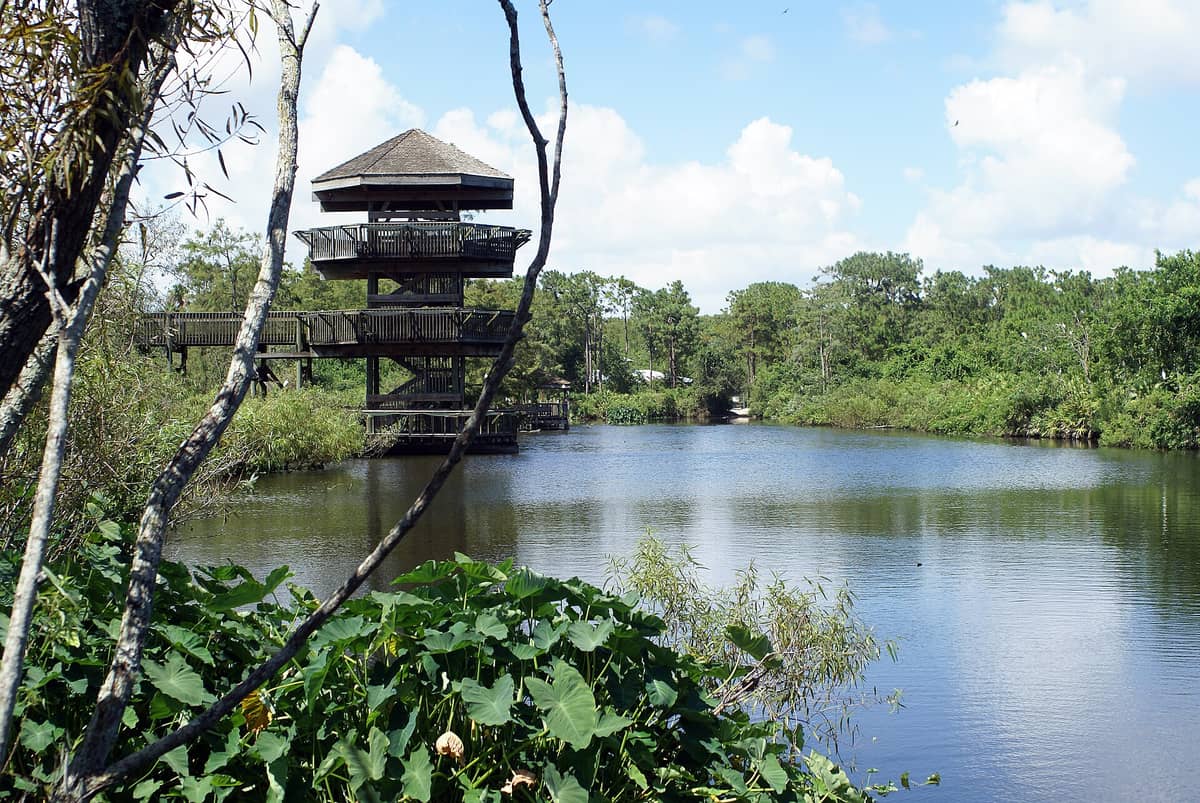
The Sanford Riverwalk along Lake Monroe is a paved waterfront path that connects the marina to parks on either side of downtown. It is free, open daily, and one of the better waterfront walks in the Orlando metro. At the marina, airboat tour operators offer rides out onto the St. Johns River and into the surrounding wetlands, where alligators, wading birds, and the specific smell of Florida river water are all part of the experience. These tours are a genuine way to understand the natural geography of the region.
Sanford also works well as a base for day trips into central Florida's natural landscape. Airboat tours near Orlando frequently depart from the St. Johns River corridor, and the springs system west of the city is accessible by car. Blue Spring State Park, one of the best manatee-viewing sites in Florida, is about 15 miles west of downtown Sanford along the St. Johns River system.
Walk First Street historic district between Magnolia and Sanford Avenues
Riverwalk along Lake Monroe, especially at sunrise or sunset
Airboat tours departing from the St. Johns River marina
Antique and vintage shopping along the commercial historic district
Sanford Museum at the historic Courthouse area for local history
Touring the residential historic district south of Third Street for Victorian and Craftsman architecture
For those combining a Sanford visit with broader Orlando exploration, the city's character fits naturally into an itinerary that prioritizes Orlando's less obvious destinations. It pairs well with a visit to nearby Winter Park or a drive out to the natural springs, both of which offer a similar counterpoint to the theme park corridor.
Eating & Drinking
Sanford's food scene is anchored along First Street and has grown considerably in quality and variety over the past decade. The general tone is casual and independent: locally owned spots rather than chains, menus that lean toward American bar food, Southern cooking, and a smattering of international influences reflecting the broader Central Florida population. Price points are generally reasonable compared to tourist-facing Orlando, with most sit-down meals running between $15 and $30 per person before drinks.
The craft beer scene is arguably Sanford's strongest culinary identity. Several breweries have opened in and around the historic core, using the repurposed industrial and commercial buildings well. Weekend afternoons at these spots have a community feel, with locals bringing dogs onto covered patios and food trucks sometimes parked outside. If you are looking for a place to spend a few hours without a structured agenda, a Sanford brewery on a Saturday afternoon does the job well.
Coffee in the morning is easy to find along First Street, with independent cafes serving as the social hubs they function as in genuinely local neighborhoods. Weekend brunch has become a draw, with several spots filling up by 10 a.m. If you want a table at the more popular brunch spots without a wait, aim for before 9:30 a.m. or after 1 p.m.
Craft breweries along and near First Street for afternoon pints
Weekend brunch at independent cafes, best before 9:30 a.m. or after 1 p.m.
Southern and American comfort food at casual sit-down spots
Food trucks at brewery patios and weekend events along the waterfront
Waterfront dining with Lake Monroe views near the marina area
💡 Local tip
If you are visiting on a weekend, check whether the Sanford Farmers Market is operating near the waterfront or along First Street. It draws local food vendors and producers and is a better introduction to Sanford's community character than anything on the tourist itinerary.
Getting There & Around
The most practical public transit option from Orlando is SunRail, the regional commuter rail service. The Sanford SunRail station sits at the northern end of the line, connecting to stations south through downtown Orlando and beyond. The ride from Orlando's Church Street or LYNX Central stations to Sanford takes about 40 to 50 minutes, depending on the train, and costs a few dollars each way. Note that SunRail operates Monday through Friday only, so check current schedules before planning a weekend trip by train.
From the Sanford SunRail station, local transit connections may vary, and travelers should check the current LYNX network before relying on bus service to Downtown Sanford and the historic core. Service patterns and frequencies change, so always verify current schedules on the LYNX website before your visit.
By car from downtown Orlando, Sanford is about 25 miles north via US-17-92 or I-4 to SR-417. The drive takes 30 to 45 minutes depending on traffic, with I-4 northbound backing up during standard commute hours. Once in Sanford, street parking along First Street is generally available and free or low-cost. For a broader look at how to move around the Orlando area, the getting around Orlando guide covers all the major transit and driving options across the metro.
Orlando Sanford International Airport (SFB) is located east of downtown Sanford and handles primarily domestic and some international charter flights. It is a significantly smaller and less congested airport than Orlando International (MCO) to the south. If your flight arrives at SFB, downtown Sanford is a short drive or taxi ride away, making it a genuinely convenient base if you are planning to spend time in the northern Orlando metro.
⚠️ What to skip
SunRail service is weekday-only and subject to schedule changes. Do not assume the same frequencies you find on weekday schedules apply on weekends. Confirm service before you plan a visit relying on the train.
Where to Stay
Sanford is not a major hotel destination in the Orlando metro, but it has a growing inventory of boutique accommodations, bed and breakfast properties, and short-term rental options within the historic residential district. Staying in the area south of First Street and north of Fourteenth Street puts you within walking distance of the commercial core and the Riverwalk, which is the most practical base if you are here without a car.
For travelers who want Sanford's character but need a wider selection of accommodation types, the city is accessible enough from the broader Orlando area that staying further south and doing Sanford as a day or evening trip is entirely reasonable. The where to stay in Orlando guide covers the full range of accommodation zones across the metro, from the theme park corridor to the downtown core and beyond.
Sanford suits travelers who are self-selecting out of the resort hotel experience. If you want a pool with 800 other guests and a shuttle to Magic Kingdom, stay elsewhere. If you want a quiet porch, a short walk to dinner and a brewery, and a city that functions like an actual place rather than a visitor product, Sanford makes sense. The residential historic district in particular offers short-term rental options in restored Victorian and Craftsman homes that give you a version of Central Florida that most tourists never see.
Is Sanford Worth Your Time
Sanford sits far enough from the theme park corridor to filter out travelers who are not specifically seeking it out. That is part of what makes it work. The historic downtown has integrity that takes decades to accumulate, the waterfront is the real thing rather than a manufactured attraction, and the local food and drink scene reflects an actual community rather than a visitor demographic. It belongs in the same conversation as Winter Park and the Mills 50 District as a reason to look beyond the obvious Orlando itinerary.
That said, Sanford is not for everyone and should not be oversold. The city's crime statistics are meaningfully above national averages, and travelers should exercise standard awareness rather than assuming the small-town streetscape equals uniformly low risk. The transit connections are useful but require planning, particularly on weekends. And if your Orlando trip is built around the major theme parks, Sanford adds a 50-mile round trip that eats into park time. It is best understood as an add-on day or a deliberate alternative for those doing Orlando without Disney rather than a destination that competes with the parks on their own terms.
TL;DR
Sanford is a historic river city on Lake Monroe, 25 miles north of downtown Orlando, with a well-preserved brick-street commercial district dating from the late 1800s.
Best for: travelers seeking local character, craft beer culture, waterfront walks, antique shopping, and a genuine small-city atmosphere far from the theme park corridor.
Transit access via SunRail from downtown Orlando is practical on weekdays; weekend service is limited and should be confirmed in advance.
Crime rates are above the U.S. average city-wide; the historic First Street core is the most active and visible area. Exercise normal urban awareness after dark.
Works best as a day trip from Orlando or as a deliberate base for travelers prioritizing natural Florida, historic architecture, and independent local businesses over resort amenities.
Central Florida's wetlands are home to alligators, herons, and some of the most exhilarating eco-experiences in the Southeast. This guide breaks down the best airboat tours near Orlando by operator, price, location, and what to expect on the water.
Orlando's theme parks run 365 days a year, but the experience varies wildly depending on when you go. This guide breaks down every season by weather, crowd density, pricing, and special events so you can pick the window that fits your trip.
Orlando sits at the center of one of America's most day-trip-rich regions. Within two hours, you can be watching manatees in a crystal spring, exploring a 17th-century Spanish fort, or riding coasters at a Tampa theme park. This guide covers the best destinations worth leaving the parks behind for.
Disney World tickets are not a flat rate. Prices shift by park, date, and how many days you visit. This guide breaks down exactly what tickets cost in 2026, which type makes sense for your trip, and where the genuine savings are.
The EPCOT International Food & Wine Festival is one of the best culinary events in Orlando, running August 27 through November 21, 2026. This guide covers booth pricing, crowd strategy, entertainment, and everything you need to know before you go.
Orlando is far more than paid theme parks. From free-entry entertainment districts and botanical gardens to natural springs and cultural museums, the city offers a surprising range of genuinely no-cost experiences. This guide covers the best free things to do in Orlando, with honest notes on what actually costs nothing.
Orlando is a sprawling city built around cars, but public transit, ride-shares, and theme park shuttles can cover most visitor needs if you plan ahead. This guide breaks down every option — costs, coverage, limitations, and practical tips — so you can move around Orlando without wasting time or money.
Halloween Horror Nights at Universal Studios Florida is one of the most elaborate haunted events in the world, running from late August through early November. This guide covers ticket pricing, crowd strategy, what to expect inside the haunted houses, and a clear take on whether the Express Pass is worth it.
The Wizarding World of Harry Potter spans two separate parks at Universal Orlando Resort. This guide covers Diagon Alley, Hogsmeade, Hogwarts Express logistics, ticket pricing, crowd patterns, and the practical details that will save you time and money.
Orlando is far more than roller coasters and character meet-and-greets. This guide covers the best romantic things to do in Orlando for couples, from lakefront paddle boats and botanical garden strolls to rooftop dining and sunrise balloon flights, with honest seasonal advice and pricing details.
Orlando's dinner show scene is bigger and more varied than most visitors expect. This guide breaks down the top options, real pricing, seating differences, and practical booking advice so you get the most out of your evening.
Orlando is far more than roller coasters and mouse ears. From crystal-clear natural springs and world-class art museums to charming lakeside towns and Florida wildlife encounters, this guide uncovers the city's most rewarding experiences for travelers ready to look past the theme park corridor.
December transforms Orlando into one of the most festive destinations in the United States. From Disney's separately ticketed Christmas parties to SeaWorld's included holiday celebration, this guide covers everything you need to plan a December trip without expensive surprises.
Orlando's summer heat and afternoon thunderstorms make indoor attractions essential knowledge for any visitor. From hands-on science museums and Tiffany art collections to immersive theme park rides and interactive entertainment complexes, these are the best places to stay cool while making the most of your trip.
Seven days in Orlando, Florida gives you just enough time to hit the major theme parks, squeeze in a day trip or two, and actually breathe between it all. This itinerary balances Disney World, Universal Orlando, and the parts of the city most visitors never see — built around how crowds, weather, and park hours actually work.
Central Florida sits atop one of the world's great aquifer systems, and the results are spectacular: gin-clear spring-fed rivers, constant 68-72°F water, and some of the most beautiful state parks in the Southeast. These are the natural springs closest to Orlando worth planning a day trip around.
Orlando's after-dark scene goes far beyond the theme parks. This guide breaks down the best nightlife districts, top venues, what things cost, and how to navigate the city at night without wasting time on the wrong spots.
Orlando, Florida doesn't have to cost a fortune. With the right timing, transport choices, and free attractions, you can experience the best of the city while keeping your wallet intact. This guide breaks down exactly how to do it.
Orlando draws over 75 million visitors a year, and most leave without incident. But the city's overall crime statistics can look alarming out of context. This guide breaks down where the real risks lie, which areas to avoid, and what practical steps will keep your trip trouble-free.
Orlando delivers far more than theme parks when it comes to retail therapy. From luxury flagships at Mall at Millenia to discounted designer finds at outlet centers, plus charming boutique streets and one-of-a-kind themed shopping districts, this guide covers the best places to shop across the city.
Orlando is a serious sports city, not just a theme park destination. From NBA basketball at Kia Center to MLS soccer at Inter&Co Stadium, college football at the Bounce House, and ECHL hockey, this guide covers every major team, venue, ticket option, and seasonal event you need to plan your visit.
Orlando is home to more top-tier theme parks than any city on Earth. This guide covers every major park across Disney World, Universal, SeaWorld, and beyond, with practical advice on what to ride, when to go, and how to make the most of your visit.
Orlando has more water parks per square mile than almost anywhere on Earth. This guide covers every major option, from Disney's themed slide parks to SeaWorld's Aquatica, Universal's Volcano Bay, and the natural springs locals swear by.
Orlando, Florida is the world's most visited family destination for good reason, but navigating theme parks, ticket pricing, crowds, and heat requires a strategy. This guide breaks down everything families need to plan a trip that works for kids of all ages, without overpaying or burning out.
Orlando is one of the most diverse travel destinations in the United States, and Disney is just one piece of it. From Universal's blockbuster theme parks and world-class natural springs to historic small towns and genuine wildlife encounters, this guide covers the best experiences Orlando offers completely independent of the Mouse.
Orlando is far more than theme parks. This guide covers the full range of things to do in Orlando, Florida, from Magic Kingdom and Universal's Epic Universe to natural springs, arts districts, and day trips, with practical notes on costs, crowds, and what to skip.
Choosing where to stay in Orlando shapes your entire trip. This guide breaks down the city's main neighborhoods and hotel corridors, explains how prices shift dramatically by season, and gives you the honest picture on which areas deliver real value versus tourist-trap rates.