Central Florida Zoo & Botanical Gardens: A Practical Guide for Orlando Visitors
The Central Florida Zoo & Botanical Gardens in Sanford is a 106-acre AZA-accredited zoo and botanical garden set along the shores of Lake Monroe. It trades theme-park spectacle for a quieter, more personal wildlife experience, making it a solid choice for families and nature lovers who want something calmer than Orlando's usual offerings.
Quick Facts
- Location
- 3755 W. Seminole Blvd., Sanford, FL 32771 — about 35 minutes north of the Orlando theme park corridor
- Getting There
- Best reached by car via I-4 toward Sanford, then W. Seminole Blvd (U.S. 17-92). Free parking onsite.
- Time Needed
- 2–3 hours for a thorough visit; allow extra time for the splash ground with kids
- Cost
- Adults approx. $22–$29; Seniors (55+) approx. $18–$25; Children (3–12) approx. $17–$20; Under 2 free. Verify current rates before visiting.
- Best for
- Families with young children, nature lovers, visitors who want a low-key break from theme parks
- Official website
- www.centralfloridazoo.org
What the Central Florida Zoo Actually Is
The Central Florida Zoo & Botanical Gardens is not trying to compete with SeaWorld or Busch Gardens. That is the first thing worth understanding before you visit. It is an AZA-accredited institution — one of roughly 240 in North America to hold that designation — set on the banks of Lake Monroe in Sanford, Seminole County. The zoo covers a manageable footprint compared to major metropolitan zoos, with shaded pathways winding through genuine subtropical vegetation rather than manicured concrete plazas on a 106-acre piece of land donated by Seminole County.
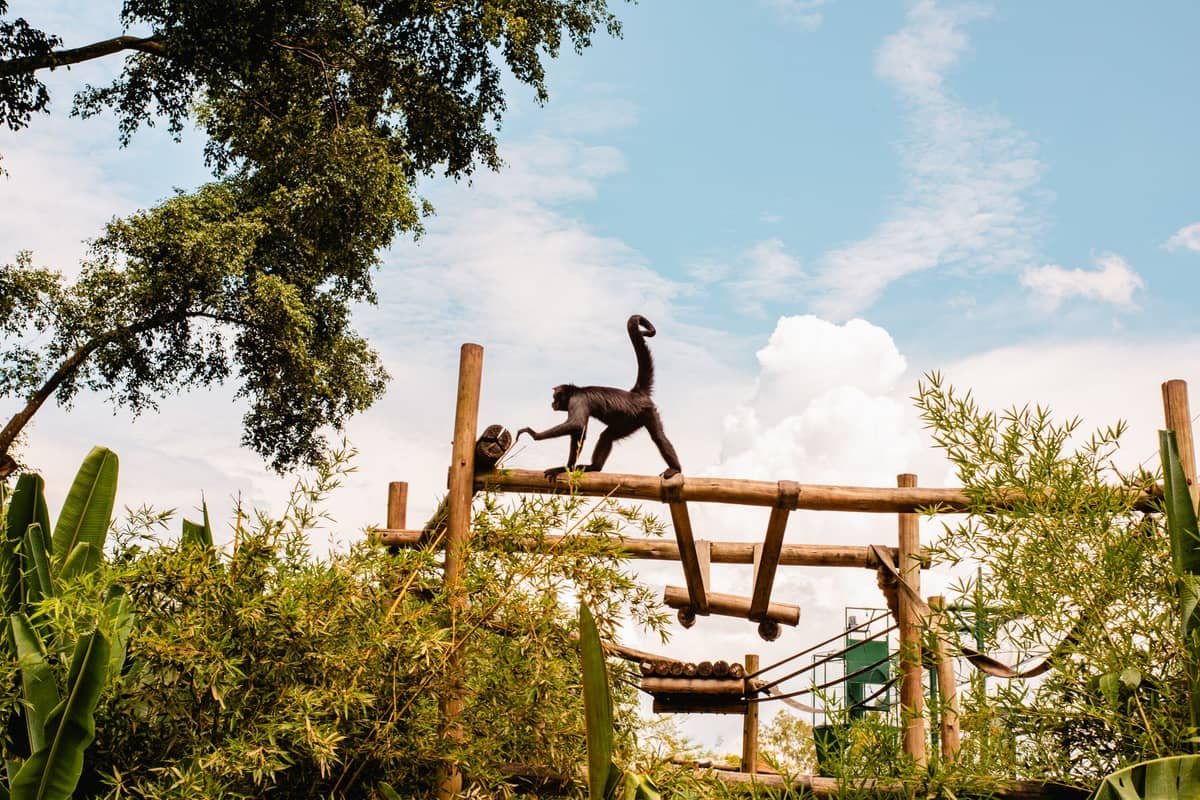
The collection includes big cats, primates, reptiles, birds, and a rotating cast of animals involved in conservation programs. The botanical gardens designation, added officially in 2007, reflects the surrounding landscape: native palms, tropical flowering plants, and cypress habitat that legitimately frames the animal exhibits rather than decorating them.
ℹ️ Good to know
The Zoo is closed on Thanksgiving Day and Christmas Day. It is open daily from 9:00 a.m. to 4:00 p.m., with last admission at 3:30 p.m. Confirm on the official site before your visit.
A Century of History, Quietly Told
The zoo's roots go back to 1923, when it operated as the Sanford Municipal Zoo — a modest collection of animals originally donated to the city by the local fire department. For decades it was little more than a civic curiosity. The transformation began on July 4, 1975, when the collection moved to its current Lake Monroe site, on land donated by Seminole County, reopening as the Central Florida Zoological Park.
AZA accreditation followed in 1986, signaling a shift toward genuine conservation standards rather than roadside-attraction status. The addition of botanical gardens status and the opening of the Wharton-Smith Tropical Splash Ground marked a significant reinvention. Celebrating its 50th anniversary at the current location in 2025, the zoo has earned its footing as a community institution rather than a tourist afterthought.
For context on how this fits into the broader Sanford area, the Sanford neighborhood guide covers the wider riverfront district, including the Sanford Riverwalk just a short drive away.
Tickets & tours
Hand-picked options from our booking partner. Prices are indicative; availability and final rates are confirmed when you complete your booking.
Central Florida Zoo and Botanical Gardens skip-the-line ticket
From 20 €Instant confirmationHorseback trail ride in Central Florida
From 59 €Instant confirmationFree cancellationCentral Florida Everglades and Safari Park tour
From 141 €Instant confirmationFree cancellationUltimate Central Florida Everglades and Safari Park
From 166 €Instant confirmationFree cancellation
The Experience by Time of Day
Arriving at opening time is the single most impactful choice you can make at this zoo. When the gates open at 9:00 a.m., the air is still tolerable, the animals are alert and active, and the paths are quiet enough that you can hear birds calling from the tree canopy overhead. The smell of fresh mulch and tropical blooms is strongest in the morning before heat and foot traffic flatten it.
By late morning, particularly on weekends, families with strollers begin to fill the main pathways. The chatter of children near the reptile exhibits and the splash ground picks up significantly. If your priority is observing animals in active states, the first 90 minutes of the day will reward you more than any other window.
Midday visits in summer are genuinely uncomfortable. Florida's humidity and direct sun are not abstract concerns here — many of the paths are exposed for stretches, and temperatures above 90°F are common from June through September. Animals, reasonably, tend to retreat to shade. If you arrive midday, focus on shaded botanical sections and enclosed exhibits. Afternoons in winter, by contrast, are actually pleasant, with the low Florida sun warming the pathways without the punishing humidity.
💡 Local tip
Wear closed-toe shoes with grip — some pathways near the lakeside areas can be uneven or damp, especially after rain. Bring water and apply sunscreen before entering; shade is available but not continuous throughout the grounds.
What You Will Actually See
The animal collection covers a broad geographic range: African species including cheetahs and giraffes share the grounds with American alligators, Komodo dragons, and a variety of primates. Bird exhibits include species that are easy to overlook at larger institutions, given proper attention here. The signage is informative without being academic, pitched well for children but not condescending to adults.
The botanical layer is genuine, not incidental. Native Florida plant species are labeled, and the tree canopy in several sections provides a genuinely green, enclosed feeling that breaks from the open-air zoo template. Around Lake Monroe, the perspective opens up, and the flat water with its line of cypress trees gives a sense of place that anchors the zoo to its Florida setting in a way that indoor exhibits cannot replicate.
The Wharton-Smith Tropical Splash Ground is a water play area aimed at young children. It operates as a separate seasonal amenity and is particularly useful for families who need a break from animal exhibits mid-visit. Bring a change of clothes for small children if you plan to use it.
💡 Local tip
Photography is easiest in morning light, when animals are active and the sun is lower and softer. Many enclosures have mesh or glass that requires positioning to avoid reflections — step close and shoot at an angle rather than straight on.
Getting There and Practical Logistics
The zoo sits at 3755 W. Seminole Blvd., Sanford, FL 32771, along U.S. Highway 17-92 near Lake Monroe. The most straightforward route from the Orlando theme park area is I-4 northbound toward Sanford. Driving time from the International Drive corridor runs approximately 35–40 minutes without significant traffic. Free onsite parking is available, which is a genuine convenience.
Public transit to the zoo is not practical for most visitors. The zoo is in a suburban Seminole County location that is not well served by LYNX bus routes from Orlando proper. A personal vehicle or rideshare service is the realistic approach for anyone without a car. Keep in mind that rideshare availability in Sanford is lower than in central Orlando, so arrange a return pickup before you go inside rather than assuming on-demand service will be waiting.
If you are spending more than one day in the Orlando area and planning a trip north, pairing this zoo visit with the Sanford Riverwalk makes for a full day out of the theme park zone. The broader region also includes natural springs worth exploring — the Orlando natural springs guide covers options within reasonable driving distance.
Accessibility
The zoo maintains a dedicated accessibility program and an accessibility coordinator reachable at 407-323-4450 ext. 121. Visitors with specific mobility, sensory, or other accommodation needs are encouraged to contact the coordinator before arriving rather than addressing questions at the gate. Pathways are generally suitable for wheelchairs and strollers, though uneven terrain exists in some areas near the lakefront.
Honest Assessment: Where It Delivers and Where It Does Not
The Central Florida Zoo rewards visitors who arrive with calibrated expectations. It is not a large metropolitan zoo. You will not find the depth of collection available at, say, a major city zoological society with multiple specialist buildings and cutting-edge habitats. Some exhibits reflect the zoo's gradual, community-funded growth rather than a comprehensive master plan.
What it does deliver is a genuine, unhurried wildlife experience at a price point well below the major Orlando theme parks. For families with young children who would be overwhelmed by a full theme park day, or for visitors who want to spend a morning with actual animals rather than animatronics, the zoo earns its admission fee. The botanical setting is a legitimate bonus, particularly in spring when flowering plants are at their most striking.
Visitors specifically seeking the most intense or immersive animal encounters in Florida may want to weigh Discovery Cove or Wild Florida Adventure Park as alternatives, both of which offer different but more hands-on formats. For a broader look at how to fill a week, the 7-day Orlando itinerary can help you slot this zoo into a longer trip without overlap.
⚠️ What to skip
Florida summer afternoons bring afternoon thunderstorms, often arriving between 2:00 p.m. and 4:00 p.m. with little warning. The zoo has limited covered shelter. If you visit in summer, plan to arrive early and wrap up by early afternoon.
Insider Tips
- Visit on a weekday morning in late fall or early spring for the optimal combination of cooler temperatures, quieter crowds, and active animals. This is when the experience most resembles what you see in promotional photographs.
- The zoo's botanical sections reward slower walkers. Most visitors rush toward animal exhibits and ignore the plant labels entirely — pausing to read them adds context to Florida's subtropical ecosystem that the animal exhibits alone do not provide.
- If you have children who use the splash ground, pack a dry bag and a change of clothes in the car rather than carrying them throughout the zoo. The splash ground works best as a last stop before heading to the parking lot.
- Call the accessibility coordinator at 407-323-4450 ext. 121 before visiting if anyone in your group has specific mobility or sensory needs. Staff preparation makes a tangible difference at smaller institutions like this one.
- Ticket prices have risen steadily in recent years. Check the official site for current rates and look for AAA discounts, local coupon books, or combo offers through third-party ticket platforms — savings of a few dollars per person are commonly available.
Who Is Central Florida Zoo & Botanical Gardens For?
- Families with children aged 3–10 looking for a manageable, non-overwhelming day out
- Nature and wildlife enthusiasts who prefer observational, unhurried experiences over theme park spectacle
- Visitors on a tighter budget who want a full-day activity significantly cheaper than the major Orlando parks
- Travelers spending time in Sanford or northern Seminole County who want a local anchor attraction
- Anyone looking for a morning activity that pairs well with an afternoon on the Sanford Riverwalk or a nearby natural spring
Nearby Attractions
Other things to see while in Sanford:
- Sanford RiverWalk
The Sanford RiverWalk is a paved, several-mile public trail tracing the south-shore road corridor of Lake Monroe in historic Sanford, Florida. Free to visit, open around the clock, and welcoming to walkers, cyclists, joggers, and leashed dogs, it offers a genuine slice of small-city Florida life that stands well apart from Orlando's theme park corridors.