Is Chicago Safe for Tourists? What You Actually Need to Know
Chicago's reputation for danger is significantly overblown when it comes to tourist areas. This guide breaks down which neighborhoods are genuinely safe, where to exercise caution, and the practical habits that keep visitors out of trouble.
Plan and book this trip
Tools from our partner Travelpayouts help you compare flights and hotels. If you book through them, we may earn a commission at no extra cost to you.
Flights
Hotels map
TL;DR
- The Loop, River North, Millennium Park, and the Riverwalk are busy, well-patrolled, and safe for visitors during the day and most evenings.
- Serious violent crime is concentrated in specific residential neighborhoods on the South and West Sides, far from the typical tourist circuit.
- Petty theft and phone snatching are the most realistic risks tourists face, not violent crime. Take the same precautions you would in any major U.S. city, and check out getting around Chicago to plan your transit routes safely.
- At night, use Uber or Lyft rather than walking unfamiliar routes. Confirm the car details before you get in.
- Emergency services: dial 911. Non-emergency city issues: dial 311.
The Honest Safety Picture
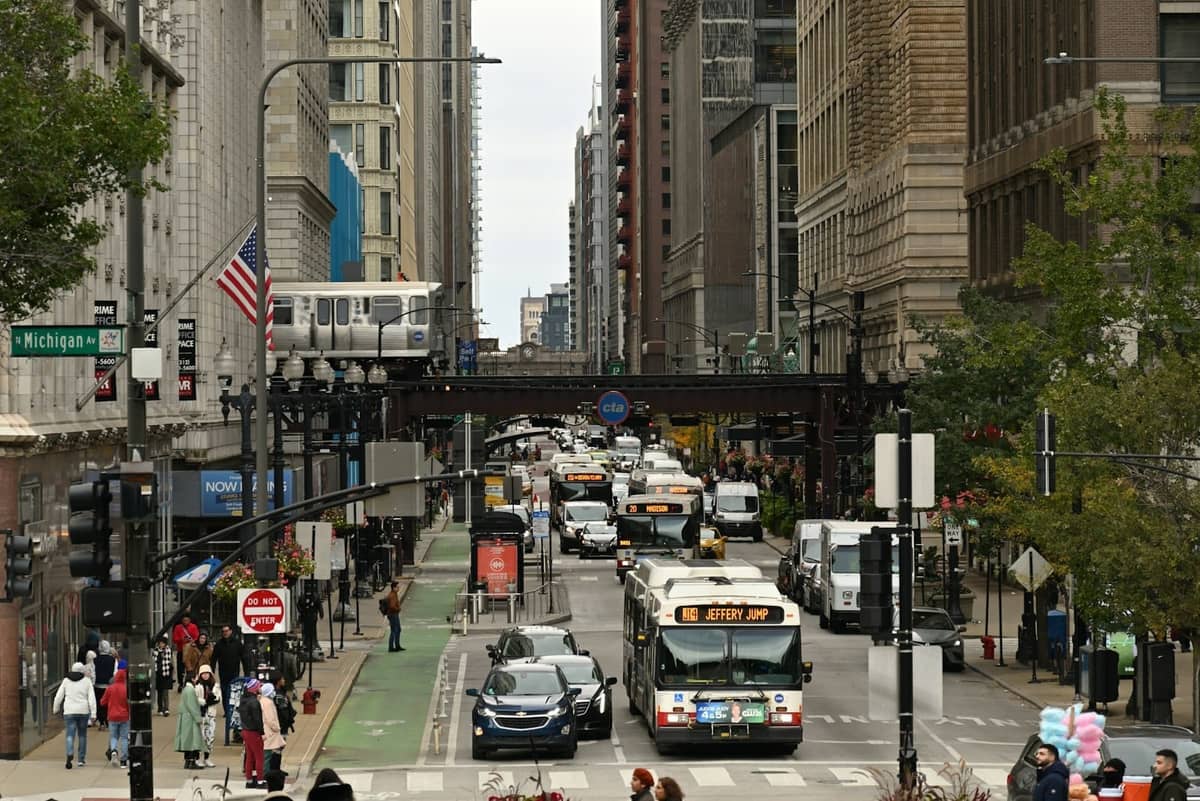
Chicago has a crime reputation that is disproportionately attached to its tourist identity. The city does have real crime challenges, but they are geographically concentrated in residential neighborhoods that most visitors will never set foot in. The areas tourists actually use, including the Loop (Chicago's central business district), River North, the Magnificent Mile, Navy Pier, Millennium Park, and the Museum Campus, are active, well-lit, and regularly patrolled. Millions of people visit these areas annually without incident.
That said, Chicago is a city of about 2.7 million people spread across roughly 234 square miles and 77 distinct community areas. Treating it as a single undifferentiated place when discussing safety is misleading. Crime statistics that make headlines are driven by specific zip codes and neighborhoods that bear little relation to the visitor experience. Knowing which parts of the city those are, and understanding what risks actually apply to tourists, is how you travel smart here.
ℹ️ Good to know
The Chicago Police Department publishes crime data publicly through the City of Chicago Data Portal. If you want to check specific areas before your trip, search the portal at data.cityofchicago.org for up-to-date incident maps. Numbers change year to year, so avoid relying on articles citing statistics from several years ago.
Safe Areas for Tourists vs. Neighborhoods to Avoid
The tourist core is genuinely comfortable. The Loop is Chicago's downtown business and cultural center, home to the Art Institute, the Chicago Riverwalk, and dozens of restaurants and hotels. It fills with office workers during the day and theater and restaurant-goers in the evening. River North and the Magnificent Mile are among the most foot-trafficked corridors in the entire Midwest. These areas, along with Lincoln Park, Lakeview, Wicker Park, and the West Loop, are broadly safe and walkable.
Neighborhoods commonly cited as high-crime and not recommended for tourist exploration include Englewood, Austin, West Garfield Park, North Lawndale, and parts of South Chicago and Washington Park. These are primarily residential areas on the South and West Sides, located well outside the tourist map. You are unlikely to pass through them accidentally, but it is worth knowing they exist so you can orient yourself correctly.
- Safe and tourist-friendly The Loop, River North, Streeterville, Magnificent Mile, Lincoln Park, Lakeview, West Loop, Wicker Park, Hyde Park (daytime), Museum Campus
- Generally fine with awareness Pilsen, Chinatown, Andersonville, Uptown, Logan Square. Walkable and interesting, just stay on main corridors at night.
- Exercise caution or avoid Englewood, Austin, West Garfield Park, North Lawndale, parts of South Chicago and Washington Park. No tourist attractions draw visitors here, and crime rates are significantly higher.
⚠️ What to skip
GPS apps sometimes route drivers through high-crime neighborhoods when avoiding highway tolls or traffic. If you are driving, check your route in advance and opt for major roads. Waze and Google Maps will not flag neighborhood safety, so this is on you to verify.
The Realistic Risks Tourists Actually Face
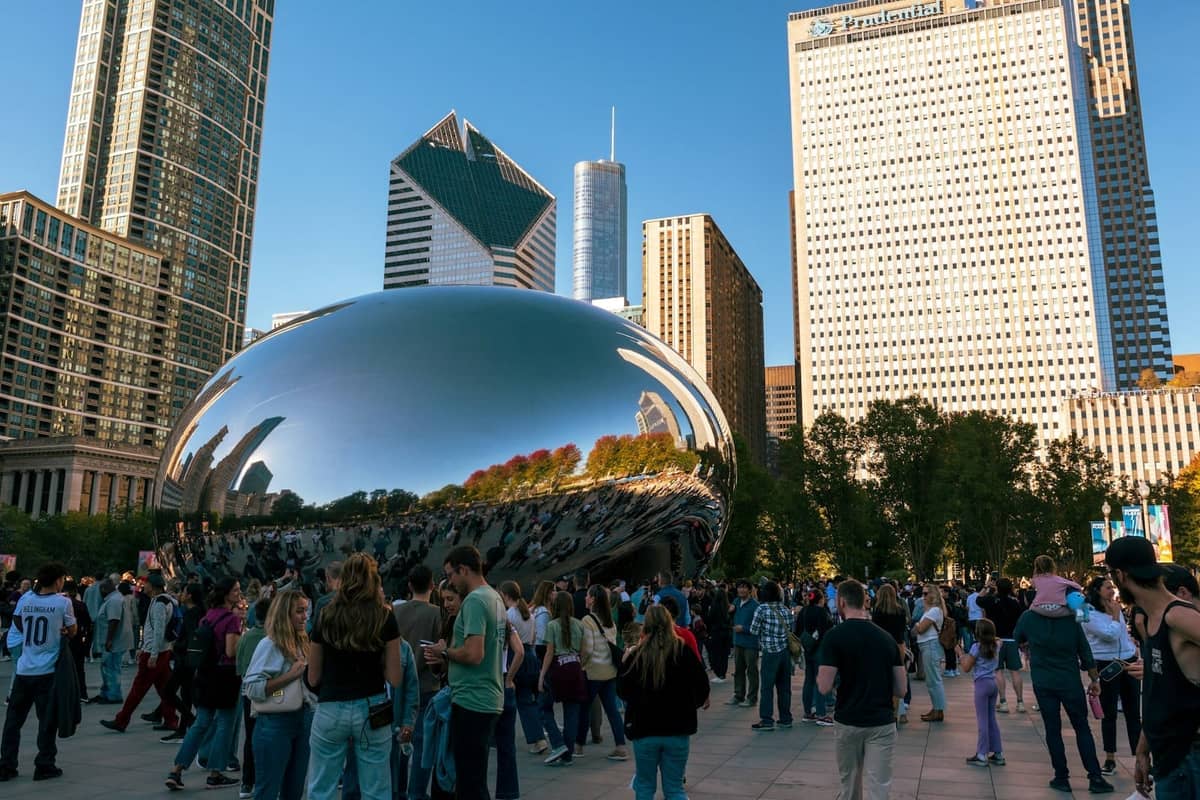
In tourist-heavy areas, the primary risk is opportunistic theft, not violent crime. Phone snatching is the most reported issue, particularly in crowded areas like Millennium Park, Navy Pier, and along the Riverwalk. A thief on a bicycle or on foot will grab an unattended or loosely held phone and disappear into a crowd. The fix is simple: do not leave your phone on outdoor dining tables, do not hold it loosely while looking at a map in a busy area, and be aware of who is nearby when you pull it out.
Pickpocketing is less common than in European tourist capitals but it does happen in crowded transit stations and on the L during rush hour. Keep valuables in a front pocket or a zippered bag. Wearing a crossbody bag that stays closed is a practical default. Do not carry more cash than you need for the day. Leave your passport and spare credit cards in your hotel safe.
Outdoor dining, which Chicago embraces aggressively from April through October, carries a specific risk. Sidewalk tables, particularly on busy streets, expose your phone, bag, and belongings to passersby. Keep your bag on your lap or under your feet, not hanging from the back of a chair. Back patios and walled courtyards accessed through the restaurant are more contained and safer for keeping your belongings.
Practical Safety Habits That Actually Make a Difference
- Use Uber or Lyft at night rather than walking long distances in unfamiliar areas. When your car arrives, verify the license plate, car color, and driver photo in the app before getting in. Do not get into a car that pulls up and calls your name without you confirming those details.
- Wait inside the venue until your rideshare arrives, especially late at night. Standing on the sidewalk with a phone out is the most visible you can be.
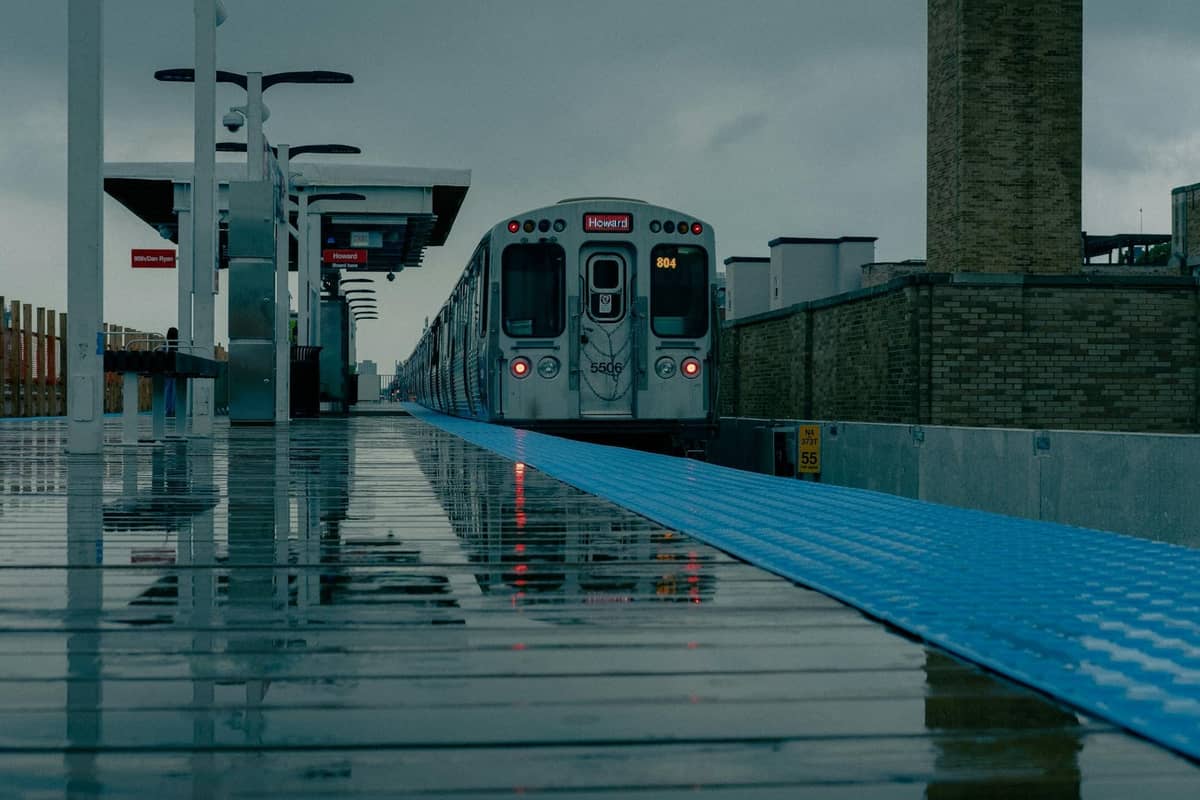
- On the L at night or on quiet buses, sit near the driver or in a car with other passengers. The Blue Line from O'Hare operates 24 hours a day; late-night trains can feel sparse, so position yourself accordingly.
- Do not flash expensive watches, jewelry, or cameras in areas outside the immediate tourist core. This matters more in transitional neighborhoods than in the Loop itself.
- If you encounter a large crowd or demonstration, move away calmly and do not attempt to document it from the edges. Protests can shift quickly.
- Download the Citizen app before you arrive. It sends real-time alerts for incidents in your vicinity and is widely used by Chicago locals. It helps you make informed decisions about where to walk rather than just avoiding the city on instinct.
✨ Pro tip
The CTA Blue Line from O'Hare to downtown is safe and reliable, and at $5 it is far cheaper than a taxi or rideshare. During daytime and early evening hours there is no practical reason to pay $40-60 for a cab. Late at night, particularly after midnight, the calculus shifts and rideshare is the better call.
Getting Around Safely: Transit, Taxis, and Rideshare
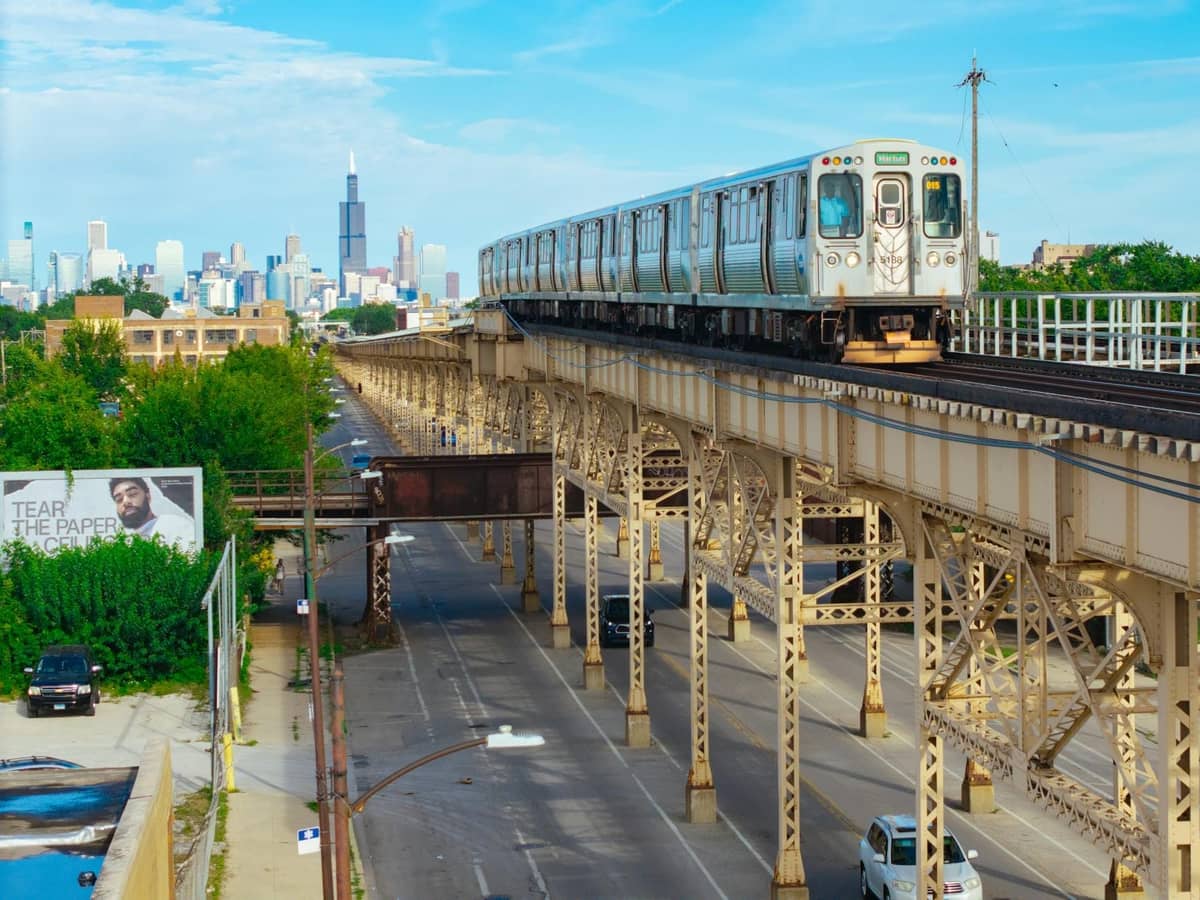
The CTA operates the L train and more than 125 bus routes across Chicago. For tourists, the most-used lines are the Red Line (connecting the North Side, downtown, and the South Side), the Blue Line (O'Hare to downtown), and the Orange Line (Midway to downtown). The system is generally safe during daytime hours. For a full breakdown of routes and fares, see the guide to getting around Chicago.
Taxis are available citywide and metered by city-set rates. From O'Hare, expect a ride to downtown to take 30-60 minutes depending on traffic, with costs running into several tens of dollars. From Midway, the trip is shorter, typically 20-35 minutes. Both airports have clearly marked taxi stands at arrivals level. Rideshare pickup zones are separate and clearly signed at both O'Hare and Midway.
One underrated safety note: the Chicago Pedway, an underground walkway network spanning more than 40 blocks and connecting downtown buildings, is useful in winter and during heavy rain. It is climate-controlled, clean, and passes through hotels, government buildings, and transit stations. It is not a safety concern in itself, but knowing it exists means you can avoid street-level exposure in bad weather without hailing a cab.
Seasonal Safety Considerations
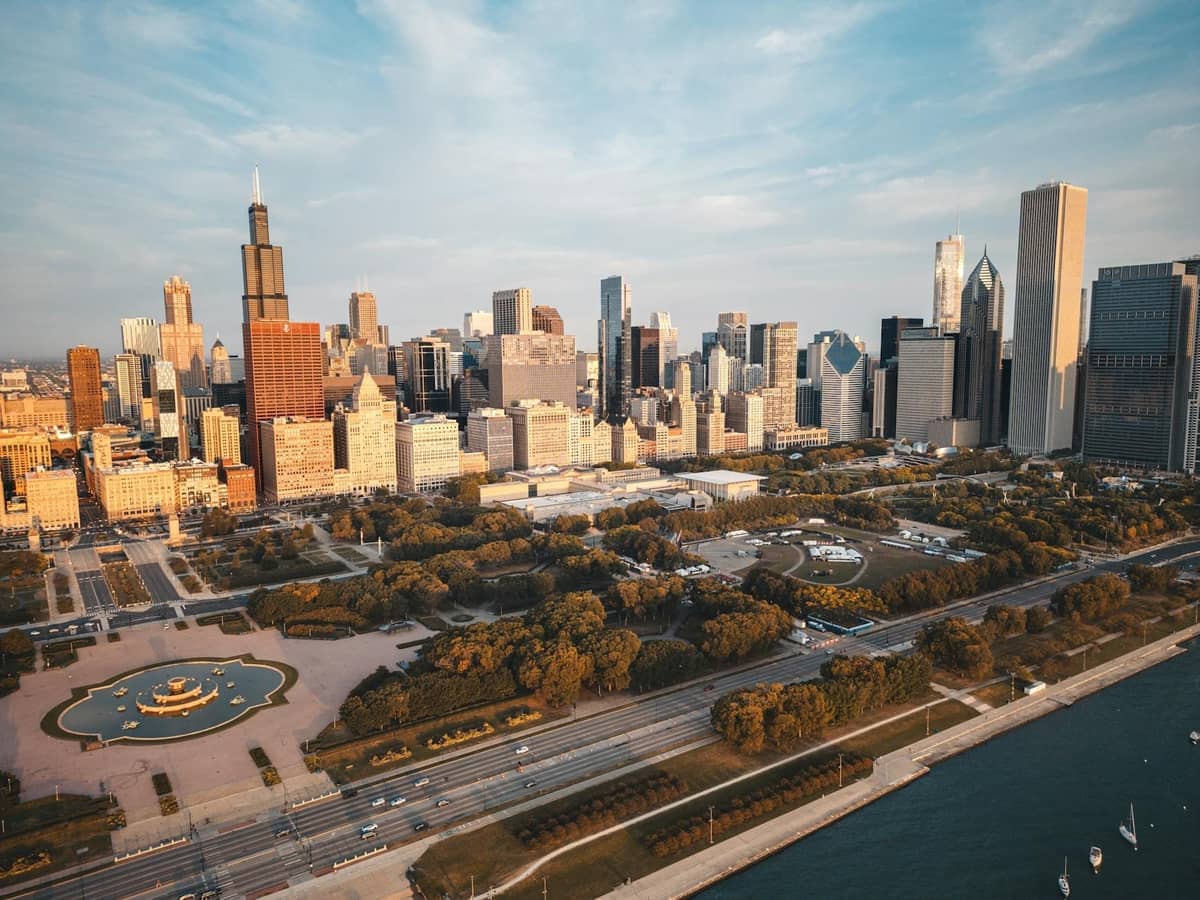
Chicago summers concentrate more people, more events, and more street activity. Major events like Lollapalooza in Grant Park, the Chicago Air and Water Show along the lakefront, and Taste of Chicago draw massive crowds to central parks and the lakefront. These are overwhelmingly safe events, but large crowds are optimal conditions for pickpockets. Keep your bag zipped and your phone pocketed when you are in dense crowds. For full summer event planning, the Chicago in summer guide covers the calendar in detail.
Winter in Chicago is genuinely cold, with January temperatures averaging around -4°C (25°F) and wind chill making it feel considerably colder. The practical safety consideration in winter is not crime but exposure: dress in proper layers, avoid extended time outdoors after dark in below-freezing temperatures, and know that the L platforms are unheated. The Chicago in winter guide covers exactly what to wear and how to plan around the weather.
Spring (late April through June) and early fall (September through October) are the most comfortable seasons to visit. Crowds are smaller than peak summer, the weather is moderate, and the city's outdoor spaces are genuinely pleasant. These seasons also tend to see fewer of the large crowd events that create petty theft conditions.
Key Numbers and Emergency Resources
The emergency number throughout the United States, including Chicago, is 911. This connects you to police, fire, and ambulance services. For non-emergency city issues, the number is 311. Save both in your phone before you arrive.
- Emergency (police, fire, ambulance): 911
- Non-emergency city services and information: 311
- U.S. country dialing code: +1. Chicago area codes: 312 and 872 (downtown and some nearby areas), 773 and 872 (rest of city).
- Tap water in Chicago meets federal and state standards and is safe to drink. Travelers staying in older buildings may want to ask about lead pipe status, as the city has an ongoing lead service line replacement program.
- Electricity: 120V, 60Hz, plug type A and B. Visitors from Europe or Asia will need an adapter and possibly a converter.
- Tipping is expected in Chicago restaurants: 18-20% is standard for table service, 15% is on the low end, and anything below 10% is considered rude. Many workers receive a reduced base wage under Illinois tipped employee rules.
FAQ
Is Chicago safe to visit as a tourist?
Yes, for the areas tourists actually use. The Loop, River North, Millennium Park, the Riverwalk, Navy Pier, Lincoln Park, and the Museum Campus are well-patrolled and regularly visited by millions of people. Serious violent crime is concentrated in specific residential neighborhoods on the South and West Sides that are far from the tourist circuit. Exercise the same common sense you would in any large U.S. city.
Which parts of Chicago should tourists avoid?
Neighborhoods including Englewood, Austin, West Garfield Park, North Lawndale, and parts of South Chicago and Washington Park have significantly higher crime rates and are not destinations for visitors. They are also not areas you would pass through accidentally while following standard tourist routes. If you are unsure about a specific address or area, check the Chicago Police Department's public crime data portal before going.
Is it safe to use the CTA L train in Chicago?
During daytime and evening hours, yes. The Red, Blue, Orange, and Green Lines are used daily by commuters and tourists alike. Late at night, particularly after midnight on quieter lines, exercise common sense: sit near other passengers or near the conductor's car, keep your phone pocketed, and be alert. The Blue Line from O'Hare operates 24 hours and is a solid and affordable option for airport arrivals during normal hours.
What is the biggest safety risk for tourists in Chicago?
Opportunistic theft, primarily phone snatching. In busy tourist areas like Millennium Park and the Riverwalk, thieves on foot or bicycles will grab an unattended or loosely held phone. Keep your phone in a pocket or closed bag when you are not actively using it, do not leave it on outdoor dining tables, and be aware of your surroundings in crowded areas.
Is Chicago safe at night?
In the tourist core, yes, with caveats. Restaurant strips in the West Loop, bar areas in Wicker Park and River North, and theater districts in the Loop are active and reasonably safe on weekend evenings. The practical advice for late nights is to use rideshare rather than walking unfamiliar routes or taking late-night trains. Confirm your Lyft or Uber details before getting in, and wait inside until the car arrives.