World of Discoveries Porto: The Age of Exploration Brought to Life
World of Discoveries is an interactive museum and theme park on Porto's historic waterfront dedicated to Portugal's Age of Exploration. Spread across around 2,000 square meters on Rua de Miragaia, it combines life-size dioramas, a boat ride through recreated historical worlds, and hands-on exhibits that work well for families and curious adults alike.
Quick Facts
- Location
- Rua de Miragaia 106, Ribeira, Porto
- Getting There
- Metro São Bento (Line D); Tram Line 1, Alfândega stop; buses 1M, 500, ZR, ZM
- Time Needed
- 1–2 hours
- Cost
- Approx. €16–18 adults, €10–12 children (verify on official website before visiting)
- Best for
- Families, history enthusiasts, rainy-day visits
- Official website
- www.worldofdiscoveries.com/?lang=en
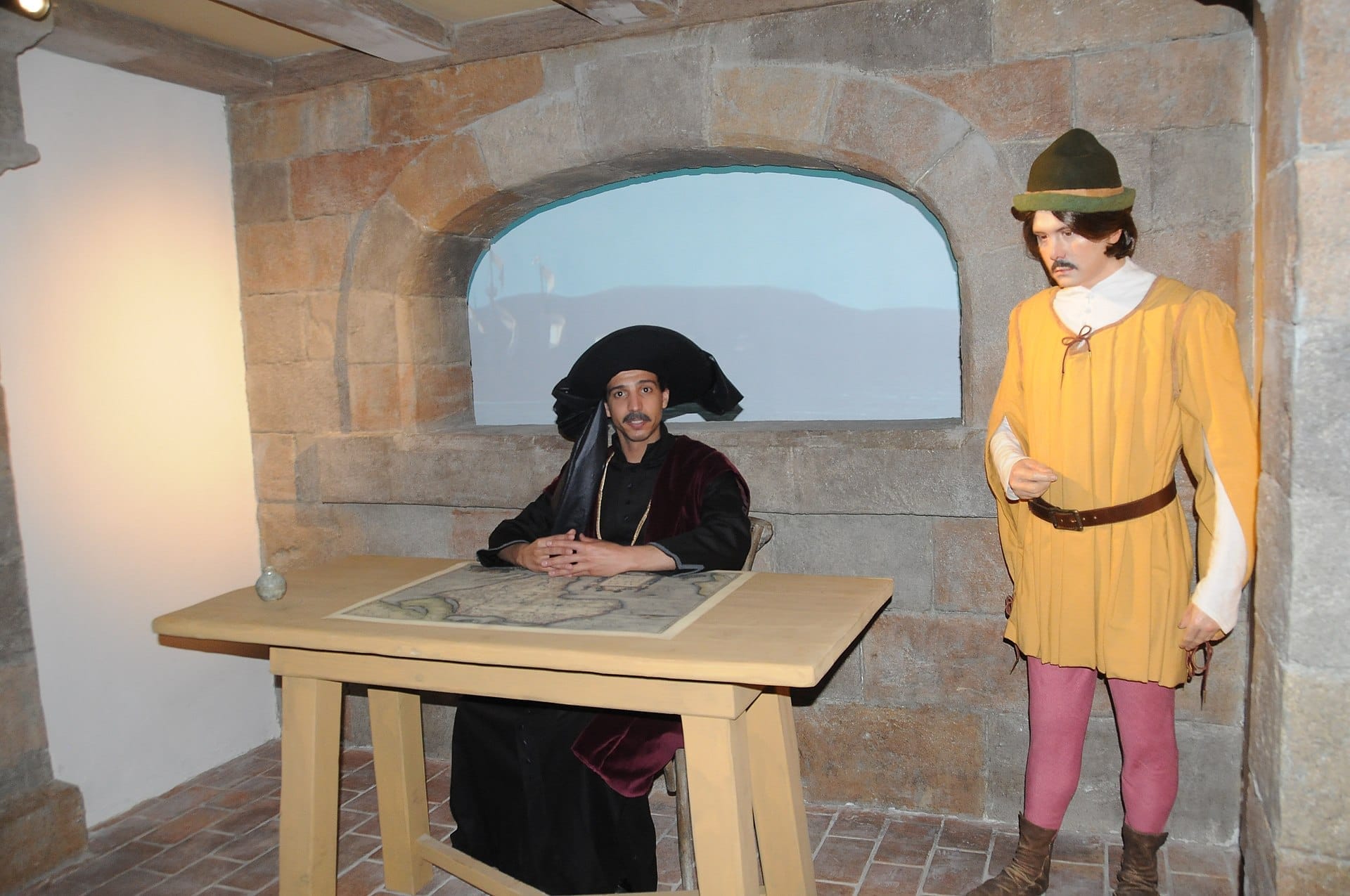
What World of Discoveries Actually Is
World of Discoveries (Portuguese: Mundo dos Descobrimentos) is an interactive museum and themed attraction on Porto's riverfront that tells the story of Portugal's 15th and 16th century Age of Exploration. Few countries have a claim on that era as strong as Portugal, and this is the only attraction in Porto that tackles it at scale, with theatrical environments rather than traditional display cases.
The format is unusual for a European museum. Rather than moving quietly from room to room reading labels, visitors pass through reconstructed historical environments: trading posts in West Africa, spice markets in India, settlements in Brazil and Japan. The route culminates in a slow boat ride through these recreated worlds, which is the centerpiece of the experience and what sets World of Discoveries apart from a conventional history museum.
The building itself, a converted warehouse on Rua de Miragaia, sits a short walk west of the Cais da Ribeira along the Douro waterfront. The industrial architecture is plain from the outside, giving little indication of what is inside, which can make it easy to walk past if you are not looking for it.
💡 Local tip
Ticket prices on third-party booking platforms do not always match the official website. Check worldofdiscoveries.com directly before you visit, as prices and opening hours are updated there first.
The Practical Visit: Hours, Getting There, and What to Bring
World of Discoveries is open weekdays from 10:00 to 18:00 (last admission 17:15) and on weekends and public holidays from 10:00 to 19:00 (last admission 18:15). It is closed on 1 January and 25 December.
Getting here from central Porto is straightforward. The closest metro stop is São Bento on Line D, from which the attraction is roughly a 10–15 minute walk west along the waterfront. If you prefer to take the historic tram, Tram Line 1 stops at Alfândega, just minutes away on foot. Several bus lines including 1M, 500, ZR, and ZM also serve this stretch of the riverfront. Taxis and ride-hailing apps like Uber and Bolt are reliable options if you are coming from farther afield.
The Ribeira waterfront walk from Cais da Ribeira to the museum entrance is pleasant and takes around 10 minutes on foot. It doubles as a good warm-up to the experience, giving you a sense of the Douro's scale before you encounter the maritime history inside.
There is no specific dress code. Comfortable walking shoes matter more than anything else, as the route involves standing and some uneven floor surfaces in the theatrical sections. Visitors with mobility limitations should note that the attraction states it meets legal physical accessibility requirements, with wheelchair access and accessible toilets provided.
⚠️ What to skip
The last admission times (17:15 on weekdays, 18:15 on weekends) are noticeably earlier than the closing times. Arriving within an hour of last admission may feel rushed. Give yourself at least two hours if you want to move through the exhibits comfortably.
Tickets & tours
Hand-picked options from our booking partner. Prices are indicative; availability and final rates are confirmed when you complete your booking.
Museu da 1ª Demarcacao, Museum of the Oldest Appellation in the World
From 5 €Instant confirmationFree cancellationWOW World of Wine 48-hour pass
From 30 €Instant confirmationBrickWorld exhibition at the Atkinson Museum in WOW Porto
From 10 €Instant confirmationFree cancellationSerralves All-Access Pass
From 24 €Instant confirmationFree cancellation
Inside the Attraction: What You Will See and Experience
The experience is organized roughly chronologically, beginning with Portugal's early Atlantic explorations and moving through the major trading routes to Africa, Asia, and the Americas. Each zone is built as an immersive environment rather than a gallery: the lighting, soundscapes, and scale of the sets are designed to place you inside the historical moment. The craftsmanship varies, but the ambition of the reconstruction is consistently high.
The boat ride is the most memorable part of the visit for most people. Small boats carry visitors slowly through a sequence of scenes built along a water channel, complete with animated figures, ambient sounds, and narration. It evokes a mild theme-park register rather than a scholarly one, which is a deliberate choice. The creators were clearly aiming for emotional resonance over academic density.
The interactive elements are concentrated toward the beginning and work especially well for children. There are mapping exercises, navigation simulations, and hands-on components tied to Portuguese explorers like Vasco da Gama and Pedro Álvares Cabral. Adults who find the interactive approach too didactic can move through those sections quickly, as the diorama and boat-ride portions of the visit carry more weight anyway.
World of Discoveries pairs naturally with a visit to the nearby Casa do Infante, which occupies the birthplace of Prince Henry the Navigator, the royal figure who sponsored many of the expeditions explored inside the museum. Visiting both on the same afternoon gives the Discoveries story a useful architectural anchor.
Time of Day and Crowd Patterns
Mornings on weekdays are the quietest windows. From opening at 10:00 until around noon, the interior is calm enough to move at your own pace through the theatrical environments without competing with school groups or tour buses. The boat ride, in particular, is noticeably more atmospheric when the queue is short and you can take in each scene without the noise of a crowd behind you.
Weekend afternoons between roughly 13:00 and 15:00 are the busiest period. During school terms, mid-week mornings can also be busy if a large educational group has booked. The attraction is an approved school-trip destination and structured visits with classes do affect the atmosphere in the interactive zones.
Rainy days in Porto drive higher footfall to indoor attractions across the city, and World of Discoveries is no exception. If you are visiting during the wetter months from November through March, the attraction can fill up faster than usual on wet afternoons. Arriving at opening time on a grey morning will still give you a good experience.
Cultural Context: Why Portugal's Age of Exploration Matters Here
Portugal was, by population and territory, a small country when its navigators began charting the African coast in the early 1400s. Within a century, Portuguese ships had reached India via the Cape of Good Hope, established trade posts across the Indian Ocean, and made landfall in Brazil. The economic and cultural consequences shaped the early modern world in ways that are still felt today, from the spread of the Portuguese language across three continents to the transformation of European spice and textile markets.
Porto's own role in this history was significant. The city's skilled craftsmen built ships and provisioned expeditions, and the wealth that flowed through the Douro estuary funded much of the ecclesiastical and civic architecture still standing in the city today. That history is not widely told in English-language form outside academic contexts, which gives World of Discoveries a real curatorial function for international visitors who arrive in Porto knowing little about why the country's medieval churches and baroque palaces are where they are.
If the Age of Exploration theme grips you, Porto has more to offer beyond this attraction. The Igreja de São Francisco nearby in Ribeira is itself a product of the wealth that trade brought back to Portugal, its interior covered in gilded carved wood funded by colonial commerce. The two sites make a strong pairing.
Who This Works For and Who It Might Not
World of Discoveries is built for a broad audience, which means it does not go particularly deep on any aspect of the history it covers. Visitors with a strong academic background in Portuguese maritime history may find the treatment superficial. The attraction's strength is accessibility and atmosphere, not scholarly rigor.
For families with children roughly between the ages of 6 and 14, it is one of the better rainy-day options in Porto. The boat ride holds attention, the interactive elements give children something to do, and the overall visit length of two to three hours fits well inside a family day without exhausting younger visitors. Parents who have spent time in similar museum-park formats will recognize the approach immediately.
Solo travelers or couples who prefer compact, walkable Porto may find the admission price harder to justify compared with the free or lower-cost experiences along the waterfront. The riverfront promenade, the nearby churches, and the views from the Dom Luís I bridge offer an equally rich engagement with Porto's history at no cost. World of Discoveries earns its ticket price most clearly when the weather is poor or when you are traveling with children.
For broader context on how this attraction fits into a Porto visit, the things to do in Porto guide offers a useful overview of how to weight your time across the city's main draws.
Photography and Practical Notes
The theatrical lighting inside World of Discoveries is designed for atmosphere rather than photography. Many of the diorama environments are lit in low amber tones that reproduce poorly on smartphone cameras without deliberate exposure adjustment. If photography matters to you, set your camera to a higher ISO and use burst mode on the boat ride sections, as the movement of the boat and the low light combine to produce motion blur on slower settings.
Flash photography and tripods are generally restricted in themed museum environments like this; check with staff at the entrance if you are carrying specialist equipment. For most visitors, smartphone shots in the main diorama halls will be adequate as memory shots, even if the dynamic range of the lighting is challenging.
ℹ️ Good to know
The café and gift shop are located near the exit. The gift shop carries Portuguese navigation-themed items that are more distinctive than typical souvenir fare, including reproductions of historical maps and maritime instruments.
Insider Tips
- Book tickets in advance on the official website rather than at the door, especially for weekend visits. Queue time at the ticket desk can eat into your visit window, and pre-booking sometimes offers small savings over the walk-up price.
- Combine this visit with a walk east along the riverfront to Cais da Ribeira afterward. The contrast between the reconstructed historical world inside the museum and the actual medieval streetscape outside gives both experiences more texture.
- The boat ride narration is available in multiple languages. Confirm your preferred language with staff before boarding, as the audio system defaults to Portuguese in some group configurations.
- School groups typically arrive between 09:30 and 11:00 on weekday mornings during term time. If you are visiting without children and want a quieter experience, a weekday arrival after 14:00 or a weekend morning opening slot tends to be calmer.
- The attraction is on the western edge of the Ribeira neighborhood, which means the surrounding streets are quieter than the central tourist core around the Dom Luís I bridge. There are a handful of local cafés within a two-minute walk that are less crowded and less expensive than the options directly on the waterfront promenade.
Who Is World of Discoveries For?
- Families with children aged 6 to 14 looking for an engaging indoor activity
- First-time visitors to Porto who want historical context for the city's architecture and wealth
- Rainy-day sightseeing when outdoor alternatives are less comfortable
- Travelers with a broad interest in maritime history and the early modern world
- School-age groups on educational trips to Porto
Nearby Attractions
Other things to see while in Ribeira:
- Cais da Ribeira
Cais da Ribeira is Porto's historic riverside promenade along the north bank of the Douro, part of the UNESCO World Heritage-listed centre. Free to walk, lined with colourful buildings and boat tour kiosks, it is one of Portugal's most recognisable urban waterfronts.
- Casa do Infante
Casa do Infante stands on Rua da Alfândega in the heart of Porto's Ribeira district, occupying a site that has been central to the city's life since the Roman period. Built as a royal customs house in 1325 and later named for Prince Henry the Navigator, traditionally regarded as having been born here in 1394, it now operates as a unit of the Museu do Porto, housing archaeological remains and centuries of civic records beneath one roof.
- Dom Luís I Bridge
The Ponte Dom Luís I is a double-deck iron arch bridge spanning the Douro River between Porto's Ribeira quarter and Vila Nova de Gaia. Open 24 hours a day and free to cross on foot, it rewards visitors with sweeping river views from both its road-level walkway and its elevated metro deck, 45 metres above the water.
- Douro River Cruise
A Douro River cruise transforms Porto's skyline into a living panorama of medieval towers, port wine lodges, and six iron bridges. Whether you take a 50-minute sightseeing loop or a multi-day voyage into the Alto Douro Wine Region, the river gives you a perspective on Porto and its surroundings that no viewpoint on land can match.