Vaxholm: The Fortress Town at the Edge of Stockholm's Archipelago
Vaxholm is a small historic town on the island of Vaxön, about 20 km northeast of Stockholm, guarding the main sea approach to the capital since 1549. It combines a photogenic waterfront of 19th-century wooden houses, a formidable island fortress, and direct ferry connections deeper into the Stockholm archipelago. For a half-day or full-day escape from the city, few destinations are as rewarding or as easy to reach.
Quick Facts
- Location
- Vaxön island, Vaxholm Municipality, Stockholm County — approx. 20 km northeast of central Stockholm
- Getting There
- SL bus from Stockholm (Tekniska högskolan or Danderyds sjukhus metro stations); or passenger ferry from Strömkajen, central Stockholm (approx. 1–1.5 hours by boat)
- Time Needed
- 3–6 hours for town + fortress; a full day if you continue into the archipelago
- Cost
- No entry fee for the town itself; ferry ticket and fortress museum admission charged separately
- Best for
- Archipelago first-timers, history enthusiasts, photographers, families, anyone wanting a half-day out of Stockholm
- Official website
- http://www.vaxholm.se
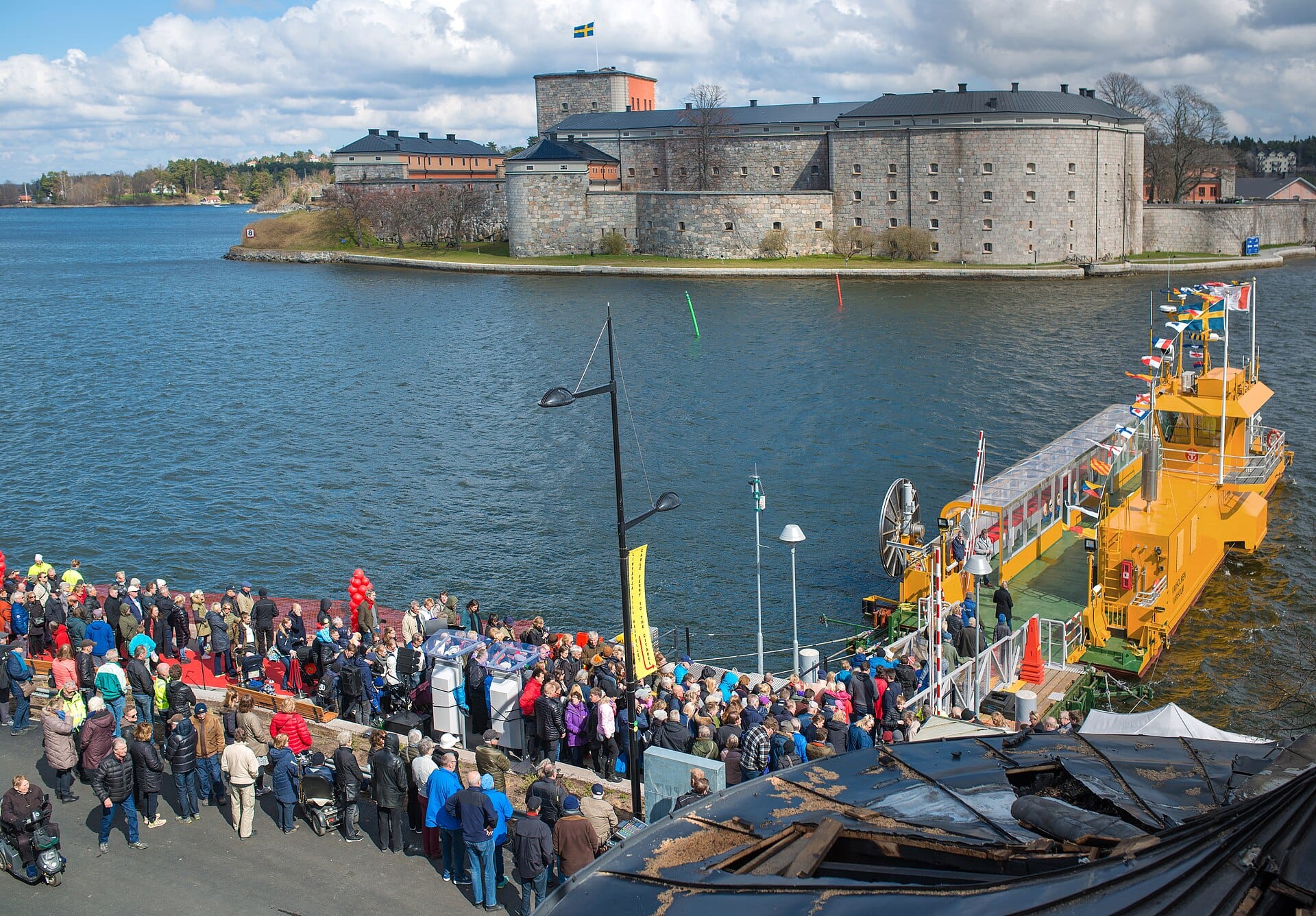
What Vaxholm Actually Is
Vaxholm is a small town of roughly 6,000 residents that has officially held city status since 1652, a historical designation that feels slightly absurd given its quiet scale today. It sits on the island of Vaxön, connected to the mainland by road, and it serves as the traditional gateway to the Stockholm archipelago's roughly 30,000 islands, skerries, and rocks. The town's strategic position at the narrowest navigable channel between Stockholm and the open Baltic made it militarily critical for nearly 500 years.
Visitors arrive expecting a charming village and find something with more depth: a working waterfront, a genuine 16th-century fortress still rising from its own tiny islet, rows of painted wooden houses in the characteristic Swedish style, and ferries departing for destinations further into the archipelago. It is not a theme park version of Swedish coastal life. It is the real, if somewhat tourist-aware, article.
💡 Local tip
Coming by ferry from central Stockholm is significantly slower than the bus, but it frames your arrival dramatically: you approach Vaxholm across open water with the fortress growing larger on the starboard side. If time allows, take the boat at least one way.
Getting There: Bus vs. Ferry
The SL regional bus is the fastest option. Take the metro to Tekniska högskolan or Danderyds sjukhus on the red line, then board a regional bus to Vaxholm. Journey time from central Stockholm is roughly 45–60 minutes depending on traffic, and a standard SL travel card covers the fare. The bus drops you near the harbour, within walking distance of everything in the town.
The ferry from Strömkajen (near the Grand Hotel in Norrmalm) takes around 1 to 1.5 hours and is operated by Waxholmsbolaget, the archipelago ferry company. The ferry ticket is separate from SL and must be purchased through Waxholmsbolaget. If you hold a Stockholm Pass, check current inclusions as ferry coverage can change. The longer travel time is the trade-off for one of the most enjoyable harbour arrivals in the region.
ℹ️ Good to know
Waxholmsbolaget also offers multi-day archipelago passes (Båtluffarkort) if you plan to island-hop beyond Vaxholm. These represent good value for anyone spending more than one day on the water.
Tickets & tours
Live prices and dates from our booking partner. If you book, we may earn a commission at no extra cost to you.
2-hour archipelago tour on a RIB speedboat
From 122 €Instant confirmationFree cancellationHaunted Stockholm exploration game and tour
From 12 €Instant confirmationFree cancellationFotografiska Stockholm entrance tickets
From 0 €Instant confirmationFree cancellationStockholm: Nature Reserve Hiking Tour with Campfire Lunch
From 102 €Instant confirmationFree cancellation
The Town: What You'll Find on Foot
Vaxholm's town centre is small enough to walk in an hour, but worth stretching over two or three. The harbour area is the obvious focal point: wooden jetties, small boats, the cable ferry to the fortress across the narrow strait, and a row of waterfront buildings that have barely changed in silhouette since the 19th century. The smell of the sea here is genuine — salt, timber, a faint trace of diesel from the working boats.
Behind the waterfront, the streets open into a grid of low wooden houses painted in the deep reds, yellows, and ochres that define Swedish vernacular architecture. The Rådhuset (Town Hall), a yellow wooden building from 1785, anchors the main square. In summer, flower boxes hang from almost every window and the sound of seagulls is constant. In autumn and winter, the same streets are quieter and somehow more atmospheric: the colours look richer against grey skies and the crowds thin to almost nothing.
The main shopping street, Hamngatan, has a handful of boutiques, a bakery, and several restaurants serving the obligatory archipelago staples: smoked fish, shrimp sandwiches, and grilled herring. None of this is surprising, but the quality tends to be higher than equivalent tourist-zone food in central Stockholm, partly because many visitors here are weekending Stockholmers with standards.
Vaxholm makes a natural staging point for exploring the broader archipelago. From the harbour you can continue by ferry to islands including Grinda, Sandhamn, and Finnhamn. For more on planning a multi-island trip, see our Stockholm archipelago guide.
Vaxholm Fortress: The Reason the Town Exists
The fortress predates the town. King Gustav Vasa ordered its construction in 1549 on a small islet called Vaxholmen, controlling the only deep-water channel into Stockholm from the Baltic. The name Vaxholm derives from this fortress, not the other way around. For three centuries, the fortress was expanded, rebuilt, and updated as military technology changed. Its final significant construction phase in the mid-19th century produced the granite-clad rectangular citadel visible today, a structure that looks like it was designed to absorb cannon fire indefinitely.
Access is by the Kastellet cable ferry, a short crossing from the town quay that itself becomes part of the experience. The fortress is now managed as a museum. Inside, exhibits cover the military history of the Stockholm archipelago from the 16th century through the 20th, including the fortress's role in repelling a Danish fleet in 1612 and its later service during the Cold War period. The courtyard and ramparts offer an unobstructed view back to Vaxholm town and down the strait toward Stockholm.
⚠️ What to skip
The cable ferry to the fortress has limited capacity and may have constraints for visitors using wheelchairs or mobility aids depending on water levels and ferry conditions. Check with the fortress directly before planning access-dependent visits.
The fortress is most atmospheric in the morning before tour groups arrive from Stockholm. The stone interior stays cool even in summer heat, and the views from the upper levels are clearest in the low morning light. Give the museum at least 90 minutes if the military and maritime history interests you.
How the Experience Changes by Season
Vaxholm in June and July is at its most postcard-ready: long daylight hours extending past 10 pm, outdoor restaurant terraces full, the harbour active with pleasure boats, kayaks, and ferries. This is also when it's busiest, particularly on weekends when Stockholmers arrive in numbers. If you visit on a summer Saturday, expect queues at the more popular lunch spots and a lively, almost festival-like atmosphere around the waterfront.
May and early September offer the same light without the peak crowds. These shoulder months are arguably the best time to visit if you have a choice. For a broader view of when Stockholm's surroundings are at their best, see our guide to the best time to visit Stockholm.
Winter visits are genuinely rewarding for a different reason: the town is quiet, the wooden architecture looks severe and Nordic against snow or frost, and the sense of the archipelago as a working, year-round place rather than a summer backdrop becomes clear. The ferry still runs. Most restaurants close or reduce hours in the off-season, so check ahead.
Photography, Practicalities, and What to Bring
The most photographed angle in Vaxholm is from the southern end of the waterfront, with the fortress framed across the water and the town's wooden buildings in the foreground. Early morning gives the cleanest light and the fewest people in frame. The fortress itself is best shot from the water (the ferry crossing gives you 90 seconds at close range) or from the ramparts looking back at the town.
Wear comfortable shoes: the town is flat and easy to walk, but the fortress has uneven stone floors and steps. In any season, bring a light waterproof layer since the channel creates its own wind patterns that can feel several degrees colder than the mainland, particularly on the fortress ramparts.
Vaxholm works well as a standalone day trip from Stockholm. It also pairs naturally with a wider day trip from Stockholm, particularly if you continue by ferry to another island for the afternoon and return to the city by evening boat.
Who Should Reconsider This Trip
Vaxholm is a very good day trip, but it is not the right choice for everyone. If you have only one day in Stockholm, your time is almost certainly better spent in the city itself: the Vasa Museum, Gamla Stan, Djurgården, and the royal palace cover a density of history and culture that Vaxholm cannot match in scale. Vaxholm makes sense from day two onward, when you want relief from the city rather than more of it.
Travelers who are specifically uninterested in maritime or military history may find the fortress underwhelming after the ferry crossing. The town itself is pleasant but compact; without the fortress, a visit fills about two hours comfortably. If your priority is deeper archipelago nature rather than townscape, consider ferrying through Vaxholm directly to a less-developed island like Grinda or continuing to Sandhamn.
Insider Tips
- Arrive by the first morning ferry from Stockholm rather than midday: the harbour is calm, the light is ideal, and you'll reach the fortress before the bus-arrived day-trip crowds.
- The bakery on Hamngatan typically sells out of its most popular items by early afternoon on summer weekends. Buy pastries and coffee before visiting the fortress, not after.
- Walk the southern residential streets away from the harbour — Trädgårdsgatan and its side streets — to see the wooden house architecture without any tourist infrastructure around it. This is the texture of a real Swedish coastal town.
- The Waxholmsbolaget app lets you check live ferry schedules and buy tickets. Download it before you leave Stockholm to avoid queue delays at the harbour ticket window.
- If you're visiting in summer and want to swim, ask locals about the swimming spots on the less-touristed side of Vaxön. The harbour area is active with boat traffic; the calmer coves are a short walk or cycle away.
Who Is Vaxholm For?
- First-time visitors to Stockholm who want a taste of the archipelago without committing to a multi-day boat trip
- History and architecture enthusiasts drawn to Swedish coastal vernacular buildings and 16th-century military history
- Photographers looking for classic Swedish waterfront compositions with fortress and painted wooden houses
- Families who want an easy, structured day trip with clear landmarks, ferry rides, and outdoor space
- Travelers on a second or third Stockholm visit who have already covered the city's main museums and want something different
Nearby Attractions
Combine your visit with:
- Birka Viking Town
Founded around AD 750 on a remote island in Lake Mälaren, Birka was one of Scandinavia's earliest true urban trading centers. Today it survives as part of the UNESCO World Heritage Site Birka and Hovgården, reached only by seasonal boat from Stockholm, where around 2,000 Viking-age graves still dot the surrounding landscape. It is one of the most historically significant half-day excursions available from the Swedish capital.
- Drottningholm Palace
Drottningholm Palace is Sweden's most complete royal domain, a UNESCO World Heritage Site on Lovön island just about 10 km west of Stockholm. The baroque complex includes the palace, a working 18th-century theatre, a Chinese Pavilion, and formal gardens that shift in character across every season.
- Royal National City Park (Ekoparken)
The Royal National City Park, known locally as Ekoparken, is the world's first national urban park and one of Stockholm's most remarkable features. Stretching around 27 km² from Djurgården in the south to Ulriksdal in the north, it wraps around the city in a continuous arc of ancient oak forests, royal palaces, museum islands, and open waterways. Entry is free and the park never closes.
- Hagaparken
Hagaparken is a 144-hectare English landscape park just north of central Stockholm, laid out for King Gustav III in the late 18th century. Free to enter year-round, it offers a rare combination of royal history, open meadows, and waterside walking paths within easy reach of the city. Individual attractions inside the park, including the Butterfly House and royal pavilions, charge their own fees.
Planning a trip? Discover personalized activities with the Nomado app.