Vallisaari Island: Helsinki's Wild Fortress Island
Vallisaari Island sits in Helsinki's eastern archipelago, just 20 minutes by ferry from the city centre. Open only from 20 May to 12 September, it combines rare wildlife, crumbling 19th-century military ruins, and untouched rocky coastline — with no entrance fee beyond the ferry ticket.
Quick Facts
- Location
- Vallisaari and Kuninkaansaari, FI-00860 Helsinki — eastern archipelago, ~20 min by ferry from Market Square
- Getting There
- JT-Line ferry from Kolera Basin (pier 10), near Market Square (Kauppatori); crossing ~20 min. Season 2026: 20 May – 12 September
- Time Needed
- 3–5 hours for a comfortable visit; a full day if you bring a picnic and want to explore both islands
- Cost
- Island entry free. Ferry (JT-Line, 2026): adult return €9.80, ages 7–17 €6.80, under 7 free with adult
- Best for
- Nature walkers, history enthusiasts, photographers, families with older children, anyone who wants genuine wilderness within city limits
- Official website
- vallisaari.fi/en_US/for-visitors
What Vallisaari Actually Is
Vallisaari Island opened to the general public in 2016 after decades of restricted military use, and the result is striking: an island that feels genuinely wild despite sitting inside a European capital. The Finnish state agency Metsähallitus manages it as a nature and heritage site, which means visitor numbers are deliberately kept low, infrastructure is minimal, and the landscape retains a raw, slightly overgrown quality that most urban islands quickly lose.
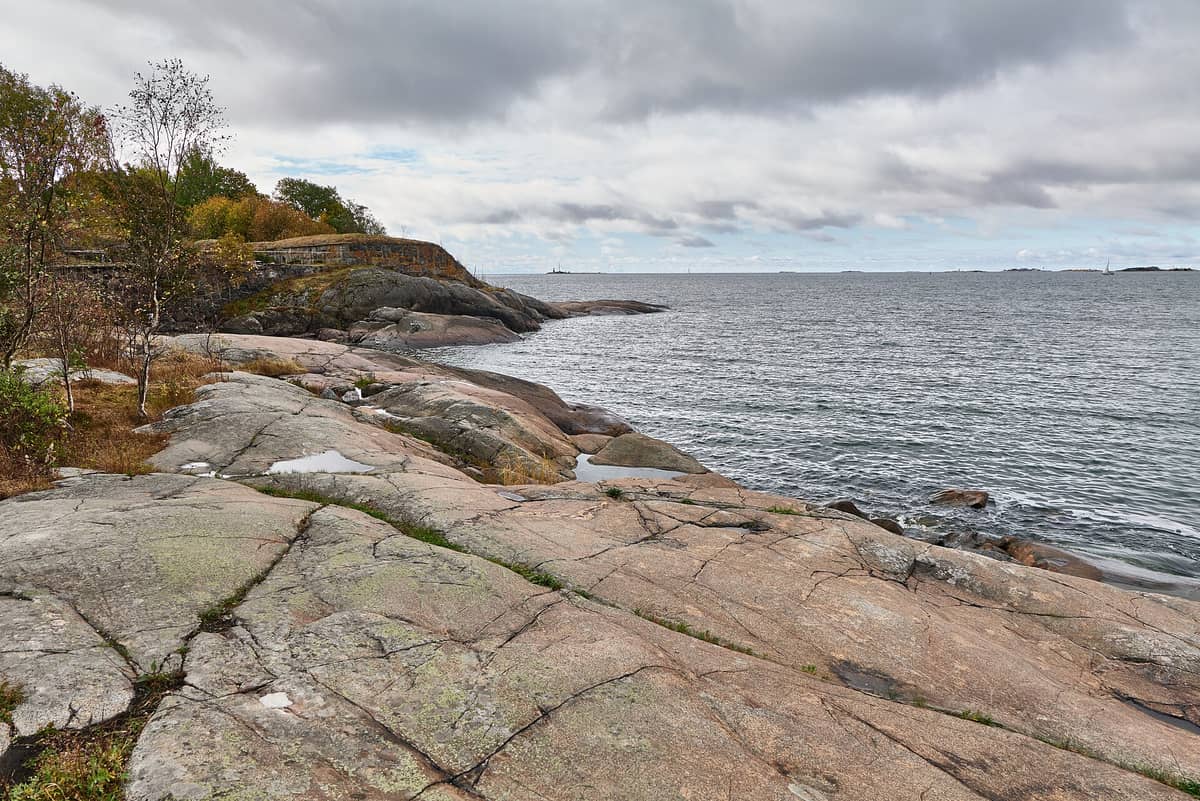
The island is composed of two connected land masses — Vallisaari itself and the smaller Kuninkaansaari — linked by a narrow causeway visitors can walk across. Together they form a compact but varied landscape: granite outcrops, shaded pine forest, open meadows thick with wildflowers in summer, and a ragged coastline with clear views across the Gulf of Finland toward the outer archipelago.
Vallisaari sits within the same broader archipelago zone as Suomenlinna fortress, but the two islands feel nothing alike. Suomenlinna is a polished UNESCO World Heritage Site with cafes, museums, and steady tourist traffic. Vallisaari is quieter, rougher, and less curated — which is precisely its appeal.
ℹ️ Good to know
Vallisaari has no entrance fee. You only pay for the ferry. The JT-Line return ticket (adult €9.80 in 2026) is booked online or at the pier — but ferries sell out on warm summer weekends, so booking in advance is strongly recommended.
The Military Past You Can See and Touch
For most of the 19th and 20th centuries, Vallisaari served as a military munitions depot and restricted zone. The Russian Empire fortified much of Helsinki's archipelago in the 1800s, and Vallisaari was part of that defensive network. Structures from successive military eras remain scattered across the island: stone magazines with thick vaulted walls built to contain explosions, rusting rail tracks once used to move ammunition crates, bunkers half-consumed by moss, and piers that once received military supply vessels.
These ruins are not fenced off behind glass. You walk among them, and on sunny days the warm granite and the smell of pine resin mixes with the cool, slightly mineral air coming off the water. The combination of industrial decay and lush summer vegetation gives the island an atmospheric quality that is difficult to manufacture and impossible to replicate in a city park.
The military closure that kept visitors out for so long turned out to be the island's ecological salvation. With no development, no cars, and no recreational disturbance for decades, plant communities and animal populations established themselves largely undisturbed. What you see today is partly the result of that enforced absence.
Tickets & tours
Hand-picked options from our booking partner. Prices are indicative; availability and final rates are confirmed when you complete your booking.
Helsinki Beautiful Canal Route, archipelago cruise
From 26 €Instant confirmationFree cancellationHelsinki Panorama Sightseeing Bus Tour With Audio Guide
From 35 €Instant confirmationFree cancellationHelsinki Pasila Street art district tour with a local
From 99 €Instant confirmationFree cancellationSurvival suit floating experience
From 125 €Instant confirmationFree cancellation
Wildlife and Ecology: What You Can Expect to See
Vallisaari is noted among Finnish naturalists for its biodiversity. The surrounding waters occasionally host marine mammals, and white-tailed eagles are regularly spotted soaring over the outer rocks. The meadows support unusual plant species — including several orchid varieties — that thrive in the thin, rocky soils that most development would have immediately removed.
In practice, what most visitors notice is birds. The island sits along migratory routes, and in spring and early summer the density of birdsong in the forest interior is remarkable given how close you are to a city of 700,000 people. Bring binoculars if birdwatching matters to you. Even without them, watching sea eagles ride thermals over the outer coast costs nothing and is genuinely impressive.
Because the ecology is actively protected, visitors must stay on marked paths in sensitive areas. Metsähallitus enforces this with on-island rangers during peak season. The restriction is not onerous — the designated routes cover the island's most interesting terrain — but if you are expecting to roam freely across every meadow and shore, know that some zones are off-limits during nesting and flowering periods.
⚠️ What to skip
Vallisaari has very limited food kiosks or cafes, and none that operate reliably throughout the entire season. Bring your own food, water, and sun protection. The island has basic toilet facilities near the Luotsipiha and Torpedolahti piers, but nothing else in the way of visitor services inland.
How the Island Changes Through the Day
The first ferry of the day typically departs around 10:00 from Kolera Basin. Visitors who take the earliest crossing get roughly two hours before the midday crowd arrives on the second or third boat. In that window, the island is genuinely quiet: the path through the forest interior is almost empty, the light is soft, and the wildlife is most active. Early morning is when you are most likely to see the white-tailed eagles and hear the full range of forest birds.
By early afternoon on a warm July weekend, the main landing area at Luotsipiha pier fills noticeably. Families spread out on the rocks near the southern shore, and the causeway between Vallisaari and Kuninkaansaari gets steady foot traffic. It is never the density you find at Suomenlinna on a summer Saturday, but the feeling of solitude that characterises the island at 10:00 is harder to find by 14:00.
Late afternoon, as visitors begin catching return ferries, the island quiets again. The evening light on the outer coast — particularly the western-facing rocks where you can see across toward the city skyline — is worth staying for if your return ferry allows it. Check the last departure time before you settle in for sunset: missing the final boat means waiting for a private water taxi.
Getting There: Ferries and the Route from the City
The primary ferry connection in 2026 is operated by JT-Line, departing from Kolera Basin (Kolera-allas), pier 10, near Market Square. The crossing takes approximately 20 minutes. Outbound ferries depart from around 10:00; the last return departure varies by month, ranging from around 20:00 in June to around 22:00 at the height of summer and around 18:00 in September. Always verify the current timetable on the JT-Line website or vallisaari.fi before you go, as schedules shift across the season.
To reach the ferry pier, the simplest approach is to walk or take a tram to Market Square (Kauppatori) and then follow the waterfront east for a few minutes to Kolera Basin. The pier is clearly signed during the operating season. From Helsinki Central Railway Station, it is roughly a 15-minute walk along the waterfront.
Visitors arriving by private boat can use the Torpedolahti guest harbour on the northern side of the island, which charges a pier fee. Capacity is limited and should be confirmed in advance. The Helsinki Card and local public transport tickets do not cover the Vallisaari ferry — the JT-Line ticket must be purchased separately.
💡 Local tip
Book ferry tickets online via the JT-Line ticket shop before your visit, especially for weekends in July. The boats are not large, and popular sailing times sell out. Booking online also saves time at the pier.
Photography, Practicalities, and Who Should Think Twice
Photographically, Vallisaari rewards patience and wide lenses. The combination of mossy military architecture, wildflower meadows, and open seascapes gives you genuinely diverse material on a single island. The ruins photograph best in soft light — early morning or the golden hour before the last ferry — when the harsh midday sun stops flattening the texture of the stone. The outer coast of Kuninkaansaari, with its bare granite shelves extending into the sea, is the most dramatic location on a clear day.
Wear shoes with grip. The terrain shifts between compacted gravel paths, smooth granite, and rooted forest floor. In wet weather, the rock surfaces become slippery. There are no paved paths in the island interior. Paths are generally well-marked but not always wide, and some sections involve short scrambles over exposed rock.
Accessibility for visitors with limited mobility is genuinely constrained. The ferry gangway and the pier area at Luotsipiha are manageable, but most of the island's interesting terrain involves uneven surfaces. If accessibility is a concern, confirm current conditions directly with the operator or Metsähallitus before booking. For a more accessible waterfront island experience closer to the city centre, Lonna Island is worth considering.
Visitors who are primarily looking for a beach day, a cafe lunch, or a curated cultural experience will likely find Vallisaari frustrating. There is no swimming beach in the conventional sense, no food service, and the historical interpretation on the island is limited. The island is at its best for people who find genuine satisfaction in walking through landscape that has not been smoothed for visitors — and who do not need amenities to feel comfortable.
If you are building a broader itinerary around Helsinki's waterfront islands, the Helsinki islands guide covers the full range of options, from the urban energy of Katajanokka to the wild outer islets.
Seasonal Conditions and When to Go
The island is only open to the public during the ferry season, which in 2026 runs from 20 May to 12 September. May and early June offer the quietest conditions and the most dramatic wildflower display, with orchids at their peak and migrating birds still present. July is peak season: warm, long days (Helsinki sees nearly 19 hours of daylight around the solstice), but also more visitors and the risk of ferry sell-outs.
August is an underrated month for the island. The crowds ease slightly as school holidays end, the wildflower meadows are past their peak but the coastal views remain excellent, and the water temperature in the sheltered bays reaches its annual maximum, making the rocks along the shore pleasant for sitting and wading. September brings early autumn colours to the birch trees at the forest edge and cool, often clear air that extends visibility across the archipelago.
Weather is the variable that most affects the experience. On overcast, windy days the island loses much of its warmth and the open coast becomes exposed. Always check the forecast. For general guidance on planning around Helsinki's weather patterns, the best time to visit Helsinki guide covers the seasonal tradeoffs in detail.
Insider Tips
- Take the 10:00 first ferry and head directly into the forest interior before the second boat arrives. The difference in atmosphere between 10:30 and 13:00 on a summer weekend is significant.
- The causeway between Vallisaari and Kuninkaansaari is easy to miss if you stay near the main pier area. Cross it and walk to the outer coast of Kuninkaansaari — the views back toward Helsinki are better from there than from anywhere on Vallisaari itself.
- Pack more water than you think you need. There is no water source on the island, and the ferry crossing in warm weather plus the walking adds up. One litre per person is a minimum for a half-day visit in July.
- The Helsinki Biennial contemporary art event has used Vallisaari as one of its outdoor venues in recent even-numbered years, which brings temporary artworks into the island landscape. Check whether a Biennial is running during your visit — it adds a layer to the experience without changing the access or cost.
- If you want to see ringed seals, bring binoculars and walk to the outer rocks on Kuninkaansaari's seaward side in the early morning. They are not guaranteed, but the site is known for them and early quiet hours are your best chance.
Who Is Vallisaari Island For?
- Nature and wildlife enthusiasts who want real habitat within a city trip
- Photographers looking for unusual combinations of industrial ruins and wild coastline
- Families with children aged 8 and up who can handle uneven terrain and a full outdoor day
- Visitors to the Helsinki Biennial looking for outdoor contemporary art in an unusual setting
- Anyone wanting a genuine half-day escape from the city without a long journey
Nearby Attractions
Other things to see while in Helsinki Waterfront & Islands:
- Helsinki Zoo (Korkeasaari)
Helsinki Zoo, known in Finnish as Korkeasaari Zoo, sits on its own island a short ferry ride from the city centre. One of the oldest zoos in the world, it operates year-round with a full day of wildlife, rocky island terrain, and sea views thrown in.
- Lonna Island
Just 1.5 kilometres from the city shore, Lonna Island packs a public sauna, waterfront restaurant, and sweeping Gulf of Finland views into roughly 150 metres of Baltic rock. It runs seasonally, the crowd is refreshingly local, and the ferry ride alone reframes the city.
- Pihlajasaari Island
Pihlajasaari is a traditional recreational island in Helsinki's southern archipelago, reachable by a short ferry ride from the city waterfront. Known for its sandy beaches, smooth granite outcrops, and pine-shaded paths, it offers one of the most accessible slices of Finnish island nature within the capital.
- Seurasaari Island
Seurasaari is a forested island about 15 minutes from central Helsinki, accessible year-round for free. From mid-May to mid-September, the Seurasaari Open-Air Museum brings together historic wooden farmsteads, manor houses, and cottages relocated from across Finland. Outside museum season, the island functions as a quiet nature escape popular with locals.