Uvala Lapad Beach: Dubrovnik's Neighbourhood Bay for Swimmers and Families
Uvala Lapad is a sheltered pebble bay on the Lapad Peninsula, about 3 kilometres west of the Old Town. Free to enter and backed by a shaded promenade, it draws a mix of local families, hotel guests, and travellers looking for calm water without the Old Town crowds.
Quick Facts
- Location
- Lapad Peninsula, Dubrovnik (Šetalište Nika i Meda Pucića area)
- Getting There
- Libertas bus lines 4 or 6 from Pile Gate or Gruž; approx. 10 minutes
- Time Needed
- 2 to 4 hours for a beach half-day; up to a full day with the promenade
- Cost
- Free public access; paid loungers and umbrellas available in high season
- Best for
- Families, swimmers, travellers based in Lapad, anyone escaping Old Town heat
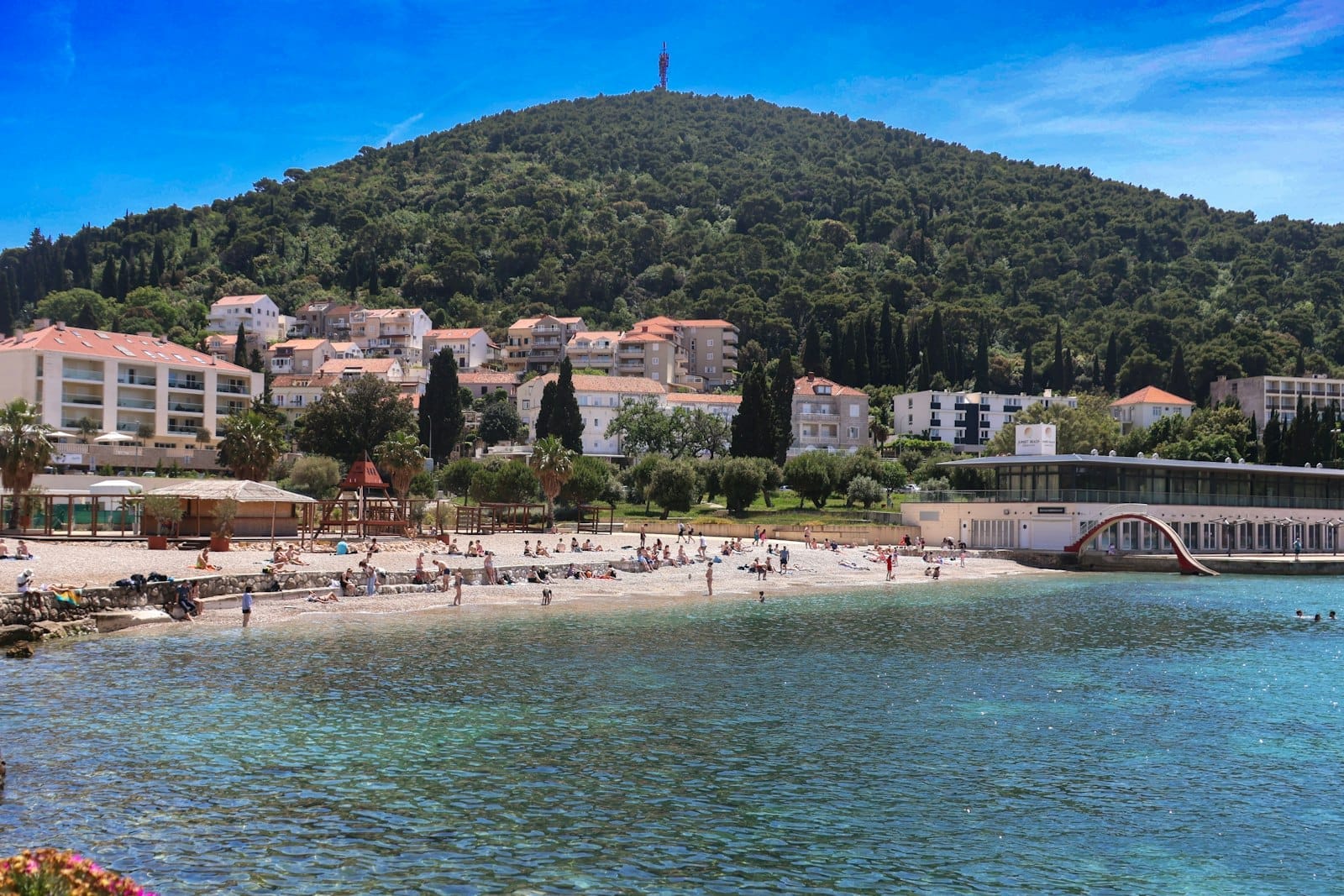
What Uvala Lapad Actually Is
Uvala Lapad, or Lapad Bay Beach in English, is a compact pebble cove tucked into the western side of the Lapad Peninsula. It is one of the most urban beaches in the Dubrovnik area: the promenade runs right behind the shoreline, hotels rise on three sides, and the sounds of families, cafe speakers, and the occasional scooter carry across the water. That description is not a criticism. It is context. Uvala Lapad is not a wild or remote beach. What it offers instead is reliability: clean water, calm conditions thanks to the sheltered bay shape, free access, and a walkable neighbourhood of restaurants and grocery stores right behind it.
The bay sits roughly 3 kilometres west of the Old Town walls. That distance is meaningful. While Banje Beach sits directly below the city walls and charges for loungers in a conspicuously scenic spot, Uvala Lapad serves a quieter, more residential crowd. Regulars here are as likely to be locals getting in a morning swim as they are cruise passengers on a half-day excursion.
💡 Local tip
The Libertas bus is the easiest way to arrive. Lines 4 and 6 connect the Pile Gate area and the Gruž port to the Lapad neighbourhood in around 10 minutes. Get off at the Lapad stop and the promenade is a short walk downhill. Buy a ticket from the driver or a kiosk to keep costs low.
The Beach Itself: Surface, Water, and Layout
The beach is pebble, not sand. The stones are smooth and medium-sized, which makes walking on them manageable but not entirely comfortable without water shoes for children or anyone sensitive on their feet. The water entry is gradual in most sections, which is a genuine advantage for younger swimmers or anyone cautious in the sea. Visibility underwater is good in the morning before any boat traffic picks up nearby.
The bay's enclosed shape keeps wave action minimal for most of the summer. On days with a southerly wind, a light chop can develop, but compared to Banje or the more exposed coves on the Lapad coast, this bay stays calmer. The water temperature in July and August typically sits in the high twenties Celsius, dropping to the low twenties by late September when the beach is noticeably quieter.
Public showers and changing cabins are available during the high season at no charge. In peak summer, a section of the beach is managed with paid lounger and umbrella rentals, typically available to hotel guests at package rates and to the public for a per-hour or per-day fee. Arriving without a reservation for a lounger in July or August means staking out your own spot on the open pebble section, which most visitors do with a towel and nothing else.
Tickets & tours
Live prices and dates from our booking partner. If you book, we may earn a commission at no extra cost to you.
Mostar and Kravice Waterfalls excursion from Dubrovnik
From 120 €Instant confirmationFree cancellationDubrovnik Old Town Tour ith Cable Car Ride
From 56 €Instant confirmationFree cancellationMostar and Kravice Waterfalls full-day tour with pickup from Dubrovnik
From 66 €Instant confirmationFree cancellationSea kayaking experience in Dubrovnik
From 46 €Instant confirmationFree cancellation
How the Beach Changes Through the Day
The morning shift, roughly 7 to 9 a.m., belongs to early risers: hotel guests, local swimmers doing laps parallel to the shore, and a handful of retirees who sit on the benches along the promenade with coffee. The water at this hour is at its clearest and the light comes in low from the east, reflecting off the hills above the bay. It is genuinely peaceful, and this window is worth setting an alarm for if you are staying nearby.
By 10 a.m. the beach fills quickly. Families with children establish territory in the shallow sections. The promenade cafes open and the first smell of grilled food drifts from the restaurants lining the back of the bay. From 11 a.m. to 3 p.m. in July and August, the beach is at its busiest and hottest. The hills behind the bay limit the afternoon breeze, which means direct sun with little relief. Shade is scarce unless you secure a spot near the tree line at the far ends of the beach.
Late afternoon, from around 4 p.m. onward, brings the most pleasant conditions of the day. The direct sun drops behind the western hills, the temperature becomes comfortable, and the crowd thins noticeably as families head to dinner. The sea retains the day's warmth long into the evening. Swimmers at 6 or 7 p.m. often find conditions better than at noon.
⚠️ What to skip
Mid-July and August between 11 a.m. and 3 p.m. can see serious overcrowding. If you have any flexibility, visiting in late June or September cuts both crowd density and heat significantly. The water is still warm and the promenade far more pleasant.
The Lapad Promenade: Context and Neighbourhood
The beach is framed by the Šetalište Nika i Meda Pucića promenade, a pedestrianised seafront path that stretches the length of the bay and continues around the headlands on both sides. Pine trees line sections of the walkway and provide the most consistent shade anywhere near the beach. The promenade is flat and well-paved, making it accessible for prams and wheelchairs in most sections, though the descent from the main road has some steps in places. For more on the broader Lapad neighbourhood, including hotels, restaurants, and the quieter coves tucked into the headlands, the area rewards a few hours of exploration beyond the main bay.
The neighbourhood behind Uvala Lapad has a layered history. Large villas were built here in the late 19th and early 20th centuries, and one 15th-century Gradić family villa survives as a reminder that Dubrovnik's aristocracy favoured this peninsula long before it became a hotel zone. The main hotel and resort buildings date largely from the 1960s and 1970s, which gives the area a functional, slightly dated architecture that feels more Yugoslav coast than Adriatic glamour. That is not necessarily a drawback: the area is unpretentious and genuinely set up for visitors who want practical amenities within walking distance of water.
Getting There and Practical Logistics
From the Old Town, the simplest route is the Libertas bus. Lines 4 and 6 depart from outside the Pile Gate and stop at Lapad, with a journey time of roughly 10 minutes depending on traffic. In summer, buses run frequently but can be crowded midday. Tickets are purchased from the driver in cash or from kiosks near the stop. The Dubrovnik transport guide covers fares and timetable logic in more detail.
Walking from the Old Town takes around 45 minutes along a mostly flat coastal road. It is a reasonable option in the morning before the heat builds, and the route passes through the Gruž port area. Driving is possible and parking is available near the beach, but in peak season the access roads become congested by late morning. If you are staying in a Lapad hotel, the beach is simply a short walk downhill.
The beach sits within easy reach of the Gruž ferry port, which is worth noting if you are combining a beach morning with an afternoon island ferry departure. The port is about 2.5 kilometres from Uvala Lapad, and the Libertas bus connects the two in minutes.
Photography, Accessibility, and Who Should Think Twice
Photographically, Uvala Lapad is not dramatic. The bay does not produce the iconic clifftop or wall backdrops you get near the Old Town. The best compositions tend to be early morning when mist occasionally sits over the water and the light is soft, or from the promenade looking back at the bay with the hills behind. For serious photography in Dubrovnik, the Dubrovnik photography guide identifies the city's most rewarding vantage points, most of which are not at this beach.
Accessibility is reasonable. The promenade is flat and the beach has gradual water entry in its main sections. However, the pebble surface itself is not wheelchair-accessible to the waterline, and some entry points have concrete steps. The shower and changing facilities are functional but not equipped with special accessibility fittings as of current information. Families with toddlers find the shallow, calm water well suited to small children, and a playground is located near the promenade.
Travellers who prioritise dramatic scenery, solitude, or sandy beaches will likely find Uvala Lapad underwhelming. The beach is an urban amenity, not a scenic destination. If that is what you need, the Dubrovnik beaches guide covers a range of options including rockier, more secluded coves on the Lapad headlands and the beaches accessible by ferry on the islands. Visitors staying in the Old Town who want a dramatic swim setting may prefer to take a boat to Lokrum or walk to Banje instead.
ℹ️ Good to know
Uvala Lapad is a public beach with free access year-round. Lifeguard supervision and seasonal facilities (showers, toilets, paid loungers) operate during the main summer season. Outside July and August, expect fewer services but also far fewer people.
What to Bring and Seasonal Conditions
Pebble beaches reward preparation. Water shoes make entry and exit significantly more comfortable, especially for children. A beach mat rather than a thick towel is easier to arrange on uneven stones. Shade is limited in the central sections of the beach from roughly 10 a.m. to 4 p.m., so sunscreen, a hat, and a light cover-up are necessary rather than optional. There are several small supermarkets and cafes within two minutes of the promenade if you forget anything. For broader planning around Dubrovnik's season, the Dubrovnik weather guide gives a clear breakdown of temperature, rainfall, and sea conditions month by month.
- Water shoes: recommended for comfortable pebble entry, especially for children
- Sunscreen and hat: shade is limited between 10 a.m. and 4 p.m.
- Cash: bus tickets and some beach vendors are cash-only
- A beach mat: easier on pebbles than a thick towel
- Reusable water bottle: tap water in Dubrovnik is drinkable and there are fountains on the promenade
Insider Tips
- The far eastern end of the bay, near where the promenade curves toward the headland, tends to be less crowded than the central section even at peak times. The pebbles are slightly larger here but so is the personal space.
- Early morning swimmers sometimes spot sea urchins in the rocky sections at the bay edges. Stay in the sandy-pebble central section if you are not wearing water shoes.
- The promenade restaurants get busy at peak meal times but the cafes near the beach are useful for a cheap cold drink and a shaded seat. Prices are noticeably lower here than in the Old Town for the same items.
- If you are staying in Lapad and want a quieter alternative, the smaller coves accessible by walking the headland paths north and south of the main bay are worth finding. They have fewer facilities but more space.
- The beach is accessible in May and October when the water is still swimmable by Adriatic standards and the promenade is quiet enough to feel like a different place entirely. These shoulder months offer the best ratio of comfort to crowd size.
Who Is Uvala Lapad Beach For?
- Families with young children who need calm, shallow water and nearby toilets and cafes
- Travellers staying in Lapad hotels who want a beach within walking distance
- Those who want a straightforward swim without the scenery premium of the Old Town area
- Visitors combining a morning swim with an afternoon ferry from Gruž port
- Budget travellers who want free beach access with basic facilities
Nearby Attractions
Other things to see while in Lapad:
- Betina Cave Beach
Betina Cave Beach (Betina špilja) is a natural sea cave carved into the limestone cliffs east of Dubrovnik's Old Town, accessible only by water. Free to visit and genuinely uncrowded, it rewards kayakers and boat-trippers with turquoise water, dramatic rock walls, and a story tied to one of Dubrovnik's most brilliant Renaissance scientists.
Planning a trip? Discover personalized activities with the Nomado app.