St. Peter's Pool: Malta's Most Dramatic Natural Swimming Hole
St. Peter's Pool is a horseshoe-shaped limestone inlet on the Delimara peninsula, near the fishing village of Marsaxlokk. Carved by centuries of coastal erosion, it offers some of the clearest water on the Maltese islands, with rock ledges rising up to four meters above the surface for jumping. There is no beach, no lifeguard, and no shade. What you get instead is raw, unfiltered Mediterranean coastline at its most elemental.
Quick Facts
- Location
- Delimara Peninsula, southeastern Malta, near Marsaxlokk
- Getting There
- Bus Route 81 (Valletta–Marsaxlokk), alight at Marsaxlokk, then walk or take a short taxi
- Time Needed
- 2–4 hours
- Cost
- Free entry; parking approx. €3 (all-day)
- Best for
- Swimmers, cliff jumpers, photographers, and anyone who wants coastline without a crowd
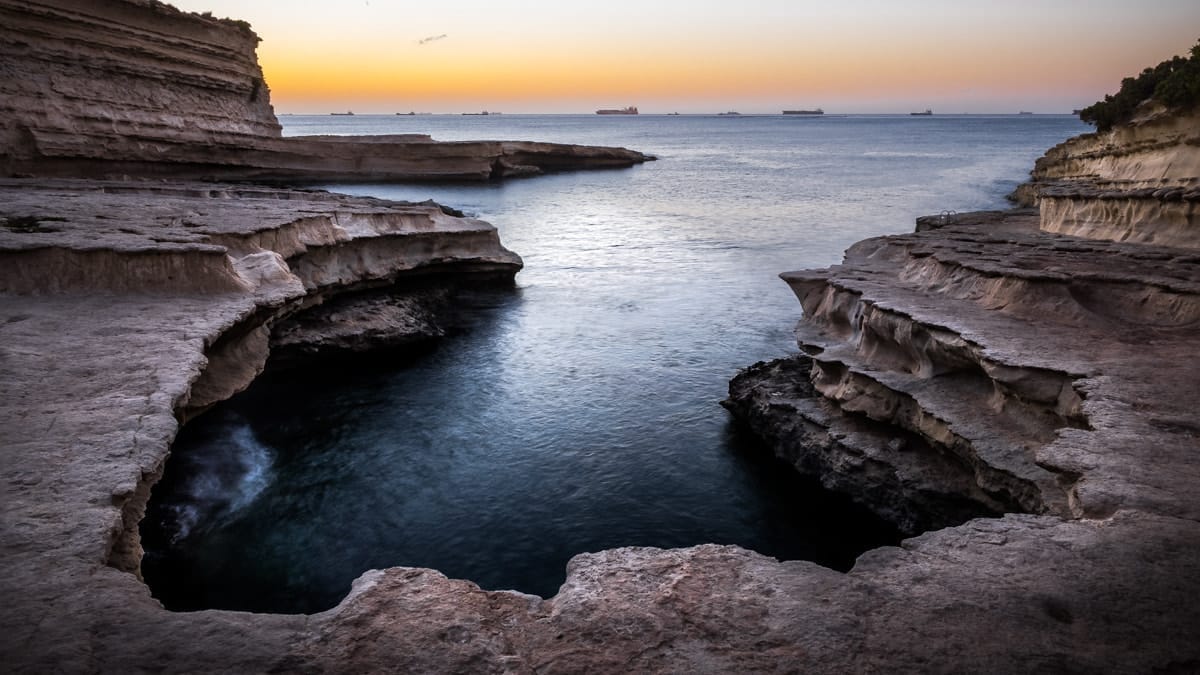
What St. Peter's Pool Actually Is
St. Peter's Pool, officially known simply as Peter's Pool, sits at the tip of the Delimara peninsula on Malta's southeastern coast. It is not a beach in any conventional sense. There is no sand, no sunbed rental, no beach bar. What you find instead is a broad shelf of pale Maltese limestone, shaped over millennia into a rough horseshoe by the slow work of wind and sea. The inlet is largely sheltered from the open Mediterranean, which is precisely why the water inside it achieves that particular shade of blue-green: deep enough to be cool and clear, calm enough on most days to swim without concern.
The formation is a product of the same coralline limestone that defines much of southern Malta's coastline. Softer rock eroded away first, leaving harder ridges that now form the walls of the pool. Those walls rise in steps and ledges, the highest reaching around four meters above the water. For a significant portion of visitors, those ledges are the entire reason to come.
ℹ️ Good to know
The official name is Peter's Pool, but 'St. Peter's Pool' is the name you will see on most signs and maps. Both refer to the same place.
The Approach: Getting There Is Part of the Experience
Reaching St. Peter's Pool requires some intention. From the Marsaxlokk waterfront, the drive takes roughly ten minutes via a narrow road that winds past a power station and its distinctive chimney. Watch for a small signpost near a low building; the road narrows significantly from that point. Parking costs around €3 for the day and fills up quickly in July and August, sometimes before 9am on weekends.
If you are relying on public transport, Bus Route 81 connects Valletta with Marsaxlokk, with the journey taking around an hour. Alight at the Abdosir stop, from which the pool is accessible on foot or via a short ride. For a broader overview of getting around the island, the getting around Malta guide covers bus routes, taxis, and car hire in useful detail.
From the car park, a short walk across open limestone brings you to the edge of the pool. The rock surface is uneven and there are no marked paths, so wear shoes with grip for the approach. Flip-flops are fine once you settle on the flat sections, but they are not ideal for the walk in.
⚠️ What to skip
The limestone can be extremely slippery when wet, particularly near the water's edge. Move slowly near the drop-offs, especially when climbing back up from the water.
Tickets & tours
Hand-picked options from our booking partner. Prices are indicative; availability and final rates are confirmed when you complete your booking.
City Sightseeing hop-on hop-off bus tour of Gozo
From 20 €Instant confirmationFree cancellationThe Malta Experience Audio-Visual Show and La Sacra Infermeria Tour
From 20 €Instant confirmationFree cancellationLuggage Storage in Malta
From 6 €Instant confirmationFree cancellation6-day heritage and attractions pass in Malta
From 80 €Instant confirmationFree cancellation
In the Water: What to Expect
The water inside the inlet is remarkably clear on calm days. The horseshoe shape limits wave action except during rough weather, and the depth drops away quickly from the rock edges, making entry by jumping the most practical option at most points. There is no gradual wading in as you might find on a sandy beach. You climb to a ledge, gauge the depth below you, and jump.
The ledges range from around one meter off the surface to approximately four meters at the highest point. The lower ones attract families and less confident swimmers; the higher ledges draw younger visitors who treat the pool as a kind of informal cliff-jumping venue. On summer weekends, there is usually a loose queue at the upper ledge, with a fair amount of deliberation before each jump. The water below is deep enough to be safe at those heights under normal conditions, but swell can change the surface level noticeably, and the rock walls immediately around the entry point require awareness.
Snorkelling is rewarding in the calmer sections. The limestone formations continue underwater, and the relatively shallow outer edges harbour sea urchins, small fish, and occasional octopus. Bring your own equipment as there is no hire available on site.
How the Experience Changes by Time of Day
Early morning visits, roughly between 7am and 9am, offer the most undisturbed experience. The light at that hour comes in low and lateral, picking out the texture of the limestone and turning the water a deep, almost cobalt blue. The temperature of the rock is still cool underfoot, and you may have the entire inlet to yourself or share it with only a handful of others.
By midday in summer, the limestone has absorbed several hours of direct sun and becomes very hot to stand on. Bring something to lay on. The crowds peak between about 11am and 2pm, particularly on Saturdays and Sundays in July and August, when the car park fills completely and the rock shelves become genuinely crowded. The water remains beautiful regardless of the hour, but the atmosphere changes substantially.
Late afternoon, from around 4pm onward, brings the day-trippers back to Marsaxlokk or Valletta, and the pool quietens considerably. The western light at that hour is warm and directional, excellent for photography. Sunset from the Delimara peninsula can be striking, though the pool itself faces broadly south, so you are looking at open sea rather than a classic sunset horizon.
💡 Local tip
Visit on a weekday in September or October for the ideal balance: warm water from a summer of sun, thinner crowds, and soft afternoon light. June is also strong if you want to avoid peak season entirely.
Practical Considerations Before You Go
There are no facilities at St. Peter's Pool. No toilets, no food stalls, no shade structures of any kind. The nearest services are back in Marsaxlokk, around ten minutes by car. Bring more water than you think you need, particularly in summer when the limestone reflects and amplifies the heat considerably. A hat and reef-safe sunscreen are sensible additions.
The pool is not accessible for visitors with limited mobility. The walk from the car park crosses rough and uneven terrain, and entry into the water is via rock ledges with no ladders or assisted entry points. Families with young children should assess the jumping distances carefully. The lower ledges are manageable for confident child swimmers, but there is no shallow wading area.
If you are spending the day in the southeastern corner of Malta, St. Peter's Pool pairs naturally with the Marsaxlokk fish market in the morning, followed by the pool in the afternoon. The village itself is worth an hour of walking regardless, particularly along the waterfront where the traditional luzzu fishing boats are moored. The Marsaxlokk area guide covers the wider neighbourhood in more depth.
Photography and the Visual Case for Visiting
St. Peter's Pool is photogenic in a way that does not depend on a specific angle or golden-hour calculation. The geometry of the inlet, the contrast between pale rock and the improbable blue-green of the water, and the lack of human infrastructure all contribute to images that look considered even when they are taken casually on a phone. The best shooting position for wide compositions is from the higher rock sections on either arm of the horseshoe, looking inward and down toward the water.
The midday light, harsh for portraits, is actually useful here: it penetrates the water and reveals the rock formations beneath the surface, turning the shallower sections translucent green and the deeper central water a near-purple blue. Drone photography is popular among visitors but subject to Maltese aviation regulations; check current rules through the Civil Aviation Directorate before flying.
Who Should Think Twice
St. Peter's Pool is not for everyone. Visitors who need flat, accessible terrain will struggle with the approach and the site itself. Those hoping for a relaxed, amenity-rich beach day are better served by Golden Bay or Mellieha Bay, both of which offer lifeguards, sunbed hire, and nearby food. If the sea is rough, the pool loses much of its appeal: swell reduces the water clarity, makes entry more hazardous, and limits the jumping options significantly. Check wind and wave forecasts before making the trip, particularly outside of the summer months.
Visitors who dislike heat should note that the limestone plateau surrounding the pool offers no natural shade whatsoever. On a July afternoon, the surface temperature of the rock makes sitting without a towel or mat genuinely uncomfortable. The water provides relief, but only while you are in it.
Insider Tips
- Arrive before 9am on summer weekends to claim a flat section of rock before the crowds arrive. By 10:30am on a Saturday in August, every usable ledge has towels on it.
- Water shoes with a rubber sole are more practical than flip-flops for the whole visit. They protect against sea urchins in the shallower edges and give grip on the wet rock near the entry points.
- The drive past the power station is not a mistake. The road looks industrial and unpromising right up until the moment the limestone opens out onto the coast. Follow it to the small car park at the end.
- Combine the visit with an early-morning stop at the Marsaxlokk fish market, which runs its largest sessions on Sunday mornings. You can be at the pool by 10am having already had a full Maltese morning.
- If you plan to jump from the higher ledges, look down before you climb up. Assess the depth, check for any swell coming in from the open side, and watch a few others jump first. The pool rewards awareness more than bravado.
Who Is St. Peter's Pool For?
- Swimmers who want clear, calm water without the infrastructure of an organised beach
- Cliff jumping and ledge diving enthusiasts, from beginners at the lower levels to more confident jumpers at the four-meter mark
- Photographers looking for natural light on an unbuilt coastline
- Snorkellers who want to explore limestone formations and shallow-water marine life without a boat
- Travellers who want to see the southeastern coast beyond the Marsaxlokk waterfront
Nearby Attractions
Other things to see while in Marsaxlokk:
- Marsaxlokk Sunday Fish Market
Every Sunday morning, the harbor at Marsaxlokk transforms into Malta's most atmospheric market. Fishermen sell directly from their boats, stalls overflow with the morning's catch, and the waterfront fills with locals negotiating over lampuki and swordfish. It's free, fast-paced, and over by early afternoon.