Marsaxlokk Sunday Fish Market: Fresh Catch, Painted Boats, and the Real Malta
Every Sunday morning, the harbor at Marsaxlokk transforms into Malta's most atmospheric market. Fishermen sell directly from their boats, stalls overflow with the morning's catch, and the waterfront fills with locals negotiating over lampuki and swordfish. It's free, fast-paced, and over by early afternoon.
Quick Facts
- Location
- Seafront harbor, Marsaxlokk, Southern Malta
- Getting There
- Bus 81/82/85 from Valletta (~45 min, €2); Bus 206 from University of Malta (~1 hr, €2)
- Time Needed
- 1.5 to 2.5 hours
- Cost
- Free entry; bring cash for fish, produce, and food stalls
- Best for
- Food lovers, photographers, early risers, culture seekers
What the Marsaxlokk Sunday Market Actually Is
The Marsaxlokk Sunday Fish Market, known in Maltese as Suq il-Ħadd ta' Marsaxlokk, is an open-air market that takes over the village's entire harbor promenade every Sunday morning. It is the largest and most well-known fish market in Malta, and while tourism has added a souvenir element over the years, the core of the market remains genuinely functional: local fishermen selling the week's catch directly to the public.
The market stretches along the waterfront in two distinct layers. Closest to the water, vendors display fish on ice-packed tables or directly from crates. Swordfish sections the size of a torso, octopus draped over rods to dry, trays of fresh tuna, and smaller reef fish are arranged with the kind of casual precision that only comes from decades of practice. Behind this fish line, a secondary row of stalls sells vegetables, bread, olives, honey, and the usual tourist merchandise: lace, magnets, and miniature luzzu boats.
💡 Local tip
Arrive before 9:00 AM if buying fish. The best cuts and full variety are available earliest. By 10:30 AM, the prime stock is gone and remaining vendors are winding down on quantity.
The Village Behind the Market: Marsaxlokk's Fishing Heritage
Marsaxlokk is not a market town that grew up around a tourist attraction. It is one of Malta's oldest and most important fishing settlements, with roots reaching back to Phoenician traders who used the bay as a natural harbor more than 2,800 years ago. The name itself reflects centuries of layered influence: "marsa" from Arabic meaning port or harbor, and "xlokk" from the Maltese word for the southeast wind, the sirocco that pushes across the Mediterranean from North Africa.
Today, Marsaxlokk accounts for approximately 70 percent of Malta's fishing fleet. The boats you see moored along the harbor are not props. They go out most nights and return in the early hours of Sunday morning with the catch that fills those market stalls. Many of the vendors are the fishermen themselves, or their families.
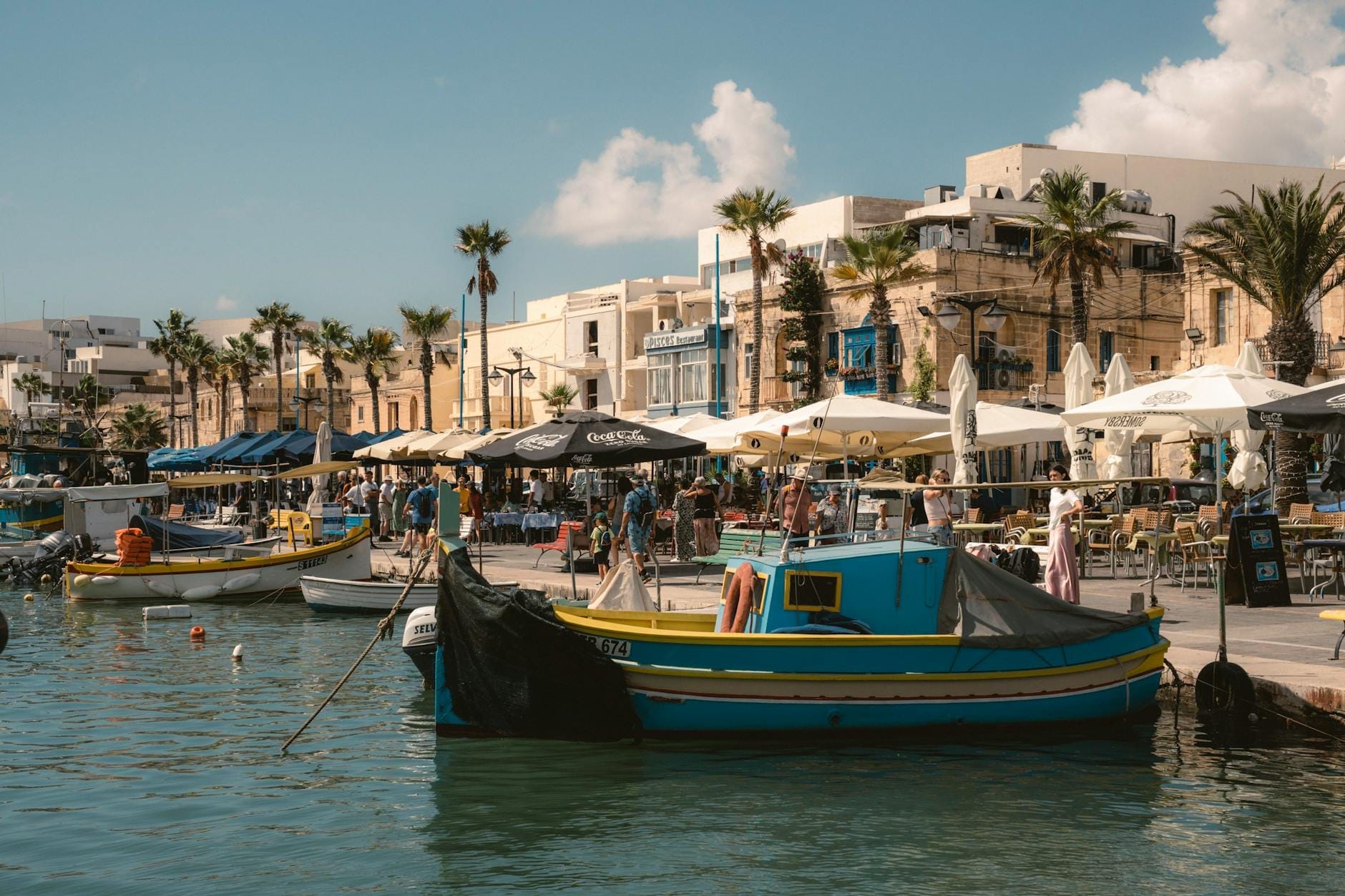
The most visually striking aspect of the harbor is the fleet of traditional fishing boats called luzzu (singular: luzzu), painted in bold reds, yellows, and blues, each with the Eye of Osiris or Eye of Horus painted on the bow. This symbol predates Christianity in Malta by centuries, and while its exact protective meaning has evolved, it remains a living tradition rather than decoration for tourists. The luzzu have become one of the most recognizable images in Malta. For more on the island's layered ancient and maritime history, the Knights of Malta history guide provides useful broader context.
Tickets & tours
Hand-picked options from our booking partner. Prices are indicative; availability and final rates are confirmed when you complete your booking.
City Sightseeing hop-on hop-off bus tour of Gozo
From 20 €Instant confirmationFree cancellationThe Malta Experience Audio-Visual Show and La Sacra Infermeria Tour
From 20 €Instant confirmationFree cancellationLuggage Storage in Malta
From 6 €Instant confirmationFree cancellation6-day heritage and attractions pass in Malta
From 80 €Instant confirmationFree cancellation
The Market Hour by Hour: When to Come and What to Expect
Stalls begin setting up from around 6:30 AM. At this hour, the market belongs almost entirely to locals. Fishermen unload and sort their catch, traders arrange their produce, and the smell of salt water and fresh fish is strongest. The light in early morning, especially in spring and autumn, is clean and sharp, falling low across the harbor and illuminating the painted hulls. This is the best time for photography without crowds.
Between 8:00 and 10:00 AM, the market reaches peak density. Locals do their shopping, families walk the promenade, and tour groups begin arriving from Valletta and Sliema. The promenade narrows with foot traffic, and the fish tables get three or four people deep. Noise levels rise considerably: vendors calling out prices, ice scraped across trays, the sound of Maltese spoken quickly between neighbors.
After 11:00 AM, fish availability drops sharply and the market shifts in character. The tourist-facing stalls become more prominent, and the fish vendors who sold out early have often already packed up. By 1:00 to 1:30 PM, the market is functionally over, though a few stalls linger.
ℹ️ Good to know
A smaller, quieter market runs on weekdays along the same waterfront, primarily with non-fish goods. It lacks the energy and scale of Sunday but is worth a brief look if you're visiting Marsaxlokk mid-week.
Seasonal Highlights: Lampuki and What to Look For
The variety of fish on display changes with the season, and knowing this helps set expectations. From August through December, lampuki (mahi-mahi) dominates the market. This is Malta's most culturally significant fish, the centerpiece of Maltese autumnal cooking, and during lampuki season, entire families turn out to buy it in quantity. The flesh is white and firm, and you'll see locals buying whole fish by the kilo to take home and fry or bake with capers and tomatoes.
Outside lampuki season, swordfish, tuna, sea bream, grouper, and various small rockfish are typical. Fresh octopus is present year-round, often hung on lines or draped over racks. In winter, the market is smaller and more local-facing, which many travelers actually prefer for its authenticity.
If you're planning a broader food-focused trip, pair the market visit with a tour of what Maltese cuisine actually does with these ingredients. The guide to what to eat in Malta maps out the dishes you'll encounter in local restaurants around Marsaxlokk after the market.
Practical Walkthrough: Getting There and Getting Around
Marsaxlokk sits in the southeast of Malta, about 12 kilometers from Valletta. The most practical public transport option is buses 81, 82, or 85 departing from Valletta, with journey times of approximately 45 minutes and a flat fare of €2. Services begin early enough to reach the market before 8:00 AM. Bus 206 from the University of Malta (near Msida) takes approximately one hour. Confirm current schedules via Malta Public Transport before your visit, as Sunday timetables can differ from weekday ones.
Driving is possible but parking near the harbor is limited and fills quickly on Sunday mornings. If arriving by car, aim for before 8:00 AM or be prepared to park further out and walk. Ride-hailing via Bolt is a practical alternative from Sliema or Valletta, with typical fares in the €10 to €15 range one way.
Accessibility along the waterfront promenade is generally manageable on foot, but the market in full swing is crowded and narrow. Pushchairs and wheelchairs can navigate the paved harbor path but will encounter congestion between 9:00 and 11:00 AM. Coming at opening time or just before 11:00 AM reduces this significantly.
⚠️ What to skip
Bring cash. Most fish vendors and stall operators do not accept card payment. ATMs are not immediately obvious in the village center, so withdraw cash before travelling.
After the market, the Marsaxlokk harbor restaurants open for lunch and serve the morning's catch in straightforward preparations: grilled fish, pasta with seafood, and fried snacks. This pairing of market and lunch is how most locals and experienced visitors structure the visit. Marsaxlokk is also a practical base for exploring other sites in the south of Malta. St. Peter's Pool is a short drive away and works well as a second stop on the same day.
Photography, Weather, and Who Might Not Enjoy This
In terms of photographic opportunity, this is one of the most rewarding locations in Malta. The combination of painted boats, weathered faces, raw fish, and golden morning light gives photographers of almost any level strong material to work with. A standard kit lens is sufficient; there's no need for long telephoto. Get low to capture the eye painted on the luzzu bows against the water. The best light is in the first two hours after sunrise, which varies by season but runs roughly 6:00 to 8:00 AM in summer and 7:00 to 9:00 AM in winter.
Weather affects the experience more than many visitors anticipate. On a calm, bright morning, the harbor is genuinely pleasant. On a cold or wet winter Sunday, the market is shorter, sparser, and less photogenic. Summer heat between 10:00 AM and noon can become uncomfortable, especially with crowds. The most reliably pleasant conditions are spring and early autumn, when temperatures sit between 20 and 26 degrees Celsius.
Travelers who prefer polished, curated experiences may find the raw fish smell and crowd noise less appealing than expected. If your primary interest is the luzzu boats rather than the market itself, visiting on a weekday morning gives you the harbor almost entirely to yourself. For beach-focused visitors, combining the trip with a swim nearby is logical. See options in the best beaches in Malta guide for southern coast options close to Marsaxlokk.
First-time visitors to Malta often include the market as part of a wider Sunday itinerary. If you're building out a day or a multi-day plan, the Malta 3-day itinerary shows how Marsaxlokk fits alongside Valletta and other key sites without overloading the schedule.
Insider Tips
- If you want to eat fish you've just bought at the market, several restaurants along the harbor will cook it for you for a small fee. Ask at the waterfront restaurants directly when you arrive.
- The dried octopus hanging on lines near the fish stalls is often available to purchase whole. It's a traditional Maltese ingredient and makes a genuinely local souvenir that's practical to carry home.
- Lampuki season (August to December) is the best time to visit if you want to understand the market's real significance. The atmosphere during peak lampuki weeks is noticeably more energetic and local.
- Stand to the side of the fish tables rather than in front of them. Locals transact quickly and will step around you, but giving them clear access keeps the experience from feeling confrontational.
- The souvenir stalls selling lace and ceramics at the back of the market are generally overpriced relative to shops in Valletta. Buy fish and food here; save crafts shopping for the capital.
Who Is Marsaxlokk Sunday Fish Market For?
- Food travelers who want to see what Maltese cuisine starts with before it reaches the plate
- Photographers looking for vivid, unscripted subjects in natural light
- Early risers who want a genuinely local Sunday morning experience
- Travelers building a southern Malta day trip that includes a beach or historic site in the afternoon
- Budget-conscious visitors: the market itself is free, and fresh fish is inexpensive by European standards
Nearby Attractions
Other things to see while in Marsaxlokk:
- St. Peter's Pool
St. Peter's Pool is a horseshoe-shaped limestone inlet on the Delimara peninsula, near the fishing village of Marsaxlokk. Carved by centuries of coastal erosion, it offers some of the clearest water on the Maltese islands, with rock ledges rising up to four meters above the surface for jumping. There is no beach, no lifeguard, and no shade. What you get instead is raw, unfiltered Mediterranean coastline at its most elemental.