South Melbourne Market: Melbourne's Oldest Neighbourhood Market
Trading since 1867, South Melbourne Market is a working neighbourhood market where Melburnians actually shop. Free to enter and open four days a week, it offers fresh produce, specialty food stalls, and a covered indoor warren of traders that rewards slow exploration.
Quick Facts
- Location
- Corner of Coventry & Cecil Streets, South Melbourne
- Getting There
- Tram 96 or 12 (Stop 127); Bus 236 stops directly outside on Cecil Street
- Time Needed
- 1.5–2.5 hours
- Cost
- Free entry; purchases vary by stall
- Best for
- Food lovers, local culture, weekend mornings
- Official website
- www.southmelbournemarket.com.au
What South Melbourne Market Actually Is
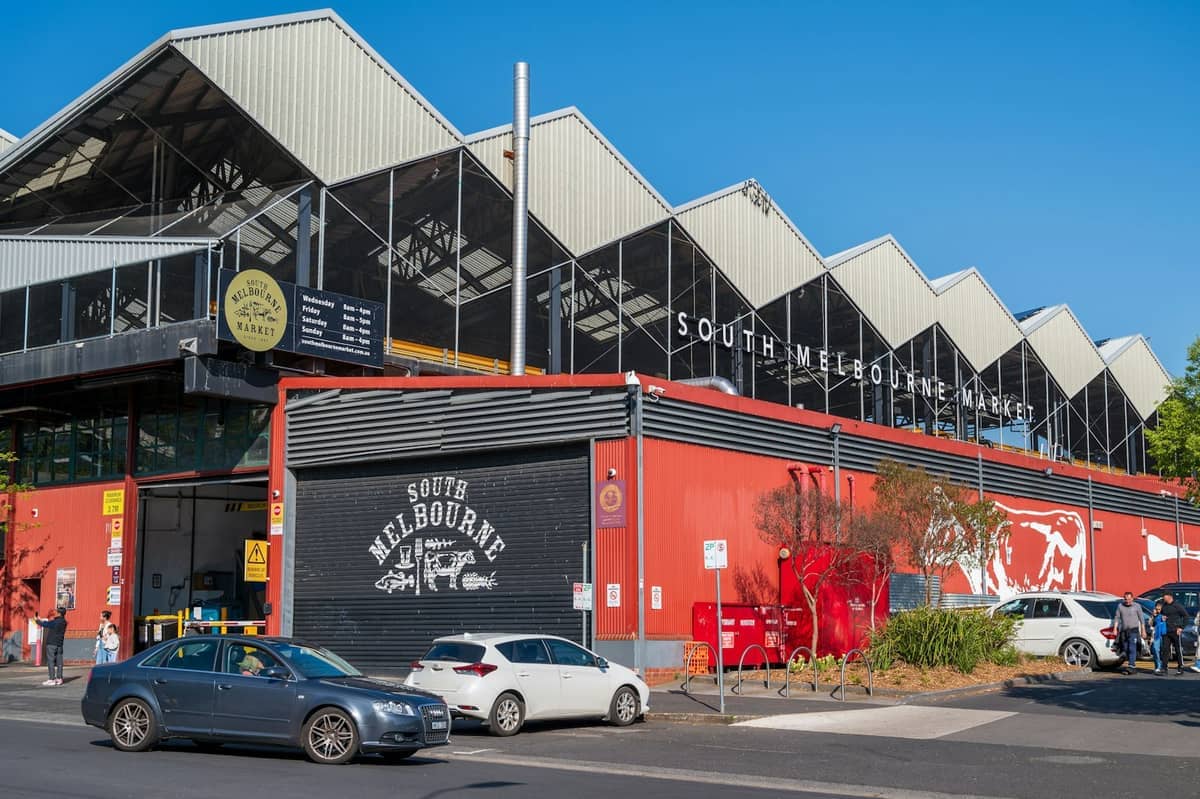
South Melbourne Market is not a weekend pop-up or a curated food hall designed for Instagram. It is a covered neighbourhood market established in 1867, originally on a 10-acre site bounded by Coventry, Cecil, and York Streets and the St Kilda Railway line. The market sits on the corner of Coventry and Cecil Streets in South Melbourne, roughly two kilometres south of the CBD, and it functions first and foremost as the local shopping destination for residents of the surrounding suburb.
The distinction matters. Visitors expecting a polished tourist experience may find the market refreshingly unpolished. Stalls vary from butchers and fishmongers to Greek pastry makers, vintage clothing racks, and independent bookshops. The mix is honest and slightly eclectic in the way that genuine neighbourhood markets tend to be, shaped more by long-standing trader relationships than by a marketing brief.
💡 Local tip
Arrive by 9am on Saturday or Sunday for the best produce selection and a quieter atmosphere. By 11am the Centre Aisle fills with families and brunch-seekers, and the popular dim sim queue at the laksa stall can stretch considerably.
Opening Hours and Getting There
The market opens Wednesday and Saturday–Sunday 8am to 4pm, and Friday 8am to 5pm. It is closed Monday, Tuesday, and Thursday. The four-day week is worth confirming before you go, as many visitors assume weekend-only operation and miss the Wednesday session, which is often the least crowded.
Tram routes 96 and 12 stop nearby on Clarendon Street, within a short walk of the market entrance. Bus route 236 stops directly outside on Cecil Street. If you are coming from the city centre, the tram is the most straightforward option. The Route 96 South Melbourne stop uses low-floor trams with level boarding access, which is relevant if you are travelling with a pram or have mobility requirements. For context on navigating Melbourne's tram network more broadly, the City Circle Tram guide has a useful overview of the system.
Street parking exists on surrounding streets and a rooftop car park serves the market directly, with six accessible spaces and lift access down to the Centre Aisle. On Saturday mornings, nearby parking fills quickly by 9:30am, so public transport is genuinely the easier option.
Tickets & tours
Live prices and dates from our booking partner. If you book, we may earn a commission at no extra cost to you.
Great Ocean Road reverse itinerary tour from Melbourne
From 77 €Instant confirmationFree cancellationHidden bars of Melbourne guided tour
From 115 €Instant confirmationFree cancellationSecrets of Melbourne guided tour
From 60 €Instant confirmationFree cancellationPenguin Parade Express Guided Tour from Melbourne
From 95 €Instant confirmationFree cancellation
The Layout: What You'll Find Where
The market divides roughly into two zones. The covered Centre Aisle runs through the heart of the building and houses the majority of specialty food traders, delicatessens, and non-food stalls. Outer sections open onto partially covered areas where fresh produce, flowers, and a rotating selection of craft vendors operate. The ceiling height in the Centre Aisle is relatively low, which creates a compressed, sensory experience: the smell of roasting coffee from one stall collides immediately with smoked fish from the next, and the sound of the crowd carries differently from an open-air market.
Navigation is intuitive but not obvious on a first visit. The market does not follow a grid so much as an accumulation of stalls that have grown together over decades. Getting briefly lost is normal and rarely consequential, as the building is not large enough to disorient for long. A market map is available at the main entrance.
The dim sim stall near the Coventry Street entrance has achieved a level of local mythology that is disproportionate to its modest appearance. South Melbourne dim sims are steamed or deep-fried and considerably larger than the dim sum served in Chinese restaurants, a product of the market's post-war food culture when the stall first appeared. Locals pick them up wrapped in paper and eat them standing outside. This is worth doing once, not because it is transcendent, but because it is genuinely specific to this place.
How the Experience Changes by Time of Day
Wednesday mornings have a noticeably different texture from weekend sessions. The crowd skews older and local: retirees working methodically through their weekly shopping, traders chatting with regulars by name, and little of the camera-out energy that Saturday brings. If you want to observe the market as a functioning community institution rather than as a visitor attraction, Wednesday is the session to choose.
Saturday between 9am and 10am is the sweet spot for weekend visitors. Produce stalls are fully stocked, the coffee queues are manageable, and there is still space to move through the Centre Aisle without navigating a crowd. After 10:30am, the atmosphere shifts: a younger demographic arrives, brunch groups form, and the overall pace slows. The market does not become unpleasant, but it does become more crowded.
Friday afternoons draw a specific crowd of people stocking up before the weekend: smaller groups, purposeful shopping, and a slightly faster pace. The extended closing time of 5pm means it is feasible to visit directly after work, which is rare for Melbourne's outdoor markets.
⚠️ What to skip
South Melbourne Market is not a year-round outdoor market, but the partially covered outer sections are exposed to weather. On wet days, the experience contracts towards the fully covered Centre Aisle, which becomes noticeably busier. In Melbourne's changeable climate, checking the forecast before a visit is always sensible.
Historical and Cultural Context
The market was established in 1867, making it one of Melbourne's oldest continuously operating markets. Its foundation predates many of the city's major institutions, and the surrounding South Melbourne neighbourhood developed substantially in relation to the market's presence. The original site covered 10 acres, a scale that reflected the market's role as a primary distribution point for produce serving the inner suburbs.
The market's character was shaped significantly by successive waves of immigration throughout the twentieth century. Greek, Italian, and Eastern European communities established stalls and trades that became permanent fixtures, giving the food culture a Mediterranean lean that persists today. This layering of culinary traditions is something South Melbourne shares with other inner Melbourne institutions. For a broader sense of how Melbourne's multicultural food history plays out across the city, the Melbourne multicultural food guide is a useful companion read.
Unlike Melbourne's more famous Queen Victoria Market, which draws large tourist numbers and has undergone significant redevelopment debate, South Melbourne Market has maintained a lower profile and a more suburban character. This is partly a function of geography: it sits slightly removed from the central tourist circuit, which has the practical effect of keeping the visitor-to-local ratio more balanced.
What to Buy and What to Skip
The fresh produce section is the market's clearest strength. Fruit and vegetables, fresh flowers, seafood, and meat from established traders represent genuine value compared to supermarket alternatives, and the quality is consistently cited by South Melbourne residents as the primary reason they return regularly. The cheese selection across several stalls is unusually good for a neighbourhood market of this size.
The non-food stalls are more variable. Craft and clothing vendors range from genuinely interesting independent designers to standard market fare. This section is worth browsing rather than expecting. The book and record stalls in the outer sections occasionally yield worthwhile finds for people with patience.
For food enthusiasts treating the market as a destination rather than a shopping stop, it pairs well with the surrounding South Melbourne neighbourhood. The streets between the market and the foreshore have their own coffee shops and small restaurants worth exploring. If you are planning a broader morning in the area, the Melbourne markets guide covers how South Melbourne compares with the city's other major market options.
Accessibility and Practical Notes
The market is meaningfully accessible. Access ramps are in place at multiple entry points, the rooftop car park has six dedicated accessible spaces with lift access directly into the Centre Aisle, and the Route 96 tram stop nearby uses low-floor vehicles with level boarding. The City of Port Phillip's Community Bus, which serves the area, is wheelchair accessible. The Centre Aisle floor surface is smooth and navigable with a pram or wheelchair, though the outer sections have slightly less predictable terrain.
There are no bag or clothing restrictions. No ticket or registration is required. Payment methods vary by stall: most accept card, but a small number of longer-established traders still prefer cash. Having some Australian dollars on hand avoids frustration at specific stalls.
ℹ️ Good to know
Who should consider skipping this: if you are visiting Melbourne for only one or two days and your market appetite is limited, the Queen Victoria Market offers a larger scale and is closer to the CBD. South Melbourne Market rewards those with a genuine interest in local food culture rather than those looking to tick off a landmark.
Insider Tips
- The dim sim stall near the Coventry Street entrance sells steamed and deep-fried versions. Order the steamed version first: it is the original preparation and a more useful point of comparison with what you'll find elsewhere in Melbourne.
- Wednesday mornings are the least crowded session of the week. If your schedule allows a mid-week visit, you'll experience the market in its most functional, local-facing mode without the weekend crowd.
- The rooftop car park lift drops you directly into the Centre Aisle, but arriving by tram (Route 96 or 12) from the city is genuinely faster on weekend mornings when nearby street parking is contested from early.
- Several of the delicatessen stalls in the Centre Aisle will vacuum-pack cured meats and specialty cheeses if you ask. This is useful if you are continuing on to other destinations and want to take produce with you.
- The market has a small but consistent selection of vintage and secondhand clothing in the outer sections. It is not a dedicated vintage market, but the turnover is regular enough that a look costs nothing and occasionally pays off.
Who Is South Melbourne Market For?
- Food lovers who want to shop where locals shop rather than at tourist-facing market stalls
- Families looking for a manageable, covered market with a relaxed pace and affordable food options
- Visitors with an interest in Melbourne's multicultural food history and immigrant-trader culture
- People staying in South Melbourne, St Kilda, or Southbank who want a genuine neighbourhood shopping experience
- Travellers with a mid-week day free who want to see Melbourne life outside its major tourist attractions
Nearby Attractions
Combine your visit with:
- 1000 Steps Kokoda Track Memorial Walk
The Kokoda Track Memorial Walk, known locally as the 1000 Steps, climbs through fern-filled forest in the Dandenong Ranges east of Melbourne. Free to visit and reached by train, it combines a genuine physical workout with quiet moments of WWII commemoration.
- Albert Park Lake
Albert Park Lake is a vast freshwater reserve just minutes from Melbourne's CBD, offering a 4.7km walking and cycling path around calm water, sports ovals, and open parkland. Free to enter and accessible by tram, it rewards early morning walkers, cycling families, and anyone wanting to understand how Melbourne uses its open spaces.
- Bells Beach
Bells Beach, in Wadawurrung country and also known by its Traditional Owner name Djarrak, is a 48-hectare coastal reserve near Torquay that holds the distinction of being the world's first declared surfing reserve. With its sheer sandstone cliffs, deep bowl-shaped break, and annual Rip Curl Pro competition, it draws surfers and non-surfers alike for one of Victoria's most dramatic coastal experiences.
- Brighton Beach Bathing Boxes
Lined up along Dendy Street Beach in Brighton, Melbourne's 96 privately owned bathing boxes are one of Victoria's most recognisable sights. Free to view from the public beach, they reward visitors who time their arrival with the morning light or an empty tide. Here is what you actually need to know before making the trip.
Planning a trip? Discover personalized activities with the Nomado app.