Scienceworks Melbourne: What to Know Before You Visit
Located in Spotswood and operated by Museums Victoria, Scienceworks combines interactive science galleries, a digital planetarium, and a working 19th-century pumping station on a single site. It draws families, school groups, and curious adults looking for a hands-on science experience a short train ride from the city centre.
Quick Facts
- Location
- 2 Booker Street, Spotswood, Victoria
- Getting There
- Werribee or Williamstown line train to Spotswood Station, then a short walk
- Time Needed
- 2.5 to 4 hours; full day with Planetarium and Pumping Station
- Cost
- A$15 adults; children under 16 free. Planetarium and Lightning Room shows may cost extra. Verify before visiting.
- Best for
- Families with children, school groups, science enthusiasts, rainy-day visits
- Official website
- museumsvictoria.com.au/scienceworks
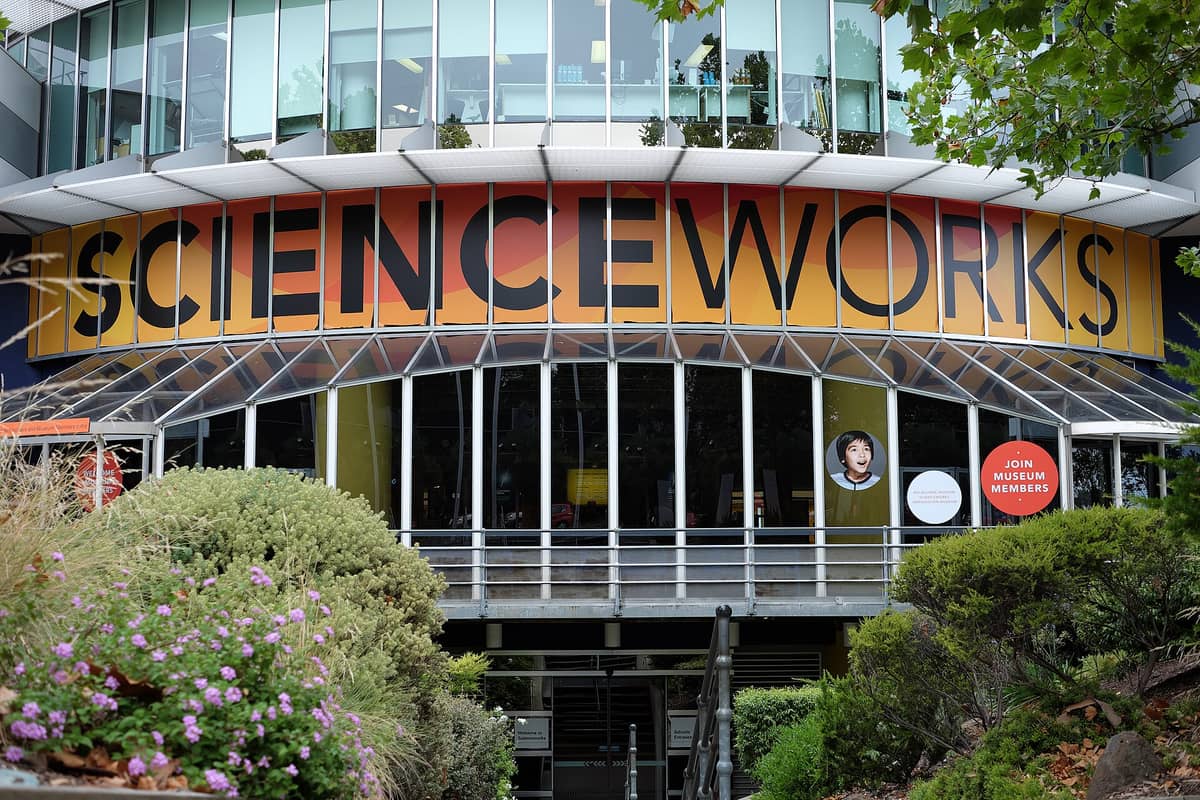
What Scienceworks Actually Is
Scienceworks is a science and technology museum operated by Museums Victoria, sitting on the western fringe of Melbourne's inner suburbs in Spotswood. It opened on 27 March 1992 and has grown into one of the most attended family science attractions in Victoria. The site combines modern interactive galleries with a genuine piece of industrial heritage: the Spotswood Pumping Station, a steam-powered facility that dates to 1897 and once formed part of Melbourne's sewerage infrastructure.
This is not a passive museum where you read text panels. Almost every exhibit is designed to be touched, operated, or solved. Visitors push buttons, pull levers, step on sensors, and work through physical puzzles. For families with children who find traditional museum formats frustrating, that texture makes a real difference.
💡 Local tip
Book Planetarium and Lightning Room sessions in advance, especially on weekends and school holidays. Walk-in availability is limited and these shows sell out early in the day.
The Main Galleries: What You'll Actually See
The core exhibition spaces cover topics across physics, biology, sport science, and technology. Exhibits on the human body sit alongside displays on motion, energy, and basic engineering principles. Some zones are clearly aimed at younger children, with sensory play elements and scaled-down challenges. Others work equally well for adults who engage at a deeper level with the underlying science.
The sport science section tends to draw the longest queues from older children and teenagers. Reaction-time tests, force plates, and speed measurements let visitors benchmark themselves against data rather than just read about athletic performance. It's one of the exhibits where adults genuinely stop and compete with each other.
The Lightning Room show adds an audio-visual jolt to the visit: a live demonstration featuring a large Tesla coil that produces visible electrical arcs and loud discharge cracks. It is not subtle, and younger children may find the noise startling. The demonstration is typically brief, running around 15 minutes, and requires a separate ticket booked in addition to general admission.
Tickets & tours
Live prices and dates from our booking partner. If you book, we may earn a commission at no extra cost to you.
Great Ocean Road reverse itinerary tour from Melbourne
From 77 €Instant confirmationFree cancellationGreat Ocean Road bus tour with a forest walk
From 90 €Instant confirmationFree cancellationYarra Valley Bus Wine Tour including lunch with a glass of wine and chocolate
From 107 €Instant confirmationFree cancellationHidden bars of Melbourne guided tour
From 115 €Instant confirmationFree cancellation
The Spotswood Pumping Station: The Part Most Visitors Underestimate
The Spotswood Pumping Station, adjacent to the main museum building, is the single most underrated element of the Scienceworks site. Built in 1897, the station was central to Melbourne's sewage system and continued operating until September 1965. The machinery inside, including enormous Worthington steam pumps and beam engines, has been preserved in a way that lets visitors understand the mechanical logic of the whole system.
The scale surprises people. The pump hall is cathedral-like in height, with engine components that dwarf the visitors standing beside them. The smell of old metal and machine oil lingers. On days when engine activations run, the sound and motion of the equipment operating adds a layer of experience no exhibit panel can replicate. Check the museum's schedule for demonstration times before visiting.
Note that some areas of the historic pumping station involve stairs and uneven surfaces. Visitors with limited mobility should check the current accessibility map on the Museums Victoria website before planning this part of the visit.
If you find industrial heritage compelling, Scienceworks fits naturally into a broader Melbourne itinerary that includes the city's architectural and historical layers. The Melbourne Museum in Carlton covers natural and social history at a similar depth, and the two together give a strong picture of how Museums Victoria approaches public science education.
The Planetarium
The Melbourne Planetarium at Scienceworks runs digital dome presentations covering astronomy, space science, and related topics. The dome format creates an immersive experience that holds the attention of both children and adults, with projections that wrap around the entire ceiling of the theatre. Programming rotates, so the specific show available changes over time.
Seats recline so viewers look up into the projection, which can cause motion discomfort for some people, particularly those sensitive to visual motion effects. This is worth considering if visiting with young children or anyone prone to that kind of dizziness. The shows run at fixed session times, so check the schedule when you arrive and buy tickets before exploring the main galleries.
ℹ️ Good to know
Planetarium and Lightning Room tickets are sold separately from general admission. Both can sell out on busy days. Check current show times and pricing at museumsvictoria.com.au/scienceworks before your visit, as session times and availability vary.
How the Experience Changes Through the Day
Scienceworks opens daily at 10:00 a.m. and closes at 4:30 p.m. Doors open promptly, and the first hour after opening is the calmest part of the day. School groups typically arrive mid-morning on weekdays, filling the galleries with organised noise and competition for the more popular interactive stations. If you are visiting without children and want a quieter experience, arriving right at 10:00 a.m. or after 2:30 p.m. gives you more space.
School holiday periods change the character of the museum significantly. Queue times at popular exhibits extend, the cafe gets busy quickly, and interactive zones can feel crowded enough to make the experience less enjoyable for adults. Weekday visits outside school holidays are consistently quieter. Melbourne's school holiday dates are worth checking against your travel dates if crowd levels matter to you.
For families, arriving around 10:30 a.m. booking the Planetarium session for the early afternoon, and pausing for lunch at the on-site cafe around midday is a practical structure that keeps the day from feeling rushed without trying to do everything in one frantic run.
Getting There and Practical Logistics
Scienceworks is located at 2 Booker Street, Spotswood. By public transport, take a Werribee-line or Williamstown-line train from Flinders Street Station or Southern Cross Station to Spotswood Station. The walk from the station to the museum takes around five to ten minutes, and the route is straightforward along a suburban street.
If you are combining Scienceworks with a visit to the waterfront, Williamstown Foreshore is accessible on the same train line and makes a natural pairing for an afternoon after leaving the museum.
On-site parking is available for those driving. The museum is wheelchair- and stroller-accessible throughout the main building, and Museums Victoria has taken steps to make the site autism-friendly, including sensory considerations in some areas. Families with neurodivergent children are encouraged to check the museum's access resources in advance.
General admission is A$15 for adults; children aged 16 and under enter free. This is one of the more reasonable admission prices among Melbourne's major science and history institutions, particularly given the scale of the site. Confirm current pricing at the official Museums Victoria website before visiting.
For context on how Scienceworks fits within Melbourne's broader landscape of free and paid cultural attractions, the guide to the best museums in Melbourne covers the full range, including institutions where entry is free.
Who Should Skip This
Visitors travelling without children and looking for quiet, contemplative cultural experiences are likely to find the noise levels and interactive-first design of Scienceworks less satisfying than Melbourne's art galleries or heritage sites. The NGV collections, the State Library, or the immigration and social history museums offer a different register entirely.
If your Melbourne time is limited and you need to prioritise, check the full overview of things to do in Melbourne to weigh Scienceworks against other options closer to the city centre. The Spotswood location is not inconvenient, but it does require a dedicated trip rather than slotting in between other CBD attractions.
Visitors expecting a research-level or technically advanced science institution may also find the exhibits pitched younger than they prefer. The museum is designed to be broadly accessible, which means the science is explained at a level that prioritises engagement over depth.
Insider Tips
- Buy Planetarium and Lightning Room tickets the moment you arrive, before exploring anything else. By mid-morning on weekends and any day during school holidays, popular sessions are frequently sold out.
- The Spotswood Pumping Station gets less foot traffic than the main galleries, so it is often the calmest part of the site even on busy days. If you want space to look closely at exhibits, the pump hall rewards unhurried attention.
- The on-site cafe runs out of popular items during peak lunch periods. If you are visiting with children, eating before noon or after 1:30 p.m. avoids the worst of the queue.
- The museum's autism-friendly initiatives include sensory maps and quieter access options. Contact Museums Victoria directly in advance if you need specific support arrangements for a neurodivergent visitor.
- The Werribee-line train is the more frequent service to Spotswood Station; if you are coming from the city, check the PTV app for the next departure before leaving Flinders Street to avoid a long wait on the platform.
Who Is Scienceworks For?
- Families with children aged 4 to 14 looking for an active, hands-on day out
- Rainy-day visitors who need a covered, engaging indoor option
- Anyone with an interest in industrial heritage and Victorian-era engineering
- School groups and educational visits focused on science and technology
- Visitors seeking a full-day science and astronomy experience combining galleries, planetarium, and pumping station
Nearby Attractions
Combine your visit with:
- 1000 Steps Kokoda Track Memorial Walk
The Kokoda Track Memorial Walk, known locally as the 1000 Steps, climbs through fern-filled forest in the Dandenong Ranges east of Melbourne. Free to visit and reached by train, it combines a genuine physical workout with quiet moments of WWII commemoration.
- Albert Park Lake
Albert Park Lake is a vast freshwater reserve just minutes from Melbourne's CBD, offering a 4.7km walking and cycling path around calm water, sports ovals, and open parkland. Free to enter and accessible by tram, it rewards early morning walkers, cycling families, and anyone wanting to understand how Melbourne uses its open spaces.
- Bells Beach
Bells Beach, in Wadawurrung country and also known by its Traditional Owner name Djarrak, is a 48-hectare coastal reserve near Torquay that holds the distinction of being the world's first declared surfing reserve. With its sheer sandstone cliffs, deep bowl-shaped break, and annual Rip Curl Pro competition, it draws surfers and non-surfers alike for one of Victoria's most dramatic coastal experiences.
- Brighton Beach Bathing Boxes
Lined up along Dendy Street Beach in Brighton, Melbourne's 96 privately owned bathing boxes are one of Victoria's most recognisable sights. Free to view from the public beach, they reward visitors who time their arrival with the morning light or an empty tide. Here is what you actually need to know before making the trip.
Planning a trip? Discover personalized activities with the Nomado app.