Salto del Tequendama: The Waterfall at the Edge of the Savanna
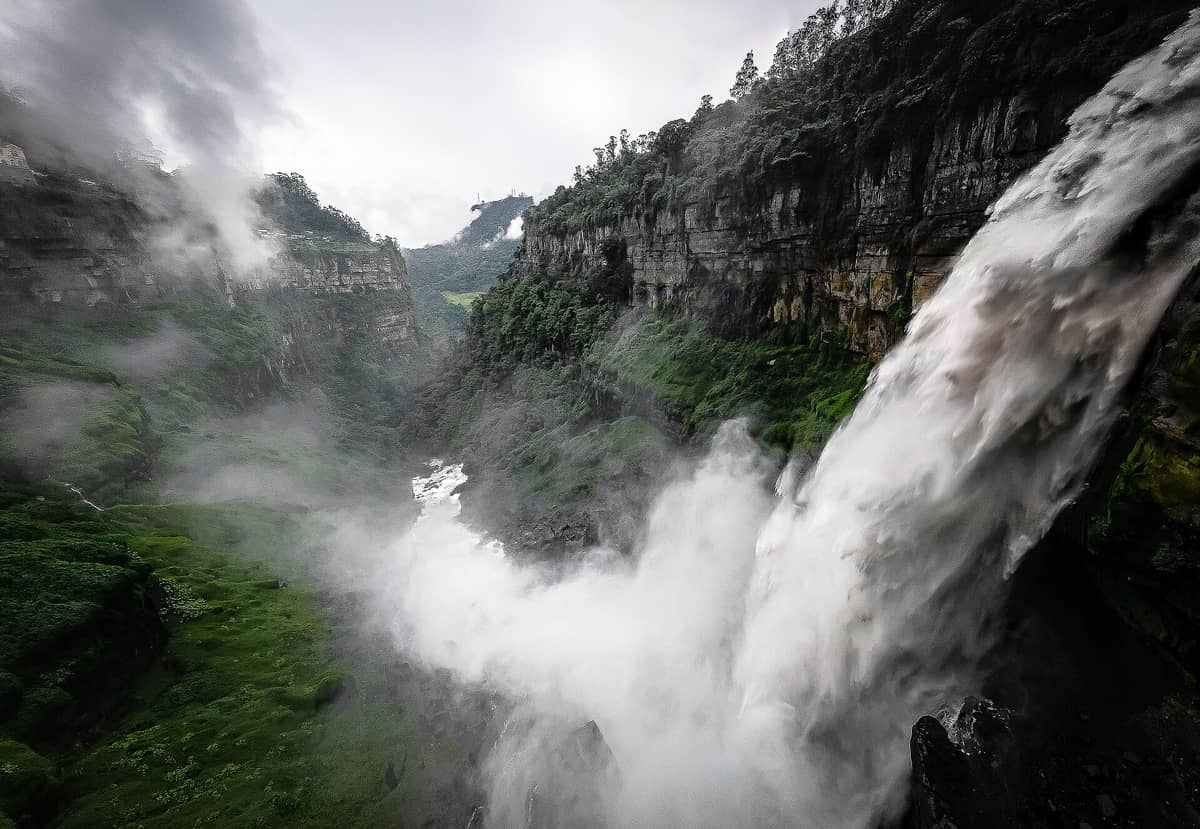
About 30 kilometers southwest of central Bogotá, the Bogotá River suddenly drops roughly 132–150 meters off the edge of the Andean savanna in a single dramatic plunge. The site pairs natural spectacle with the story of an abandoned Art Deco hotel, now the Casa Museo Salto de Tequendama, dedicated to biodiversity and the environmental history of the river.
Quick Facts
- Location
- Vereda San Francisco, km 5 vía Bogotá–Mesitas del Colegio, Soacha, Cundinamarca
- Getting There
- Buses from Portal del Sur (TransMilenio) toward Mesitas del Colegio; ride-hailing apps (Uber, Cabify, Didi) from Bogotá take roughly 45–75 min depending on traffic
- Time Needed
- 2–4 hours including museum; viewpoints alone take 30–60 minutes
- Cost
- Outdoor viewpoints free; museum entry approx. COP 15,000 (verify on arrival); children under 8 free
- Best for
- Nature lovers, day-trippers from Bogotá, history and architecture enthusiasts
- Official website
- www.casamuseotequendama.org
What You're Actually Looking At
Salto del Tequendama is one of South America's most dramatic urban-fringe waterfalls. The Bogotá River, which drains the high Andean plateau known as the Sabana de Bogotá, reaches the western rim of the Sabana de Bogotá and drops on the order of 130–150 meters in a single free-falling column into the deeply cut valley below. The contrast is abrupt: at the top, a broad shallow river crosses flat agricultural land; within seconds, it becomes white mist and thunder.
The waterfall has held cultural significance since long before Spanish colonization. The Muisca people who inhabited the savanna regarded Tequendama as a sacred site, and oral tradition describes the falls as the place where the first inhabitants of the plateau descended into the world. That historical weight is easy to feel when you stand at the roadside railing and look down into cloud.
⚠️ What to skip
The Bogotá River has been heavily polluted by decades of urban runoff and industrial discharge. The water visible at the falls is not clean, and the smell at the base can be noticeable on warm, still days. This does not diminish the visual impact of the falls, but it is worth knowing before you arrive.
The Hotel That Became a Museum
Perched at the very edge of the precipice is a French-influenced structure that looks like it was transplanted from a European spa town and left to weather decades of mist. This is the former Hotel El Refugio del Salto, inaugurated in 1923 to serve wealthy Bogotanos who traveled out to take in the spectacle. At its peak, it was a fashionable destination. By the late twentieth century, as the river's water quality deteriorated and the neighborhood around Soacha declined, the hotel closed and the building fell into abandonment.
In 2014, the building was restored and reopened as the Casa Museo Salto de Tequendama, Biodiversidad y Cultura. The museum focuses on the ecological history of the Bogotá River watershed, the biodiversity of the surrounding cloud forest transition zone, and the cultural heritage of the Muisca people. The combination of crumbling elegance, dramatic cliff-edge location, and serious environmental storytelling makes it one of the more unusual museums within reach of the city.
If you enjoy the kind of institution that places nature and history in the same frame, this pairs well with a visit to the Museo del Oro in central Bogotá, which holds the most complete collection of Muisca goldwork in the world and provides deeper context for the cultural significance of sites like Tequendama.
Tickets & tours
Hand-picked options from our booking partner. Prices are indicative; availability and final rates are confirmed when you complete your booking.
Zipaquira Salt Cathedral guided tour
From 86 €Instant confirmationFree cancellationCandelaria walking tour
From 35 €Instant confirmationFree cancellationCoffee farm guided tour
From 114 €Instant confirmationFree cancellationBogota full-day bike rental
From 19 €Instant confirmationFree cancellation
How the Experience Changes by Time of Day
Morning visits, particularly between 9:00 and 11:00, tend to offer the clearest views. The valley often fills with mist and low cloud by mid-afternoon, which can obscure the full drop. On some days the cloud is so thick that the falls are invisible from the roadside railing. On others, the swirling mist adds to the atmosphere rather than blocking the view. The unpredictability is part of the experience, but if you are making a long journey specifically to photograph the falls, a clear morning gives you the best odds.
Weekends bring significantly more visitors, especially between 10:00 and 14:00. The roadside area can become quite congested, with vendors selling food and crafts, families gathered at the railings, and tour groups arriving from Bogotá. If you visit on a weekday, you will likely have the outdoor viewpoints nearly to yourself, though the museum is only open to pre-booked groups during the week. The museum opens to general visitors on Saturdays, Sundays, and public holidays from 09:00 to 16:00, with the ticket office closing at 15:30.
💡 Local tip
Arrive before 10:00 on weekends to see the falls before the crowds and before the afternoon valley clouds build. The light is better for photography in the morning hours, and the air is noticeably cooler and fresher.
Getting There from Bogotá
The falls sit in the municipality of Soacha, Cundinamarca, roughly 30 kilometers southwest of central Bogotá. The main road access is via the Bogotá–Mesitas del Colegio highway; the museum and primary viewpoints are at approximately kilometer 5 from the Soacha junction.
The most straightforward route for independent travelers is a ride-hailing app (Uber, Cabify, or Didi), which provides direct door-to-door service and avoids the need to navigate connections. Travel time from the city center ranges from 45 minutes to over 90 minutes depending on traffic, which in Bogotá is a serious variable. Budget traffic is heaviest on Friday afternoons and Sunday evenings.
For those using public transport, buses toward Mesitas del Colegio depart from the Portal del Sur station on the TransMilenio network. Ask the driver to let you off at the Salto del Tequendama stop. TransMilenio routes are covered in the getting around Bogotá guide, which includes current fare information and navigation tips.
Many visitors combine this trip with other day excursions from the capital. The Tequendama falls sit in the same general southwest corridor as several other natural sites in Cundinamarca, making it possible to plan a logical route without excessive backtracking.
Inside the Museum: What to Expect
The museum's most arresting quality is the building itself. Walking through rooms that were once hotel guest suites, now repurposed into exhibition spaces, while knowing that the floor-to-ceiling windows overlook a drop of well over 130 meters, creates a specific kind of vertigo that no exhibit can manufacture. The architecture carries its history in peeling paint, cast-iron balustrades, and tiled floors worn smooth by a century of use.
Exhibitions cover the ecological corridor of the Bogotá River, the biodiversity of the transition zone between the high savanna and lower subtropical valleys, and the environmental damage caused by urban pollution. The narrative is honest about the river's condition, framing the museum itself as part of an ongoing restoration effort. Audio guides are available via QR codes, so bring a smartphone with headphones.
Admission to the museum is approximately COP 15,000 per person, though published figures from different sources vary slightly. Children under 8 enter free. Confirm the current fee when you arrive or through the official website before traveling. The museum currently operates with capacity limits per area, so visiting early in the day reduces the chance of queuing between rooms.
ℹ️ Good to know
The museum is closed to general visitors on weekdays. Pre-booked groups can arrange weekday visits by contacting the museum in advance through the official site at casamuseotequendama.org.
Photography, Practical Notes, and Who Should Skip This
For photography, the best positions are from the roadside viewing railings before you enter the museum, and from the museum's balconies and terraces if weather allows. A wide-angle lens captures the full drop; a telephoto isolates the mid-fall spray and rock face textures. The falls face roughly northwest, which means afternoon light hits the mist well when the sun is lower, though afternoon cloud often arrives before the light improves.
Dress in layers. The savanna at the top can be cool and windy, while the path down toward the valley (where it exists) is warmer and more humid. Waterproof or water-resistant outer layers are useful if mist is blowing. Wear shoes with grip if you plan to walk beyond the paved roadside area.
Accessibility information for the museum is limited in publicly available sources. Visitors with mobility requirements should contact the museum directly before visiting. For context on Bogotá's general accessibility situation, the things to do in Bogotá guide covers a wider range of attraction types with varying access requirements.
This site is not for everyone. Travelers who are sensitive to strong odors should be aware that the river pollution can produce noticeable smells, particularly in warmer conditions at lower viewpoints. Those expecting a pristine natural setting of the kind found at, say, Cascada La Chorrera in the Eastern Hills will find Tequendama more complicated: it is spectacular but also a story of environmental damage as much as natural beauty. If you want only a clean, postcard-perfect waterfall experience, this may not be the right choice.
For a day trip that involves a genuinely pristine natural setting, Cascada La Chorrera, east of Bogotá on the Choachí road, offers clear water and a trail experience that feels further from the city. For a more structured cultural and natural day trip, the Catedral de Sal de Zipaquirá is in the opposite direction from Bogotá and is often combined with visits to Laguna de Guatavita.
Insider Tips
- The outdoor roadside viewpoints are accessible at any hour and are free. If your schedule or budget does not allow for the museum, you can still see the falls clearly from the public railing in 20 minutes.
- Weekend mornings before 10:00 are the sweet spot: fewer visitors, better light, and a higher probability of seeing the full drop before afternoon cloud fills the valley.
- Food vendors near the entrance sell arepas, coffee, and fruit. Quality is basic but the coffee is hot and cheap, which matters on a cool misty morning at the cliff edge.
- Confirm museum hours and pre-book if visiting as a group larger than 10, as capacity per area is restricted and the museum may turn away walk-ins during busy periods.
- If driving from Bogotá, the Autopista Sur through Soacha is the direct route but can be very slow on weekends. Allow extra time, or use Waze or Google Maps to find real-time routing around congestion.
Who Is Salto de Tequendama For?
- Day-trippers from Bogotá looking for a half-day excursion that combines natural spectacle with cultural context
- Architecture and history enthusiasts drawn to the 1923 hotel building and its transformation into a museum
- Travelers interested in environmental history and urban-impact storytelling, not just scenic views
- Photographers seeking dramatic mist, vertical scale, and a building that looks like it belongs in a Gabriel García Márquez novel
- Families with older children who can handle the height exposure and engage with the museum's interactive exhibits
Nearby Attractions
Combine your visit with:
- Cascada La Chorrera
Cascada La Chorrera is Colombia's tallest waterfall, plunging approximately 590 metres through cloud forest on the road to Choachí, less than an hour east of Bogotá. The hike to reach it is a proper half-day commitment, not a gentle stroll, but the payoff is one of the most dramatic natural sights within day-trip distance of the capital.
- Catedral de Sal de Zipaquirá
Carved 180 meters beneath a working salt mine, the Catedral de Sal de Zipaquirá is one of South America's most extraordinary architectural achievements. This guide covers what to expect underground, how to get there from Bogotá, and whether the trip is worth your time.
- Jardín Botánico de Bogotá
The Jardín Botánico de Bogotá José Celestino Mutis is one of Colombia's most important living plant collections, spread across a flat, walkable campus that includes the striking Tropicario greenhouse complex. It is a calm, well-organized space that rewards visitors who enjoy botany, photography, and a break from the city's pace without leaving it.
- Laguna de Guatavita
Laguna de Guatavita is a circular crater lake in the Cundinamarca highlands and one of Colombia's most significant sacred sites. Associated with the Muisca El Dorado ritual, it sits 75 km northeast of Bogotá inside a protected forest reserve managed by CAR. Access is by mandatory guided walk only, making every visit a slow, deliberate encounter with both Andean ecology and pre-Columbian history.