Roma Street Parkland: Brisbane's Green Heart in the CBD
Beside Brisbane's central business district, Roma Street Parkland is a 16-hectare public garden that opened in 2001. It combines formal planting in the Spectacle Garden with a genuine subtropical rainforest walk, public art installations, and open lawns — all free to enter and well-connected by train, bus, and on-site parking.
Quick Facts
- Location
- 1 Parkland Boulevard, Brisbane City QLD 4000
- Getting There
- Roma Street Station (train/bus) — direct elevator access from Platform 10
- Time Needed
- 1–2 hours for a full loop; 30 minutes for a quick garden walk
- Cost
- Free — no admission charge
- Best for
- Families, morning walkers, and visitors wanting green space without leaving the city
- Official website
- www.romastreetparkland.com
What Roma Street Parkland Actually Is
Roma Street Parkland is a 16-hectare public garden and rainforest precinct beside Roma Street Station, on land that was once a freight yard for Queensland Rail. It opened in 2001 and has become one of Brisbane's most useful everyday spaces: free, accessible by public transport, and genuinely varied in what it offers across a single site.
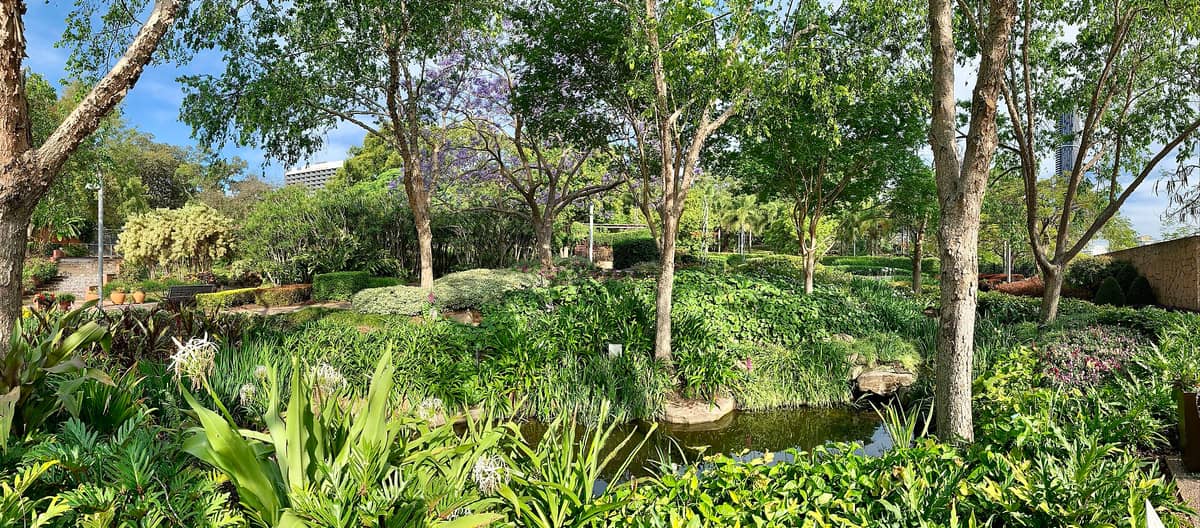
The parkland divides roughly into two distinct characters. The Spectacle Garden is structured and colorful — think formal planting beds arranged around a central lake, with fountain features and manicured paths. The Rainforest Walk is the contrast: a dense subtropical canopy that drops the temperature noticeably, where the sound of the city fades and you're moving through hanging vines and layered vegetation that feels more Daintree than downtown Brisbane.
This is not a passive space. The park has public artworks installed throughout, a dedicated sensory walk, open event lawns, and a children's playground. Joggers use the perimeter loop at sunrise. Families fill the lawns on weekend afternoons. Office workers eat lunch on the lower terraces near the garden beds. The park earns its place in a travel itinerary not because it's spectacular, but because it's genuinely good at being a public park.
💡 Local tip
The elevator from Roma Street Station's Platform 10 provides direct access into the park. This makes Roma Street Parkland an accessible green space in the CBD.
The Spectacle Garden: Color, Structure, and the Central Lake
The Spectacle Garden is the parkland's showpiece section, and it earns that description most convincingly in spring and early summer when the seasonal plantings reach full bloom. The color palette changes with the planting calendar, but the bones of the garden — the terraced layout, the formal lake at the lower level, the wide paths that allow easy navigation with strollers or wheelchairs — remain constant year-round.
Morning is the best time to visit this section. The light comes in at a low angle across the lake surface before 9am, the air is cooler, and the garden is generally quiet except for joggers finishing their loops. By midday in summer, exposed sections of the Spectacle Garden can feel uncomfortably hot — Brisbane's subtropical sun is direct and intense from November through March. Bring water and sun protection if you're planning more than a brief stroll during these months.
Photography in the Spectacle Garden is straightforward and rewarding. Wide shots from the upper terraces capture the geometric planting beds against the CBD skyline backdrop. Macro detail shots of individual plantings work well in the softer light before 8am or after 4pm. The park's position slightly elevated above street level means you can also capture some city framing without fighting traffic or pedestrians.
Tickets & tours
Live prices and dates from our booking partner. If you book, we may earn a commission at no extra cost to you.
Luggage Storage in Brisbane
From 5 €Instant confirmationFree cancellationBrisbane's dark stories true crime tour
From 21 €Instant confirmationFree cancellationFull-day Mount Tamborine winery tour from Brisbane with lunch
From 140 €Instant confirmationFree cancellationNorth Stradbroke Island small groups day tour
From 79 €Instant confirmationFree cancellation
The Rainforest Walk: Where the City Disappears
The Rainforest Walk is the part of Roma Street Parkland that surprises most first-time visitors. The transition from open garden to closed canopy happens in under a minute — you step off a main path and suddenly you're surrounded by subtropical vegetation, the canopy overhead blocking direct sun, the air noticeably cooler and more humid. The soundscape shifts: fewer traffic sounds, more insects and occasional birdcall.
The walk itself is not long — you can move through it in 15 minutes at a comfortable pace — but it's dense with detail. Interpretive signage identifies plant species and explains the ecological context of subtropical rainforest. The path surface is maintained and accessible, though some sections have gentle grades that require attention with prams or mobility aids.
Midday is actually a reasonable time for the Rainforest Walk, because the canopy provides shade that the open garden sections don't. The light filtering through the upper canopy creates interesting photographic conditions, particularly for close-up detail of foliage and ground plants. This is also where the park's sensory walk is incorporated, with tactile and fragrant plantings positioned at accessible heights.
ℹ️ Good to know
The Spectacle Garden and Rainforest Walk are open daily from dawn until dusk. The broader parkland — including the open lawns and paths — has 24-hour access.
History: From Freight Yards to Public Gardens
The land Roma Street Parkland occupies has a layered industrial and infrastructural history. Before the parkland's 2001 opening, the site was dominated by Queensland Rail freight operations — a working yard at the heart of what was otherwise becoming increasingly valuable inner-city land. The decision to transform the site into a public park reflected a broader shift in how Brisbane was rethinking its CBD edges in the late 1990s.
The park sits on Turrbal and Jagera Country. Brisbane City Council acknowledges both peoples as the Traditional Custodians of the land on which the city is built. Understanding that context adds depth to a visit: the subtropical vegetation in the Rainforest Walk represents an attempt to reintroduce plant communities that predate the colonial-era clearing of the region's native cover.
For broader context on Brisbane's green spaces and their histories, the Brisbane heritage and history guide covers the city's transformation from colonial outpost to modern Queensland capital across sites that include parklands, public buildings, and riverside precincts.
Getting There and Getting Around the Park
Roma Street Parkland has one of the most convenient transit connections of any Brisbane attraction. Roma Street Station is directly beside the park, served by train and bus services. The elevator from Platform 10 provides step-free access straight into the parkland without needing to navigate street-level intersections.
The Brisbane Coach Terminal is also adjacent to the parkland, which makes it a logical first stop for visitors arriving by long-distance coach from the Gold Coast, Sunshine Coast, or elsewhere in Queensland. On-site parking is available for those arriving by car, though parking in this part of the CBD can be in demand during weekday business hours.
If you're planning to combine Roma Street Parkland with other CBD green spaces, note that the City Botanic Gardens are about a 15-minute walk southeast toward the river — a worthwhile pairing on a cooler morning. For a full picture of moving around Brisbane's inner-city precincts, the guide to getting around Brisbane covers the Translink network in detail.
When to Visit and What to Expect by Season
Brisbane's climate shapes the parkland experience significantly. The most comfortable visits happen between May and September, when mean daily maximum temperatures sit around 22 to 24 degrees Celsius and humidity is lower. Morning visits in this period are pleasant in the open Spectacle Garden sections, with little need for shade-seeking until well into the day.
Summer visits (December through February) are a different calculation. Mean daily maximums can reach 29 to 30 degrees Celsius, with high humidity. Open sections of the park can feel punishing between 10am and 3pm. The Rainforest Walk is the logical retreat: the canopy provides real relief, and the dense planting creates a microclimate several degrees cooler than the surrounding streets. Early morning arrivals before 8am are the practical solution for those visiting in summer who want the full park experience.
The parkland hosts outdoor events — concerts, seasonal displays, community programs — particularly in the cooler months. Check the official Roma Street Parkland website for a current event calendar before visiting if you want to time a visit around programming. Equally, be aware that events can mean significantly larger crowds, which alters the quiet-garden character the park usually has.
⚠️ What to skip
Brisbane receives its highest rainfall between December and March. Afternoon thunderstorms are common in summer — they develop quickly and can be intense. The Rainforest Walk offers partial shelter, but if you see storm clouds building to the southwest, plan to exit open areas.
Accessibility and Family Practicalities
Roma Street Parkland is one of the more thoughtfully accessible parks in the Brisbane CBD. The elevator from Platform 10 at Roma Street Station provides direct access to the parkland for wheelchair users and pram users. Accessible bathrooms are available within the park, and signed accessible parking spaces are on-site.
The sensory walk incorporated into the parkland makes this a practical choice for visitors with sensory sensitivities or cognitive disabilities. The variation between open, structured garden areas and the enclosed rainforest section also means the park offers different levels of stimulation that can be navigated based on individual needs.
Families visiting Brisbane with children will find Roma Street Parkland a useful base that connects to a wider network of kid-friendly experiences. The Brisbane with kids guide covers the parkland alongside other family-focused attractions across the city.
Honest Assessment: What the Parkland Is and Isn't
Roma Street Parkland is not one of Australia's great botanical gardens. It's not trying to be. It occupies a different role: a well-maintained, free, centrally located green space that gives Brisbane's CBD residents and visitors somewhere to genuinely decompress without leaving the inner city. That is a more modest ambition, and the park meets it consistently.
Visitors arriving with expectations of a major botanical collection or a wilderness experience will be disappointed. The Rainforest Walk is engaging but short. The Spectacle Garden is pretty but not extraordinary by the standards of dedicated botanical gardens like the Brisbane Botanic Gardens at Mount Coot-tha, which offers significantly larger scale and specialist plant collections.
If you have a full day and your primary interest is garden landscapes, the Brisbane Botanic Gardens at Mount Coot-tha is the more ambitious destination. Roma Street Parkland works best as a 60 to 90-minute green interlude within a broader CBD day, not as a standalone destination requiring a special journey.
Insider Tips
- The elevator from Platform 10 at Roma Street Station provides direct access to the parkland. If you have luggage, a pram, or any mobility consideration, use this route on arrival.
- The Rainforest Walk is the coolest part of the park by air temperature. In summer, plan your route so you enter the rainforest section during the hottest part of the day and save the open Spectacle Garden for early morning or late afternoon.
- The upper terraces of the Spectacle Garden give you a partial CBD skyline view that works well for photography in the late afternoon golden hour. Position yourself on the western terrace edge looking northeast for the best framing.
- Check the official Roma Street Parkland website before visiting if you're coming on a weekend — outdoor events are held on the main lawn and can draw large crowds that change the park's usual relaxed character significantly.
- The park has drinking water fountains at multiple points — useful information during Brisbane's summer heat. The bathrooms near the main entry are maintained to a good standard and are a reliable option for families managing long days in the CBD.
Who Is Roma Street Parkland For?
- Early-morning joggers and walkers wanting a green route within the CBD
- Families with young children needing open lawns and a playground close to public transport
- Visitors with limited mobility or sensory sensitivities, given the elevator access, accessible paths, and sensory walk
- Travelers using Roma Street Station as a transit hub who have an hour between connections
- Anyone wanting a quiet outdoor break during a full CBD itinerary without leaving the inner city
Nearby Attractions
Other things to see while in Brisbane CBD:
- ANZAC Square & Shrine of Remembrance
ANZAC Square and its Shrine of Remembrance sit at the geographic and emotional heart of Brisbane's CBD, offering free access to one of Queensland's most significant commemorative sites. From the flame-lit colonnade to the underground Memorial Galleries, this 1929 landmark rewards both quiet reflection and architectural curiosity.
- Brisbane City Hall
Brisbane City Hall is the Queensland capital's most distinguished civic building, a neoclassical sandstone structure with an 87-metre clock tower and a 31-metre copper-domed auditorium. Free general entry, a central CBD location on King George Square, and genuine architectural grandeur make it a rewarding stop for history-minded travellers and anyone curious about what Brisbane looked like before the glass towers arrived.
- Brisbane Customs House
Perched on the northern bank of the Brisbane River at 399 Queen Street, Customs House is one of Queensland's most celebrated examples of Victorian Free Classical architecture. Built between 1886 and 1889, it has served as a working customs facility, a university function centre, and today operates as a heritage event venue and restaurant that welcomes casual visitors during business hours. Entry to the main spaces costs nothing.
- Brisbane Riverwalk
The Brisbane Riverwalk is a free, 870-metre floating walkway connecting Howard Smith Wharves near the CBD to New Farm, with separated pedestrian and cycling lanes, uninterrupted river views, and easy links to some of the city's best precincts. Whether you walk it at dawn for the quiet or at dusk for the light show on the water, it consistently delivers.
Planning a trip? Discover personalized activities with the Nomado app.