Praia do Tamariz: Estoril's Elegant Atlantic Beach, 36 Minutes from Lisbon
Praia do Tamariz is a 380-metre Atlantic beach in Estoril, directly opposite the famous Casino and a short walk from Cascais. With calm, lifeguarded waters, a free oceanfront saltwater pool, and one of the most convenient train connections on the Portuguese Riviera, it draws families, day-trippers, and beach regulars from Lisbon and beyond.
Quick Facts
- Location
- Estoril, Cascais municipality — 25 km west of Lisbon
- Getting There
- Train from Lisbon Cais do Sodré to Estoril station (36 min, €2.50 single); beach is 100 m from the platform
- Time Needed
- Half day to full day
- Cost
- Beach and saltwater pool free; sun loungers approx. €15/person/day in summer
- Best for
- Families, first-time Lisbon visitors wanting a beach day, couples, non-swimmers
- Official website
- www.visitcascais.com/partners/tamariz-beach
What Praia do Tamariz Actually Is
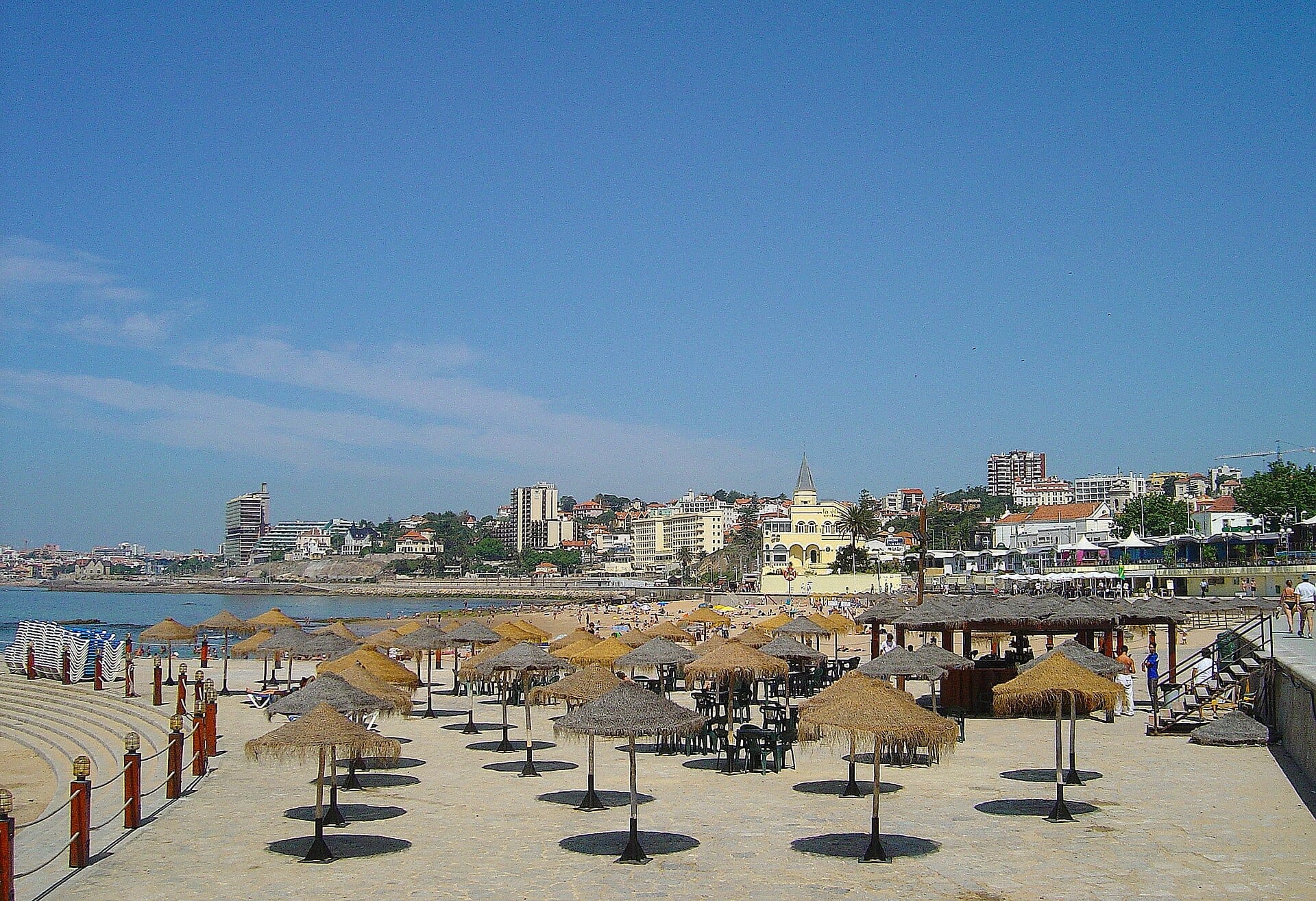
Praia do Tamariz is a sheltered Atlantic beach in Estoril, a coastal town that sits between Lisbon and Cascais along what the Portuguese call the Linha de Cascais. The beach runs roughly 380 to 400 metres of fine golden sand, bracketed on one side by the grand Estoril Casino and its manicured gardens, and on the other by the beginning of the paved seafront promenade, the Paredão de Cascais, which leads 1.7 kilometres west into Cascais town centre.
The water here is notably calmer than beaches further west on the Atlantic coast. The bay's orientation and shallow gradient mean waves are rarely powerful, making it genuinely suitable for young children, nervous swimmers, and elderly visitors in a way that places like Costa da Caparica simply are not. Estoril train station sits literally 50 metres from the sand, so arriving requires no navigation whatsoever.
💡 Local tip
The Piscina Oceânica do Tamariz, a large saltwater swimming pool built into the rocks at the western edge of the beach, is free to use in summer. It fills with filtered Atlantic seawater and offers a contained, zero-wave swimming experience. Arrive before 10am to get a spot on its limited surrounding deck.
A Beach With a History of Glamour
Tamariz was once known simply as the 'Elegant Beach.' Through much of the 20th century, Estoril was a magnet for European royalty, aristocrats in exile, and wartime spies, drawn by the casino, the mild climate, and the social scene along the Linha de Cascais. The beach was the outdoor counterpart to that world: a place where the summer rituals of high society played out against Atlantic light.
That era is long gone, but a certain understated sophistication remains in the architecture of the surrounding hotels and the casino gardens directly across the road. Tamariz today is democratised and accessible, but it hasn't been overrun by mass tourism in the way some other beaches near European capitals have. The clientele skews toward well-heeled Lisbon families and international visitors who've done their research.
The beach sits inside the broader Cascais municipality, which has made significant investments in coastal infrastructure. If you want to understand the fuller stretch of coastline, the Lisbon beaches guide covers all the main options from Estoril to the wilder Atlantic shores further west.
Tickets & tours
Live prices and dates from our booking partner. If you book, we may earn a commission at no extra cost to you.
Sintra, Pena Palace, Cabo da Roca and Praia da Adraga Hike from Lisbon
From 55 €Instant confirmationFree cancellationBelem and Modern Lisbon bus hop-on hop-off combined tickets
From 28 €Instant confirmationFree cancellationSt. George Castle E-ticket and Audio Tour
From 28 €Instant confirmationLisbon Story Centre entrance tickets
From 7 €Instant confirmationFree cancellation
What the Beach Feels Like at Different Times of Day
Early morning at Tamariz, before 9am, is almost meditative. The casino gardens across the road are quiet, the sand is freshly raked, and the light off the water has the particular pale-gold quality of the Portuguese Atlantic coast in summer. A handful of locals swim laps in the saltwater pool. The smell is clean salt air with occasional wafts of espresso from the beach bars beginning to set up. This is the best window for photography.
By late morning, particularly on weekends from June through August, the dynamic shifts considerably. Families from Lisbon take the train out en masse, sun lounger rows fill in from the water's edge back, and the beach bars start running at full capacity. The noise level rises: children, Portuguese pop from speakers, the clatter of trays. It's lively rather than peaceful, and genuinely enjoyable if that's the energy you're after.
Midday to mid-afternoon in July and August is peak intensity. Temperatures regularly reach 27 to 30°C and the sand reflects heat upward. Finding a free patch of beach near the water at 1pm on a Saturday in August is difficult. The saltwater pool is at capacity. If your goal is relaxation, this is not the window to arrive.
Late afternoon, from around 5pm onward, is underrated. The angle of the sun changes, the heat softens, day-trippers begin heading back to the train, and the beach opens up again. Estoril's western orientation means the light in the final two hours before sunset is exceptional, and the casino building and gardens take on a warm glow that's worth seeing regardless of whether you swim.
⚠️ What to skip
In July and August, the beach fills rapidly from late morning onward. If you want a sun lounger without pre-booking, arrive by 9:30am. On weekday mornings, the crowd pressure is noticeably lower than on weekends.
Getting There from Lisbon
The Linha de Cascais train is the only sensible way to reach Tamariz from central Lisbon. Trains depart from Cais do Sodré station every 20 minutes or so, and the journey to Estoril takes approximately 36 minutes. A single ticket costs around €2.25 at time of writing; if you have a Viva Viagem card loaded with credit, you can tap in and out. The train runs along the riverbank and then the coast, and the ride itself is pleasant, offering increasingly good Atlantic views as you approach Estoril.
Cais do Sodré is easily reached from central Lisbon by metro (Green Line) or on foot from Baixa-Chiado. The station is also adjacent to the Santos and Cais do Sodré neighbourhood, which is worth exploring before or after your beach day.
Driving is technically possible but not recommended on summer weekends. Parking near the beach in Estoril is extremely limited, and the train deposits you closer to the sand than any car park would.
ℹ️ Good to know
From Estoril station, walk down through the small tunnel beneath the tracks and the beach is immediately in front of you. Total walking time from train to sand: under two minutes.
Facilities, Amenities, and the Saltwater Pool
Tamariz is well-served for a public beach. In summer, lifeguards are stationed during beach hours, which matters on any Atlantic-facing coastline even with relatively calm water. There are toilet facilities, outdoor showers for rinsing off, and multiple beach bars serving the standard Portuguese beach roster: fresh fish, cold Sagres beer, prego sandwiches, and ice cream.
Sun loungers and parasols are available for hire at approximately €15 per person per day, though this price may vary by season and provider. There is no obligation to rent: the beach is a public space and free to use with your own towel and umbrella.
The Piscina Oceânica do Tamariz deserves particular mention. It is a large, rock-edged saltwater pool positioned at the western end of the beach, filled directly from the sea. The pool is free and open to anyone, which makes it one of the better-value amenities on the entire Linha de Cascais. Children who find the open sea intimidating take to it immediately. It is not a lap pool but functions well as a safe, contained swimming area.
The Promenade to Cascais and What Surrounds the Beach
One underappreciated aspect of a Tamariz visit is its position as the eastern anchor of the Paredão de Cascais, a 1.7-kilometre paved coastal promenade that runs directly to Cascais town centre along the waterfront. The walk is flat, shaded in patches, and offers constant Atlantic views. It takes around 20 to 25 minutes at a relaxed pace and passes several smaller beaches and cafes along the way.
Cascais itself is a well-preserved coastal town with a historic centre, a busy harbour, and its own beaches. Combining a morning at Tamariz with an afternoon walk to Cascais makes for a natural and satisfying full day out of Lisbon. See the Cascais guide for what to do once you arrive there.
Directly across the road from the beach is the Jardim do Estoril and the Casino Estoril. The casino is reportedly one of the inspirations for Ian Fleming's Casino Royale; whether or not that claim holds up to close scrutiny, the building and its gardens are atmospheric and worth a brief look, particularly in the evening if you happen to stay late.
If Praia do Tamariz is part of a broader coastal day trip, the day trips from Lisbon guide covers the Estoril and Cascais corridor alongside other excursions worth considering.
Weather, Seasonality, and Honest Caveats
The beach season runs from roughly June through September, with July and August being peak. Even in summer, the Atlantic breeze at Estoril can be noticeable, particularly in the afternoon when the Nortada, the northerly wind that characterises the Portuguese coast, picks up. Sea temperatures are genuinely cool by Mediterranean standards: the Atlantic off Estoril typically sits between 17 and 20°C in midsummer. Swimmers from warmer-water destinations often find it bracing at first.
Outside July and August, the beach is quiet but the promenade and surroundings remain attractive. May, June, and September offer the best balance: warm enough to swim comfortably, light enough to enjoy, and without the August crowd density. In winter, the beach is largely deserted and the saltwater pool closed, though the coastal walk is still well worth doing on a clear day.
For a full breakdown of what to expect by month, the best time to visit Lisbon guide gives useful seasonal context.
⚠️ What to skip
Tamariz is an Atlantic beach. Even on calm days, the current conditions should be checked. Swim between the flags where lifeguards are on duty. Outside summer, lifeguards may not be present.
Who should think carefully before making this their Lisbon beach day: anyone seeking complete solitude in August, anyone who struggles in cool water and won't use the pool, or anyone coming from the Alfama or Belém side of the city who isn't planning to spend meaningful time at the coast. The train journey is easy, but 36 minutes each way is a commitment if you only have half an afternoon.
Insider Tips
- The westernmost section of the beach, near the saltwater pool, tends to stay shadier in the mornings because of the rocky outcrop. If you run hot, this is your spot. By afternoon, the sun has shifted and it gets full exposure.
- The train from Cais do Sodré on weekend mornings in July and August can be very crowded by 10am. Take the 8:30 or 9:00am service and you'll arrive ahead of the main wave, with your pick of the beach.
- The walk from Tamariz to Cascais along the Paredão takes about 20 minutes and is almost entirely flat. Going at sunset, when most people have already boarded trains back to Lisbon, gives you the promenade essentially to yourself.
- Estoril's casino gardens opposite the beach are free to walk through and offer shade, benches, and a striking contrast to the beach atmosphere. They're a useful decompression zone if the sand is too crowded.
- The beach bars near the centre of Tamariz are more expensive and slower than the smaller kiosks at either end. If you want a cold drink without a long wait, walk five minutes east or west before ordering.
Who Is Praia do Tamariz For?
- Families with young children who need calm water and easy infrastructure
- Lisbon visitors with a single free day who want Atlantic coast access without a complicated journey
- Couples combining a beach morning with a coastal walk to Cascais in the afternoon
- Non-swimmers who want a beach atmosphere and access to the free saltwater pool
- Anyone who wants to see the Estoril Casino setting and its coastal surroundings
Nearby Attractions
Combine your visit with:
- Aqueduto das Águas Livres
Standing 65 metres above the Alcântara Valley on 35 soaring Gothic arches, the Aqueduto das Águas Livres is one of the most extraordinary feats of 18th-century engineering in Europe. Free to admire from street level and easy to combine with other west-Lisbon sights, it rewards visitors who look up from the city's quieter edges.
- Cabo da Roca
Cabo da Roca is the westernmost point of mainland Europe, a wind-scoured cape rising 165 metres above the Atlantic Ocean in the Sintra-Cascais Natural Park. It combines raw coastal scenery, genuine historical weight, and easy access from both Lisbon and Sintra into one of Portugal's most geographically significant stops.
- Cascais
Forty minutes west of Lisbon by train, Cascais trades the capital's urban intensity for whitewashed streets, Atlantic beaches, and a marina ringed by seafood restaurants. Once the summer retreat of Portuguese kings, it remains one of the most complete day trips available from Lisbon.
- Costa da Caparica Beaches
Costa da Caparica stretches 30 kilometres down the Atlantic coast, just 30 minutes from central Lisbon. Free to access year-round, it ranges from family-friendly Blue Flag beaches near the town centre to quieter surf breaks and nudist sections further south, backed by fossil-rich cliffs protected as a nature reserve.
Planning a trip? Discover personalized activities with the Nomado app.