Port of Le Havre: France's Largest Container Port and the City's Industrial Heart
The Port of Le Havre is not a tourist attraction in the conventional sense. It is a vast, operating industrial port that handles a major share of France's container traffic. Understanding it, and knowing where to observe it from, transforms how you read the entire city.
Quick Facts
- Location
- Le Havre waterfront, Seine estuary, Normandy. Harbour master's office on Chaussée John Fitzgerald Kennedy, opposite MuMa.
- Getting There
- Train to Le Havre station (Paris Saint-Lazare, approx. 2h30), then LiA bus or taxi to the waterfront. By road via A13/A131 motorways.
- Time Needed
- 30–60 minutes for waterfront observation; ferry passengers follow operator schedules.
- Cost
- No admission fee to observe the port from public areas. Ferry fares set by operators (e.g., Brittany Ferries, Portsmouth route).
- Best for
- Maritime history enthusiasts, cruise and ferry passengers, photographers, urban explorers, and anyone trying to understand Le Havre's identity.
- Official website
- www.haropaport.com/en
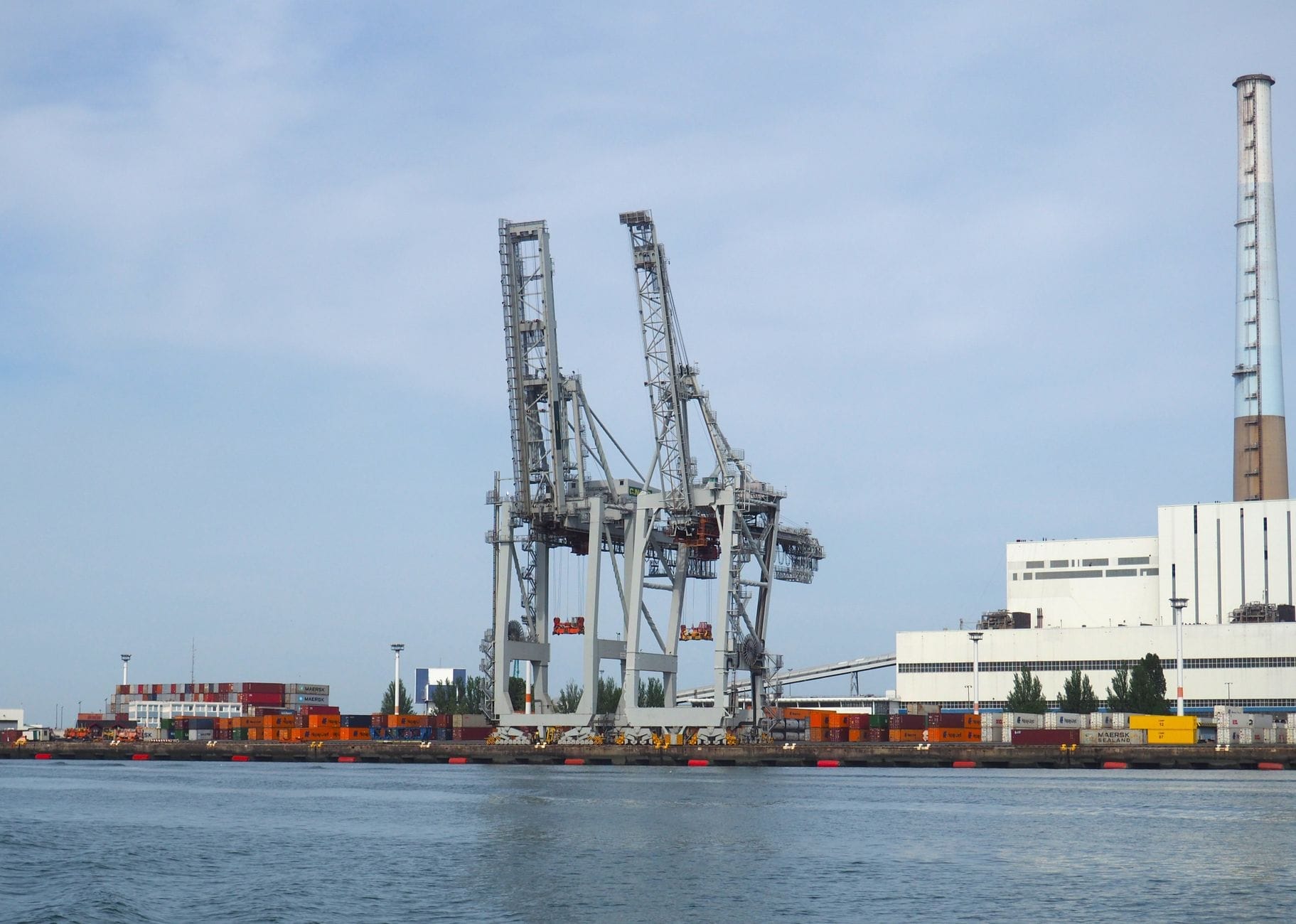
What the Port of Le Havre Actually Is
The Port of Le Havre, officially the Grand Port Maritime du Havre, is France's largest container port and its second-largest commercial port by overall tonnage. At its peak the port has handled around 2.2 million TEU (twenty-foot equivalent units) annually and processes a major share of France's container traffic. This is a working industrial facility operating 24 hours a day, seven days a week, with container terminals, canal-lock systems, bulk cargo berths, and a dedicated ferry and cruise terminal.
The port was founded in 1517 by King Francis I, who ordered a new royal harbour built on the English Channel coast of Normandy. The site chosen was the mouth of the Seine on its right bank. More than five centuries later, the port still occupies this same strategic position, now extended across flat, reclaimed land stretching westward along the Channel shore and inward through a network of canal-like docks and the Grand Canal du Havre, which connects to the Canal de Tancarville and the Seine approximately 24 km upstream.
ℹ️ Good to know
The port authority was reconstituted as the Grand Port Maritime du Havre by Decree 2008-1037 of 9 October 2008. It now operates under the HAROPA Port umbrella, a merged authority covering Le Havre, Rouen, and Paris.
Observing the Port: Where to Actually Stand
Most of the active port is a secured industrial zone with no public access. But Le Havre's urban layout places you surprisingly close to working maritime infrastructure. The most rewarding viewpoint is the Chaussée John Fitzgerald Kennedy, the road running along the inner harbour edge directly opposite the Musée d'Art Moderne André Malraux (MuMa). Standing here in the morning, when container ships are moving in or out of the locks, gives you a scale reference that almost nothing else in a French city can match: vessels whose hulls rise well above street level, guided by tugs the size of suburban houses.
The Bassin du Commerce, the rectangular inner dock at the centre of the rebuilt city, is connected to the broader port network and offers a calmer, more accessible waterfront experience. The dock is framed by Perret-era architecture and crossed by a distinctive footbridge. It functions as a visual transition between Le Havre the city and Le Havre the port. See the full guide to the Bassin du Commerce for more on this area.
For a broader perspective, the elevated plateau of Sainte-Adresse to the northwest of the city centre provides elevated views across the outer harbour entrance, the roadstead (the sheltered anchorage area beyond the jetties), and on clear days, the chalk cliffs of the Côte d'Albâtre stretching northeast. This is where the Impressionist painters, including Claude Monet, set up their easels in the 1860s and 1870s to paint the industrial port below.
Tickets & tours
Hand-picked options from our booking partner. Prices are indicative; availability and final rates are confirmed when you complete your booking.
Customized private D-day Normandy landing excursion from Le Havre
From 1.300 €Instant confirmationFree cancellationFull-day trip to Giverny and Rouen from Le Havre
From 1.200 €Instant confirmationFree cancellation
How the Port Looks at Different Times of Day
Early morning, roughly 6am to 8am, is when the port is most visually dramatic from public areas. Container ships in the roadstead wait for the tide, their anchor lights visible from the seafront promenade, and the port cranes along the southern terminals glow orange in the low light. The smell at the inner harbour edge in the morning is a specific combination of salt water, diesel, and the slight metallic note of cable grease. It is not unpleasant. It smells like a port that is actually working.
Midday flattens the scene considerably. The light becomes harsher, the colour contrast between steel and water disappears, and the activity on the terminals is harder to follow from a distance. If you are on the waterfront primarily for photography, the golden hour before sunset is the second-best window. The cranes along the port's southern edge catch the warm light directly, and the container stacks take on unexpected colour.
At night, the illuminated crane rigs and the lights of anchored vessels in the roadstead create a skyline that surprises visitors who arrive in Le Havre expecting a conventional French city. The seafront promenade between the beach and the port entrance gives the clearest nighttime view without requiring you to enter any restricted zone.
💡 Local tip
Photography tip: the port cranes are best photographed from the pedestrian seafront promenade near the base of the jetties, ideally just after sunrise. Bring a longer lens (200mm+) if you want to isolate individual vessels or crane details. Wide-angle shots from the Sainte-Adresse plateau capture scale better than detail.
The Ferry Terminal: Arriving or Departing by Sea
For many visitors, the Port of Le Havre is their first contact with France: arriving by Brittany Ferries from Portsmouth on an overnight or day crossing. The passenger ferry terminal is separate from the main commercial zone and handles regular ferry passengers.
Arriving by ferry gives a perspective on Le Havre that no other approach provides. As the vessel enters the harbour from the roadstead, the full scale of the container port becomes apparent on both sides, followed by the skyline of Perret's rebuilt city centre, anchored by the distinctive tower of Église Saint-Joseph. The 107-metre lantern tower is deliberately visible from the sea: it was designed partly as a maritime landmark for returning sailors. Seeing it from a ferry deck, framed by crane gantries, is one of the more memorable first impressions of any French city.
Cruise passengers disembark at the same general terminal area. The city centre and the main cultural attractions are accessible by taxi or by organised port shuttle services; specific arrangements vary by cruise operator and should be confirmed in advance. The port is flat and road access from the terminal to the city centre is straightforward.
If you are a cruise passenger with a half-day or full day in port, the Le Havre cruise port guide covers the most practical options for making the most of limited time ashore.
Historical and Cultural Context: Why the Port Shapes Everything
Le Havre's entire existence is a consequence of its port. The city was founded not because a settlement was already there, but because Francis I needed a functioning deep-water harbour. For the first two centuries of its existence, Le Havre was essentially a port with a town attached to it, rather than the other way around. That relationship has never reversed. The city's layout, its postwar reconstruction by Auguste Perret, its cultural identity, and even its cuisine (fresh fish, Norman dairy, Channel seafood) are all downstream effects of the port.
The World War II destruction of Le Havre is inseparable from this geography. The port was a primary Allied bombing target precisely because of its strategic value. The city was heavily bombed and largely destroyed during Allied raids, and the subsequent reconstruction by Auguste Perret produced the UNESCO-listed city centre that stands today. The port itself was rebuilt and expanded after the war into the large-scale industrial complex visible now. The Le Havre World War II history guide covers this period in more depth.
The port's influence on Le Havre's artistic history is also significant. In the 19th century, the harbour entrance and the sea views from Sainte-Adresse attracted Monet, Boudin, Jongkind, and Pissarro. The light quality over the open roadstead, the movement of water in the tidal estuary, and the spectacle of steam-age shipping were central subjects in the formation of Impressionism. The Le Havre Impressionist art trail connects many of the original viewpoints to the works now held at the Musée d'Art Moderne André Malraux.
Practical Notes for Visitors
The port itself charges no admission fee for observing from public areas. The active terminals, docks, and operational zones are secured and not open to the general public without prior arrangement. Organised port tours are occasionally offered through the Le Havre tourist office; check current availability with the local tourism authority before planning around one.
The waterfront road along the inner harbour (Chaussée John Fitzgerald Kennedy) is open to pedestrians and cyclists. The ground is level throughout, which is a practical advantage for visitors with mobility limitations. However, there are no benches, shelter, or facilities along the port-edge section. Wind off the Channel is a constant presence and can be sharp even in summer. A windproof layer is worth carrying regardless of the season.
For ferry passengers arriving with a vehicle, road access from the terminal to the A131 motorway and the city centre is clearly signed and does not require navigating narrow urban streets. The port road layout is designed for heavy freight vehicles, which means transitions between port infrastructure and the city's residential areas can feel abrupt.
⚠️ What to skip
Do not attempt to enter operational port areas, crane zones, or terminal facilities without official permission. Security is active, and access roads are monitored. Photographing from public roads and the seafront promenade is unrestricted, but entering secured port land is not.
Is It Worth Your Time?
Honestly, the Port of Le Havre rewards visitors who come with a specific purpose: to understand the city, to appreciate the industrial scale of modern container shipping, or to photograph something that looks genuinely different from a typical French urban scene. It does not reward visitors looking for a leisure waterfront with cafés, boat trips, and historical interpretation boards. Those elements exist elsewhere in Le Havre, particularly around the Bassin du Commerce and the seafront promenade.
If your visit to Le Havre is primarily about architecture, museums, and the Perret reconstruction, you will pass the port's edge without needing to plan around it, and the views will register naturally. If you are trying to understand why Le Havre is the way it is, structurally and culturally, the port is the answer to almost every question. The guide to whether Le Havre is worth visiting addresses this broader question for travelers weighing the city against other Norman destinations.
Insider Tips
- The best unobstructed view of container ships moving through the lock system is from a public waterfront area near the Porte Océane. Arrive before 8am on any weekday morning for the most activity.
- The Musée d'Art Moderne André Malraux (MuMa) sits directly on the harbour edge opposite the harbour master's office. Its café is worth a coffee stop even if you skip the museum.
- Ferry passengers on the Portsmouth crossing who book a cabin on the port side get a direct view of the harbour entrance and the city skyline as the vessel docks. Worth specifying when booking if available.
- The Sainte-Adresse plateau offers the widest-angle views of the entire port, roadstead, and outer harbour. Come in the late afternoon when westerly light falls directly on the crane rigs along the southern terminal. This is one of the viewpoints used by the Impressionists — minus the steam packets.
- If you arrive by ferry with a car and want to head directly to the city centre rather than the motorway, local roads connect the terminal area to the centre without going onto the ring road. Slower but more interesting.
Who Is Port of Le Havre For?
- Maritime history and industrial heritage enthusiasts who want to see container shipping at serious scale
- Ferry and cruise passengers arriving or departing from Le Havre by sea
- Photographers drawn to industrial landscape, cranes, and large-vessel scale
- Visitors trying to understand Le Havre's identity before exploring the city's museums and architecture
- Impressionism followers tracing the origins of the movement to the harbour views that inspired Monet and Boudin