Plant 4 Bowden: A Converted Clipsal Factory and Market
Plant 4 Bowden transforms a former Clipsal factory in the suburb of Bowden into a lively food and artisan market space. With Wednesday and Friday night markets, independent traders, and easy tram access, it offers a genuine taste of Adelaide's local food culture beyond the city centre crowds. it offers a genuine taste of Adelaide's local food culture beyond the city centre crowds.
Quick Facts
- Location
- 5 Third Street, Bowden SA 5007 — 5 Third Street, Bowden SA 5007 — just outside Adelaide CBD
- Getting There
- 2-min walk from Adelaide Entertainment Centre tram stop; 1 street from Bowden train station
- Time Needed
- 1–2 hours for a browse; allow a full evening for Wednesday or Friday night markets
- Cost
- Free general entry; individual vendors and events may charge separately
- Best for
- Local food lovers, weekend families, couples looking for a low-key evening out
- Official website
- www.plant4bowden.com.au
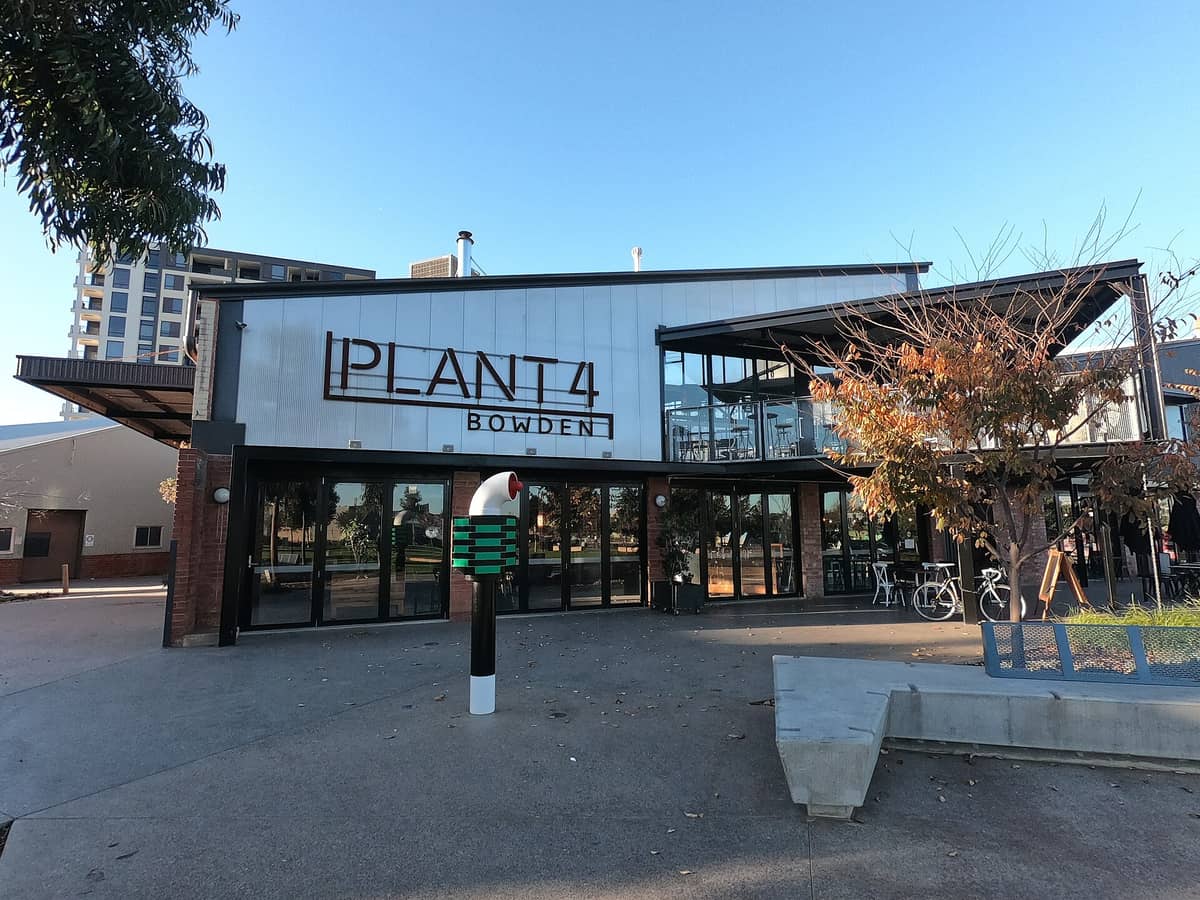
What Plant 4 Bowden Actually Is
Plant 4 Bowden is a food hall, artisan market, and community gathering place housed inside the shell of the former Clipsal electrical manufacturing building in Bowden, one of Adelaide's oldest industrial inner suburbs. The conversion gave the building a second life while keeping its raw industrial character: high ceilings, exposed steel, and broad open floors that now fill with the smell of fresh bread, coffee, and street food rather than machinery.
The name itself is worth noting. "Plant 4" refers to the industrial plant number of the original Clipsal site, a detail the operators kept deliberately to anchor the venue in local history. The surrounding suburb is undergoing significant urban renewal, and Plant 4 has become something of a social anchor for the new residential community growing around it, alongside older Bowden families who have watched the neighbourhood shift over decades.
If you are already planning a visit to the Adelaide Central Market in the CBD, Plant 4 offers a complementary experience: smaller in scale, less tourist-focused, and with a different set of producers and vendors. The two make a good pairing across a single food-focused day in Adelaide.
💡 Local tip
Check the official events calendar before visiting. Night markets run Wednesdays from 5–9 pm and Fridays from 5 pm until late. Individual business hours vary, so not all stalls are open simultaneously; the market is busiest and most rewarding on market nights.
The Space Itself: Industrial Bones, Human Scale
Walking in from Third Street, the building does not announce itself with grand signage or a manicured entrance. The facade is industrial and understated, which is part of the appeal. Inside, the scale opens up: the original factory floor is generous enough to hold dozens of market stalls, food trucks, and permanent vendors without feeling cramped, while still maintaining the slightly rough-edged warmth that distinguishes genuinely repurposed spaces from purpose-built "food precincts" elsewhere in Australian cities.
Natural light comes in through large openings, and on a clear afternoon the interior has a quality of light that photographers tend to notice. The structural steel overhead is visible throughout, and the concrete floor carries the wear of its working-class past. Murals and local art installations appear in corners and along walls, added incrementally rather than as a single commissioned fit-out.
On a mid-week afternoon between market nights, the space is quiet. A handful of permanent operators are open, ambient music plays at low volume, and you can take your time. On a Friday evening, the same space holds a crowd of several hundred: the food smell intensifies, voices layer over each other, and the venue takes on genuine energy. Neither version is wrong; they suit different moods.
Tickets & tours
Live prices and dates from our booking partner. If you book, we may earn a commission at no extra cost to you.
Ultimate Adelaide and Hahndorf full-day tour
From 94 €Instant confirmationFree cancellationHalf-day Lofty Descents tour by bike
From 89 €Instant confirmationFree cancellationAdelaide kayak tour with expert instructors
From 51 €Instant confirmationFree cancellationTrue Crime Tour in Adelaide
From 21 €Instant confirmationFree cancellation
Food, Traders, and What to Expect
Plant 4 houses a rotating mix of food and drink vendors, small producers, and artisan stalls. The offering skews toward independent South Australian producers rather than franchise operations, which means the roster changes over time. On any given market night you might find fresh pasta, wood-fired flatbreads, Korean-inspired street food, natural wine, local cheese, and handmade chocolate within a short walk of each other.
For families, the setup works well. There is no single queue or ticketed entry, children can move freely, and the variety means adults and younger visitors can find something at separate food stations without negotiating a single menu. Seating is communal and informal, spread across the interior and, weather permitting, outside.
If the food culture at Plant 4 interests you, it fits into a broader Adelaide food scene worth exploring. The Adelaide food market guide covers the city's full range of market options, from the historic Central Market to smaller neighbourhood setups like this one.
Timing Your Visit: Day vs. Night
The difference between visiting Plant 4 during the day and coming on a Wednesday or Friday evening is significant enough to treat them as two different experiences. Daytime visits are relaxed and practical: good for a coffee and a look around, but the full range of vendors is not always present. If you are visiting specifically to eat and browse, a night market session is the version to plan for.
Wednesday nights draw a mix of locals finishing the work week early and regulars who treat the market as a weekly habit. Friday nights attract a broader crowd, including groups and couples, and tend to run later into the evening. The Friday session has the higher energy of the two, while Wednesday is a shade more relaxed.
Adelaide's Mediterranean climate is relevant here. Summer evenings (December through February) can be warm to hot, and the semi-open nature of the building means you will feel the temperature. Late autumn and spring nights, roughly April through May and September through October, offer the most comfortable conditions for an outdoor-indoor market experience. Winter evenings are cool but manageable if you dress accordingly.
⚠️ What to skip
On very hot Adelaide summer nights (above 35°C), the building's industrial construction means it retains heat. If a heatwave is forecast, the experience is noticeably less pleasant. Check the Bureau of Meteorology forecast for the day before planning a summer evening visit.
Getting There and Getting Around
Access is straightforward from central Adelaide. The Adelaide Entertainment Centre tram stop puts you two minutes on foot from the entrance at 5 Third Street. Bowden train station is one street away. Both options make Plant 4 one of the more transit-accessible market venues in the wider Adelaide area, meaning you can arrive from the CBD, eat and browse, and return without needing a car or rideshare. from the entrance at 5 Third Street. Bowden train station is one street away. Both options make Plant 4 one of the more transit-accessible market venues in the wider Adelaide area, meaning you can arrive from the CBD, eat and browse, and return without needing a car or rideshare.
On-site parking is available for those driving. During peak Friday night markets the car park fills, so arriving by tram or train on busy evenings is genuinely the better option rather than just a theoretical preference.
For visitors still orienting around Adelaide's transport network, the getting around Adelaide guide explains the tram, train, and bus system in practical detail, including how to pay fares using the Metrocard system.
Bowden as a Neighbourhood: Worth the Short Trip
Bowden itself is about 3 km from the Adelaide CBD, but it sits outside the central parkland ring that defines the city's formal grid. The suburb has a history rooted in working-class industry and immigration, and traces of that remain in the built fabric alongside newer apartment buildings and small bars that have followed urban renewal investment over the past decade.
Plant 4 is the most prominent public destination in Bowden, but spending a few minutes walking the surrounding streets gives context. The mix of Victorian-era workers' cottages, converted warehouses, and contemporary infill housing tells the story of how the suburb is changing, which makes the preserved industrial identity of Plant 4 feel more meaningful than it would as a standalone venue in a generic precinct.
Bowden sits at the edge of Adelaide's West End corridor, a strip connecting the CBD to the inner northwest with bars, studios, and creative spaces. The Adelaide West End guide covers this stretch in more detail if you want to plan an evening that extends beyond Plant 4.
What to Know: What Plant 4 Is and Isn't
Plant 4 Bowden is a genuinely good local food market operating in a well-executed adaptive reuse building. It is not a major tourist attraction in the conventional sense. There are no ticketed exhibits, no heritage tours, and no single headline experience. Its value is in the quality of the food, the unpretentious atmosphere, and the sense that you are somewhere Adelaideans actually go rather than somewhere designed primarily for visitors.
Visitors who arrive expecting the scale or variety of the Adelaide Central Market will find Plant 4 smaller and more curated. That is by design, not a shortcoming. The venue works best for people who appreciate independent producers, enjoy a relaxed communal eating experience, and have some interest in the broader story of how post-industrial urban spaces find new uses.
Those who prefer air-conditioned comfort, clearly separated dining rooms, or a single-cuisine focus will find the open industrial format less suited to their preference. Similarly, visitors in Adelaide for only a day or two might reasonably prioritise the Central Market or other central-city options over a short tram trip to Bowden. But for anyone with two or more days, the visit is worth making, particularly on a Wednesday or Friday evening.
ℹ️ Good to know
Plant 4 is open seven days a week, but individual vendor hours vary. Night markets are the most reliable time to find the full range of traders open: Wednesdays 5–9 pm and Fridays 5 pm until late. Confirm current hours and any special events at plant4bowden.com.au before visiting.
Insider Tips
- Arrive at a Friday night market 15–20 minutes after opening rather than at the start. The initial queue at the most popular food stalls settles quickly, and you will spend less time waiting.
- The communal seating inside fills fast on Friday evenings. If the weather is mild, check for outdoor seating options near the building entrance before committing to an indoor spot.
- Plant 4 occasionally hosts ticketed events, pop-up dinners, and community nights that differ from the regular market format. The events calendar on the official website is more informative than general listings, so check it directly.
- Bowden station is served by suburban train lines, making Plant 4 accessible from areas of Adelaide not directly on the tram line. If you are staying in the inner east or south, a train to Bowden is often faster than a tram connection via the city.
- If you are visiting on a weekday afternoon rather than a market night, the permanent coffee and specialty food operators are the reliable draw. It is a good spot for a working lunch if you are in the area.
Who Is Plant 4 Bowden For?
- Food-focused travellers who want to eat alongside locals rather than in tourist-oriented venues
- Couples looking for a low-key, unhurried weeknight dinner option with variety
- Families with children comfortable in open, informal communal spaces
- Design and architecture enthusiasts interested in adaptive reuse of industrial buildings
- Visitors on a budget who want free-entry browsing with the option to spend as much or as little as they like on food
Nearby Attractions
Other things to see while in Adelaide CBD:
- Adelaide Arcade
Opened in December 1885, Adelaide Arcade is one of Australia's oldest and best-preserved Victorian-era shopping arcades. Free to enter and located opposite Rundle Mall's fountain, it offers a rare combination of architectural beauty, specialty retailers, and a genuine sense of Adelaide's commercial history.
- Adelaide Botanic Garden
Open daily and completely free, Adelaide Botanic Garden covers 50 hectares on the northern edge of the CBD. From a 19th-century palm house to a full-scale tropical rainforest glasshouse, it rewards a slow morning or a purposeful afternoon walk.
- Adelaide Central Market
Adelaide Central Market has operated continuously since 1869, making it one of the largest undercover fresh produce markets in the Southern Hemisphere. Spread across 5,720 square metres in the heart of the CBD, it draws locals, chefs, and curious visitors to its mix of produce stalls, specialty food traders, and casual eateries. This guide covers everything you need to plan a worthwhile visit.
- Adelaide Festival Centre
Opened in 1973, Adelaide Festival Centre is South Australia's flagship performing arts complex, anchoring the northern edge of the CBD along King William Road. From major theatre productions to intimate performances, it draws both locals and visitors year-round — and its riverside location makes it as much a place to linger as to attend a show.
Planning a trip? Discover personalized activities with the Nomado app.