Perdana Putra: Inside Putrajaya's Most Commanding Government Building
Perdana Putra is the official office complex of Malaysia's Prime Minister, rising above Putrajaya Lake in a striking blend of Moorish, Islamic, and Malay architectural styles. While the interior is not open to the general public, the building's exterior and surrounding grounds draw visitors for its architectural drama, lakeside position, and symbolic role at the heart of Malaysia's purpose-built federal capital.
Quick Facts
- Location
- Precinct 1, Putrajaya, Malaysia
- Getting There
- Putrajaya station (KLIA Transit), then taxi or Grab to the precinct
- Time Needed
- 30–60 minutes for the exterior and lakeside walk
- Cost
- Free to view from the outside
- Best for
- Architecture enthusiasts, photography, Putrajaya sightseeing
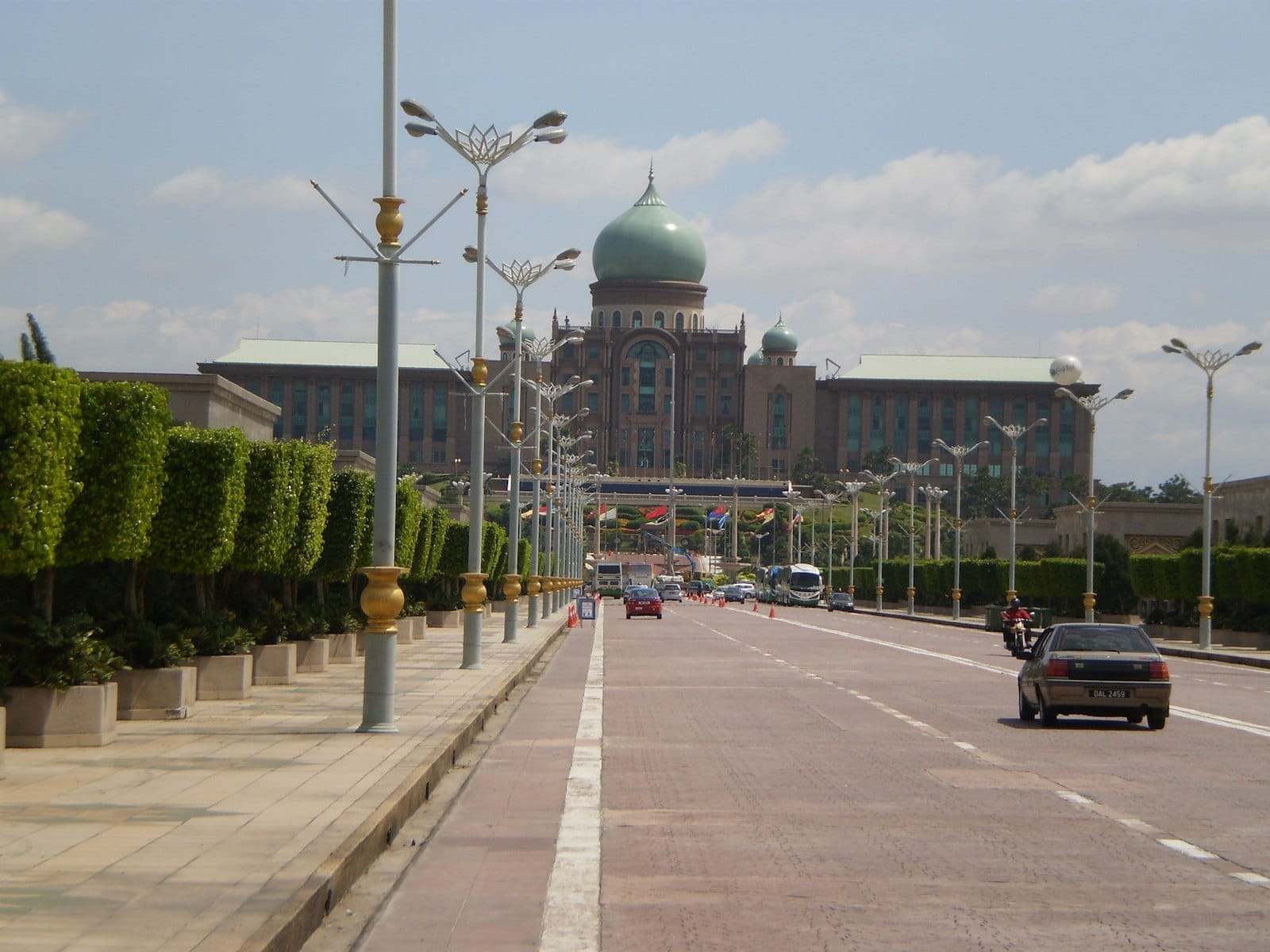
What Perdana Putra Actually Is
Perdana Putra is the official administrative office of the Prime Minister of Malaysia, one of the most recognisable structures in Putrajaya, the country's federal administrative capital. The building sits on a low hill at the northern end of Putrajaya Lake, positioned so that its copper-green dome and tiered towers are visible from almost every corner of the precinct. It is not a palace, and it is not a tourist attraction in the conventional sense — the interior is closed to the public. What draws visitors is the architecture itself, the careful urban planning that surrounds it, and the experience of walking through a capital city that was built almost entirely from scratch.
Putrajaya was developed from jungle and palm oil plantations beginning in the 1990s, conceived as a modern federal capital to relieve congestion in Kuala Lumpur. Perdana Putra was completed in 1999 and became one of the foundational landmarks of the new city. Its name translates loosely as 'Premier's Palace' in Malay, and the scale of the structure reflects the ambition of the entire Putrajaya project: a planned capital designed to project confidence, Islamic heritage, and Malaysian identity simultaneously.
The Architecture: What You're Actually Looking At
The building is a deliberate fusion of styles. The dominant influence is Moorish, visible in the horseshoe arches, the ornamental geometric screens, and the emphatic central dome finished in oxidised copper that gives it a muted green-grey tone. Malay and Persian architectural elements layer in through the decorative tilework, the proportions of the minarets, and the way the structure steps down toward the water. Architects from Putrajaya Corporation led the design, and the brief was clear: produce something that reads as unmistakably Islamic while functioning as a modern government workplace.
Up close, the facade rewards slow looking. The stone cladding shifts in tone depending on the light — pale and almost cream-white in harsh midday sun, richer and more ochre in the late afternoon. The building, perched on a hilltop 50 meters above ground, is the visual anchor, but the building's true complexity is in the layering of arches, screens, and colonnades that wrap its lower levels. From across the lake, the entire complex reads as a single composed mass. From the esplanade directly in front, it breaks into individual surfaces and details.
💡 Local tip
For the best exterior photos, position yourself on the esplanade opposite the main entrance in the late afternoon when the low sun catches the copper dome and the stone facade warms considerably. Early morning works well too, with mist sometimes sitting on the lake behind you.
Tickets & tours
Hand-picked options from our booking partner. Prices are indicative; availability and final rates are confirmed when you complete your booking.
Private day trip to Putrajaya, KL City, Batu Caves and fireflies tour
From 109 €Instant confirmationFree cancellationPrivate half-day Putrajaya tour
From 74 €Instant confirmationFree cancellationGrand Kuala Lumpur and Batu Caves with Putrajaya Combo tour
From 73 €Instant confirmationFree cancellationPetronas Twin Towers and Kuala Lumpur Tower observation deck tickets
From 34 €
Visiting the Grounds: What You Can Actually Do
The public perimeter around Perdana Putra is walkable and well-maintained. A broad esplanade runs along the lakeside approach, and the surrounding roads are wide, low-traffic, and relatively shaded by mature trees planted when the precinct was developed. Security is visible but not intrusive for those staying on the public pathways. The closest you can get to the main entrance is the gated forecourt, which is staffed and restricted — do not attempt to enter without official clearance.
The surrounding precinct is part of Putrajaya's Civic and Cultural District, and within a short walk you will find the Putra Mosque directly adjacent, sharing the same lakeside position. The mosque is open to non-Muslim visitors outside prayer times, and the combination of the two buildings from the waterfront gives you the defining image of Putrajaya that appears in almost every photograph of the city.
If you have more time in the area, Putrajaya Lake is worth exploring properly — boat cruises offer a perspective on Perdana Putra from the water that most visitors miss, showing how the building was deliberately positioned to dominate the lake's northern axis.
How the Experience Changes by Time of Day
Putrajaya is a government city, and it moves on government hours. Weekday mornings between 8am and 9am bring steady traffic and workers moving through the precinct. By mid-morning the roads quieten considerably, and the esplanade area near Perdana Putra is often nearly empty — which is either peaceful or slightly eerie depending on your expectations. This is not a city that thrives on foot traffic; it was designed for administrative efficiency, not street-level energy.
Weekends feel different. Families arrive, especially at the Putra Mosque side, and the lakeside walkways see joggers and couples. Late afternoon on a Saturday or Sunday is probably the best general-visitor experience: the light is good for photography, the temperature drops slightly, and there are enough people around to give the precinct some life without crowding the spaces.
Avoid coming in the middle of the day between roughly 11am and 2pm. Putrajaya's planning prioritised the car, which means shade on the pedestrian routes is limited, and the combination of exposed stone, broad roads, and intense Malaysian sun can make the walk genuinely uncomfortable. Bring water regardless of what time you visit.
Getting Here from Kuala Lumpur
Putrajaya sits approximately 25 kilometres south of central Kuala Lumpur. The most straightforward public transport option is the KLIA Transit train from KL Sentral to Putrajaya and Cyberjaya station, a journey of around 35 minutes. From the station, the civic precinct where Perdana Putra is located is not walkable — the distances are long and the pedestrian infrastructure between the station and the government buildings is limited. A Grab or taxi from the station to the Putra Mosque and Perdana Putra area takes around 10 minutes.
Driving is straightforward via the MEX or KESAS highways, and parking is available near the mosque precinct. If you are combining this with other Putrajaya sights, check the Putrajaya Botanical Garden and the Putra Mosque which are both within the same immediate area and together make a half-day visit reasonable.
ℹ️ Good to know
Putrajaya is also accessible on a structured day trip from Kuala Lumpur. Several tour operators combine it with nearby sights. Alternatively, it pairs naturally with a visit to Cyberjaya or a connection to KLIA if you're travelling on a departure day with time to spare.
Honest Assessment: Is It Worth the Trip?
Perdana Putra is worth seeing if you have a genuine interest in contemporary Islamic architecture, urban planning at scale, or the political geography of Malaysia. The building is impressive in a way that photographs underrepresent — the scale and the quality of the materials read differently in person. Standing on the esplanade with the dome above you and the lake behind you, there is a real sense of having arrived at the formal centre of a nation, even if that nation's government is largely invisible behind security gates.
If you are visiting Kuala Lumpur for a short stay and weighing whether to make the trip to Putrajaya, the honest answer is that Perdana Putra alone does not justify the journey. Combined with the Putra Mosque, a walk along the lakefront, and potentially a boat cruise on the lake, the full Putrajaya civic precinct experience is satisfying and genuinely unlike anything in central KL.
Travellers who are primarily interested in street life, markets, and food should focus their time in areas like Chinatown or Bukit Bintang instead. Putrajaya rewards curiosity about architecture and planning — it does not reward passive sightseeing.
⚠️ What to skip
The interior of Perdana Putra is not open to the public. There are no guided tours of the building for general visitors. Do not plan your trip expecting to go inside.
Photography and Practical Notes
The building and its esplanade are freely photographable from public ground. Drone use in the Putrajaya civic precinct is restricted and subject to Malaysian Civil Aviation Authority regulations — do not fly a drone near government buildings without the appropriate permits, as enforcement is real.
Standard camera equipment is fine on the esplanade and lakeside walkways. A wide-angle lens helps with the scale of the building from close range; a telephoto is useful for picking out details on the dome and upper arches from the opposite lakeside. If you want to include the lake as a foreground element, the walkway on the eastern side of the lake toward the Putra Bridge offers a longer perspective with water in frame.
Dress conservatively when visiting the precinct, especially if you intend to enter the Putra Mosque as part of the same visit. Shoulders and knees covered is the standard expectation, and the mosque provides robes for visitors who need them.
Insider Tips
- The best single viewpoint of Perdana Putra is not from the esplanade directly in front but from the Putra Bridge walkway to the east — from here, the dome appears framed between the bridge's cable stays with the lake in the foreground, and the composition is significantly more dynamic.
- Putrajaya's civic precinct is almost completely deserted on public holidays. If you want solitude and unobstructed photography, a Malaysian public holiday morning is the quietest you will ever find it.
- The stone paving on the esplanade reflects heat intensely. Wear shoes with some sole thickness, and bring more water than you think you need — there are no convenience stores in the immediate precinct.
- If you arrive by Grab, ask the driver to drop you at the Putra Mosque side rather than the Perdana Putra gate — the mosque drop-off point puts you at the best viewing angle immediately, and you can walk the esplanade toward the main building from there.
- Putrajaya holds an annual Putrajaya International Hot Air Balloon Fiesta, usually in March. If your visit coincides with it, the festival takes place on the fields near Perdana Putra and transforms the normally quiet precinct into one of the most photographically spectacular events in Malaysia.
Who Is Perdana Putra For?
- Architecture and design enthusiasts who want to study contemporary Islamic government architecture at close range
- Photographers looking for grand civic compositions, especially with the lake as a foreground
- Travellers interested in Malaysian politics, urban planning, or the country's post-independence national identity
- Those combining a half-day Putrajaya circuit with the Putra Mosque and lakefront walk
- Anyone transiting through or near KLIA with a few hours and an interest in seeing beyond the airport
Nearby Attractions
Other things to see while in Putrajaya:
- Putra Mosque
Rising at the edge of Putrajaya Lake, Putra Mosque is Malaysia's most photographed place of worship. Its rose-tinted granite facade, Persian-influenced dome, and vast marble courtyard make it a striking architectural landmark — and an active, working mosque open to respectful visitors.
- Putrajaya Botanical Garden
Spanning 92 hectares at the heart of Malaysia's planned federal capital, Putrajaya Botanical Garden is the country's most ambitious horticultural project. With dozens of themed plant collections, lakeside walkways, and a climate that keeps things green year-round, it offers a genuinely different perspective on Putrajaya beyond its mosques and government towers.
- Putrajaya Lake
Putrajaya Lake is a 650-hectare man-made reservoir built as the centrepiece of Malaysia's federal administrative capital. Ringed by grand government buildings, mosques, and ornate bridges, it offers boat tours, cycling paths, and some of the most photogenic skylines in the country.