Putrajaya Lake: Where Malaysia's Planned Capital Meets the Water
Putrajaya Lake is a 650-hectare man-made reservoir built as the centrepiece of Malaysia's federal administrative capital. Ringed by grand government buildings, mosques, and ornate bridges, it offers boat tours, cycling paths, and some of the most photogenic skylines in the country.
Quick Facts
- Location
- Putrajaya, Federal Territory, Malaysia
- Getting There
- KLIA Transit: Putrajaya & Cyberjaya station, then taxi or Grab (approx. 10 min)
- Time Needed
- 2 to 4 hours for a lakeside walk and boat tour
- Cost
- Free to walk the waterfront; boat tours vary by operator (approx. RM30–RM60 per person)
- Best for
- Architecture lovers, photographers, families, and those wanting a break from the city's density
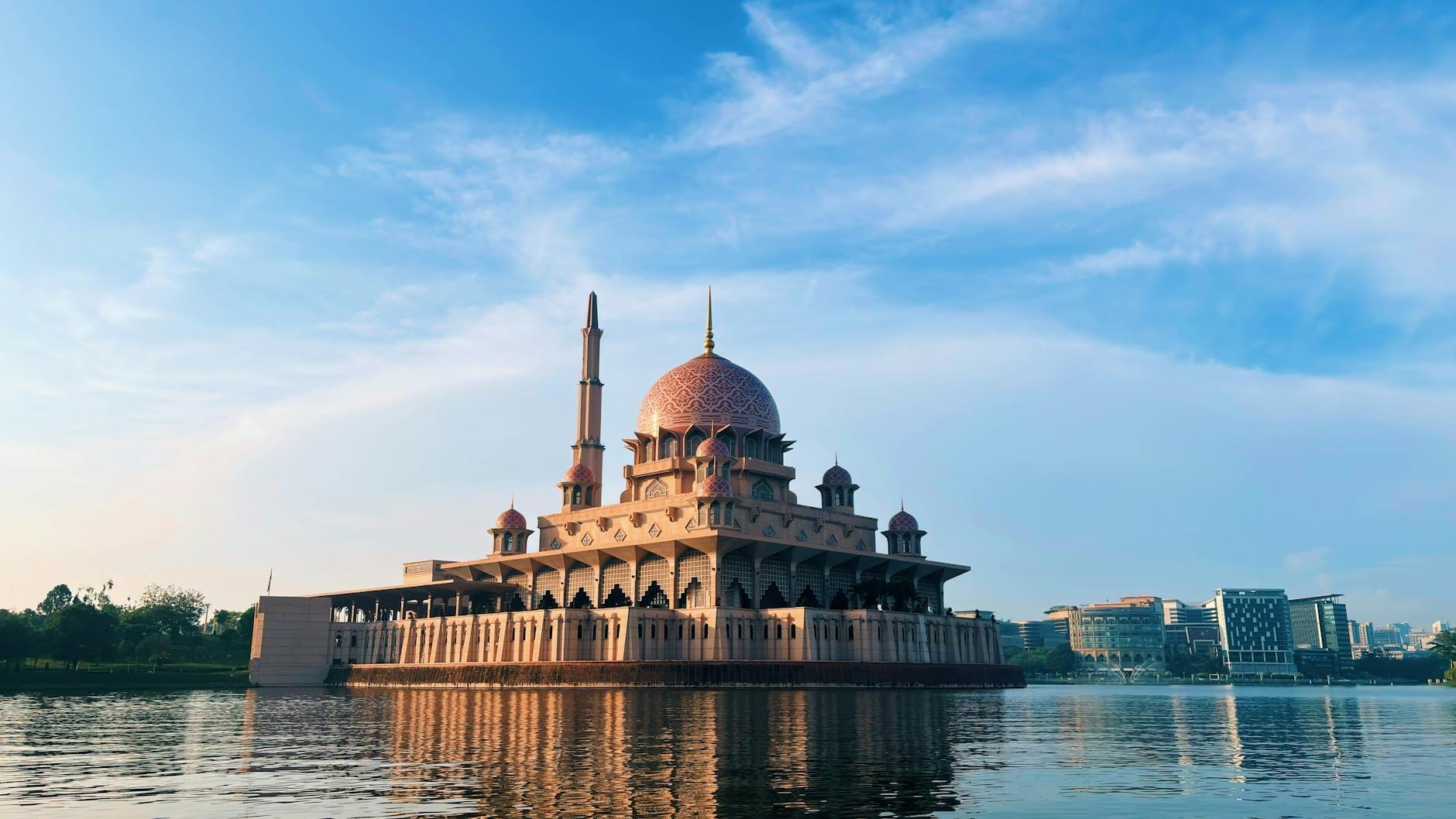
What Is Putrajaya Lake?
Putrajaya Lake is not a natural body of water. It was engineered in the late 1990s as the defining element of Putrajaya, Malaysia's purpose-built federal administrative capital. Covering approximately 650 hectares, the lake was formed by inundating the valleys of Sungai Chuau and Sungai Bisa and functions as a flood mitigation reservoir for the surrounding urban development. What distinguishes it from similar infrastructure projects is the deliberate ambition to make the water itself a destination, with government ministries, a grand mosque, and a series of ceremonial bridges arranged around its perimeter in a layout more reminiscent of a European capital plan than a tropical city.
The result is a place unlike anywhere else in Malaysia. On weekday mornings, the lake is almost eerily quiet, the water reflecting the dome of Putra Mosque and the colonnaded facade of Perdana Putra, the Prime Minister's office complex, with barely a ripple. On weekends, families arrive with bicycles, boat operators rev their engines at the jetties, and the atmosphere shifts considerably.
💡 Local tip
Arrive before 9am on a weekend for the calmest water reflections and minimal crowds. By 10am, boat traffic begins to chop up the surface and the main jetty areas fill with visitors.
The Bridges: A Walk-Through Architecture Catalogue
Putrajaya Lake's most immediately striking feature is its bridges. Multiple bridges cross the lake and its channels (the exact number of bridges is not specified in authoritative sources), each designed in a different architectural style meant to reference Malaysian and Islamic heritage while projecting a modern national identity. The Putra Bridge, the largest and most photographed, draws visual inspiration from the Khaju Bridge in Isfahan, Iran, with its multi-tiered arched stonework and pedestrian walkways. It connects the main administrative core to the Putra Boulevard on the southern side.
The Seri Wawasan Bridge takes the opposite approach: a cable-stayed structure with a leaning pylon that cuts a sharp geometric profile against the sky, particularly striking at dusk when the city's lights begin to reflect off the water. Walking across it at sunset, you get an unobstructed view back toward the Putra Mosque and the terraced government buildings climbing the hills above the north shore.
Most visitors only see the bridges by boat or from a distance. For a richer experience, walk across at least two of them on foot. The pedestrian lanes are wide and the views from mid-span, looking along the lake's axis, are considerably more dramatic than any photograph from the shore suggests.
The bridges form a natural route connecting the lake's major landmarks to Perdana Putra and the Putra Mosque to the north, both of which are worth combining into any lakeside visit.
Tickets & tours
Hand-picked options from our booking partner. Prices are indicative; availability and final rates are confirmed when you complete your booking.
Private day trip to Putrajaya, KL City, Batu Caves and fireflies tour
From 109 €Instant confirmationFree cancellationPrivate half-day Putrajaya tour
From 74 €Instant confirmationFree cancellationGrand Kuala Lumpur and Batu Caves with Putrajaya Combo tour
From 73 €Instant confirmationFree cancellationPetronas Twin Towers and Kuala Lumpur Tower observation deck tickets
From 34 €
On the Water: Boat Tours and What to Expect
Several jetties operate around the lake offering different boat tour options. The main departure point is Jambatan Putra Jetty on the northern shore, near the Putra Mosque. From here, operators run covered cruise boats that circuit the lake over 45 minutes to an hour, giving passengers views of the major landmarks from the water. The pace is slow and the commentary, when provided, is in Bahasa Malaysia, so international visitors may find the on-board narration of limited use. The visual experience, however, needs no translation.
Gondola-style rides and smaller water taxis also operate depending on the day and season, with more activity on weekends and public holidays. Pricing is set by individual operators and tends to fluctuate, so confirm rates before boarding. The boats are covered against sun and rain, which matters considerably in Putrajaya's open, shade-free waterfront environment.
⚠️ What to skip
The waterfront has very little natural shade. A midday visit in the Malaysian heat between 11am and 3pm is genuinely uncomfortable. Bring sun protection or plan your outdoor time for early morning or late afternoon.
Walking the Waterfront: What the Ground-Level Experience Delivers
The lakeside promenade runs in sections rather than as a continuous loop. The most rewarding stretch is the north shore walkway between the Putra Bridge and the area below the Putra Mosque, where the scale of the government architecture becomes physically apparent in a way it never is from photographs. The buildings are large, the spaces between them are large, and the water acts as a visual anchor that prevents the whole composition from feeling oppressive.
The south shore, accessible via the Putra Bridge, is quieter and less manicured. The Wetlands Park along the southwestern edge of the lake is worth exploring if you have extra time: it is a designated wetland conservation area with boardwalks through mangrove-adjacent vegetation, and in the early morning you will hear frogs and see egrets wading at the water's edge. The contrast with the marble-and-granite northern shore is considerable.
Those who want to continue exploring green spaces nearby will find that the Putrajaya Botanical Garden is a short drive from the lake's western end and makes a natural pairing for a full day in the federal capital.
Photography: When and Where to Shoot
Putrajaya Lake rewards photographers who plan around the light. The northern shore, with the Putra Mosque and Perdana Putra complex, faces roughly south, which means the facades are best lit in the late afternoon rather than morning. For golden-hour reflections with the mosque dome and Putra Bridge in frame, position yourself on the south side of the Putra Bridge approximately 90 minutes before sunset.
For the Seri Wawasan Bridge and the downtown skyline to the east, early morning provides better light. The cable-stayed pylon faces east, so it catches the first sun well before the rest of the waterfront wakes up. Blue-hour shots of the illuminated bridges, taken 20 to 30 minutes after sunset, are consistently the most dramatic images taken here, and the lack of crowds at that hour is an added benefit.
ℹ️ Good to know
Drone photography requires a permit in Putrajaya and is regulated by the Civil Aviation Authority of Malaysia (CAAM). Do not fly without checking current regulations and obtaining the appropriate authorization.
Smartphone photographers should note that the distances involved are considerable. The Putra Mosque from the opposite shore looks small on a standard phone camera. A camera with optical zoom or a wide-to-telephoto zoom lens will produce far more usable images of the architectural details.
Getting There and Getting Around
Putrajaya is not efficiently explored without some form of private or hired transport. The KLIA Transit (ERL) stops at Putrajaya & Cyberjaya station, but this station sits several kilometres from the lake itself. From the station, a Grab ride to the Putra Bridge area takes roughly 10 minutes.
Visitors combining the lake with a broader Putrajaya itinerary should read the day trip planning guide from Kuala Lumpur for transport logistics, as Putrajaya is commonly added to routes that include other federal territory attractions.
Bicycle rentals are available near the Dataran Putrajaya area on weekends, and cycling along the lakeside roads gives access to viewpoints that are impractical to reach on foot. The roads around the lake are wide, well-surfaced, and have designated cycling lanes in several sections, though motor vehicles share the space. The total circuit of the lake by bicycle is approximately 10 kilometres and takes around 45 minutes at a relaxed pace.
For visitors combining Putrajaya with a broader Kuala Lumpur trip, the guide to getting around Kuala Lumpur covers the ERL and how it connects the city center to the federal territory.
Honest Assessment: Who Will Love This, and Who Might Not
Putrajaya Lake delivers best for people who respond to scale, civic architecture, and planned urban landscapes. If your reference points are places like Canberra, Astana, or Brasília, you will find the comparison immediately legible and probably fascinating. If you have come to Malaysia for jungles, street food, and unscripted urban texture, this particular experience may feel sterile. The city is deliberately monumental and relatively empty by design, and those qualities provoke very different reactions depending on what you are looking for.
Families with children tend to enjoy the open spaces, the boat rides, and the general safety and cleanliness of the environment. The lack of clutter and crowd pressure is genuinely unusual by Southeast Asian urban standards.
Solo travellers visiting purely for Instagram-worthy images should note that many of the most circulated photos of Putrajaya require specific conditions, namely calm water, clear skies, and good light. All three align only occasionally. If you visit on an overcast day, the lake still looks impressive, but the reflections that make Putrajaya Lake photographs distinctive will not materialize.
Insider Tips
- The Putra Bridge is walkable in both directions but most visitors only cross it once. Walk to the midpoint, then turn around: the view back toward the mosque changes dramatically depending on the angle of light.
- The Wetlands Park on the lake's southwest corner has a boardwalk that is almost always empty on weekday mornings. Egrets, kingfishers, and monitor lizards are commonly spotted here in the early hours.
- Weekday visits are dramatically quieter than weekends. If your schedule allows, a Tuesday or Wednesday morning gives you the entire northern promenade largely to yourself.
- The McDonald's outlet near Dataran Putrajaya is one of the few affordable food options within easy walking distance of the main waterfront. Most other restaurants in the area cater to government workers on weekday lunch hours and may be closed on weekends.
- Bus Rapid Transit Putrajaya (BRT Sunway) does not serve Putrajaya Lake directly, but the Nadi Putra bus service operates routes around the city. Route 601 and others stop near the key landmarks; check the Prasarana website for current schedules before visiting.
Who Is Putrajaya Lake For?
- Architecture and urban design enthusiasts who appreciate large-scale planned city environments
- Photographers working in the early morning or late afternoon with interest in reflection shots and civic monuments
- Families looking for a clean, open, and low-stress outdoor environment with boat ride options
- Travellers pairing a half-day Putrajaya itinerary with Putra Mosque and the botanical gardens
- Anyone wanting a pronounced visual contrast to Kuala Lumpur's dense, layered city core
Nearby Attractions
Other things to see while in Putrajaya:
- Perdana Putra
Perdana Putra is the official office complex of Malaysia's Prime Minister, rising above Putrajaya Lake in a striking blend of Moorish, Islamic, and Malay architectural styles. While the interior is not open to the general public, the building's exterior and surrounding grounds draw visitors for its architectural drama, lakeside position, and symbolic role at the heart of Malaysia's purpose-built federal capital.
- Putra Mosque
Rising at the edge of Putrajaya Lake, Putra Mosque is Malaysia's most photographed place of worship. Its rose-tinted granite facade, Persian-influenced dome, and vast marble courtyard make it a striking architectural landmark — and an active, working mosque open to respectful visitors.
- Putrajaya Botanical Garden
Spanning 92 hectares at the heart of Malaysia's planned federal capital, Putrajaya Botanical Garden is the country's most ambitious horticultural project. With dozens of themed plant collections, lakeside walkways, and a climate that keeps things green year-round, it offers a genuinely different perspective on Putrajaya beyond its mosques and government towers.