Padise Abbey: The Fortified Monastery That Survived Seven Centuries
Padise Abbey is a partly ruined medieval fortified monastery in the former Livonian territories. Founded by Cistercian monks in the early 14th century, this complex of stone towers, vaulted corridors, and roofless halls sits about 50–55 km southwest of Tallinn, offering a rare encounter with medieval monastic architecture in a remarkably atmospheric state.
Quick Facts
- Location
- Kloostri, Padise village, Lääne-Harju municipality, Harju County, Estonia
- Getting There
- By car from Tallinn: approx. 50–55 km southwest via roads toward Paldiski/Haapsalu. There is public transport to Padise village, but no direct stop at the monastery itself; a car or organized tour remains the most practical option.
- Time Needed
- 1.5 to 3 hours on site
- Cost
- Adult: €10 | Concession: €7 | Family (2 adults + children under 18): €22 | Groups of 12+: 10% discount
- Best for
- Medieval history enthusiasts, photographers, day-trippers from Tallinn
- Official website
- padise.ee/en
What Padise Abbey Actually Is
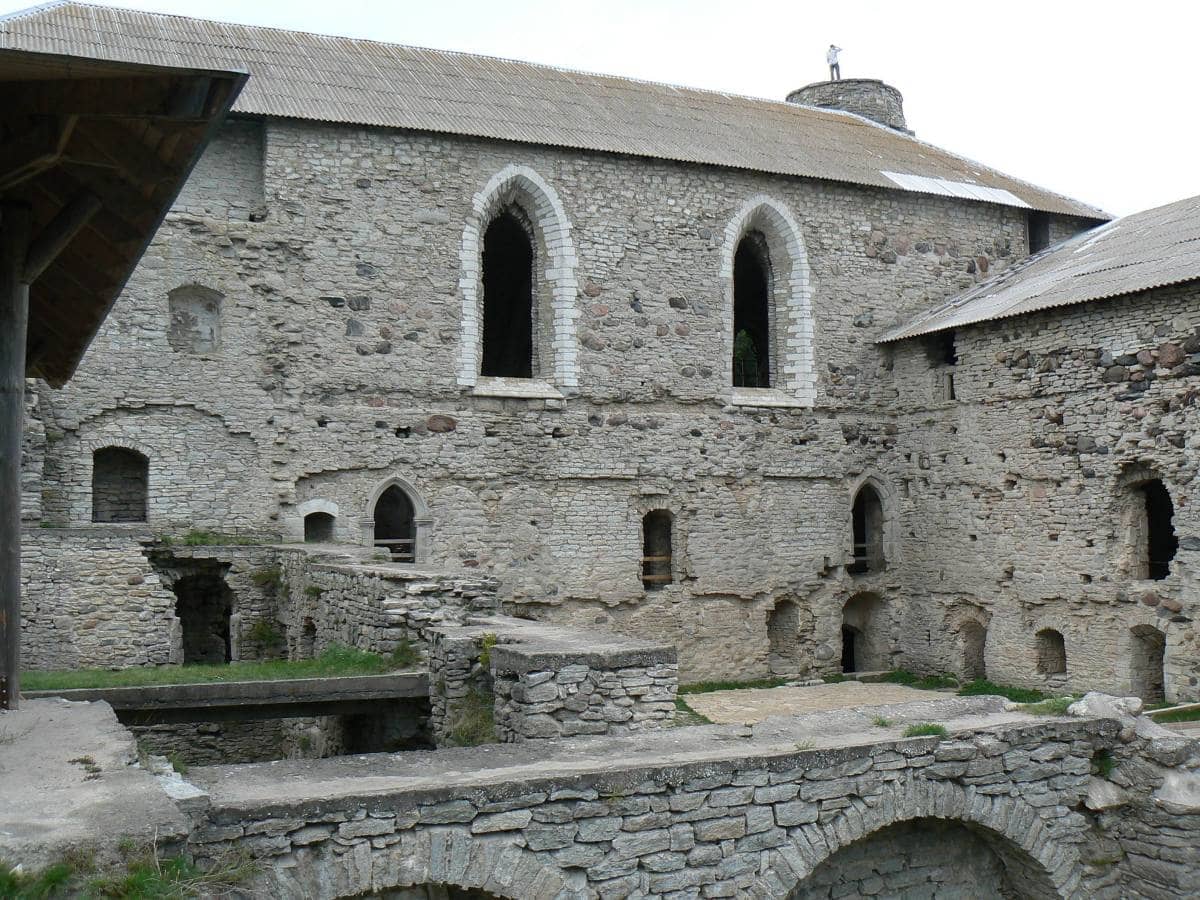
Padise Abbey is a former Cistercian monastery in northern Estonia, dating to the early 14th century and considered one of the most significant surviving examples of medieval fortified monastic architecture in the region once known as Livonia. Unlike many European monastery ruins that have been fully restored or absorbed into later buildings, Padise occupies a middle ground: enough remains standing to convey the original scale and ambition of the complex, while the roofless halls, eroded stonework, and moss-covered towers give it the unmistakable quality of genuine age.
A chapel stood on the site by the late 13th century (documented in 1281), and Cistercian monks from Dünamünde Abbey settled here in 1310. Over the following two centuries, the community built the stone structures that still define the site today: a church, a cloister, a chapter house, and defensive walls that were reinforced as the political climate of the Baltic region grew increasingly volatile. The abbey was dissolved in the mid-16th century during the Livonian War, subsequently converted into a manor, and suffered significant damage over the centuries. What visitors explore today is a carefully managed ruin, with some sections restored and interpreted for visitors.
ℹ️ Good to know
Opening hours are seasonal: May 1 to September 30, Tuesday to Sunday 11:00–18:00. October 1 to April 30, Friday to Sunday 11:00–16:00. The site is closed on Mondays year-round. Verify hours via the official Padise Monastery information before your visit.
The Experience: Walking Through the Complex
Arriving at Padise, the first impression is one of unexpected solidity. The walls are thick, the towers taller than you might anticipate, and the overall footprint of the complex is larger than typical countryside ruin sites in Estonia. The stone is a pale grey-brown limestone, quarried locally, and it takes on different tones depending on the light: warm amber in late afternoon sun, grey and slightly forbidding under overcast skies.
The entrance leads into a courtyard that once formed the heart of the monastic community. From here, the layout becomes legible: the church to one side, the cloister walk running around the central garth, and the remains of utility buildings flanking the outer walls. Interpretive signage is available in Estonian and English, which helps orient visitors unfamiliar with Cistercian architectural conventions. The chapter house, where monks gathered daily for readings and community decisions, retains some of its vaulted ceiling, making it one of the most visually compelling interior spaces on site.
The towers can be climbed at certain access points, offering elevated views across the surrounding fields and tree lines. These vantage points also make clear how the defensive additions changed the character of what began as a purely religious structure. By the late medieval period, this was as much a fortified stronghold as a place of contemplation.
💡 Local tip
Wear sturdy, closed-toe shoes. The site has uneven stone floors, steps without handrails, and sections where the ground surface is unpredictable. Sandals or casual footwear will limit where you can explore safely.
Tickets & tours
Hand-picked options from our booking partner. Prices are indicative; availability and final rates are confirmed when you complete your booking.
Self-guided Discovery Walk of Tallinn city contrasts beyond the medieval walls
From 26 €Instant confirmationFree cancellationTallinn's art and culture tour with a local
From 62 €Instant confirmationFree cancellationHistorical walking tour of Tallinn with a local
From 599 €Instant confirmationFree cancellationIntroductory walking tour of Tallinn with a local guide
From 109 €Instant confirmationFree cancellation
How the Experience Changes by Time of Day and Season
Morning visits, shortly after opening, offer the site almost entirely to yourself. The quality of morning light in Estonia, particularly from late spring through summer, is exceptionally clear, and the low angle of sunlight picks out the texture of the stonework in ways that midday light flattens. If you are visiting primarily for photography, arriving at 11:00 when the gates open gives you the best combination of good light and minimal crowds.
Midday in summer can bring coachloads of visitors, though Padise never feels overwhelmed the way Tallinn's Old Town can. The site is large enough that groups disperse fairly quickly, and there are quieter corners in the outer sections of the complex. In autumn, the surrounding deciduous trees turn, and the warm colours against the pale stone make for a noticeably different aesthetic experience compared to summer visits.
Winter visits (Friday to Sunday only, 11:00–16:00) are a different proposition entirely. Snow on the ruins is genuinely striking, and the shorter opening window means you have to plan carefully. The cold also makes the exposed sections of the complex uncomfortable without proper layering. That said, the winter atmosphere is evocative in a way that the summer version is not, and visitor numbers drop sharply, so you may have large portions of the site completely to yourself.
Historical Context: Cistercians, Livonia, and the End of the Abbey
The Cistercian order was known across medieval Europe for building in remote locations, prioritising agricultural self-sufficiency, and maintaining a deliberately austere architectural style. Padise fits this pattern: it sits in a rural setting, the original church interiors would have been plain by the standards of Gothic ecclesiastical architecture elsewhere in Europe, and the community was designed to function as an independent economic unit.
What distinguishes Padise from many Cistercian sites is the degree to which military necessity shaped its later development. The Baltic region in the 14th and 15th centuries was a contested zone, and the monastery added defensive features, including towers and reinforced outer walls, that are not typical of Cistercian foundations further west in Europe. This dual identity, religious community and defensible stronghold, makes Padise architecturally unusual and historically interesting beyond its age alone.
The Livonian War of the mid-16th century effectively ended monastic life at Padise. The complex passed through various secular hands, was used as a manor, and gradually fell into disrepair over the following centuries. Visitors with an interest in how the Reformation and regional warfare transformed the Baltic landscape will find Padise a useful counterpoint to the better-known ecclesiastical sites in Tallinn itself. For broader context on this period, the Tallinn medieval history guide covers the political and religious transitions that shaped the region.
Getting There: Planning the Journey from Tallinn
Padise is not reachable by direct public transit to the monastery gates from Tallinn in any practical sense. The site sits approximately 50–55 km southwest of the city, near the village of Padise in Lääne-Harju municipality. Driving is the most reliable option: the journey takes roughly 45 to 60 minutes depending on the route and traffic, following roads in the direction of Paldiski or Haapsalu. A GPS or navigation app is advisable, as the final approach through the village is not always clearly signed from main roads.
Some visitors combine Padise with Rummu Quarry, which lies approximately 4.2 km away and offers a completely different kind of landscape experience. This pairing makes for an efficient day trip from Tallinn, covering very different periods of Estonian history in a single excursion.
If you prefer not to drive, organized day tours from Tallinn occasionally include Padise as part of a wider western Estonia itinerary. Check current offerings from tour operators in the city. For general orientation on moving around the region, the guide to getting around Tallinn has useful context on car rental and transport options.
⚠️ What to skip
There is no public transport that stops directly at the monastery gates. Do not rely on taxis from Tallinn unless you have arranged a return pickup in advance. The village of Padise has no taxi rank or ride-hailing availability.
Practical Notes: Accessibility, Photography, and What to Bring
The site is a genuine medieval ruin and is not fully accessible to visitors with mobility limitations. Uneven stone floors, narrow doorways, steps without rails, and open-air sections with loose gravel mean that wheelchair users and visitors with significant mobility challenges will find large portions of the complex inaccessible. The monastery requests that visitors with specific accessibility needs contact them directly before arriving (info@padise.ee) so that staff can advise on what is currently navigable.
Photography at Padise is excellent and unrestricted in the public areas. The combination of ruined stone interiors, dramatic sky visibility through roofless sections, and the exterior tower silhouettes gives photographers a range of compositional options. A wide-angle lens is useful for capturing the scale of the church interior, while a longer focal length picks out stone details on the tower facades. Early morning and late afternoon light are both effective; midday sun in summer creates harsh shadows in the enclosed courtyard spaces.
There is limited food and drink infrastructure at the site itself. Bring water and any snacks you need, particularly if combining the visit with Rummu Quarry. Padise works well as a standalone day trip from Tallinn or as part of a longer itinerary exploring day trips from the capital. The day trips from Tallinn guide covers other destinations in the region worth pairing with a visit here.
Who Will Get the Most Out of Padise, and Who Might Not
Padise rewards visitors who arrive with some curiosity about medieval European history, monastic architecture, or the specific historical trajectory of the Baltic region. You do not need to be a specialist, but a basic interest in what you are looking at makes the experience considerably richer. The interpretive signage is helpful but not exhaustive, so visitors who like to read about a site before arriving will find the on-site experience more meaningful.
Families with children who enjoy exploring large open outdoor spaces will find Padise genuinely engaging: there is room to walk around, towers to look up at, and enough spatial complexity to hold attention. It pairs well with active outdoor activities nearby. For families planning a Tallinn trip more broadly, the Tallinn with kids guide has practical suggestions for structuring days that balance historical sites with more active options.
Visitors primarily interested in polished museum experiences, extensive multilingual audio guides, or fully restored interiors may find Padise underwhelming. It is a working ruin, not a reconstruction, and the level of interpretation is proportionate to the site's scale and funding. Anyone expecting the kind of experience offered by major Western European abbey restorations should calibrate their expectations accordingly. The value here is authenticity and atmosphere, not comprehensive presentation.
Insider Tips
- Arrive at 11:00 on a weekday morning in summer for the combination of good light, minimal crowds, and full access before any group tours arrive.
- The chapter house retains the most intact vaulted ceiling of any interior space on site. Spend extra time here and look for the carved stonework at the column capitals, easily missed if you move through quickly.
- Padise and Rummu Quarry are approximately 4 km apart. Combining both in a single day trip from Tallinn gives you a full day with two very different but equally interesting sites, with no significant extra driving.
- The surrounding fields and tree line visible from the towers change dramatically in late September and October when the foliage turns. Autumn is arguably the most photogenic season, yet visitor numbers are well below summer levels.
- If you visit in the off-season (October to April), the Friday to Sunday opening hours are fixed for general visitors. The site does not usually make exceptions for groups or individuals who turn up on other days without a prior arrangement.
Who Is Padise Abbey For?
- Travellers with a genuine interest in medieval European monastic history and architecture
- Photographers looking for atmospheric, textured stone ruin subjects with open-sky interior spaces
- Day-trippers from Tallinn wanting to combine history with a short countryside drive
- Families with older children who can handle uneven terrain and enjoy exploring open historic sites
- Anyone combining the visit with Rummu Quarry for a varied full-day excursion west of Tallinn
Nearby Attractions
Combine your visit with:
- Aegna Island
Aegna Island sits 14 km off the Tallinn coast in the Bay of Tallinn, reachable in about 30 minutes by boat. The entire island is a protected landscape conservation area, covered in dense forest, glacial boulders, and coastal meadows. Entry to the island is free, making it one of the most rewarding half-day escapes from the city.
- Estonian Open Air Museum
Spread across 72 hectares of coastal forest in Tallinn's Haabersti district, the Estonian Open Air Museum (Eesti Vabaõhumuuseum) reconstructs rural and fishing life from the 18th and 19th centuries. Twelve farmyards, a working tavern, a church, mills, a schoolhouse, a fire station, and net sheds make this Estonia's largest and most immersive open-air history experience.
- Glehn Park
Glehn Park is a free, forested public park in Tallinn's suburban Nõmme district, built around a 19th-century castle by the eccentric Baron Nikolai von Glehn. With natural woodland trails, stone carvings, and a refreshing distance from the Old Town crowds, it rewards visitors who want something genuinely different from the medieval core.
- Jägala Waterfall
Standing 8 metres tall and stretching over 50 metres wide, Jägala Waterfall is Estonia's largest natural waterfall. Located just 25 kilometres east of Tallinn on the Jägala River, it is free to visit year-round and rewards visitors differently in every season, from frozen curtains of ice in winter to a thundering torrent in spring snowmelt.