Orange County Regional History Center: Orlando's Best History Museum, Explained
Housed in a beautifully preserved historic courthouse in the heart of downtown Orlando, the Orange County Regional History Center takes visitors from prehistoric Central Florida through the theme park era and beyond. At $10 for adults, it is one of downtown's most substantive and underrated cultural stops.
Quick Facts
- Location
- 65 E. Central Blvd., Downtown Orlando, FL 32801 (corner of Magnolia Ave. & Central Blvd.)
- Getting There
- Walkable from SunRail's Church Street Station (about a 7-minute, 0.3-mile walk); LYNX buses serve downtown Orlando
- Time Needed
- 1.5 to 2.5 hours for a thorough visit
- Cost
- Adults $10 | Seniors (55+) $8 | Students & Military $7 | Children 5–12 $6 | Under 5 free | Members free
- Best for
- History enthusiasts, families with older kids, travelers seeking an air-conditioned cultural break
- Official website
- www.thehistorycenter.org
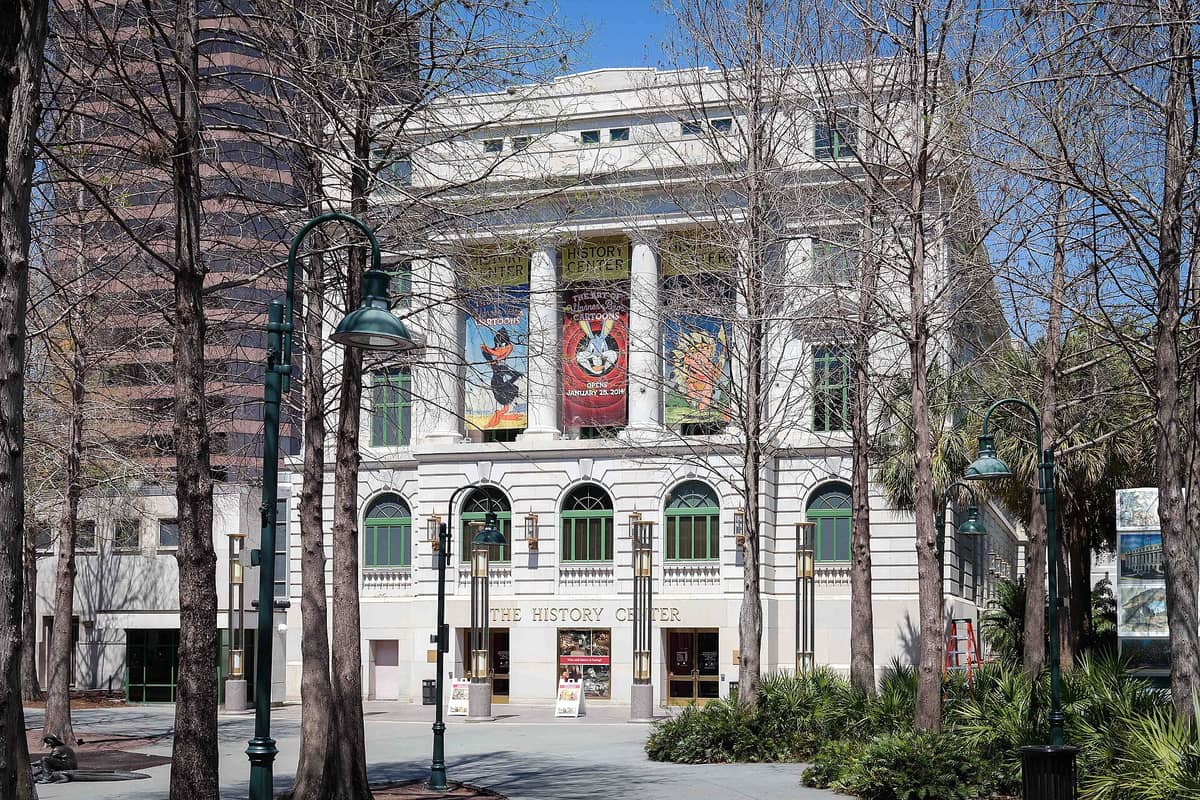
What Is the Orange County Regional History Center?
The Orange County Regional History Center is the primary history museum for Central Florida, located at 65 E. Central Blvd. in downtown Orlando. It sits inside the county's former courthouse, a handsome early-20th-century civic building that still carries the weight of the legal proceedings once held within its walls. The contrast between the formal architecture and the engaging, story-driven exhibits inside is part of what makes this place work.
The museum covers roughly 14,000+ years of human presence in Central Florida, from the Indigenous Timucua and their predecessors through Spanish colonial contact, the cattle-ranching economy, the citrus boom, and eventually the seismic transformation brought by Walt Disney World's arrival in the early 1970s. That arc, told across four floors, is genuinely compelling for anyone who has wondered what this flat, lake-dotted landscape looked like before the highways and resort corridors arrived.
💡 Local tip
Hours: Monday–Saturday 10:00 a.m.–5:00 p.m., Sunday noon–5:00 p.m. Arrive by 3:00 p.m. at the latest if you want to move through the exhibits without feeling rushed before closing.
The Building Itself: A Historic Courthouse Worth Noticing
Before you step inside, take a moment with the exterior. The building is a fine example of early Florida civic architecture, with classical proportions that stand in deliberate contrast to the glass towers and parking structures surrounding it. The entrance area retains original details that signal this was once a place of serious public business.
Inside, the courthouse bones are still legible: high ceilings, wide hallways, and a spatial logic that feels different from purpose-built museum interiors. The elevators serve every floor, making the building fully accessible for visitors with mobility needs. Two handicapped parking spaces are available on the north side of the building on E. Washington Street.
Tickets & tours
Hand-picked options from our booking partner. Prices are indicative; availability and final rates are confirmed when you complete your booking.
Kennedy Space Center Admission + Chat with Astronaut
From 112 €Instant confirmationKennedy Space Center Adults at Kids Rates entry including add-on products
From 0 €Instant confirmationKennedy Space Center day trip with express transportation
From 149 €Instant confirmationFree cancellationChat with an Astronaut and Kennedy Space Center Tour from Orlando
From 200 €Free cancellation
What You'll Actually See: The Exhibits Floor by Floor
The permanent collection moves roughly chronologically. Lower floors address prehistoric Florida: the fauna that roamed this subtropical landscape thousands of years ago, the Indigenous peoples who built communities around Central Florida's chain of lakes, and the Spanish colonial period that followed European contact. The artifacts here are genuine, and the interpretive panels are written for adults without being inaccessible to curious teenagers.
Upper floors shift to the 19th and 20th centuries, covering the cattle economy that made Orlando a regional center long before tourism, the citrus industry that shaped the county's identity for generations, and the dramatic postwar growth that preceded Disney's arrival. The exhibit on how Walt Disney World reshaped not just the local economy but the physical geography of Central Florida is one of the more thoughtful treatments you will find anywhere on that subject.
Rotating temporary exhibitions also occupy dedicated gallery space and vary throughout the year. If your trip coincides with one, check the museum's website in advance. For context on what broader Orlando offers culturally, the Orlando Museum of Art is nearby and pairs well with a downtown afternoon.
How the Experience Changes by Time of Day
Morning visits, especially on weekdays, tend to be quiet. The light inside the old courthouse is softer in the earlier hours, and you can move through galleries at your own pace without contending with school groups or weekend crowds. If you have children in tow and prefer space to linger over interactive elements, a Tuesday or Wednesday morning is close to ideal.
Weekend afternoons bring more foot traffic, particularly families and couples pairing the museum with lunch in downtown Orlando. The energy is still measured, nothing like a theme park, but you may find certain interactive stations occupied and gallery space slightly tighter near the more popular exhibits. Sunday afternoons, with the later noon opening, tend to draw a more local crowd than Saturday.
ℹ️ Good to know
The museum is air-conditioned throughout, making it a genuinely practical option on Orlando's hottest summer days, when outdoor sightseeing can become uncomfortable by mid-morning.
Getting There and Navigating Downtown Orlando
The museum's location at the corner of Magnolia Avenue and Central Boulevard puts it squarely in the civic core of downtown Orlando. SunRail's Church Street Station is the closest commuter rail stop, roughly a 10-minute walk south along Orange Avenue. LYNX bus routes serve the downtown corridor if you are coming from further afield.
If you are driving, street parking and parking garages are available in the surrounding blocks, though availability tightens on weekday lunchtimes when office workers are circulating. The north-side accessible parking on E. Washington Street is the most convenient option for visitors with mobility considerations.
For broader orientation on moving around Orlando without a car, the getting around Orlando guide covers LYNX, SunRail, and rideshare options in practical detail.
Practical Walkthrough: What to Bring and How to Plan
Comfortable shoes matter more here than many indoor attractions because you will cover four floors of gallery space. There is no dress code, and the climate-controlled interior means you can dress for the Florida heat outside without worrying about being cold indoors, though a light layer is never a bad idea in heavily air-conditioned Florida buildings.
Photography is generally permitted in the permanent galleries for personal use, though flash and tripods may be restricted. Check at the front desk if you are planning to photograph specific exhibits. The museum does not have a large in-house cafe, so plan lunch before or after at one of the restaurants within a few blocks on Orange Avenue or along Church Street.
- Allow 1.5 to 2.5 hours for a thorough visit to the permanent collection
- Add 30–45 minutes if a temporary exhibition is running
- Tickets can be purchased online in advance via the official site
- Members of partner institutions may qualify for reciprocal admission discounts; check with the front desk
- The building has accessible restrooms and elevators on every floor
Honest Assessment: Is It Worth Your Time?
For visitors whose entire Orlando trip is built around theme parks, the History Center may feel like a detour. It does not deliver spectacle or rides. What it delivers is context: a clear, well-curated account of how this particular place came to be. If you are spending more than two or three days in the city, or if you are curious about Florida beyond the resort corridor, it earns its place on the itinerary. Pair it with a walk to Lake Eola Park a few blocks east for a complete downtown afternoon.
Travelers interested in the cultural depth of the region should also consider the Wells Built Museum, which tells the story of Orlando's African American community and the segregation-era history that mainstream narratives often leave out. Together, they form a more complete picture of what this city has been.
The $10 adult admission is fair for the quality and quantity of material covered. It is not a prestige blockbuster institution, and the building's scale means it will not fill a full day. But it is honest, well-maintained, and far more interesting than its modest reputation suggests.
⚠️ What to skip
If you are visiting primarily for the architecture of the historic courthouse building, note that the original interiors have been substantially modified to accommodate museum use. The exterior is more evocative than the interior structure.
Who Will Not Enjoy This Visit
Visitors looking for immersive, high-production-value experiences along the lines of major theme park attractions will find the History Center straightforward by comparison. Young children under about seven may find the text-heavy galleries slow going, though the tactile elements and larger display objects tend to hold attention in shorter bursts. If your Orlando itinerary is tightly focused on resort entertainment, this is an easy skip without regret.
For families specifically focused on interactive and spectacle-driven experiences, the Orlando Science Center a short drive north offers more hands-on engagement for younger visitors.
Insider Tips
- Check the museum's events calendar before visiting. The History Center regularly hosts lectures, family programming, and special exhibition openings that can significantly enrich a standard admission visit.
- The fourth floor often has the best natural light and the least foot traffic. If you want quieter gallery space for reading interpretive panels in depth, work your way up before the midday crowd arrives.
- Orange County residents may qualify for discounted or free admission on specific community days. If you are a local or visiting a local, it is worth checking the official site for current offers.
- The museum's research library and archive, accessible by appointment, holds extensive records on Central Florida history including photographs and documents not on display in the public galleries. Contact the museum directly if you have specific research needs.
- Parking in the adjacent courthouse-area garages tends to be cheaper and easier to find than the street meters immediately surrounding the museum. Walk two blocks in either direction if the closest spots are taken.
Who Is Orange County Regional History Center For?
- History and culture travelers who want genuine context about Florida beyond the theme park narrative
- Families with children aged 8 and older who can engage with interpretive exhibits
- Visitors on a budget seeking a substantive downtown attraction at low cost
- Travelers looking for an air-conditioned, walkable cultural stop during Orlando's hot summer months
- Anyone spending multiple days in downtown Orlando who wants to understand the city they are walking through
Nearby Attractions
Other things to see while in Downtown Orlando:
- Church Street Station
Church Street Station is a National Register-listed railroad depot turned entertainment district in the heart of downtown Orlando. Built in 1889, the complex anchors a walkable strip of bars, restaurants, and event venues that draws both locals and visitors looking for a night out beyond the theme park corridor.
- Harry P. Leu Gardens
Harry P. Leu Gardens is a 50-acre botanical garden owned by the City of Orlando, set beside Lake Rowena near the Audubon Park neighborhood. With one of the largest rose gardens in the Southeast, a historic 1888 house museum, and miles of accessible paved paths through semi-tropical landscape, it offers a genuinely unhurried counterpoint to Orlando's theme park circuit.
- Lake Eola Park
Lake Eola Park sits at the heart of downtown Orlando, wrapping a scenic lake with paved walking paths, swan boats, a landmark fountain, and regular community events. Admission is free, the pace is relaxed, and the setting offers a rare glimpse of Orlando beyond the theme parks.
- Mennello Museum of American Art
Tucked inside Loch Haven Cultural Park on the edge of Lake Formosa, the Mennello Museum of American Art offers one of Orlando's most focused and rewarding cultural experiences. It centers on an extraordinary permanent collection of works by folk artist Earl Cunningham, surrounded by rotating exhibitions and a lakeside setting that rewards a slow, unhurried visit.