Church Street Station: Downtown Orlando's Historic Heart
Church Street Station is a National Register-listed railroad depot turned entertainment district in the heart of downtown Orlando. Built in 1889, the complex anchors a walkable strip of bars, restaurants, and event venues that draws both locals and visitors looking for a night out beyond the theme park corridor.
Quick Facts
- Location
- West Church Street, Downtown Orlando, FL (between 76–135 W Church St)
- Getting There
- SunRail Church Street Station (99 W South St); LYMMO Orange Line (Route 60) and Grapefruit Line (Route 62)
- Time Needed
- 1–4 hours depending on dining and nightlife plans
- Cost
- Free to walk the district; individual venues charge separately in USD
- Best for
- History fans, nightlife seekers, couples, architecture lovers
- Official website
- www.orlando.gov
What Is Church Street Station?
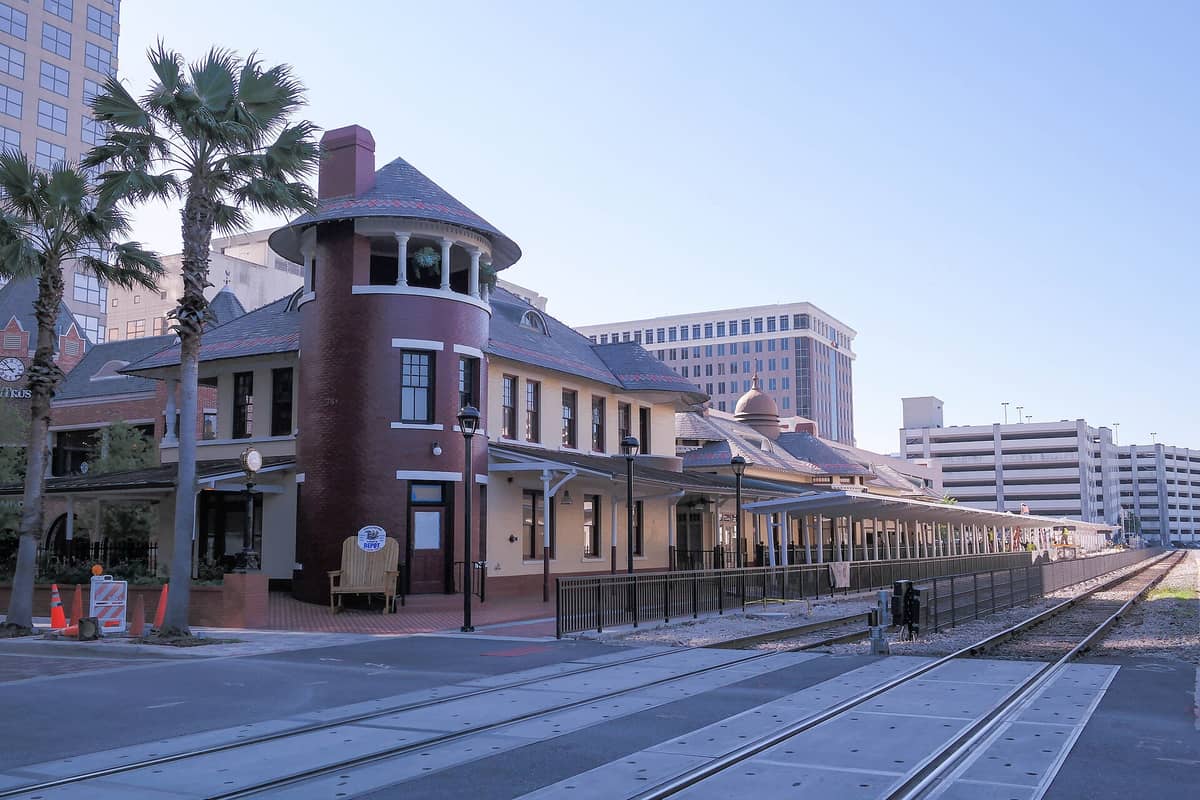
Church Street Station is one of downtown Orlando's most recognizable landmarks: a 19th-century railroad depot that has been repurposed into a walkable entertainment district with bars, restaurants, and event spaces. The original brick building, constructed in 1889 by the South Florida Railroad, still anchors the block, giving the area a sense of architectural permanence that is rare in a city built largely around mid-century sprawl.
Unlike a ticketed attraction with turnstiles and a set itinerary, Church Street Station is essentially a public urban district. You walk in, look around, choose a venue, and stay as long as you like. There is no admission fee to access the street or admire the depot building itself. What you spend depends entirely on where you eat and drink.
ℹ️ Good to know
The district generally operates daily from around 09:00 to 02:00, but hours vary by individual venue. Confirm with specific bars and restaurants before visiting, especially on weekdays or public holidays.
A Brief History Worth Knowing
The original depot replaced an even earlier 1880 wooden station and served as Orlando's central rail hub until 1926. By 1926, passenger traffic had shifted to what is now the Orlando Health Amtrak station, and the old depot fell into decline. The building sat underused for decades before entrepreneur Bob Snow purchased it and the surrounding properties in 1972 with an ambitious plan: transform the vacant rail complex into a destination entertainment venue.
Snow's redevelopment worked. By the mid-1980s, the complex was reportedly the fourth-largest tourist attraction in Florida, drawing visitors who wanted something distinctly local in a city increasingly defined by theme parks. In 1976, the depot was added to the U.S. National Register of Historic Places, a designation that protects the building's exterior character. The complex was reopened in its current form in the 1980s, and in 2014, SunRail opened a commuter rail platform directly beside the historic structure, completing a transit loop that Snow could not have imagined in 1972.
For context on how Church Street fits into the broader downtown picture, the Orange County Regional History Center is just a few blocks away and covers Orlando's development from frontier settlement to modern city, including the railroad era that gave Church Street its original purpose.
Tickets & tours
Hand-picked options from our booking partner. Prices are indicative; availability and final rates are confirmed when you complete your booking.
Pirates Cove Adventure Mini Golf
From 18 €Instant confirmationFree cancellationWild Florida 1-hour airbot adventure with transportation
From 107 €Instant confirmationFree cancellationKids Eat Free Card Orlando
From 28 €Instant confirmationFree cancellationManatees swimming and snorkelling experience by boat from Orlando
From 85 €Instant confirmationFree cancellation
What the Building Actually Looks Like
The depot is a low, wide brick structure with arched windows and the kind of solid, unpretentious construction typical of late-Victorian railroad architecture in the American South. It was built to be functional first, dignified second. The brickwork has aged into a warm orange-red that catches afternoon light particularly well, making it a reasonable subject for photography between roughly 3:00 PM and sunset when the facade is in direct sun.
The surrounding block mixes the historic depot with more modern commercial storefronts, so the district feels like an evolving urban neighborhood rather than a preserved museum piece. Not every building is architecturally significant. If you are visiting primarily for historic architecture, keep your attention on the depot itself rather than expecting the whole block to feel period-authentic.
How the Atmosphere Changes by Time of Day
Church Street in the morning is calm, almost quiet. Commuters pass through to catch SunRail trains, and a handful of coffee spots serve the pre-work crowd. The building's exterior is easy to photograph without other tourists in the frame, and the surrounding streets feel like a regular downtown neighborhood rather than a tourist zone.
By early afternoon, the lunch crowd from nearby office buildings fills the restaurants. The energy is working-city rather than tourist-destination. If you want to understand how downtown Orlando actually functions as a place where people live and work, a weekday afternoon here is instructive.
The district changes considerably after dark, particularly Thursday through Saturday. Bar patrons move between venues, cover bands and DJs start later in the evening, and the streets take on the low-level energy of any urban nightlife strip. It is not Miami or Nashville in terms of intensity, but it is the most concentrated nightlife block in downtown Orlando. Expect noise, crowds near venue entrances, and slower street parking availability after 9:00 PM.
💡 Local tip
For the best combination of atmosphere and manageability, aim for 6:00–8:00 PM on a Thursday or Friday. Restaurants are full but not overwhelmed, the bars are warming up rather than packed, and the depot building is lit attractively against the evening sky.
Getting There and Getting Around
SunRail is the most convenient option from other parts of the metro area. The Church Street SunRail station sits at 99 West South St., a short walk from the depot and the surrounding venues. Northbound and southbound platforms are on opposite sides of South Street with a marked pedestrian crosswalk. SunRail does not run late into the night, so check the schedule if you are planning an evening visit: you may need a rideshare to return.
Within downtown, the LYMMO circulator buses, specifically the Orange Line (Route 60) and Grapefruit Line (Route 62), are free to ride and connect Church Street to other downtown blocks including the arena district and the courthouse area. If you are staying on International Drive or near the theme park corridor, a rideshare is the most practical option. Street parking exists around Church Street and Orange Avenue, but weekend evenings fill up quickly. The Church Street FAQ at churchstreet.com lists nearby parking garages.
For a fuller picture of getting around the city, the getting around Orlando guide covers SunRail, LYNX buses, rideshare logistics, and driving tips across the metro area.
Accessibility
The SunRail platform at Church Street is accessible, with crosswalks connecting both sides of South Street. Downtown sidewalks around the district are paved and generally step-free at street level. Individual venues vary: the historic depot building has some structural limitations typical of 19th-century construction, so if specific accessibility requirements matter to your visit, it is worth calling ahead to whichever restaurant or bar you plan to spend time in.
Is Church Street Station Worth Your Time?
Honestly, Church Street Station is not a destination on the scale of Orlando's major theme parks, and it should not be evaluated as one. It is a neighborhood district with a genuinely interesting historic building at its center. For travelers who want a few hours in a real urban environment, a decent dinner, and a drink or two in a setting that is not a hotel lobby or a theme park plaza, it delivers that reliably.
It can feel underwhelming if you arrive expecting the scale and entertainment density of what the original 1980s complex apparently offered. The current incarnation is smaller in scope. Think of it as a pleasant downtown block with history attached, rather than a grand entertainment complex.
Travelers looking for more of a daytime cultural circuit in downtown Orlando might pair Church Street with a visit to the Lake Eola Park to the east, or walk north to the Orlando Museum of Art for a fuller day in the city center.
If your primary interest is downtown Orlando's nightlife and bar scene, the Wall Street Plaza is another concentrated nightlife block nearby and gives a sense of how downtown's evening options compare.
⚠️ What to skip
Travelers visiting solely for architecture or history may find the experience brief. The historic depot building is not a museum with interior exhibits open to the public. Exterior appreciation takes about 20–30 minutes.
Insider Tips
- SunRail does not run past the early evening on weekdays and has limited Saturday service. Check the current schedule at sunrail.com before planning your return trip — rideshares are often faster and more reliable for a late-night exit.
- The depot facade photographs best in the late afternoon when the brick picks up warm directional light. By contrast, the evening ambient lighting around the venues makes for better atmospheric shots after 8:00 PM.
- Weekday lunch hours, roughly 11:30 AM to 1:30 PM, bring the best restaurant value deals as spots compete for the downtown office crowd. You will pay noticeably more for the same food on a Friday evening.
- The LYMMO circulator buses that serve Church Street are completely free. If you are staying elsewhere in downtown and want to cover more ground without paying for a rideshare or hunting for parking, use them to loop between Church Street, the arena, and other downtown stops.
- The National Register of Historic Places designation covers the exterior of the depot building, not the interior commercial spaces. The history is real, but the interior of any given bar or restaurant has been renovated for modern use and does not preserve 19th-century character.
Who Is Church Street Station For?
- Travelers who want a few hours in a genuine urban downtown rather than a theme park environment
- Couples looking for a dinner-and-drinks evening with some historical context
- History and architecture enthusiasts curious about Orlando's pre-Disney railroad past
- Day-trippers arriving by SunRail from other parts of the metro area
- Visitors building a full downtown Orlando day alongside nearby cultural sites
Nearby Attractions
Other things to see while in Downtown Orlando:
- Harry P. Leu Gardens
Harry P. Leu Gardens is a 50-acre botanical garden owned by the City of Orlando, set beside Lake Rowena near the Audubon Park neighborhood. With one of the largest rose gardens in the Southeast, a historic 1888 house museum, and miles of accessible paved paths through semi-tropical landscape, it offers a genuinely unhurried counterpoint to Orlando's theme park circuit.
- Lake Eola Park
Lake Eola Park sits at the heart of downtown Orlando, wrapping a scenic lake with paved walking paths, swan boats, a landmark fountain, and regular community events. Admission is free, the pace is relaxed, and the setting offers a rare glimpse of Orlando beyond the theme parks.
- Mennello Museum of American Art
Tucked inside Loch Haven Cultural Park on the edge of Lake Formosa, the Mennello Museum of American Art offers one of Orlando's most focused and rewarding cultural experiences. It centers on an extraordinary permanent collection of works by folk artist Earl Cunningham, surrounded by rotating exhibitions and a lakeside setting that rewards a slow, unhurried visit.
- Orange County Regional History Center
Housed in a beautifully preserved historic courthouse in the heart of downtown Orlando, the Orange County Regional History Center takes visitors from prehistoric Central Florida through the theme park era and beyond. At $10 for adults, it is one of downtown's most substantive and underrated cultural stops.