New York Aquarium: America's Oldest Continuously Operating Aquarium on the Coney Island Boardwalk
The New York Aquarium has been drawing visitors since 1896, making it the oldest continually operating aquarium in the United States. Set on 14 acres on the Coney Island boardwalk in Brooklyn, it combines serious marine conservation with genuinely engaging exhibits — including a 500,000-gallon shark tank that earns its reputation.
Quick Facts
- Location
- 602 Surf Ave., Brooklyn, NY 11224
- Getting There
- D, F, N, Q trains to Coney Island–Stillwell Avenue, then a short walk along Surf Ave
- Time Needed
- 2.5 to 4 hours
- Cost
- Paid admission; timed-entry tickets sold online (prices vary by date and visitor category — check nyaquarium.com for current rates)
- Best for
- Families with kids, marine life enthusiasts, rainy-day visits, combining with a Coney Island boardwalk day
- Official website
- nyaquarium.com
What the New York Aquarium Actually Is
The New York Aquarium is not a flashy newcomer competing for tourist dollars. It is the oldest continually operating aquarium in the United States, with a history stretching back to December 10, 1896, when it first opened at Castle Garden in Battery Park. After wartime displacement — the aquarium closed in 1941 when construction of the Brooklyn–Battery Tunnel forced a relocation of its animals to the Bronx Zoo — it reopened at its current Coney Island boardwalk address on June 6, 1957. That combination of institutional age and seaside setting gives it a character you do not find at newer, purpose-built facilities.
Operated by the Wildlife Conservation Society, the same nonprofit that runs the Bronx Zoo and Central Park Zoo, the aquarium occupies roughly 14 acres between Surf Avenue and the Atlantic Ocean. That oceanfront position is not incidental. On clear days, the smell of salt air carries through parts of the outdoor areas, and the sound of the ocean is an actual backdrop to exhibits like the sea lion habitat. The WCS mission emphasizes conservation science, which means the aquarium functions as more than entertainment — it supports field research and animal care programs with real scientific credibility.
💡 Local tip
Book timed-entry tickets in advance at nyaquarium.com. Same-day availability is not guaranteed, especially on summer weekends and school holidays. Online pricing and walk-up pricing can differ.
The Exhibits Worth Your Time
Ocean Wonders: Sharks!
The centerpiece exhibit holds more than 500,000 gallons of water and is genuinely one of the more impressive shark displays in any American aquarium. Sand tiger sharks cruise through the main tank at eye level, close enough that you can watch their serrated teeth and the subtle movement of their gill slits. The exhibit is built around the shark populations of the Hudson Canyon, a dramatic underwater feature about 100 miles off the New York coast, which gives the scientific framing real geographic relevance for a New York audience.
Lighting inside the shark building is kept low, which creates a dramatic visual atmosphere but also means photography requires patience and a steady hand. The crowds inside tend to compress around the largest viewing windows, particularly in the hour after opening. If you can hang back slightly and wait for a natural gap, you get unobstructed views of the main tank that are genuinely worth the wait.
Sea Cliffs and the Outdoor Exhibits
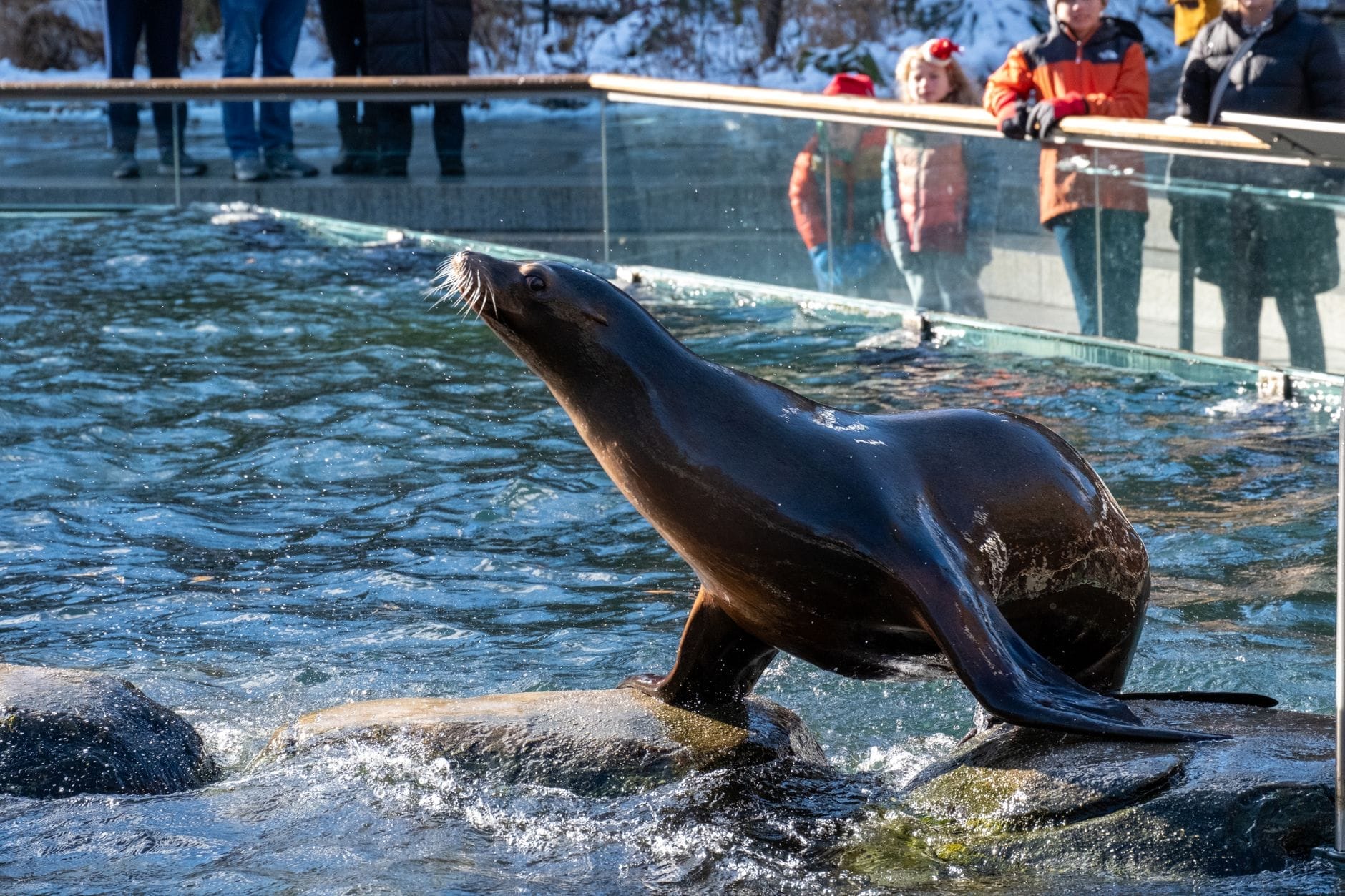
The Sea Cliffs area houses California sea lions and Pacific walruses in a habitat built to suggest rocky coastal terrain. The sea lion feeding and training sessions draw predictable crowds, but they are worth attending — the handlers explain behavioral cues and conservation context rather than just performing tricks. Walruses, up close, are genuinely strange and impressive animals, and this is one of the few places in the New York area where you can observe them at close range.
Outdoor areas are exposed to Atlantic weather, which is a practical consideration. On cool, overcast days the outdoor sections can be windy and cold, even in spring or fall. Layers are sensible. Conversely, on hot summer afternoons the outdoor paths get direct sun with limited shade, and the sea lion area can smell quite strongly in warm weather — something small children find amusing and some adults find less so.
Glover's Reef and Smaller Exhibits
Glover's Reef recreates a Caribbean coral ecosystem with seahorses, rays, and reef fish in a more intimate indoor setting. The scale is smaller than the shark exhibit, but the density of animal activity in the reef tanks is high, and the lighting here is warmer and more flattering for photography. This section tends to be less crowded than Ocean Wonders, making it a good option if you arrive during peak hours and want to avoid the main bottleneck.
Tickets & tours
Hand-picked options from our booking partner. Prices are indicative; availability and final rates are confirmed when you complete your booking.
Spirit of New York Dinner Cruise
From 161 €Instant confirmationFree cancellationNew York City Highlights bike tour
From 70 €Instant confirmationFree cancellationNew York Statue of Liberty and Ellis Island tour by ferry
From 55 €Instant confirmationNew York 9-11 Memorial Tickets and In-App Audio Tour
From 60 €Instant confirmation
How the Experience Changes by Time of Day
The aquarium currently opens at 10:00 on weekdays and weekends. The first hour after opening is reliably the calmest. Indoor exhibits like the shark building are quieter, stroller traffic is manageable, and the sea lion area has not yet accumulated its midday audience. If you are visiting with young children or have limited patience for crowds, arriving at opening is the single most effective strategy.
By noon, especially on summer weekends, the aquarium fills with a mix of families, school groups, and day-trippers who have come down from elsewhere in Brooklyn or Manhattan. The Coney Island boardwalk itself gets busy around this time, and the convergence of aquarium visitors with beachgoers creates noticeable congestion around the entrance area. The main shark tank viewing window is at its most crowded between roughly 11:30 and 14:00.
Late afternoon, in the final 90 minutes before closing, offers a second calmer window. Families with young children tend to leave by mid-afternoon, and the indoor exhibits become noticeably quieter. The trade-off is that some animal feeding sessions and demonstrations will already have concluded for the day.
ℹ️ Good to know
Hours: Monday–Friday 10:00–17:00; Weekends and holidays 10:00–17:30 (subject to change). Hours can vary seasonally and during special events — confirm at nyaquarium.com before your visit.
Getting There: The Subway Ride Is Part of the Experience
The D, F, N, and Q trains all serve Coney Island–Stillwell Avenue, the southern terminus of those lines. From Midtown Manhattan, the ride on the Q or D takes roughly 50 to 60 minutes, depending on service. Stillwell Avenue station is one of the largest elevated transit terminals in New York, a structure worth noticing in its own right. From the station, the aquarium entrance on Surf Avenue is about a five-minute walk south.
The subway journey itself frames the visit in a useful way. You arrive at a genuine outer-borough destination, not a sanitized tourist corridor, and the transition from dense urban streets to the salt air of the boardwalk is part of what makes a Coney Island trip feel distinct from a Manhattan day. If you are planning a broader Coney Island outing, consider pairing the aquarium with a walk along the Coney Island Boardwalk or a visit to Luna Park immediately next door — the combination makes for a full day without requiring much additional transit.
Historical Context: More Than 125 Years of Marine Science in New York
The aquarium's origins at Castle Garden — a circular fort converted into an immigration processing station before Ellis Island took over that role — place it at one of the most historically layered sites in New York Harbor. By the time it moved to Coney Island in 1957, the facility was already six decades old and had survived a world war, an involuntary relocation, and a complete reinvention of its mission. The Coney Island address was part of a broader urban renewal effort for the neighborhood, and the aquarium became one of the anchoring institutions that kept the area connected to the wider city.
The WCS's stewardship since the 1990s has shifted the facility toward a more explicitly conservation-focused identity. The organization manages five New York City wildlife parks in total, and the research conducted across those facilities feeds into global conservation programs. If this institutional dimension interests you, the Bronx Zoo — the flagship WCS facility — offers a significantly larger scope of that same mission, though it requires a very different trip.
Practical Notes: What to Know Before You Arrive
The aquarium is fully accessible for wheelchair users and strollers, with step-free paths connecting the main exhibit areas and accessible restrooms throughout the grounds. The boardwalk-adjacent location means that the perimeter paths are flat and well-maintained. Baby-changing facilities are available, and there is a café on-site for food and drinks, though the options are standard fare at institutional pricing — packing snacks is a reasonable alternative for longer visits.
Photography is permitted throughout the aquarium. For the dark indoor exhibits, particularly the shark building, a phone camera will struggle without switching to night mode or a portrait setting to reduce motion blur. The outdoor sea lion viewing area offers better natural light for photography, particularly in the morning when the sun is still low enough to illuminate the pool without harsh shadows.
Weather matters significantly here. The outdoor exhibits represent a meaningful portion of the overall experience, and a cold, rainy day compresses what is available into the indoor buildings. The aquarium is still worth visiting in rain — the indoor exhibits are substantial — but the full experience depends on at least tolerable outdoor conditions. Summer heat brings its own considerations, particularly in the fully exposed outdoor areas in mid-afternoon.
⚠️ What to skip
Summer weekends (late June through August) are the busiest period by a significant margin. If you are visiting during this window, book timed-entry tickets well in advance and plan to arrive at opening time to avoid the worst of the crowds.
Is the New York Aquarium Worth It?
The honest answer is: it depends on who is going. For families with children, particularly kids aged 4 to 12, the combination of large predator fish, sea lions, and walruses at close range delivers reliably. The Ocean Wonders: Sharks! exhibit, specifically, holds up against comparable exhibits at much larger institutions.
For adults visiting without children who are primarily interested in marine biology or conservation, the aquarium rewards a slower, more attentive visit — but it is not the scale of the Shedd Aquarium in Chicago or the Monterey Bay Aquarium in California. Visitors focused exclusively on world-class museum experiences in New York City might find their time better spent at the American Museum of Natural History or across the city's broader cultural institutions. But as part of a Coney Island day — combining the aquarium with the boardwalk, the beach, and the amusement area — it makes strong sense.
The trip to Coney Island itself is underrated as a New York experience, and the aquarium is one of the most legitimate reasons to make the journey. If you are looking to understand what a full day in the neighborhood looks like, the Brooklyn guide covers the broader context, including how Coney Island fits into a Brooklyn itinerary.
Insider Tips
- The shark exhibit's largest viewing window has a bench built into the floor directly in front of it. It fills up fast, but if you wait near it rather than pressing against the glass, you get a calmer and wider-angle view when the bench clears.
- Timed-entry tickets are priced by the date you select — weekday tickets tend to be lower than weekend tickets, and visiting on a Tuesday or Wednesday in spring or fall is both cheaper and significantly less crowded than any weekend slot.
- The outdoor sea lion area has a lower viewing section below the main terrace that most visitors walk past. It places you at water level with the animals and offers a much closer perspective than the elevated walkway above.
- If you are combining the aquarium with Luna Park next door, buy your Luna Park rides and game credits separately and in advance — the crowds at the entrance can add meaningful wait time on busy days.
- The aquarium is included in several New York City attraction passes, which can offer savings if you are planning multiple paid attractions during your stay. Check the current pass options against the standalone ticket price before committing.
Who Is New York Aquarium For?
- Families with children aged 4 to 12 looking for a full half-day activity
- Visitors combining an aquarium visit with a Coney Island boardwalk and beach day
- Marine biology and conservation enthusiasts who want to see one of the country's most historically significant aquariums
- Travelers looking for a genuine outer-borough Brooklyn experience beyond the standard tourist circuit
- Rainy or overcast days when outdoor activities are less appealing — the indoor exhibits are substantial
Nearby Attractions
Other things to see while in Coney Island:
- Coney Island Boardwalk
The Riegelmann Boardwalk at Coney Island is a 2.7-mile wooden promenade along the southern Brooklyn shoreline, free to walk and open year-round. From summer crowds eating Nathan's Famous hot dogs to quiet winter mornings with only the Atlantic for company, it offers one of New York City's most iconic experiences.
- Luna Park Coney Island
Luna Park in Coney Island is Brooklyn's seaside amusement park, sitting on the same storied stretch of boardwalk that once drew millions at the turn of the twentieth century. It offers classic coasters, carnival games, and sweeping Atlantic Ocean views within a short subway ride of Manhattan. Here's how to make the most of it.